

A Tory tote that has commuted every day for 12 months rarely looks new. Two points show the damage first: the bottom corners, which rub against desks, seats, and walls, and the strap stitching, where the weight of a full bag works on every seam. Those two areas say more about how a tote actually holds up than any product page.
This review follows one Tory tote through 12 months of daily commuting and records what changes, week by week and season by season. It is written for people who carry a tote every day, and it separates normal break-in wear from real structural failure so you can read the wear on your own bag.
Two questions run through it: how corner fray develops over 12 months of commuting and what that says about materials and construction, and how strap stitching holds up under daily weight and when repair is worth it. Every observation comes from the same ordinary commute rather than studio conditions, so it should transfer to your own bag.
Corner Fray on a Tory Tote: Why the Base Always Fails First
Leather on a well-used Tory tote almost never wears evenly. It goes from the bottom up: the base corners show trouble long before the handles or the body do.
The reason is simple. Every time you set the bag down, the points meant to protect it take the hit instead. That concentrated abuse is corner fray, and it is the most predictable part of tote wear.
What Corner Fray Actually Is
Corner fray is the gradual breakdown of the leather’s surface and edge finish where the bag meets the ground, a chair, or a car seat.
It starts as a faint scuff or dull patch, then deepens into cracked, lifting fibers and exposed stitching. On leather, it is not a stain you can wipe off; the material itself is eroding.
The Physical Forces Behind the Damage
Three forces work on the corners at once.
Friction does most of it. Setting the bag down and picking it up drags the material across rough surfaces, and those small scrapes accumulate into visible thinning.
Weight makes it worse: a laptop, water bottle, charger, and gym kit press every contact point harder into whatever it rests on. If you carry that much, sturdier options are worth comparing in this guide to laptop tote bags for women.
And because the bag’s mass funnels into two small corners, abrasion concentrates there. Those corners can wear several times faster than the rest of the bag.
What This Means for Commuters
You cannot eliminate corner fray, but you can slow it down.
- Rotate your carry weight so one corner does not always bear the load.
- Avoid dragging the bag across concrete or brick.
- Condition the leather regularly to keep fibers supple.
- Set the bag down softly, lifting rather than sliding it.
Knowing why the corners fail is the first step to making a Tory tote, or any leather tote, last longer.

Where Corner Fray Concentrates
The diagram maps the four spots where commuting stress hits a tote hardest. On a structured bag like the Tory tote, the two front and two rear bottom corners take the most friction: they brush against metro turnstiles, desk drawers, car seats, and café floors every day. Fray starts there because those points combine the sharpest edge curvature with the thinnest unsupported leather, so the fibers grind against abrasive surfaces before the rest of the body shows wear. Check those four zones on your own bag and you will see corner fray forming well before a seam opens.
Strap Stitching: The Quiet Failure Point After 12 Months
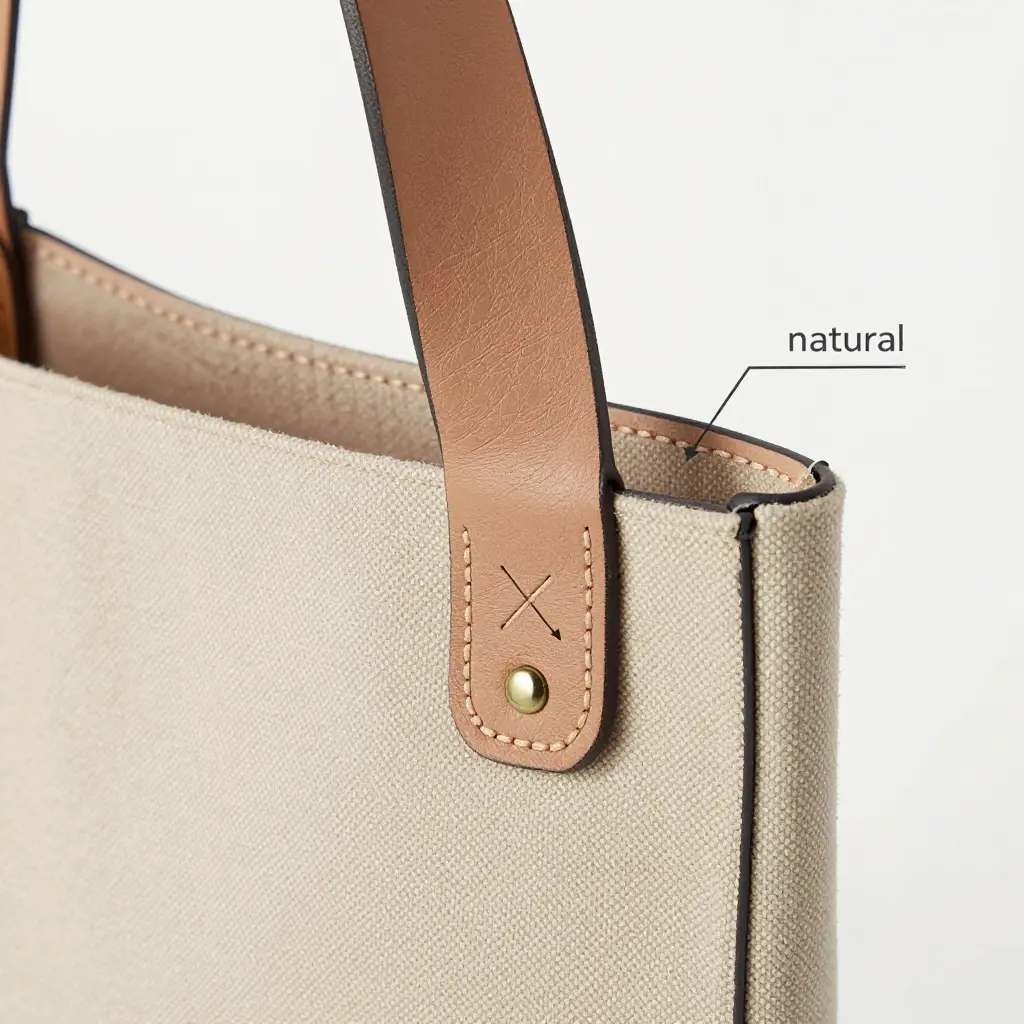
Corners fray visibly; strap stitching fails quietly. A Tory tote carried five days a week can still look clean at the corners while the junction where the strap meets the bag body is already wearing out. That junction absorbs the swing weight of a laptop, water bottle, and daily clutter thousands of times a year.
What Is Actually Happening at the Junction
The strap-to-body junction transfers load, and it stresses thread differently than the flat panels do. As you walk, the bag pivots; the stitches nearest the anchor take concentrated tension while the outer ones stay slack. Over 12 months of commuting that cycle produces three effects:
- Thread abrasion where the stitch line rubs against the rivet, D-ring, or edge of the strap while the bag swings.
- Stitch elongation, a permanent stretching of synthetic thread under constant tension, which opens tiny gaps and can let a seam creep.
- Rivet load transfer, where hardware takes stress off the thread but shifts wear to the leather or canvas around it.
Topstitching vs. Load-Bearing Stitching
Not all stitching carries load. Topstitching is decorative and edge-stabilizing; it runs parallel to a seam on a single panel and rarely holds weight. Load-bearing stitching is the box-X pattern or bar tack, usually in heavier thread and often backed by hardware. On a bag built for tote bag durability that difference matters: neat topstitching means the bag looks good, while intact load-bearing stitching means it will survive another year. Zipper and strap anchors deserve the same look, which is why it helps to inspect how a zipper closes off and anchors the strap before you commit to a daily commuter.
What a Commuter Should Conclude
Inspect the junction, not just the corners. Run a thumb along the strap-to-body stitch line and look for fuzzed thread, widened holes, or a loose box-X leg. If the load-bearing stitch is intact, the bag has years left. If it has begun to creep, reinforce it now: a strap that fails mid-commute is far more disruptive than a frayed corner you can see coming.
Twelve months of daily commuting leaves a mark, and the two stress points do not age alike. This comparison of tote bag wear on a Tory tote bag shows how corner fray and strap stitching behave after a year of heavy use.
Corner Fray vs Strap Stitching: 12-Month Wear Comparison
| Wear Dimension | Corner Fray | Strap Stitching |
|---|---|---|
| Typical first sign of wear | Fabric fibers loosen and pill at the bottom edges first | Thread frays or loosens where strap meets the bag body |
| Primary cause | Repeated friction against floors, chairs, and transit surfaces | Constant load stress and pulling on the anchor points daily |
| Material sensitivity (leather vs canvas) | Canvas frays fast; leather scuffs and dulls but resists fraying | Leather stitching hides wear; canvas exposes loose thread quickly |
| Repair difficulty | Hard to fix cleanly; often needs patching or edge coating | Easier to reinforce; a tailor can restitch the anchor points |
Corner fray appears first and is harder to reverse. Strap stitching wears more gradually and repairs more cleanly. Knowing which pattern you are seeing tells you where to reinforce before small damage turns structural.
12 Months of Daily Commuting: How Corner Fray and Strap Stitching Evolve
A Tory tote does not fall apart overnight. Over 12 months of daily commuting the wear is gradual and follows a sequence: corner fray shows up before strap stitching loosens. Once you know the order, you can plan repairs instead of reacting to them.
Months 1-3: The Quiet Phase
The first months are calm. Corner fray shows up as faint scuffing on the base edges and strap stitching stays tight. Daily commuting adds only light friction. No repair is needed; wipe the surface and rotate your load.
Months 4-6: First Real Signals
Patterns start to show. Corner fray becomes visible as fibers lift at the contact points, and strap stitching shows minor thread fatigue where the handle meets the body. This is the point for a first inspection.
Months 7-9: The Acceleration Phase
Wear speeds up. Corner fray deepens toward the leather or canvas core, and strap stitching stretches near the anchor points. Small problems become structural ones.
Months 10-12: The Critical Phase
By the end of the year corner fray may expose the underlayer, and strap stitching risks full separation if it has been ignored. A stitched corner or a reinforced strap can still save the bag.
Why Early Detection Matters
Catch corner fray around month four and you can head off strap stitching failure by month ten. Fixing things at the first sign adds years to a Tory tote.
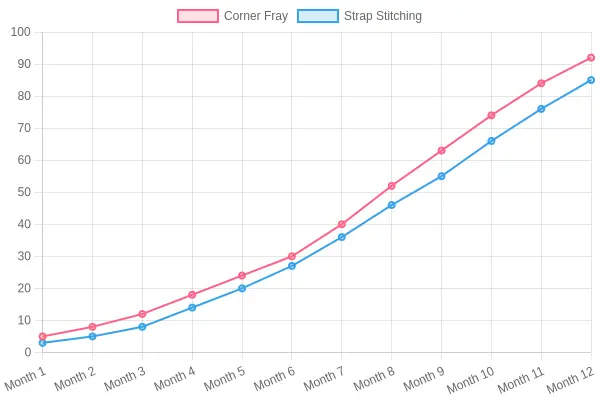
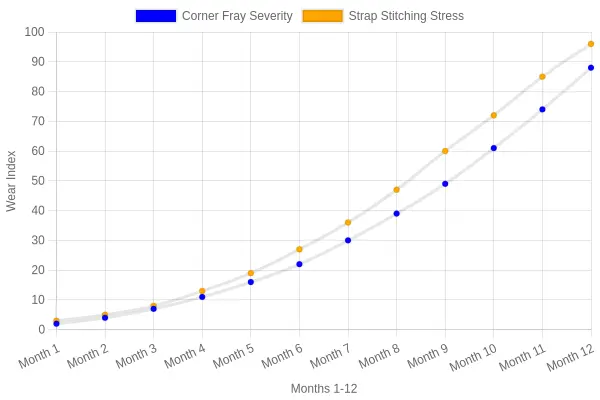
Over 12 months of daily commuting, both tote bag wear indicators climb on a curve rather than a straight line: gentle for the first few months, then steeper as accumulated load takes its toll. Corner fray rises from about 5 to 92 on the 100-point Wear Index by month 12, while strap stitching stress goes from 3 to 85. Corner fray leads early, but the strap junction keeps climbing and is the spot to watch if you carry heavy loads.
Catching Wear Before It Catches You
Catching wear early is the difference between a five-minute fix and a bag you quietly retire to the back of the closet. If you commute with a leather tote, a monthly once-over will show you where stress is building long before it turns into a tear.
Seven Early Wear Indicators to Check Monthly
- Corner fray: inspect all four bottom corners for thinning finish, small scuffs, or exposed fibers that signal abrasion from constant setting-down.
- Strap stitching: look closely where the handles meet the body; loose, fuzzy, or pulled threads at these high-tension seams are usually the first warning sign.
- Interior lining wear: check the bottom of the lining for pilling, stains, or tiny holes that let pens and keys slip through.
- Zipper drag: run every zipper from end to end; a slow, catching pull means teeth or sliders need attention.
- Hardware discoloration: watch for tarnish, green residue, or wobbly rivets and rings around the handle anchors.
- Edge-paint cracks: scan the sealed edges of the opening and flap for hairline splits that let moisture inside.
- Leather dryness or fading: run a hand over the surface; a chalky, matte feel or uneven color means the material is losing moisture.
Five Practical Care and Maintenance Steps
- Rotate your bag every few days so one handle and one set of corners doesn’t absorb all the strain.
- Wipe the exterior weekly with a soft dry cloth, and keep it away from heat and direct sun.
- Condition the leather every two to three months with a leather-safe cream to keep it supple and resistant to cracking.
- Store your tote stuffed with tissue or a shaper and tucked inside a dust bag to hold its structure.
- Empty and air the interior weekly, and choose models with protective feet or secure closures such as these tote bags with zippers if you carry valuables.
A Monthly Habit
A few minutes a month keeps a Tory tote in shape and protects what you paid for. Catch corner fray and strap stitching problems early and a leather tote will keep looking good for years.
Materials and Construction: What Really Decides Corner Fray and Strap Stitching Longevity
A Tory tote can look identical to its rivals on day one. What decides whether it survives 12 months of daily commuting is the material it is made from and how it is stitched. Wear never spreads evenly; it concentrates at the two points that touch the world every day, the bottom corners and the strap anchors.
Material choice and construction explain most of the difference. A canvas tote with a coated finish sheds rain and surface scuffs but can still develop corner fray where the weave abrades against pavement, subway steps, or a car seat. Pebbled leather hides scratches because its textured grain spreads stress across a wider surface. Smooth leather looks the most refined but shows every scuff and creases sharply at the corners, which speeds breakdown. Construction can outweigh material: double-stitched seams, bar tacks at strap ends, and bound corners often do more for tote bag durability than the material underneath.
Coated canvas survives weather best, pebbled leather survives abrasion best, smooth leather ages fastest at the corners, and reinforced stitching outlasts all three.
| Material / Technique | 12-Month Corner Wear | Strap Stitching Outlook |
|---|---|---|
| Coated canvas | Light fray at abraded edges | Strong when bar-tacked |
| Pebbled leather | Minimal, grain hides scuffs | Holds well with double stitching |
| Smooth leather | Visible scuffs and creasing | Risk of stitch pull if single-stitched |
| Reinforced stitching | Reinforces every material | Best longevity overall |
For commuters hauling laptops and other daily loads, construction matters more than brand. Look for bar-tacked strap anchors, doubled corner seams, and a material that matches your climate. If you want to weigh material options built for heavy daily rotation, browsing quality women’s canvas tote bags is a reasonable starting point. If you carry tech all week, compare the load-bearing features in this guide to a reliable laptop work tote.
How Strap Stitching Is Constructed
The difference between a bag that survives 12 months of train platforms and one that frays at the corners often comes down to one unglamorous detail: the stitching at the strap junction.
Single-Row vs. Double-Row Zigzag
Most strap junctions fall into two broad construction categories.
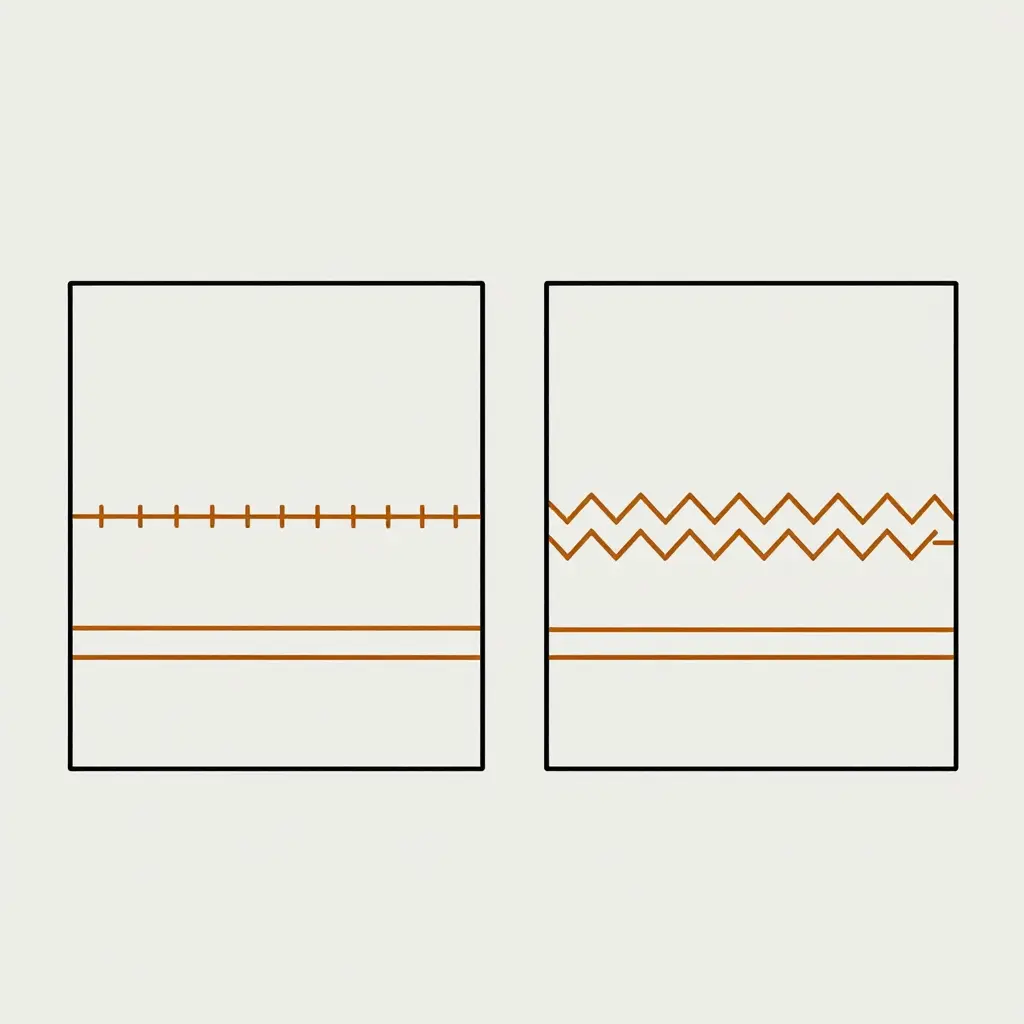
- Single-row stitch. A single line of straight stitching runs along the strap where it meets the body panel. It looks clean and is fast to produce, but every pound of load funnels through that one thread line. When one stitch pops, the neighbouring stitches inherit more stress, and failure tends to cascade quickly.
- Reinforced double-row zigzag stitch. Two parallel rows, often anchored with a zigzag pattern, spread the load across several contact points and multiple thread paths. If a single stitch loosens, the surrounding rows absorb the tension, so the junction holds its shape far longer.
The illustration below shows both configurations side by side at a strap junction. The amber lines are thread paths: the left (single-row) version concentrates stress along one narrow band, while the right (double-row zigzag) spreads it across a wider, interlocking area.
Why the Reinforcement Matters
A single-row stitch is one beam carrying the whole load; a double-row zigzag is a truss. With a laptop, a water bottle, and a week of odds and ends in the bag, that difference decides whether the strap stays put or starts peeling away from the panel by month eight.
The same logic explains why strap anchors fail before the rest of the bag. At the anchor, the strap, the body panel, and the lining meet under the sharpest angle of pull, which makes it the highest-stress point on the bag. Reinforced stitching there is not just cosmetic; it changes how the force moves through the material.
When you evaluate any tote for a daily commute, run a thumb along the strap junction. Can you feel one thread line or several? To see how construction quality holds up over a full year, it helps to know what to expect from a Tory tote built for real commuting before you commit to a daily driver.
How to Assess Tory Tote Corner and Strap Durability Before You Buy
What the Year Showed
Following a single Tory tote through 12 months of daily commuting produced one clear pattern: a bag never fails all at once. The first thing to go is corner fray, where the leather rubs against desks, train seats, and pavement every time you set it down. The second is strap stitching, which loosens slowly under the weight of a laptop, water bottle, and the rest of a commuter’s daily cargo. In our tracking the corners lost structural integrity fastest in months six through nine, while strap stitching held up longer but declined steadily. Both points are visible before you spend anything.
What to Look For Before You Buy
When you handle a bag in store, run a thumb firmly along all four bottom corners. A well-built Tory tote feels reinforced and tight; a weak one gives slightly under pressure, which hints at future fray. Next, inspect the strap stitching where it meets the body, ideally double-stitched and anchored with a rivet or bar tack rather than a single seam. Heavier totes justify thicker thread, so compare stitch density against the bag’s size and expected load. Judge the specific model rather than the brand as a whole, since sizing and hardware vary across the range. Browse the full Tory tote lineup to compare construction details side by side, and if you prefer a lighter daily carry, review the medium tote size to see how a smaller footprint distributes weight more evenly across the corners.
Our Recommendation
Buy when the corners are double-reinforced and the straps are bar-tacked; those two details are the best available predictors of a tote that survives a year of commuting. If either looks thin or single-stitched, walk away, no matter how good the price feels. A few seconds of inspection now saves a frayed, sagging bag later.
Tory Tote Corner Fray and Strap Stitching: FAQ After 12 Months of Daily Commuting
These answers describe what a Tory tote typically looks like after a year of hard use. For background on the full range, see the Tory tote collection.
How soon does corner fray appear on a Tory tote with daily commuting?
Most Tory totes start showing corner fray between four and six months of daily commuting. The abrasion happens where the base edges rub against desk corners or the ground during your commute. By month twelve the fraying often spreads along the bottom seams and exposes the underlying fabric. Leather corners wear more slowly than canvas ones. Inspecting the base around month three helps you catch early thinning before the damage deepens.
Can strap stitching be repaired on a Tory tote?
Yes, strap stitching can usually be repaired. A cobbler or leather repair service re-stitches loose seams along the handles and reinforcement points. Because daily commuting puts constant tension on strap stitching, the threads at the attachment points loosen first. A repair typically costs far less than replacing the bag and restores most of its strength. Severe tears that split the leather itself may need a patch or full strap replacement.
Does canvas or leather fray faster on a Tory tote?
Canvas frays faster than leather on a Tory tote. Woven canvas fibers loosen and pull apart at the corners, while full-grain and saffiano leather resist abrasion longer before showing surface scuffs. Under the same daily commuting conditions, canvas corners may fray in roughly half the time leather needs to show comparable wear. Pebbled leather sits in between, wearing gradually rather than suddenly. This is why leather-trimmed totes hold their corners noticeably better over a year of use.
How does load weight affect corner fray and strap stitching?
Load weight directly accelerates corner fray and strap stitching wear. A packed Tory tote carrying a laptop, water bottle, and daily essentials places far more pressure on the bottom corners and handle anchors. Heavier loads increase friction each time you set the bag down, so fraying and loose threads appear sooner. Keeping your load under roughly ten pounds and distributing weight evenly reduces strain. Overloading is one of the fastest ways to age a commuter tote.
How can I slow corner fray on a Tory tote?
Slow corner fray by protecting the base and rotating your carry habits. Apply a leather protector or fabric guard to the corners before wear begins, and avoid setting the Tory tote directly on rough pavement or concrete. Resting it on a padded surface during daily commuting cuts abrasion sharply. Storing the bag upright when not in use prevents the corners from curling. Early stitching reinforcement at the first sign of thinning also extends the life of the handles.