
Two Forces at Work in Every Saturday Haul
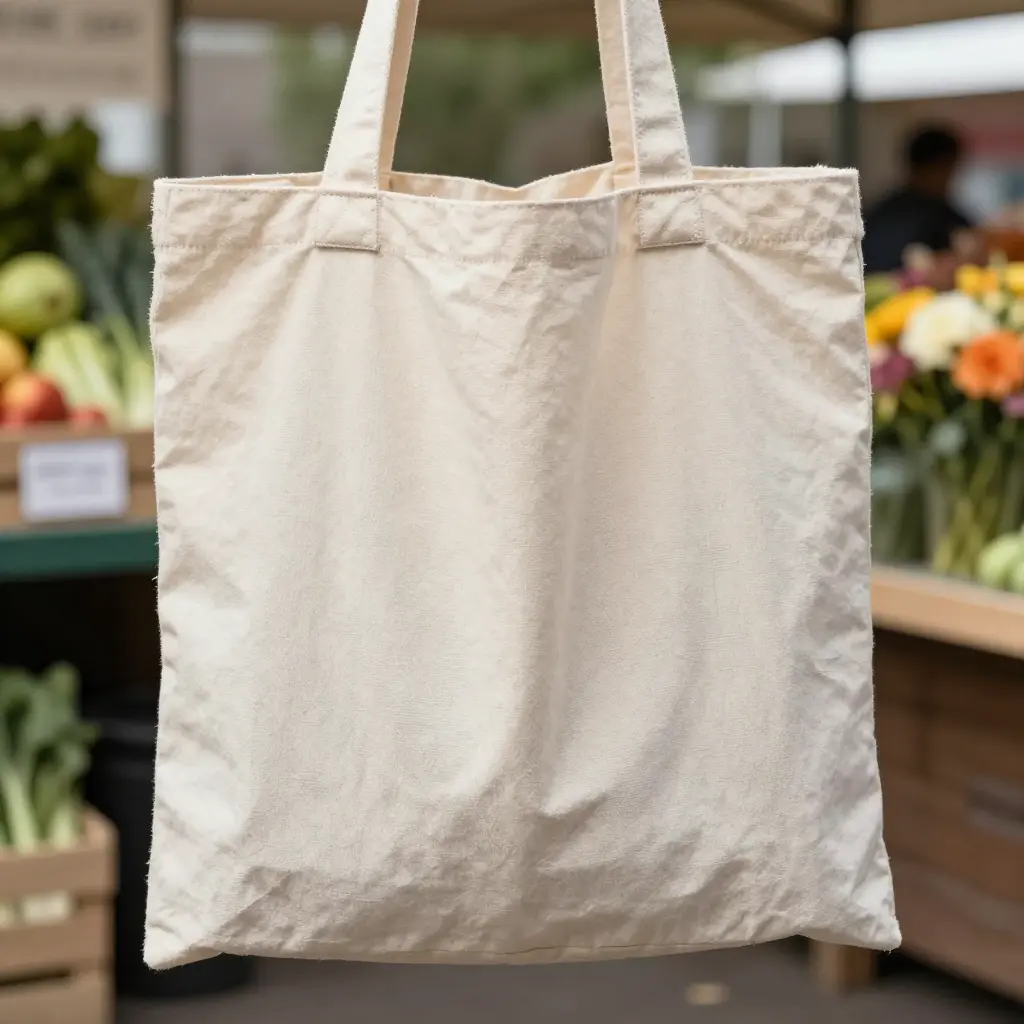
A Saturday trip to the farmers market puts a cotton canvas tote under two kinds of stress at once. One is the shrinkage that follows every wash. The other is the bottom gusset seam stress that builds where the bag carries the week’s produce. The two are connected, and that connection is what wears a bag out.
When cotton fibers tighten after a wash, the fabric pulls inward, and that tension travels down to the seams that hold the base together. A bag that carried last month’s load without trouble starts to fray at the corners a few washes later.
Knowing how shrinkage and load stress feed into each other is what separates a tote that lasts years from one that lasts a season.
The sections below cover why cotton canvas shrinks when it gets wet, how washing and drying habits speed that up or slow it down, and what a full load does to the bottom gusset over time. They close with habits that keep a bag in service through hundreds of market trips: spreading weight, drying flat, and checking seams. If you are shopping for a replacement, these women’s canvas tote bags are a decent place to start.
Why Cotton Canvas Shrinks: The Action Is Inside the Fiber
When a cotton canvas tote comes out of the wash smaller, the fabric is not just “tightening up”; the fibers themselves have contracted, and once that happens the change does not reverse.
What Cotton Fibers Actually Do
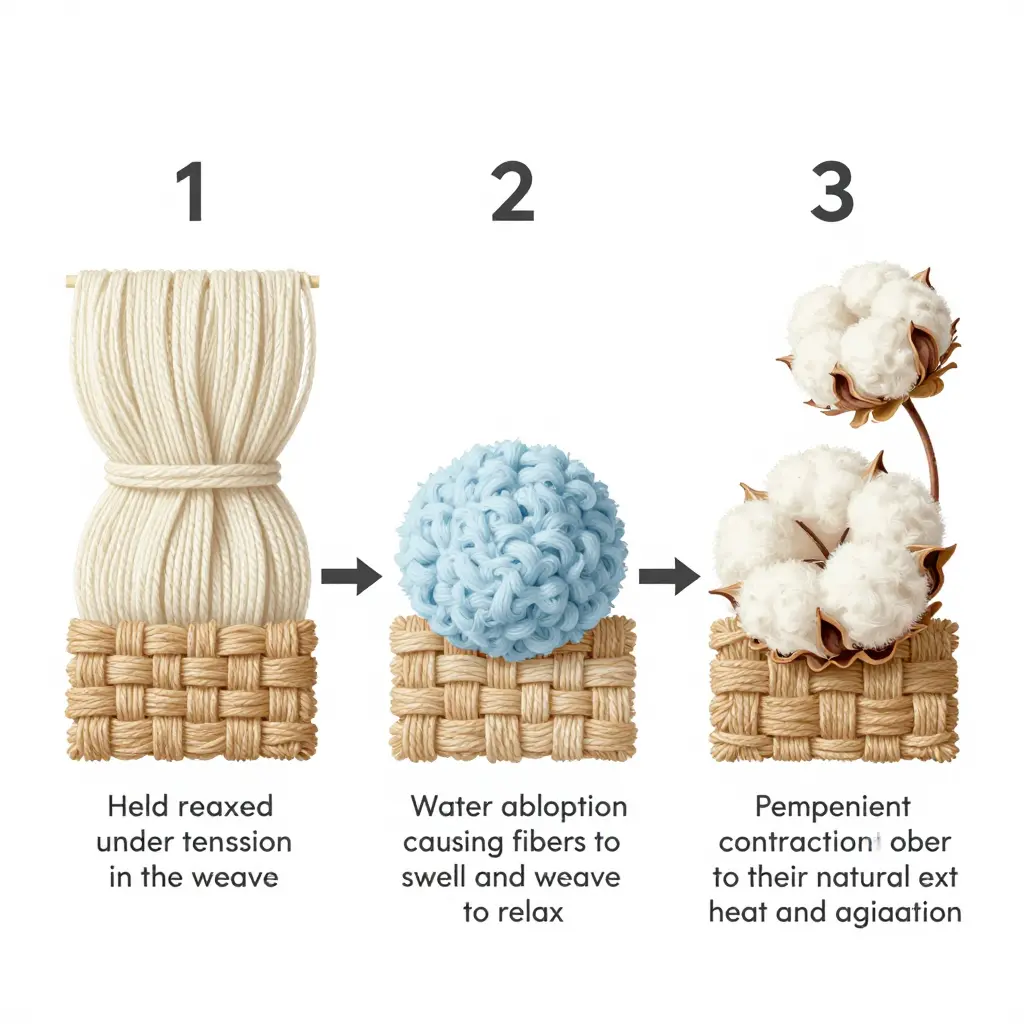
Cotton fibers are hollow, twisted tubes of cellulose. Mills spin them into yarn and weave them into canvas while the yarn is held under tension, and that tension is temporary.
Water releases it. As cotton absorbs moisture the fibers swell and the yarns relax, and the heat and mechanical agitation of a wash cycle let the fibers slide past one another and return toward their unstretched state. That is the contraction, and drying does not undo it.
Why Twill and Plain Weave Respond Differently
The weave decides how much the fabric can move. In a plain weave, warp and weft cross over and under each other in a tight grid, so there are many intersection points where the structure can shift and shrink. Twill floats each thread over two or more yarns before it crosses, which leaves longer diagonal strands and more slack, so it usually shrinks less and more evenly.
Yarn density and finishing matter too, and both fall under fabric construction. Heavy, dense canvas made from pre-shrunk fibers moves less than a loose, untreated weave.
What This Means for Your Grocery Run
A tote that shrinks changes shape, and shape matters once the bag is loaded. As the fabric contracts, the weave tightens and the threads pull against each other, concentrating stress along the bottom gusset and seams, especially under produce and glass jars. Untreated canvas will move some, so pre-wash it if you want to set the size, and check the gusset seams every few washes.
The Quiet Loss of Capacity
A tote that has been through a hot wash or a soaked market morning rarely looks different from across the table. The change is small, but it shows up in use: canvas tote capacity drops as the fibers pull together, so the volume printed on the tag no longer matches the bag.
Why the Bottom Gusset Flattens
The bottom gusset, the folded panel that gives a tote its width and lets it stand open, is the first part to lose ground. As the canvas contracts, the gusset loses depth: a bag that opened to six inches may settle closer to four, and that depth comes straight off your packing height. The base area shrinks with it, so the bag holds less than it did.
Why the Seams Work Harder
The loss of volume is only half of it. The same heavy load (a gallon of cider, a bag of potatoes, a few root vegetables) now sits on a smaller base. Shorter gusset panels, tighter folds, and less fabric spread the same weight over less area, which puts the most stress where the seams meet the base corners.
Shrinkage eats into the margin the bag was built with. For a tote that keeps its shape and its stated capacity, start with a well-made women’s canvas tote whose seams and gusset depth are sized for real weight rather than a spec sheet.
How Four Canvas Tote Constructions Compare
Before you load up for a Saturday market run, it helps to know what the bag is made of. Cotton canvas totes look nearly identical on the shelf, but fabric weight, weave, and gusset construction decide whether a bag takes three pounds of tomatoes in stride or splits a seam before you reach the car. For everyday hauls, browse our women’s canvas tote bags; for bound edges and extra capacity, step up to a reinforced laptop and work tote. The table below compares four common constructions.
| Fabric weight | Weave type | Typical shrinkage after washing | Bottom gusset construction | Best suited load |
|---|---|---|---|---|
| 8 oz (lightweight promotional canvas) | Loose plain weave | High (roughly 5-8%) | Flat base, no gusset or a shallow single-fold | Featherweight items: a couple of apples and a bunch of herbs, event swag, single-item errands |
| 12 oz (midweight grocery canvas) | Medium plain weave | Moderate (roughly 3-5%) | Boxed gusset, single-stitched seam | Standard grocery runs: leafy greens, a carton of milk, canned goods, pantry staples |
| 16 oz (heavyweight canvas) | Dense plain or twill weave | Low (roughly 1-3%) | Boxed gusset, double-stitched seam | Heavy hauls: melons, glass jars, potatoes, root vegetables |
| Reinforced work / sleeve style | Heavy plain weave with edge binding | Minimal (under ~2%) | Reinforced boxed gusset with bound seams and riveted stress points | Bulky and heavy loads: tools, laptops, books, multi-bag market trips |
As a rule of thumb, the heavier the canvas and the more reinforced the gusset, the less the bag shrinks and the more its bottom seam tolerates. For produce-heavy market mornings, aim for at least a 12 oz weave with a boxed gusset; save the 16 oz and reinforced builds for your heaviest, bulkiest loads.
Bottom Gusset Seam Stress: The Weakest Link in Your Grocery Run
During a heavy grocery run, the load does not spread evenly across a canvas tote. Most of it gathers in one strip of fabric at the bottom gusset seam stress zone, where the base folds and the stitches hold it together. A carton of milk, a bag of potatoes, and two glass jars all pull on that same line.
Why Force Piles Up Exactly There
The geometry explains it. Every item in the bag pulls straight down. The gusset runs as a horizontal fold across the floor of the bag. Where the two meet, the fabric has to redirect downward force sideways along a crease, which is not what the weave was built for. The threads at that intersection carry the load in tension, and unlike the side panels they have no slack.
The Hidden Stressors
A few things make that one seam work harder:
- Thread tension – tight stitching holds the seam firmly, but it also puts strain on individual thread loops instead of spreading it.
- Stitch density – too few stitches per inch and the seam tears between them; too many and the needle perforates the canvas, weakening the fabric it is supposed to bind.
- Fabric edge abrasion – every time the bag sags and lifts, the folded edges rub against the stitching and fray the canvas from the inside out.
Constructions differ in how they handle that load. Some designs add internal reinforcement where the base meets the walls, which spreads the load over a wider area; tote bags with zippers are one style where you will often find it.
How Seam Failure Begins
A seam rarely fails all at once. It starts with a single stitch stretching and one thread fraying. The canvas around it puckers and opens a small gap. On the next heavy grocery run that gap runs, and the seam begins to open along the fold. Catch the puckering early and you can reinforce the seam before the bottom lets go.
Reading the Stress Map
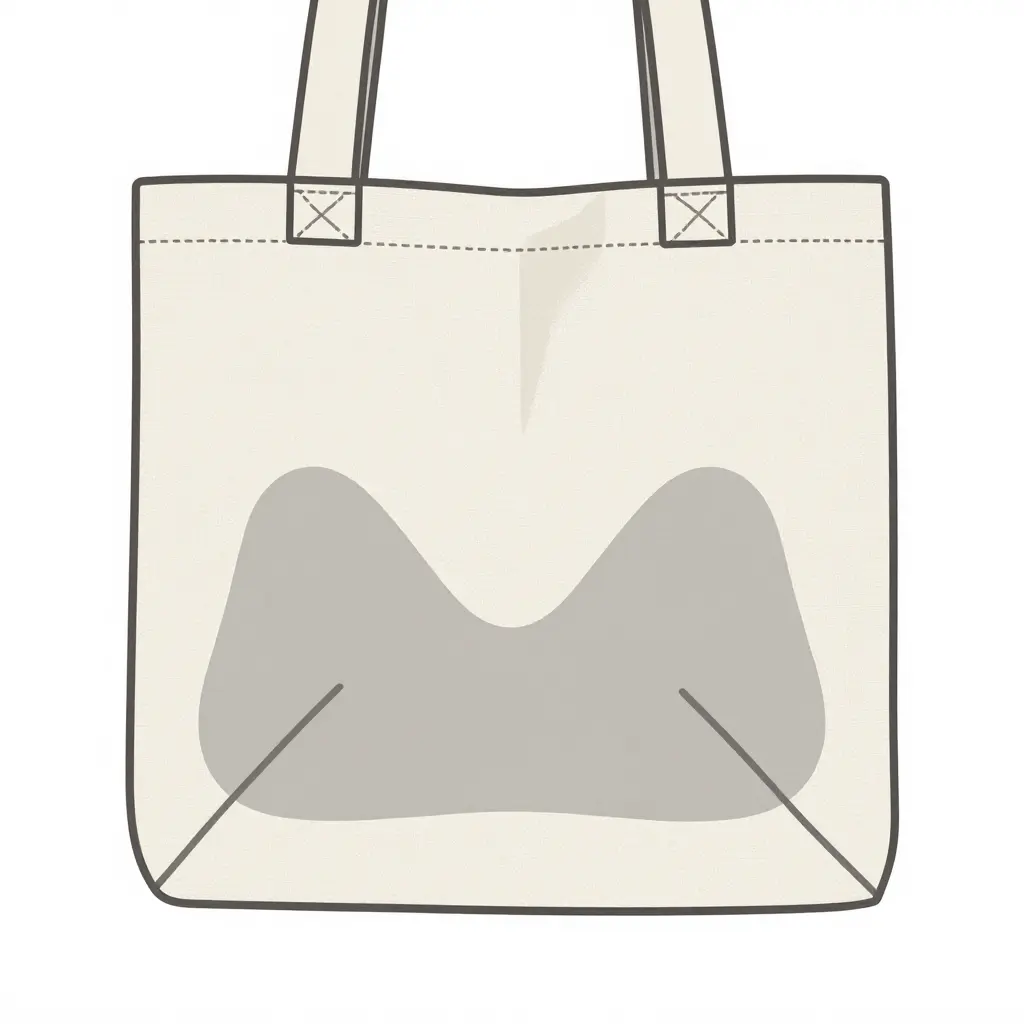
The diagram above flattens the tote’s bottom gusset so you can see where load builds up during a Saturday market haul. Three zones take the most stress:
- The two gusset fold creases – the vertical crease lines where the side panels hinge to let the base expand. These flex constantly as the bag is loaded and set down.
- The corner stitch blocks – the reinforced, bar-tacked corners where the gusset meets the side seam. Every pound you carry pulls here first.
- The base seam line – the long horizontal stitch across the bottom, spreading the weight of produce, jars, and melons over the widest span.
The darker the shaded band, the higher the load concentration. For a bag that will take that stress over many market seasons, browse women’s canvas tote bags with reinforced gusset construction.
A cotton canvas tote can last hundreds of market runs, but heat shrinkage and gusset stress shorten its life. A few habits keep it in shape.
- Wash cold, never hot. Heat drives shrinkage in a cotton canvas tote, so use cold water and a gentle cycle to keep the fibers relaxed.
- Skip the dryer entirely. Tumble heat is the fastest way to shrink and misshape a cotton bag; let it air dry instead.
- Air dry flat to hold the gusset shape. Laying the tote flat preserves the bottom gusset folds so the bag still stands open when loaded.
- Distribute weight evenly. Spread heavy items like melons or glass jars across the base rather than piling them into one corner.
- Never overload past capacity. If the seams pull tight the moment you lift it, you have packed too much, so split the load for the walk home.
- Choose reinforced corner stitching. Bar-tacked or box-stitched corners spread stress and keep the bottom gusset from tearing; well-made women’s canvas tote bags usually show this detail clearly.
- Rotate between two or three totes. Alternating bags cuts the wear and washing each one sees, so the rotation lasts longer.
- Pre-shrink before the first big haul. A single cold soak and flat dry up front limits surprise shrinkage later.
- Reinforce the gusset proactively. A quick line of stitching along the bottom gusset before it frays can save the entire bag.
With those habits, a cotton canvas tote holds its shape and keeps carrying the week’s produce.
Canvas Tote Shrinkage Across Wash Cycles
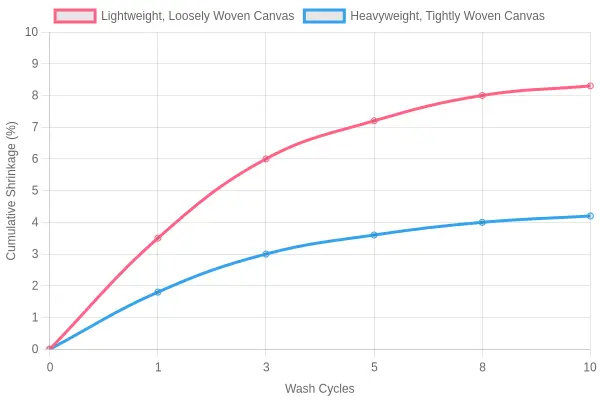
Chart title: Canvas Tote Shrinkage Across Wash Cycles
X-axis: Wash Cycles (0, 1, 3, 5, 8, 10)
Y-axis: Cumulative Shrinkage (%)
The lightweight, loosely woven canvas (pink) jumps to roughly 3.5% after a single wash and reaches about 6% by cycle three. The heavyweight, tightly woven canvas (blue) barely moves over the same stretch, going from 1.8% to 3%. After the fifth wash both curves flatten: the lightweight fabric settles near 8%, the heavy fabric near 4%, roughly double the total shrinkage for the open weave and finer yarn. Most of that change happens in the first few washes, which is why it pays to pre-shrink new canvas totes before trusting them with a full Saturday haul.
Takeaway: Most cotton canvas shrinkage happens in the first few washes, so pre-washing your tote once or twice captures nearly all of it before it matters.
Choosing a Durable Cotton Canvas Tote
Load a cotton canvas tote with squash, a milk jug, and a week’s worth of kale, and structure matters more than appearance. A block print will not help if the bottom gusset seam gives way two blocks from the car. Shop for construction first.
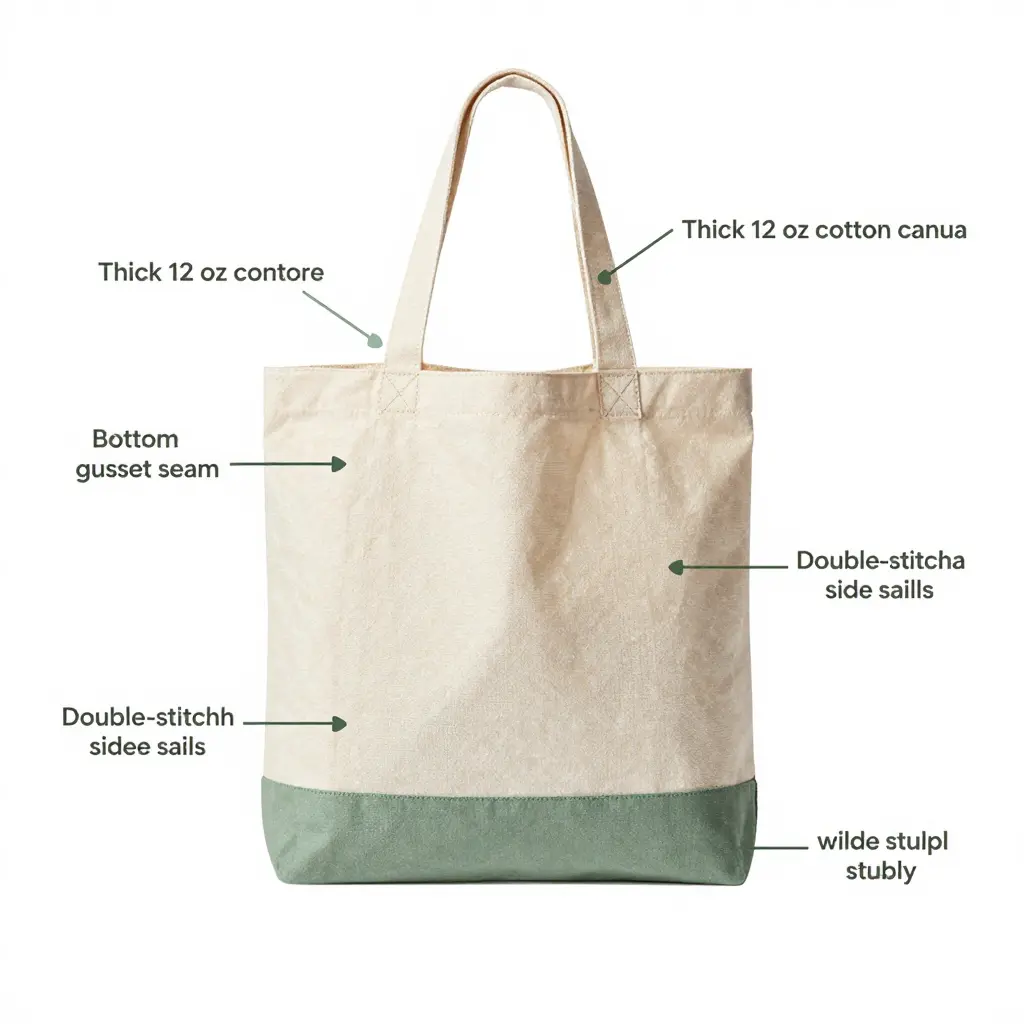
What to check before you buy
These are the details that matter:
- Fabric weight. Grocery duty wants 12 oz canvas or heavier. Thinner cotton (8-10 oz) feels soft but stretches and sags under heavy loads, and lighter weaves shrink more after the first wash.
- Gusset depth. A 4-6 inch bottom gusset lets the base sit flat so weight spreads instead of funneling into one stressed seam. Shallow totes tip over and tear at the corner.
- Double-stitched seams. Look for two rows of stitching along the side and bottom seams, plus bar-tacks where the straps meet the body. Single stitching is the first thing to fail.
- Reinforced base. A lined or double-layered bottom panel is your insurance policy against gusset blowout.
| Feature | Look for | Why it matters |
|---|---|---|
| Fabric weight | 12 oz or heavier | Resists stretch and shrinkage |
| Gusset depth | 4-6 inches | Lets the base sit flat under load |
| Stitching | Double-stitched seams | Spreads stress along the seam |
| Base | Reinforced bottom panel | Prevents gusset seam blowout |
The bottom line
If you optimize for one thing, make it fabric weight and a reinforced base; those decide whether a tote lasts a year of Saturdays. Then check for double-stitched seams and a deep gusset. For bags that already meet these specs, browse fabric tote bags for women. If you carry produce plus a laptop, a laptop and work tote is built heavier. For small items, compare tote bags with zippers.
FAQ: Cotton Canvas Tote Care for Your Saturday Farmers Market Run
How much does a cotton canvas tote shrink?
A standard cotton canvas tote shrinks about 3% to 7% on its first wash, depending on the weave and how you dry it. Untreated canvas shrinks more than pre-shrunk fabric, so inexpensive bags tend to lose a bit more. That rarely affects usability, but a snug design gets tighter.
Will a canvas tote shrink in the dryer?
Yes. Heat drives shrinkage, and a hot dryer cycle can pull a cotton canvas tote down a full size or more, especially in the first few washes. Air-drying flat is the safest way to keep its original size.
How do I stop the bottom gusset seam from tearing?
The bottom carries the most weight, so reinforce it before heavy use with double stitching or a small fabric patch. Spread heavy items evenly and stay under the seam’s limit. Low bottom gusset seam stress is what keeps the base intact over the years.
What fabric weight is best for grocery loads?
For produce and pantry hauls, aim for 12 oz to 16 oz canvas. Lighter 6-8 oz bags are fine for light items but sag under milk jugs and melons. Heavier canvas resists bottom gusset seam stress and holds its shape.
Can I pre-shrink a canvas tote before use?
Yes. Wash it once or twice in cold water and air-dry it fully before regular use to set its final size. That avoids unpleasant surprises later and softens the fibers a little.
How should I wash a cotton canvas tote to protect the gusset?
Wash cold on a gentle cycle or by hand, and turn the bag inside out so the seams are protected. Skip bleach and harsh detergent, spot-clean stains quickly, and air-dry away from direct heat. For a bag that holds up to weekly hauls, explore our women’s canvas tote bags.