
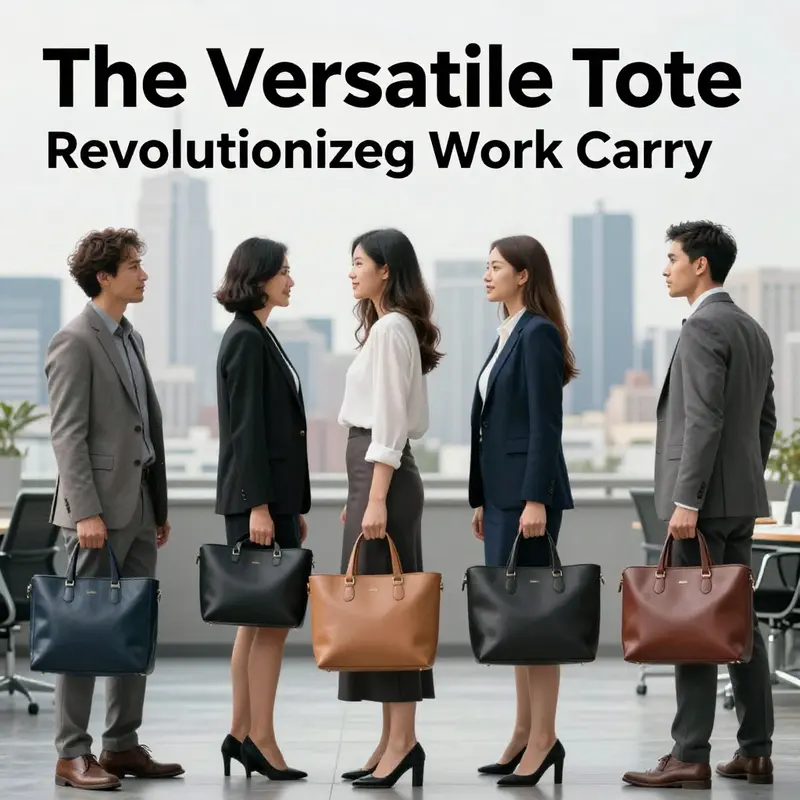
Tote bags have undergone a remarkable transformation, evolving from simple carriers into essential accessories for the modern professional. As businesses embrace a more casual and flexible approach to office attire, the perception of tote bags has shifted, particularly in creative and dynamic workspaces. This article explores practical and aesthetic considerations of tote bag use in work environments, and the chapters ahead will cover the evolution of totes in professional settings, their essential functional features, the merging of style and professionalism, organizational strategies to enhance productivity, and hybrid approaches that allow for both elegance and utility in daily commutes.
Carrying Power, Refined: The Tote’s Quiet Rise from Casual Carrier to Corporate Companion
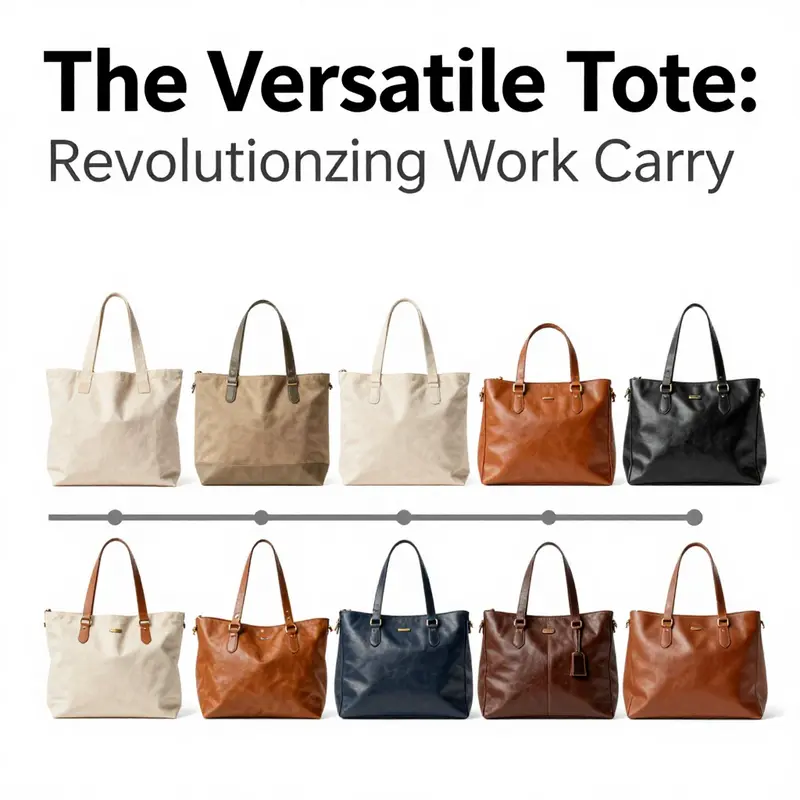
The tote’s journey into the professional sphere is less a single pivot than a quiet recalibration. What began as a straightforward, open-top carryall—the kind you’d grab for groceries, a weekend gym bag, or a simple errand run—has gradually absorbed the cues of business dress codes, meeting room etiquette, and the rhythms of hybrid work. Today, the tote blends a calm, minimalist silhouette with practical features that once felt exclusive to purpose-built work bags. The result is not just a fashion statement but a recalibrated toolkit for the modern desk, one that signals readiness and discernment without shouting. In this evolution, the tote has shed some of its casual halo, yet it has not abandoned the ease and accessibility that first made it beloved by urban professionals. It is a case study in how form and function can coalesce when workplace culture becomes more flexible, less rigid, and more concerned with what people actually carry and how they carry it.
Design language has been a major driver of this shift. A modern work tote leans into clean lines, restrained hardware, and materials that hold up under daily use. Full-grain leather offers a quiet sheen that ages gracefully, while waxed canvas or water-resistant nylon delivers practicality in variable weather and busy commutes. The color palettes tend toward black, navy, tan, and charcoal—neutral tones that pair easily with tailored pieces, blazers, and pencil skirts or sneakers and denim when the office adopts a more relaxed mood. The emphasis is on understated polish rather than flamboyance. A well-constructed tote can sit on a conference table with confidence, its silhouette echoing the discipline of a well-pressed suit while carrying the unspoken assurance that contents are safe, organized, and accessible when needed. In conservative fields—law, finance, and corporate consulting—the visual message matters as much as the contents, and a tote that looks cohesive with formalwear communicates preparedness before a single word is spoken.
Yet visuals only tell part of the story. The tote’s open-top or rectangular form, which once made it ideal for quick trips and casual days, can also be a liability in a professional routine that demands organization and device protection. Without internal pockets, padded sleeves, or dedicated compartments, a tote risks shifting its contents with every step, leaving laptops, documents, and cables vulnerable to scratches and accidental damage. More subtly, weight distribution can become uneven, contributing to posture strain during a long day of meetings, notes, and back-and-forth between office and client sites. The market’s response has been pragmatic: premium totes now include internal organization as a baseline feature. Padded laptop sleeves, zippered pouches, and modular organizers help compartmentalize items so each item has its place. These elements are not afterthoughts; they are precursors to the bag’s ability to function as a reliable extension of the desk and the briefcase, rather than merely a stylish container.
The rationale for this blend of aesthetics and utility is grounded in workplace reality. In creative fields, the tote has long enjoyed acceptance as a symbol of agility and resourcefulness. Designers and managers have celebrated its ability to blend into coworking spaces and client meetups while still carrying the essentials of a day’s work. In these environments, a tote can project energy, efficiency, and a modern ethos of mobility. Even in more traditional sectors, the tote’s versatility becomes a talking point. When a briefcase feels too formal for a client lunch or a day spent between office floors, a structured tote with leather trim or a tightly woven fabric can function as a bridge—polished enough for a meeting, relaxed enough for a coffee run. The evolving perception of professional style now includes the tote as a legitimate option for days that demand a seamless transition from desk to presentation to post-work plans.
An important part of this transition is the deliberate shift toward structure within the tote’s design. It is no longer enough to offer a single main compartment; the bag must accommodate devices, documents, and daily personal items in a way that respects both access and protection. The modern tote often features a reinforced base to maintain its shape when loaded with a laptop and notebooks, along with reinforced handles designed to distribute weight evenly and reduce stress on the shoulder. Interior organization goes beyond simple pockets; it embraces modular inserts that users can customize to their workflow. A padded laptop sleeve becomes a standard expectation, not a luxury, and removable pouches provide flexible storage for cords, chargers, and small essentials. In short, the tote evolves from a spacious sack into a carefully engineered workspace.
This engineering mindset dovetails with the habits of today’s hybrid workers. With fewer formal dress codes and more emphasis on personal style and comfort, professionals seek bags that echo their values: efficiency, adaptability, and a minimal footprint. The tote’s lean silhouette aligns with a broader minimalist aesthetic while still providing the capacity required by a laptop, a notebook, and a few everyday accessories. The result is a bag that acts as a portable desk accessory—elegant when moved into a conference room, yet unintrusive in a start-up lounge or a quiet corner of a café where a few browsed documents and a power outlet might be needed. It is also a practical instrument in a city-heavy routine, where the bag must endure crowded commutes, rough handling, and the accidental spill of coffee, rain, or ink. These pressures have driven innovations in materials and finishes, reinforcing a tote’s reputation for reliability without sacrificing a refined exterior.
For those who love the simplification and flexibility of a tote but crave more security and support, a hybrid approach can offer the best of both worlds. Professionals can opt for a high-end, structured tote on days when meetings are likely to demand a composed presentation and a sleek appearance. On days with heavy travel or a longer commute, a more robust work bag can be carried as a companion to the tote, ensuring that heavier loads and higher levels of organization stay protected. This dual strategy recognizes the tote’s strength as a stylistic and practical anchor while acknowledging that, at times, a dedicated work bag provides the extra security and ergonomic support that a heavier workload requires. In practice, the tote remains the companion that sets the tone for the day—a signal of intent to be prepared and capable—while the second bag handles the more demanding demands of travel and multitasking.
Within this evolving landscape, cautious professionals also look for signs of durability and care in the tote’s construction. High-quality materials are not merely about luxury; they are about longevity, resistance to the rigors of daily use, and the ability to age gracefully. A well-chosen tote will feature sturdy hardware that won’t easily scratch or fail, weather-resistant finishes that protect both the interior and contents, and seams that can withstand repeated loading and unloading. Handles and straps are not afterthoughts; they must offer comfortable lift and balanced weight distribution. A structured base supports upright storage, reducing the risk of the bag tipping over or losing its shape on a conference room floor. The careful integration of these features yields a bag that remains visually dependable even after months of daily use, a factor that explains why many professionals reframe their tote as a long-term investment rather than a seasonal accessory.
If readers seek a practical path to integrating a tote into their daily workflow, a few guidance principles emerge. First, prioritize interior organization that suits your typical load. If you routinely carry a laptop, a tablet, notebooks, and cables, choose a tote with a well-padded sleeve and multiple compartments for electronics and accessories. Second, assess the bag’s weight and ergonomic features. A tote that feels comfortable when slung over the shoulder or carried by the handles will reduce fatigue across a long day. Third, consider the versatility of the bag’s material and color. A neutral palette with durable finishes minimizes the need for constant rotation between outfits and fosters a cohesive professional look. Finally, test how the tote sits on a desk or in a meeting room. A bag that remains upright, unobtrusive, and easy to access will reinforce the sense of control a successful professional wants to project.
For those who want a concrete model for how to optimize a tote for work, there are practical resources that map the path from casual carryall to corporate companion. A thoughtfully designed tote that anticipates the needs of a hybrid schedule can incorporate a dedicated laptop sleeve, a removable pouch for cords, and a menu of interior organizers that can be rearranged to suit a day’s specific tasks laptop work tote. The key lies in balancing minimalism with purpose: a bag that communicates quiet confidence without sacrificing ease of access or protection. The right tote will quietly support the wearer’s posture by distributing weight more evenly and by offering a comfortable grip and sturdy handles that can survive a city commute. It is this synergy of form and function that marks the tote’s arrival as a credible professional tool, not merely a fashion accessory.
The broader cultural shift toward flexible work arrangements further anchors the tote’s relevance. With remote and hybrid models becoming more standard, professionals now seek a bag that can function across varied contexts—office, client site, coworking spaces, and travel—without needing a separate portfolio for every situation. The tote’s adaptability makes it particularly well suited to this reality. It can remain the anchor in a rotating wardrobe of outfits, a constant that preserves consistency in a changing routine. The result is a portfolio of professional gear that honors both aesthetics and practicality. The tote is no longer a symbol of informality but a versatile engine of productivity, a compact yet capable platform for the daily grind that defines contemporary work life.
As the discourse around professional style continues to mature, the tote’s place in the spectrum of work bags remains secure but evolving. Its evolution tracks shifts in industry norms, in the tempo of office life, and in the demand for mobility without sacrificing polish. The tote’s narrative—moving from a casual carryall to a durable, organized, desk-ready instrument—speaks to a broader truth about work today: that efficiency, clarity, and self-presentation are not competing concerns but complementary dimensions of professional performance. The tote’s rise embodies a broader movement toward workwear that respects the user’s time, body, and aspirations, while still acknowledging that aesthetics matter. It is the quiet confidence of a bag that knows when to lead and when to follow, adapting as careers bend between meetings, remote check-ins, and the unpredictable tempo of the everyday office.
In the end, the tote’s success in professional settings depends on a simple but powerful equation: style plus structure equals performance. The tote’s refined exterior communicates a poised, contemporary sensibility, and its interior organization ensures that performance remains frictionless. The modern professional does not have to choose between form and function; the tote offers both, in measured, thoughtful increments. It is a reminder that the best work tools—the ones that travel with us through the day’s terrain—are those that anticipate needs, protect what matters, and carry with quiet assurance the story of a career well managed. The tote’s journey from casual carrier to corporate companion is not finished, of course; it is ongoing as workplaces continue to redefine what professionalism looks like in practice. And as the next chapter unfolds, the tote will likely continue to adapt, integrating safer, smarter storage solutions and even more responsive designs that honor the evolving balance between work, life, and personal style.
For readers seeking broader industry context on how the tote has become office-appropriate, a recent fashion industry analysis traces the shift as workplaces become more flexible and as personal expression gains standing in professional settings. This evolving narrative underscores the tote’s relevance not just as a carrier but as a symbolic artifact of modern work culture. External perspectives illuminate how design, culture, and practicality converge to redefine what it means to carry one’s work—quietly, efficiently, and with a distinctly contemporary cadence.
Balanced Form, Smart Compartments: Functional Design in Tote Bags for Work Environments
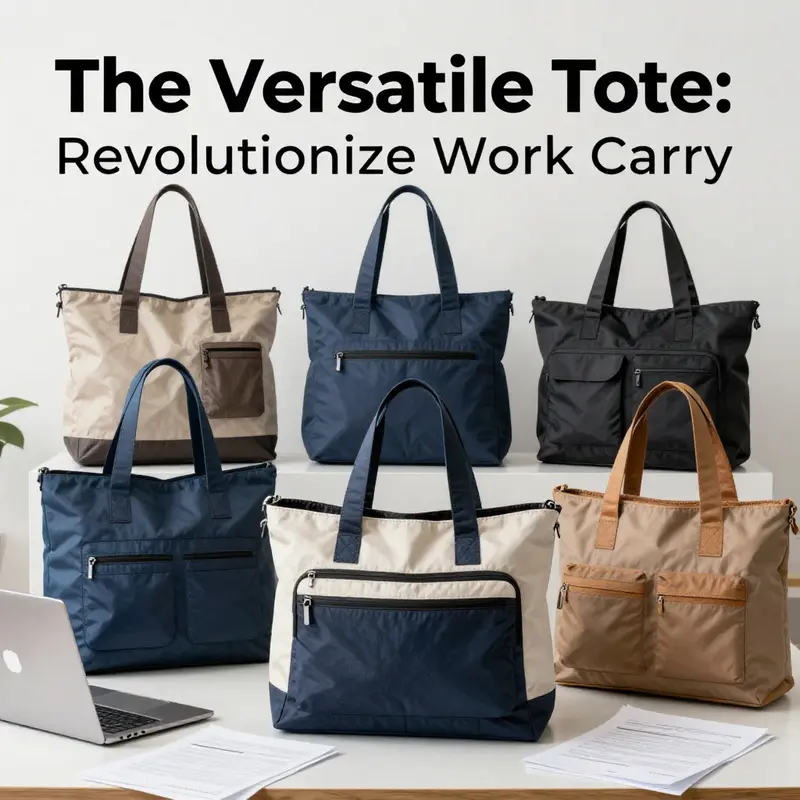
Tote bags have evolved from simple carriers into professional tools that signal readiness and calm efficiency. They balance form and function so that appearance does not eclipse purpose, and they align with wardrobes built on restraint and precision. In work settings where punctuality and presentation matter, a tote should project competence while remaining unobtrusive. The goal is a silhouette that stays upright when loaded, protects a laptop and documents, and supports the rhythm of a workday from commute to meetings to late drafting sessions.
A key pillar is structural integrity. A well-defined shape distributes weight evenly, helping a bag keep its balance and preventing the contents from tipping toward the side. This stability translates into steadier handling during transit and a consistent appearance across the day. A structured tote avoids the dreaded sag that can distort a clean line and make a bag feel careless rather than capable.
Comfort follows from thoughtful design. Durable, comfortably padded straps or handles, reinforced stitching, and materials that resist fatigue ensure that long days do not become excuses for discomfort. The aim is even load distribution so the shoulder or hand carries weight without strain, allowing smooth movement between platforms, elevators, and conference rooms.
Inside, organization is the unsung hero. A tote should protect devices with padded sleeves, offer dedicated pockets for cables and cards, and include a secure zip pocket for valuables. Thoughtful partitioning keeps often-used items accessible without turning the interior into a jumble, preserving both efficiency and calm in the workspace.
Material and finish communicate readiness. High-quality leathers, waxed fabrics, or coated synthetics convey durability and polish while aging gracefully. Weather resistance matters in urban life, but the look should remain restrained: minimal hardware, clean lines, and neutral tones that pair with tailored attire without competing for attention.
Expandability and subtle mechanisms add practical flexibility. An extra zip or hidden gusset can accommodate a larger load on busy days, yet these features should fold away when not in use to maintain the bag’s streamlined silhouette. Durability matters here, as expansion points should not invite wear at the joints.
The silhouette and finish are deliberate design choices that align with professional wardrobes. Neutral colors, restrained hardware, and a clean, minimal aesthetic support a tote that reads as a work tool rather than a fashion statement. In conservative environments, this restraint reinforces credibility; in creative settings, it offers a modern counterpoint that remains credible and versatile.
Ultimately, a work tote succeeds when form follows function without shouting. A balanced approach—structured shape, comfortable handling, organized interiors, quality materials, and quiet refinement—lets the bag become an extension of the wearer’s workflow rather than a distraction.
Polished by Design: How Tote Bags Speak Quietly but Powerfully in the Workplace
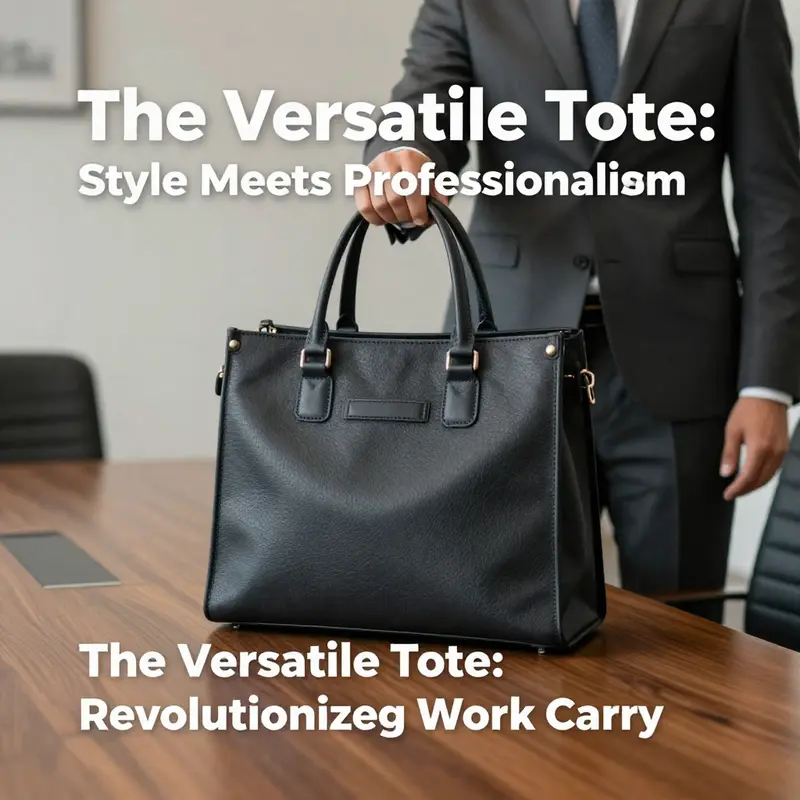
A tote bag is never merely a container. In the professional setting, it functions as a subtle ambassador, signaling how you approach work even before you speak. The way you carry your belongings, the silhouette you choose, and the materials you expose to clients and colleagues together form a quiet, persistent message about competence and preparation. In the words of a corporate image consultant cited in contemporary guidance, “Your bag is part of your professional toolkit. It should reflect competence, not compromise.” This chapter treats aesthetics not as ornament but as a strategic component of professional presence. A well-chosen tote does more than hold a laptop and a notebook; it communicates that you value order, restraint, and attention to detail. The right tote becomes a personal emblem of readiness, a confidence-tested extension of the wardrobe you rely on to project reliability in meetings, at conferences, and during daily commutes.
There is a consistent thread across conservative, modern, and creative workplaces: minimalist design tends to translate best into a broad and enduring professional appeal. Clean lines, neutral hues, and restrained hardware create a silhouette that remains legible in boardrooms and conference rooms alike. Colors like black, navy, beige, and charcoal offer a calm, timeless look that does not fight with tailored suits or blazers but rather frames them. These choices reduce visual noise, allowing your professional actions to take center stage. Materials, too, carry their own language of trust. Genuine leather speaks of refinement and longevity; waxed canvas carries a heritage of durability with a modern edge; ballistic nylon provides a resilient, lightweight option that keeps pace with fast-tracked schedules. The visual and tactile storytelling of materials matters: a bag that ages well communicates a long-term, deliberate commitment to the craft of your work.
Yet aesthetics cannot exist in a vacuum. The open-top or unstructured rectangular form that many totes embrace offers undeniable versatility, but it also carries functional liabilities for the work professional. Without rigid compartments, a tote can invite content shifts that jostle a laptop or a delicate document during a commute. The absence of padding or secure closures increases the risk of damage to devices and to important papers, and the practical problem of uneven weight distribution can subtly influence posture after hours of daily use. Those realities matter for anyone who routinely carries a laptop, a tablet, notebooks, chargers, and perhaps a planner or portfolio. The issue is not that totes are inherently unsuitable for work; it is that a lack of internal structure creates a gap between aesthetic clarity and day-to-day practicality. This gap can be bridged by thoughtful inserts, sleeves, and organizers that preserve the bag’s clean lines while delivering the security and order professionals rely on.
In practice, many professionals successfully reconcile style and function by layering a high-quality structured tote with modular organizational accessories. A padded laptop sleeve or a zippered pouch tucked into a dedicated pocket can transform a tote into a near-briefcase level of organization without sacrificing the minimalist silhouette that signals restraint and polish. These inserts become invisible guardians of content—holding a computer securely, corralling chargers and cables, and separating documents from personal items. The result is a tote that behaves like a well-considered office companion: it stays neatly composed as you walk into a client meeting or slide into a conference room, and it protects your essentials from the daily grind of commuting life. The practical virtue here is not simply convenience; it is the maintenance of a professional image under real-world conditions.
Cultural context shapes which tote aesthetic feels appropriate. In conservative industries—law, finance, consulting—purity of line, restrained hardware, and subtle texture changes are valued. A tote that appears overly casual or conspicuously flashy can compete with a candidate’s content rather than support it. In contrast, modern corporate environments and creative fieldwork may reward a certain lightness of feel—a sleek, contemporary tote that communicates efficiency and adaptability. Even within progressive workplaces, a well-structured tote tends to outperform a soft, loosely constructed version when it has to endure travel, heavy daily usage, or the rigors of back-to-back meetings. The balance remains: the aesthetic should align with workplace culture and the wearer’s wardrobe, so the bag becomes a seamless extension of the person rather than a focal point of attention.
From a design perspective, the best choices blend materials that convey quality with shapes that remain legible at a glance. Full-grain leather offers a refined, aging texture that reads as professional and durable. Waxed canvas balances heritage with practicality, giving a touch of rugged polish that still pairs elegantly with a tailored coat. Ballistic nylon introduces a modern, streamlined surface that can be surprisingly soft to the touch yet resilient to daily inconveniences. The common thread across these materials is longevity—an investment in a bag that can withstand regular use and still look appropriate across seasons and years. When the bag looks well-made, it reduces the cognitive load on colleagues and clients who encounter it; they do not have to question your readiness, because the bag quietly suggests it.
The concept of an aesthetic that sustains a professional presence is complemented by the right hardware and finishing details. Minimal hardware—hidden magnets, clean zippers, discreet branding—reduces visual noise and prevents any single feature from dominating attention. Subtle stitching, uniform gimping, and carefully matched edge finishes all contribute to a sense of care and discipline. In many workplaces, a bag that embodies restraint communicates an implicit message: the wearer respects others’ time and space, choosing simplicity over spectacle. The opposite can feel distracting or even reckless: a bag with oversized logos, high-contrast stitching, or noisy hardware can pull focus from the message you deliver in your conversations and meetings.
Aesthetics must also serve the practical necessities of daily work life. The right bag will accommodate a laptop but not scream for it; it will protect a device while remaining light enough to wear comfortably through a full day. The design ethos favors quiet efficiency: a clean exterior, a thoughtful inner layout, and a balance between rigid structure and flexible adaptability. This balance is not about appearing formal for form’s sake; it is about aligning your look with your routines. If your day alternates between office days and client sites, a tote with a built-in sleeve and a couple of modular pockets can be especially effective. The goal is to retain the elegance of a minimalist silhouette while providing enough compartments to keep cables, notes, and a charger in place. For those who want to bridge aesthetics and function, consider a tote bag with a built-in sleeve, or add one with a dedicated laptop compartment, a feature that helps protect devices while preserving the bag’s sleek exterior. tote bag with computer sleeve.
In practice, the selection process should mirror the cadence of a professional life. Start by assessing your daily load: how many documents, how many devices, and how often you switch contexts between office and meeting rooms. Then consider how the bag feels when fully loaded: does the weight pull your shoulder line, or does it sit evenly across your torso so your posture remains upright and balanced? The shape should align with your wardrobe: a structured tote in a dark neutral will echo a tailored suit, while a lighter, more flexible version can harmonize with smart-casual attire. The absence of a formal enclosure need not be a liability; it simply invites you to adopt practical accessories that restore order. A padded sleeve, a couple of zippered pouches, and an organizer insert can render a tote infinitely more trustworthy as a daily work instrument.
The conversation about tote aesthetics is also a conversation about personal brand. A bag is part of your first impression, long after the conversation has ended. It suggests a narrative about how you prepare, how you move through spaces, and how you plan for contingencies. A clean, well-proportioned tote communicates reliability without shouting it. It tells others you care about the details, even when your words are brief. For those who value subtlety and effectiveness, the tote becomes a reliable partner that keeps pace with a demanding schedule, rather than a prop that demands attention on its own. In this sense, the tote is not a trend but a tool that reinforces a consistent, professional posture across moments of interaction and quiet routine alike.
Ultimately, choosing between a tote and a more traditional work bag is a matter of balance: aesthetics, practicality, and workplace culture must meet in a single, coherent choice. If you prize a minimalist, modern look that travels well and communicates preparedness, a structured tote with smart inserts can serve you across meetings, travel, and daily commutes. If your work threatens to involve heavier loads or frequent travel, a sturdier, more compartmentalized option might be warranted on certain days, with the tote reserved for office days when minimalism is valued. A hybrid approach can be a reliable compass: use a high-end, structured tote for meetings or days when the environment rewards restrained elegance, and keep a more robust bag for heavy commutes or travel. The idea is not to force a single solution but to curate a small, compatible toolkit that lets you adapt to different work ecosystems without sacrificing your personal brand. In this way, you navigate a spectrum—from conservative boards to creative studios—while remaining unmistakably yourself.
For those who want to explore practical examples of integrating aesthetics with function, consider the broader landscape of premium options that blend professional appearance with enhanced utility—carefully chosen to support posture, device safety, and organizational ease. The discipline of selecting a tote that ages gracefully, remains resistant to wear, and holds its shape under pressure is not about chasing a trend. It is about cultivating a stable, enduring professional image that does not distract from the work at hand. As you refine your approach, remember that the goal is a bag that communicates competence and preparedness with quiet assurance. It should enhance your wardrobe rather than compete with it, and it should adapt to the dynamic rhythm of a modern workday rather than resist it.
For further reading that aligns with the latest perspectives on work-ready tote aesthetics, see the curated guides in contemporary business media.
External resource: https://www.businessinsider.com/best-tote-bags-for-work-2026
From Chaos to Calm: Organizational Solutions That Make Your Tote Bag a Sharper Work Tool
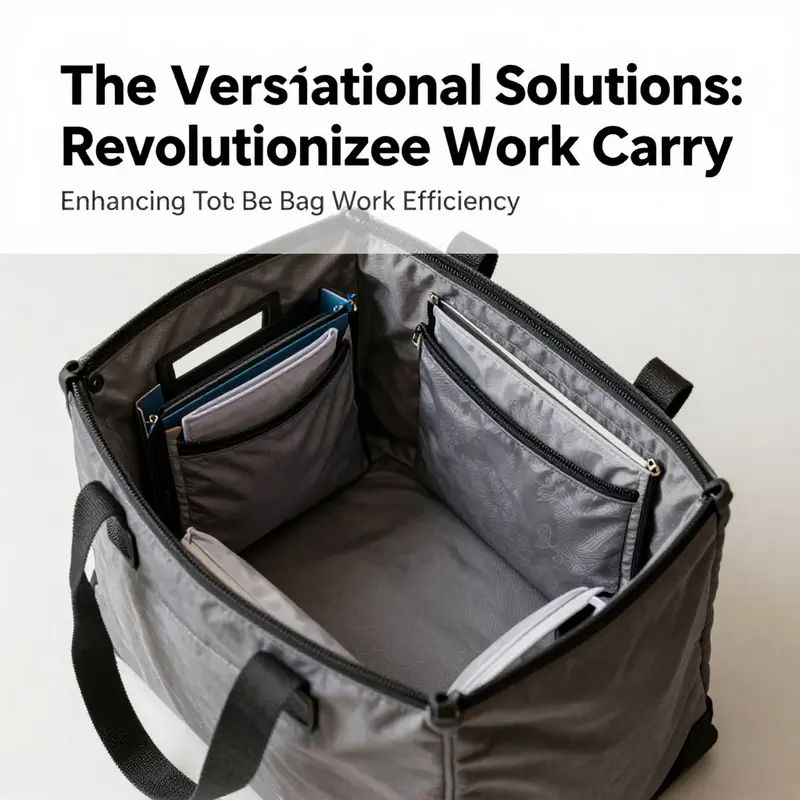
A well-organized tote bag is more than a convenient carrier; it is a portable operating system for a day that travels with you. As a productivity consultant once noted, “Your bag reflects your mindset. An organized tote signals preparedness, control, and professionalism—even before you speak.” The sentiment rings true in offices ranging from quiet law libraries to buzzing creative studios. The tote’s silhouette—clean lines, neutral tones, minimal hardware—helps project a businesslike poise. But appearance alone is not enough. The tote’s interior, its capacity for order, and the way it distributes weight can either streamline a morning routine or derail it. The goal, then, is to fuse aesthetics with function, so the bag becomes a reliable ally rather than a passive vessel. This chapter explores how to turn a tote into a disciplined extension of your work habits, not merely a stylish statement on your shoulder.\n\nThe heart of this transformation lies in an intentional, disciplined audit. Start with an emptying ritual that clears mental clutter as much as it clears space. Lay every item out in a single, easy-to-view plane. Group items into four broad categories: work essentials, personal care, tech accessories, and hygiene supplies. Work items should include documents, notebooks, and devices you carry daily. Personal care covers items you might reach for in a pinch—lip balm, hand sanitizer, tissue packs. Tech accessories include chargers, adapters, and backup drives. Hygiene products belong in a separate pocket so spills or leaks never threaten more valuable contents. The act of categorizing does more than reveal needs; it exposes what is truly essential. In this moment, the repeated advice from organization professionals rings especially clear: discard what isn’t used regularly and what has expired or broken. Removing just a few stale items can reclaim several inches of interior space and lighten the cognitive load you carry every day.\n\nWeight distribution matters as much as the items themselves. A tote without a defined inner structure often sags, twists, and shifts under load, forcing you to adjust repeatedly. That’s why the next phase focuses on smart accessories that convert chaos into calm. Invest in durable, wipeable organizers—zippered pouches and neoprene inserts—to create dedicated zones for frequently accessed items. One pouch can house tech gear—phone, charging cable, USB drives—so you never hunt for a charger in a tangle of documents. A second pouch dedicated to hygiene and personal care keeps items from mingling with electronics. A third, sized for pen, sticky notes, and a compact notepad, clinches the habit of writing down to-do items without digging through a cluttered mess. The right system acts as an anchor, keeping weight balanced and contents secure even when you’re moving through crowded hallways or stepping onto a train.\n\nWhen choosing inserts, the design features of the tote itself should guide your decision. Look for bags with multiple interior compartments and a top closure that zips or uses a magnetic mechanism. These features prevent items from tumbling out during a sudden stop or a brisk walk between meetings. A reinforced base matters too, especially if you regularly carry heavy devices or thick notebooks. Together, these structural elements preserve form and function over time, reducing sag and damage. If you frequently swap contents, consider modular pouches with standardized dimensions so you can rearrange quickly without shifting everything around. The aim is to create a system so intuitive that you unconsciously follow it every day, turning deliberate organization into a reflex.\n\nA key challenge remains the tension between minimalism and practicality. In many professional settings, the tote’s open or lightly structured opening signals flexibility and modern sensibility. Yet the same openness invites the very chaos you intend to avoid. That is where routine maintenance and a light-touch rethink of the bag’s compartments come into play. Build a routine around a daily end-of-day reset: wipe the interior to remove dust and crumbs with a microfiber cloth, then reassess the contents for the next day. A simple trick is to lightly stuff the bag with tissue paper or a soft scarf when not in use. This helps maintain its shape and resists the long-term distortion that heavy content can cause. The habit reinforces care—an accompanying discipline to the professional image you strive to project. It also creates a predictable pattern you can rely on, which is especially valuable when time is short and decisions must be quick.\n\nInterfaces between your bag, your work, and your environment are not merely physical; they are cultural. In conservative industries, a well-structured tote communicates restraint, preparedness, and situational awareness. In more creative or flexible spaces, it signals a modern, efficient approach to work. Across contexts, the bag’s tone matters as much as its contents. A tidy interior, crisp organization, and a secure top closure together convey one essential message: you value your tools, you respect your work, and you respect others by not leaving a mess on the conference table or in a shared workspace. The tote becomes a visual cue—a subtle signal of professionalism that your colleagues and clients notice before you even speak. It’s not about showing off; it’s about showing up with calm readiness.\n\nWhere that readiness truly translates into productivity is in the practical choice of a hybrid approach. For days filled with back-to-back meetings or office work where minimalism is prized, a structured tote can carry the essentials without becoming cumbersome. For days that demand heavier commuting, travel, or the likelihood of larger documents and devices, a more robust, purpose-built work bag may be more appropriate. A balanced strategy, then, is not about choosing one over the other but about using each according to the day’s demands. A carefully curated work tote, used for meetings and desk days, can pair with a second, sturdier bag designed for heavy loads and longer trips. This approach preserves the tote’s aesthetic appeal while ensuring dependable functionality when demands spike. In practice, this means letting the tote carry daily essentials within a well-ordered framework, while reserving bulkier items for a sturdier container that stays on a coat rack or in a locker during peak days.\n\nThe practical steps above are supported by a broader ecosystem of organizational tools. Durable organizers should be chosen with size in mind, ensuring a snug fit within the bag’s interior dimensions. The organization anchors—portable pouches that you can lift out of the tote for a quick change of location—are particularly helpful for people who move between office, meeting rooms, and client sites. The experience of a well-ordered tote can become contagious: one clear, calm tray of items invites you to apply the same clarity to your desk, your computer folders, and even your calendar. The end result is a domino effect of efficiency that begins with a tidy bag and extends into more deliberate, less hurried work habits. And if you want a tangible glimpse of how secure organizational design looks in action, you can explore the broader category of tote bags with zippers, which emphasizes top closures that keep contents contained during transit.\n\nTo keep this system flowing, it is useful to think of the bag as a living component of your work routine rather than a static accessory. Review the contents weekly, not just daily, to ensure you aren’t carrying duplicates or outdated materials. If a device expands your digital toolkit, find a compatible insert that protects and cushions it while offering fast access. If your job requires frequent outreach to others, slot a compact notebook and a slim cardholder into an outer pocket so you can grab what you need in seconds without rooting through the main compartment. The more predictable your pattern, the less cognitive energy you spend on logistics and the more you can devote to solving problems in real time. This is where the tote earns its status as a tool rather than a prop: by maintaining order, it maintains momentum.\n\nBeyond the practical mechanics, there is a design-minded challenge: how to preserve the bag’s elegance as you pursue efficiency. A clean, minimal aesthetic helps reduce visual clutter and supports a confident, deliberate pace in the office. Neutral colors—black, navy, tan, charcoal—tend to harmonize with suits, blazers, and other professional attire, allowing you to present a cohesive, controlled image even when nerves run high. The interior—though essential to function—should not overpower the exterior with excess bulk or loud hardware. In this sense, the best tote edition is one that quietly supports your goals: stable weight distribution, intuitive access, secure closures, and a base that resists sagging. The result is not simply a bag but a portable partner in a demanding workday.\n\nAs you refine this system, keep your readers in mind: not everyone wants a heavy, aggressively structured briefcase, but many professionals crave a look that is polished, modern, and easy to manage. The path to that balance lies in disciplined practice, thoughtful selection of interior organization options, and a willingness to adjust the setup as work needs evolve. The tote, properly organized, becomes an instrument for focus rather than a container for clutter. It can shift from a passive receptacle to an active contributor to your performance, helping you arrive at meetings with documents aligned, devices charged, and hands free to engage. And as you grow more adept at coordinating your bag with your tasks, you may find that others begin to mirror your efficiency, reflecting the subtle but powerful influence of a well-designed tote on the tempo of the workday.\n\nFor readers seeking practical demonstrations of how this philosophy translates into everyday use, a quick glance at tote organization resources can be instructive. The principle remains consistent: organize by purpose, protect by design, and maintain by habit. If you want to see an approachable, real-world example of organization in action, explore resources that focus on secure interior arrangements and accessible closures. This not only reinforces the value of the system but also offers concrete ideas you can adapt to your own tote. External resources with similar guidance will help you validate the approach while giving you fresh angles to test in your own routine. External resource: https://www.thestrategist.com/work-tote-organization
Balancing Elegance and Ergonomics: The Hybrid Tote’s Role in Modern Work Wardrobes
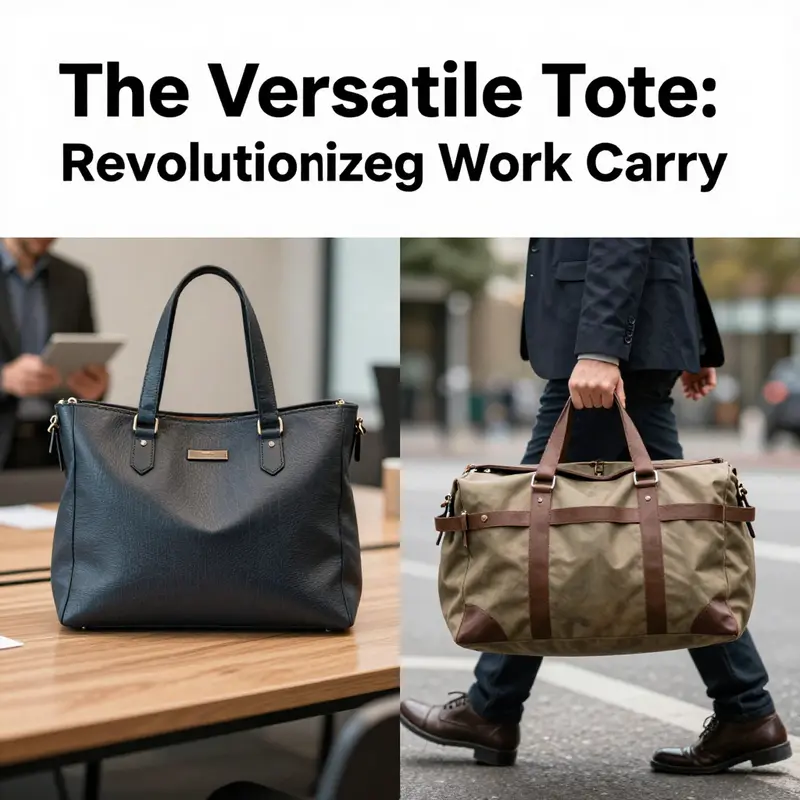
Hybrid tote bags sit at a surprisingly delicate intersection in the modern work wardrobe. They promise the clean lines and versatile polish of a formal bag, with the easy reach and lightness that suit a busy office and fluid commute. In a world where offices blend with coffee shops and home desks, the hybrid tote offers a portable, understated statement that fits both boardroom presentation and casual collaboration. The core appeal lies in the integrated laptop sleeve and a chassis built from sturdy materials like canvas, leather, or water-resistant synthetics. When crafted with restraint—steadily stitched seams, minimal hardware, and a neutral palette—the tote can accompany a tailored blazer and trousers as naturally as it does a cardigan and chinos. In this chapter, we explore how hybrid totes balance form and function, and how professionals can harmonize appearance with daily practicality across a dynamic work landscape.
Yet structure matters. The advantage of a tote is equal parts its silhouette and its openness: a single, elegant opening can make locating a charger or a file feel swift in the moment, but it can also invite contents to shift and rub against delicate electronics. Many hybrid models address this by including an integrated laptop sleeve up to about 15 inches, along with discreet interior compartments, zipper pockets, and dedicated phone slots. A tote can become an all-day organizer rather than a loose bundle, especially when you add a removable insert that creates a micro-archive for documents, cords, and a notebook. For readers exploring specific configurations, the emphasis often lands on combining a sleek exterior with practical interior zoning—an arrangement that preserves visual polish while keeping essential items within reach. See how one category of tote options positions itself as a near-suit accessory by exploring laptop-tote-bags-women, which highlights a protective sleeve aligned with everyday work needs.
However, the true test is how the design handles daily load. A tote carries weight on a single shoulder or arm, a pattern that can influence posture over time. The American Chiropractic Association’s research points to a notable risk: unilateral load carriage can increase spinal deviation by up to 27%, contributing to muscular imbalances and longer-term strain. The discomfort isn’t just a matter of feeling tired at the end of the day; it reflects biomechanics. When we lean on one side to reach for a file, the hips, spine, and neck adjust. The result can be subtle yet cumulative misalignments that undermine long-term comfort and efficiency. This awareness shapes how we evaluate a tote’s value: style is meaningful, but it gains depth when paired with mindful loading and deliberate usage that respects the body’s limits.
Facing those realities, manufacturers respond with design innovations. Removable crossbody straps allow the bag to be worn across the body when the workload requires extra security, while adjustable padding and hidden weight-distribution features seek to soften the load on the shoulder. Still, a tote—even with clever strap options—cannot replicate the even, bilateral weight distribution of a properly fitted backpack. The backpack’s ergonomic features are not merely fashion; chronically, properly weighted backpacks with lumbar support and chest straps have demonstrable effects on postural integrity and muscular balance, especially when carrying more than a few pounds daily. Biomechanics researchers emphasize that even small differences in how weight is carried can accumulate into meaningful health outcomes over years of commuting and office days. In practice, the best framework blends aesthetics with informed choice: use a stylish tote for short trips or meetings, and switch to a more supportive carry when you anticipate heavier loads or longer durations away from your desk.
That dual-carry strategy is not a surrender to compromise but an acknowledgement of professional life’s realities. It allows style to remain a signal of preparedness while health signals are preserved. The ideal hybrid tote balances several constants: a durable exterior, a padded or semi-padded laptop compartment, thoughtful interior zoning, and a restrained hardware language that avoids bulging zippers and gaudy logos. The color palette—neutral blacks, navys, charcoals, taupes—supports a wide range of tailoring and footwear, letting the bag sit as a quiet, confident counterpoint to a crisp suit or a soft knit layered over smart trousers. Details matter too: the placement of the laptop sleeve so it sits away from the bag’s spine, a comfortable grab handle, and a weight-conscious interior that prevents documents from sliding toward the bottom. When these pieces align, the tote becomes less a fashion statement than a carefully engineered tool that respects both appearance and function.
Choosing when to lean into a hybrid tote requires listening to the day’s map of tasks. If meetings demand a quick, polished entrance, a structured tote can streamline that moment without forcing a bulky briefcase vibe. If the itinerary includes a crowded commute, a lighter, more balanced option—or even a brief swap to a backpack—can matter more for comfort than a few extra minutes on a presentation. A pragmatic tip is to pair your tote with a dedicated organizational insert: a padded sleeve for the laptop, a zip pouch for cords, and small compartments for pens, a notepad, and business cards. The insert can be radial enough to stay secure but flexible enough to be rearranged as the day shifts from office to client site to café corner. It’s the micro-architecture of daily life—an invisible layer that elevates a tote from mere carry-all to a purposeful extension of the wearer. For those who want even tighter control over gear, the insert can be tailored to match the day’s priorities: a slim staple for meetings, a compact kit for work travel, or a minimal setup for city errands that still requires a dependable laptop container.
Beyond that micro-architecture lies a broader conversation about how we perceive professional gear in mixed-work environments. In creative or tech-forward organizations, the tote is celebrated for efficiency and a contemporary feel; in more traditional settings, its restrained elegance can project readiness without shouting. The crucial point is to align your choice with both workplace culture and personal habit. If you carry more items than a typical briefcase would accommodate, you may begin to see the trade-offs more clearly, especially if you notice fatigue or postural strain after a week of daily use. The hybrid tote does not erase those physics; it reframes how you manage them. It invites a deliberate routine: clean, minimal gear in a protective sleeve; a lightweight fabric that resists moisture and wear; a bag that sits close to the torso rather than hanging from one shoulder like a pendulum. In that sense, the tote becomes a quiet ally—an instrument of professional presence that respects the body as much as the appearance.
To close the loop, smart workwear embraces balance: elegance without fragility, and function without heaviness. The hybrid tote is a case study in that balance. It can be a reliable companion for days when meetings, notes, and a laptop define the essentials, while a more structured paraphernalia system can accompany longer trips or heavier workloads. The best practices blend three elements: a thoughtful, minimalist exterior; interior architecture that safeguards devices and documents; and ergonomic awareness that informs how and when to switch carries. In practice, this means choosing a tote with a professionally oriented silhouette, ensuring the interior includes a protective sleeve and organized pockets, and adopting a dual-carry mindset that respects the body’s needs while preserving the bag’s refined look. The result is a work outfit that communicates intention, discipline, and care—qualities that resonate far beyond the bag itself. For readers seeking a more explicit connection to laptop-ready carry options, the exploration of dedicated laptop solutions can offer practical inspiration and ideas for expanding on the hybrid approach in daily routines.
External resources can deepen understanding of the biomechanical considerations involved in load carriage. For a deeper biomechanical perspective guiding decisions about load carriage, readers can consult the American Chiropractic Association resource on posture and load carriage: https://www.acatoday.org/news/2026/01/25/posture-and-load-carriage-study/.
Final thoughts
The emergence of tote bags as professional accessories speaks to the evolving nature of work environments. As aesthetics seamlessly align with functionality, business owners can leverage the sophisticated appeal of totes while ensuring their teams are well-equipped for productivity. By embracing the various organizational solutions and understanding the contextual use of these bags, businesses can enhance both their brand image and work efficiency. Striking the right balance between style and practicality is no longer an option but a necessity for today’s professionals.