
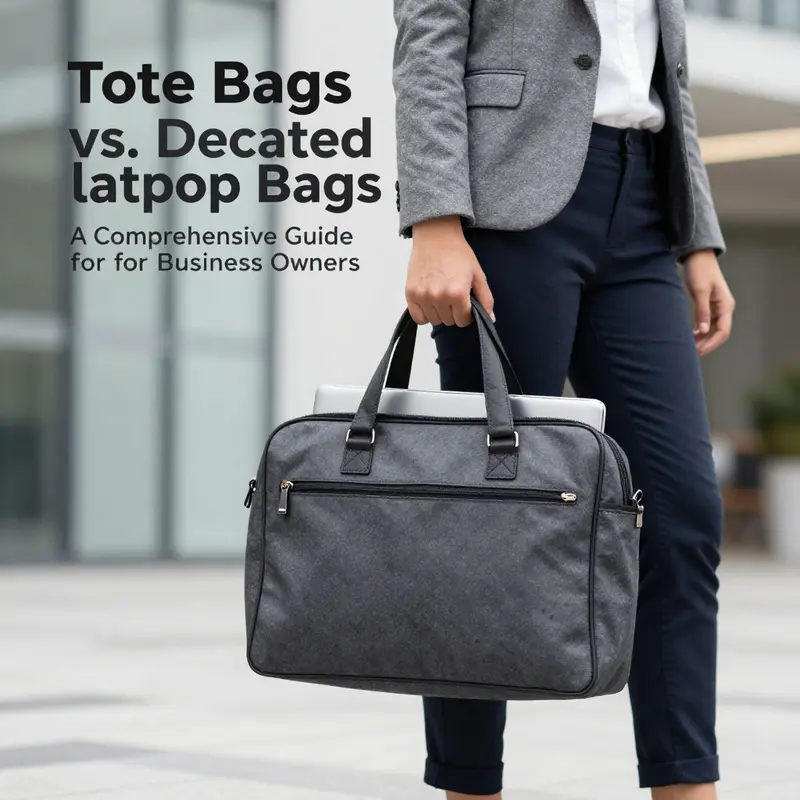
Choosing the right bag to carry your laptop is crucial, particularly for business owners who need to balance functionality with style. This article delves into the distinctions between tote bags with laptop sleeves and dedicated laptop bags. Understanding their protective features, design intent, and overall utility will help you make informed choices tailored to your professional needs. Each chapter will explore comparison criteria, highlight key features, examine protective elements, and address practical considerations, providing a holistic understanding of the best options for carrying your essential tech devices safely and stylishly.
Carrying with Care: Weighing Tote Bags with Laptop Sleeves Against Dedicated Laptop Bags in Everyday Transit

The choice between a tote bag that includes a laptop sleeve and a purpose-built laptop bag is not merely a preference for looks or a matter of price. It is a decision informed by how you move through your day, what you carry, and how much risk you’re willing to accept in exchange for style, ease, or simplicity. For many, a tote with a laptop sleeve is a versatile accessory that can double as a daily carry, a shopping bag, or a quick weekend pack. For others, a dedicated laptop bag is the armor that keeps a device intact through bumps, weather, and the grind of constant travel. The research that underpins this chapter emphasizes four intertwined dimensions—protection, organization, comfort, and durability—and shows how each design philosophy speaks to different routines and priorities. The question, then, becomes not which is objectively better, but which configuration aligns with the way you live with your laptop as an essential tool rather than a fragile luxury. In the balance between aesthetics and engineering, the answer lies in your daily patterns and the environments in which your device travels.
Protection is the most visible and perhaps the most consequential difference. A dedicated laptop bag is engineered with a layered approach to safeguarding a device. The core of such a bag typically features thick padding—often five millimeters or more—surrounding the laptop compartment, complemented by shock-absorbing foam, interior dividers that immobilize the slab of circuitry, and reinforced corners that resist compression when the bag is set down or squeezed in a crowded train car. Weather resistance is often baked into the fabric, with exterior shells designed to shed rain and splashes and to protect zippers and seams from moisture intrusion. This protective strategy is not a cosmetic afterthought but a deliberate architectural choice meant to mitigate the kinds of accidental impacts that can occur in bustling urban settings or on travel days when bags are stacked or dropped. While a tote may offer a padded sleeve, the sleeve is frequently a secondary feature rather than a fully enclosed, purpose-built space. Even when the sleeve is snug, its borders may not seal against side impacts, and the bag’s external structure does little to arrest movement inside when the bag is jolted or jostled. In practice, this translates into a tangible difference in how confidently you can place the bag on a crowded station floor or in a cab with a bag next to other gear. The effect is not merely about a rough drop in a moment of carelessness; it is about a pattern of everyday exposures that accumulate over months and years. The result is a practical truth: protection is a design objective for dedicated laptop bags, while tote bags with sleeves tend to treat protection as an optional add-on. For readers who want to examine concrete examples of how this philosophy translates into real products, a broader view of protective laptop carry systems can be explored through external insights that discuss the trade-offs between different carrying solutions, including how protection, weather resistance, and component layout influence performance in daily use.
In parallel with protection, organization defines how smoothly daily workflows unfold. A dedicated laptop bag is organized around purpose-built compartments: a padded laptop sleeve, a designated charger pocket, a separate tablet or document slot, and various zippered or mesh pockets for cables, adapters, and notebooks. Some models incorporate external ports or built-in organizers that keep things in their own place and reduce the scrambling that happens when you’re late and searching for a phone charger or a USB drive. The architecture is not merely about fitting gadgets; it is about enabling a quick, efficient routine where each item has a home and is easy to locate. By contrast, a tote bag with a laptop sleeve often relies on the tote’s interior as the main cavity, with a single sleeve as a travel-sized cradle for the laptop. Even high-end models with multiple pockets still lack the rigid zoning that a dedicated bag affords. An overstuffed tote can collapse into a messy tangle of cables and papers, and the laptop, despite being inside a sleeve, may still shift with every turn and step. The result is a workflow that can become brittle under pressure: you lose a moment to search for a charger, or you have to pause to reorganize before you can close the bag and move on. For readers who want a closer look at how these organizational differences manifest in real products, there are tote designs that advertise dedicated compartments and security pockets, though they often require compromises elsewhere in the layout. The practical takeaway is that organization is not a single feature but a web of decisions about how items relate to one another inside a bag. A small but telling detail is how easy it is to reach for what you need without unduly exposing the contents to the outside world.
Comfort and weight distribution are the third axis on which bag choice turns. The ergonomics of load carriage matter more the longer you spend moving through the day. Dedicated laptop bags, especially those designed as backpacks, aim to distribute weight evenly across both shoulders and the back. This balance reduces strain on the spine and neck and helps maintain posture during long commutes or travel. Even bags worn over one shoulder can be constructed with ergonomic considerations, including contoured straps and reinforced bases to prevent slipping and to stabilize the load. When you factor in a charger, a notebook, a tablet, and a few personal items, the difference in distribution becomes pronounced. A bag that concentrates weight on a single shoulder can contribute to muscular tension, shoulder asymmetry, and fatigue that wears on you over weeks and months. A well-designed dedicated bag may also include features intended to stabilize the laptop so it doesn’t press against your body in awkward ways, and it may provide a more comfortable grip and easier carry for those moments when you need to go up stairs or board a long train ride. Tote bags with laptop sleeves, by contrast, often emphasize style and versatility over ergonomic engineering. They pull weight onto one shoulder, and if the bag is overstuffed, the risk of shoulder strain or even a compromised laptop hinge increases as the bag tilts or swings during movement. The risk is not merely theoretical: postural stress from wearing a heavy tote is a recurring theme in ergonomic assessments of everyday carry. The interplay between comfort and function is not just about a single carry moment but about how these moments accumulate across a typical week, month, or season of schedules that demand heavy laptop use. Readers will find that the comfort calculus tilts toward dedicated designs when daily routines involve long transit time or frequent transitions between environments, such as moving from a transit hub to an office, then to a cafe or library.
Durability and material choices anchor the long-term value of either option. Dedicated laptop bags frequently rely on tough, high-performance materials designed to resist abrasion, weather exposure, and the rigors of travel. Materials such as ballistic nylons or high-denier fabrics, reinforced stitching, and sturdy hardware contribute to a bag’s resilience over years of use. The construction often includes reinforced corners and stress-point protection that minimize wear where it matters most. The result is a bag whose life expectancy tracks with the demands of a busy professional schedule: frequent packing, stacking with other gear, and exposure to rain or splashes during commutes. Tote bags, while durable in many cases, generally lean toward softer fabrics like canvas, leather, or vegan leather. Many totes offer quality construction such as double stitching and rivet-supports, but the overall resiliency under repeated impact and environmental exposure tends to be lower than that of purpose-built cases. For someone who carries a laptop every day, even a well-made tote can show wear along the zipper line, the corners where the bag sits on the floor, or the strap attachment points after months of heavy use. The durability difference becomes most evident when you count the number of days the bag continues to perform without signs of strain or failure. Within this framework, the protective, organizational, and ergonomic advantages of a dedicated bag repeatedly emerge as the more durable choice for those who treat their laptop as a core asset rather than a peripheral item.
The practical implications extend beyond the gym or the cafe and into the routines that shape working life. If your laptop is a central tool—used for presentations, data work, design, programming, or research—you are likely to benefit from a dedicated bag that offers structured protection, stable organization, and comfortable carry. The investment in padding, materials, and layout is amortized over years of daily use, and the return comes as fewer concerns about accidental damage, spilled liquids, or misplacement of accessories. For individuals whose days are lighter in laptop dependence or who prize minimalism and flexibility, a tote with a built-in laptop sleeve may deliver the right mix of convenience and style. In these cases, the user often accepts a higher exposure to risk in exchange for lighter maintenance, faster access, and a broader wardrobe of occasions to pair with the bag. It becomes a trade-off between a sleek silhouette and a fortified chassis, a choice that reflects how you balance aesthetics with function in real life. While fashion and personal expression matter, the chapter’s synthesis remains consistent: if the laptop is central to work or study and travel is frequent, a dedicated bag offers a measurable upgrade in protection, organization, and ergonomic support. If style and portability take precedence and the device can tolerate a bit more exposure, a tote with a sleeve can be an elegant, flexible companion that complements other carry gear.
To guide readers who are weighing these options in their own lives, the key is to translate abstract protection ratings and feature lists into your daily experiences. Start by evaluating how many times you actually set your bag down on wet floors, how often you need to retrieve cables in a hurry, and how long your commutes stretch without a break. Consider the weight you routinely carry and how much of that weight rests on a single shoulder versus distributed across the back. Then assess the bag’s interior architecture: does the laptop have a snug, reinforced cradle with an external barrier against side impacts? Are chargers, drives, and notebooks kept in dedicated pockets with easy access? Do you notice the bag’s exterior resisting rain and abrasion after weeks of use, or does it show signs of wear sooner than you expected? All of these questions connect to the bigger picture: your bag should support your workflow, protect your device, and feel comfortable across your typical day. If you answer these questions with a focus on long-term device safety, you are likely leaning toward a dedicated laptop bag. If your priorities tilt toward rapid access, visual appeal, and a lighter routine, a tote with a protective sleeve may fit your needs more closely.
For readers who still want to explore the tote option more fully, it can be helpful to examine the specific design cues that elevate a tote’s laptop sleeve beyond a marketing claim. A tote that truly integrates a computer compartment—one that is better than a generic sleeve and that holds the device with minimal movement—demonstrates a thoughtful approach to built-in protection. Yet even when such sleeves are present, the overall bag design remains a factor. The absence of a fully enclosed space around the laptop can leave it open to side impacts and moisture in ways a dedicated bag anticipates and mitigates. If you are curious about how these nuances play out in the real market, you can explore further with examples of totes that feature a dedicated computer sleeve and compare how their protective performance stacks up against a more traditional laptop case. A helpful reference point for readers who want to inspect such designs is available here: tote bag with computer sleeve.
Ultimately, the decision hinges on a synthesis of risk tolerance, daily rhythm, and lifestyle priorities. The literature and practical analysis strongly suggest that for those who rely on their laptop as a core productivity tool, investing in a dedicated laptop bag yields tangible benefits in protection, organization, comfort, and longevity. For those whose routines prize style, flexibility, and quick transitions over maximal protection, a tote with a laptop sleeve can serve as a capable, stylish work companion—especially when the sleeve is well-integrated and the bag’s overall construction emphasizes durability and careful handling. The broader takeaway is not a call to abandon one approach in favor of the other but a call to match your carry solution to your operating environment. In the end, you should feel confident that your device is shielded, that your essentials are easy to reach, and that you can move through your day with comfort and clarity. External resources that discuss the protective trade-offs between different carry solutions offer additional perspectives on how design choices translate into real-world outcomes, underscoring the ongoing conversation about what makes a bag truly reliable for laptop transport.
Balancing Style and Shield: How Tote Bags with Laptop Sleeves Stand Up in a Laptop-Driven World

In the city, the carryall has become more than a mere container; it is a statement about pace, purpose, and the careful balance between form and function. The tote bag with a laptop sleeve sits squarely at this intersection. It promises the elegance of an everyday accessory and the practical promise of quick access to a laptop when a deadline looms or a meeting begins in a café corner. Yet, beneath the surface of this promise lies a tension that designers and users negotiate daily: how much protection is enough, and at what cost to flexibility, weight, and ease of use? The chapter that unfolds here takes that tension seriously. It moves beyond the glossy surface of a stylish carry to examine how a tote designed to cradle a computer can actually influence the life and longevity of the device it bears, particularly when the device is a vital tool for work or study. The core question is this: can a tote bag with a dedicated laptop sleeve deliver a reasonable level of protection while preserving the spontaneity and chic minimalism that many urban professionals crave, or does it inevitably trade safety for style? The answer, as the research suggests, lies in understanding the design intent behind these bags and the practical realities of daily transit.
At the heart of tote bags with laptop sleeves is a recognizable compromise. They are crafted to be versatile, light, and visually appealing, presenting a clean silhouette that works in countless outfits and settings. The most foundational feature is the dedicated laptop compartment. It is a padded interior pocket designed to snugly fit laptops typically ranging from 13 to 15 inches. The padding is often foam-based and provides a basic bulwark against minor bumps and scratches. It is not a shell of robust protection; rather, it is a discreet shield that cushions the most common misadventures of urban transport. This cushioning becomes meaningful in moments when a bag tips slightly or brushes against a handrail; the laptop slides into a reserved pocket rather than pressing directly against a hard seam. But this is the critical caveat: the protection is only as strong as the bag’s ability to keep the computer stationary when external forces face the contents. If the tote is overloaded or the sleeve is not snug enough, the laptop can shift, bounce, or press against other items, reducing the protective effect that the padding is meant to deliver.
Beyond the laptop sleeve, these bags excel in organization and accessibility. They typically offer a constellation of pockets and slots for tablets, notebooks, chargers, cables, and other work essentials. The arrangement is not merely about adding pockets but about creating a workflow: a dedicated space for cords that keeps them untangled, a tablet pocket that stays separate from the laptop, and quick-access slots for a phone or transit card. In practice, this layout supports a fast-paced routine where minutes matter and the need to grab a charger or a notepad without a rummage is real. The minimalist aesthetic of many totes—clean lines, restrained hardware, and durable fabrics such as canvas or polyester—complements this organizational logic. The goal is not to crowd the interior with so many compartments that it becomes a maze but to provide enough structure to maintain order without sacrificing the bag’s light feel.
The minimalist design, in turn, feeds into a broader trend: urban professionals who value a streamlined profile over technical ruggedness. A tote bag with a laptop sleeve is often sought for its balance of durability and ease of carry. The fabrics chosen for these bags are typically sturdy enough to resist daily wear but flexible enough to fold into overhead compartments or slip under a desk. This balance matters because the everyday commute—stairs at a metro station, a crowded elevator, a quick dash to a meeting room—demands a bag that does not weigh down the user or hinder movement. The result is a carrier that feels almost invisible in hand yet is always ready for the moment the laptop is needed. When used with care, the tote can be a reliable everyday companion.
Access is another virtue that often shapes the appeal of tote bags with sleeves. Unlike backpacks, which require you to remove the bag from your back to reach its interior, totes provide rapid access to the laptop and its ancillary items. In busy environments—coffee shops, co-working spaces, or shared offices—this speed can be a real productivity boost. A bag that opens wide and presents the sleeve at the top or near the center can make a quick swap or a check of notifications feel instantaneous. The single-strap carrying style, whether gripped by hand or slung over a shoulder, embodies a philosophy of simplicity. Yet this simplicity can mask a potential for uneven weight distribution. A heavier laptop, an extra charger, and a bulky notebook can tilt the tote toward one shoulder, inviting strain in the neck, upper back, and arm. Users often discover that the same trait that makes a tote so easy to grab—the lightweight, straightforward design—can become a liability when loaded beyond its intended balance.
The protective logic of tote bags with laptop sleeves is, to a degree, a matter of context. The sleeve cushions, as noted, help against minor impacts and scratches. They do not, however, guarantee protection against more serious shocks or compression. When the bag is slung over a shoulder during a crowded commute, or pressed into a crowded seat, the risk of pressure on the laptop increases. A tote’s interior structure—usually soft padding, a flexible divider, and a single main compartment—lacks the rigid framework that a dedicated laptop bag or a more structured backpack often provides. That rigidity matters. It keeps the laptop immobilized and reduces the chance of contact with other items that could press against the screen or keyboard. The absence of a reinforced frame can also mean less effective moisture management in the event of rain or spills. Weather resistance becomes a practical concern when the bag lacks a robust outer shell or sealed closures that prevent moisture from seeping into the laptop sleeve.
And yet, the conversation does not reduce to a simple dichotomy between protection and aesthetics. The tote with a laptop sleeve occupies a real niche for those who want to maintain a certain look while carrying a serious tool. In many urban routines, a tote is not merely a bag—it is a carrier of identity, a signal that the wearer values both practicality and appearance. The design intent here is explicit: offer a visually light, easily accessible carry that can double as a daily accessory, not a rugged, purpose-built case. This distinction matters when considering the expected lifespan of a device. If you rely on a laptop daily for work or study, you may notice that frequent jostling, minor compression, or repeated exposure to harsh handling can accumulate over time. In contrast, dedicated laptop bags are engineered to address those exact concerns—often with multi-layer padding, weather-resistance, and a more precise confinement of the laptop within a fixed, immobilized space.
The research highlights a practical recommendation for users at this junction. Tote bags can be stylish and versatile, but those who carry laptops as a core part of their daily routine should evaluate the protective envelope offered by their bag. If the laptop is essential to daily productivity, investing in a dedicated laptop bag with reinforced padding, a structured interior, and weather-sealed materials can translate into tangible longevity for the device. The difference is not just theoretical; it translates into fewer dents, reduced screen risk from accidental impacts, and less stress during transit. When the pace of life demands quick trips to a coffee shop, a lecture hall, or a client meeting, the tote remains a reliable partner for its quick access and unobtrusive shape. But as a shield for a computer—especially one that is carried between locations and weight-bearing moments—the dedicated option often wins out in the long run.
In this sense, the choice between a tote with a laptop sleeve and a purpose-built laptop bag mirrors broader decisions about how we spend money on carry gear. The tote appeals to the eye and to the desire for a single bag that can take on many roles. It invites a philosophy of minimalism, telling a story about the user’s ability to merge personal style with professional needs. The dedicated laptop bag, by contrast, leans toward a philosophy of protection and predictability. It communicates a commitment to device longevity and a willingness to trade a touch of aesthetic flexibility for a higher degree of secured transport. The two choices are not mutually exclusive; many users adopt a pragmatic approach that pairs a tote for lighter days with a protective, structured bag for days that demand travel through rough weather or longer commutes. In daily practice, the decision often hinges on three variables: how heavily you rely on your laptop, how much you carry along with it, and how much you value quick, effortless access versus rigid, immobilized protection.
For readers who want a closer look at how these tote options sit within a broader category of laptop-oriented bags for women, see laptop tote bags for women. This reference point helps situate the tote’s charm within a landscape of styles and functions. It invites reflection on how much of the bag’s appeal is derived from its visual language and how much from its practical capacity to cradle a computer without turning the bag into a bulky, overbearing object. The conversation naturally invites further inquiry into materials and construction. Canvas and durable synthetic fabrics give the tote a sense of timeless resilience, a texture that communicates everyday usefulness while resisting the wear and tear that city life tends to impose. Yet even with sturdy materials, the absence of a rigid frame means the bag remains particularly responsive to how the user packs it. The simplest way to preserve laptop safety within a tote is to avoid overfilling and to ensure that the laptop remains the central occupant of the interior space, with other items arranged to minimize movement. A well-chosen sleeve inside the tote can also improve protection by providing an extra layer that cushions the device against minor shocks during abrupt starts or sudden stops.
Ultimately, the question of whether to choose a tote with a laptop sleeve or a dedicated laptop bag rests on a balance of lifestyle and risk tolerance. If the daily routine involves frequent short trips, a tote offers speed, style, and comfortable accessibility that many people value highly. If the routine includes longer commutes, unpredictable weather, or tasks that demand frequent laptop use in varied environments, the protective discipline of a dedicated bag can yield meaningful dividends over time. The research thus points toward a nuanced conclusion: tote bags with laptop sleeves are excellent for those who prize lightweight, versatile styling and moderate protection, while dedicated laptop bags provide a more robust shield for devices that are central to professional life. The best choice may even lie in a hybrid approach—using the tote for certain days and swapping to a purpose-built bag when the schedule and environment warrant greater protection. In all cases, awareness of the trade-offs helps users align their carry choices with the tangible demands of their work, study, and daily movement through a city that never stops.
As the discussion proceeds to broader comparisons between bag types, it becomes clear that the protective envelope around a laptop is not a one-size-fits-all feature. It is shaped by the interaction of padding, structure, and the user’s behavior—how carefully the bag is packed, how carefully it is carried, and how much weight it is expected to bear over a typical day. The tote with a laptop sleeve offers a compelling blend of ease and elegance, but its protective capabilities are inherently less rigid than those of a truly purpose-built laptop bag. For someone who travels light and prioritizes aesthetics, the tote can be an everyday fixture that satisfies both style and function. For someone who moves through crowded spaces, carries additional devices or accessories, and cannot afford even minor device risk, the dedicated option often provides greater peace of mind. The practical takeaway is straightforward: understand your own pattern of use, weigh the value of style against the weight of protection, and choose the bag that aligns with both your daily rhythm and your commitment to safeguarding your essential technology. In the chapters that follow, the conversation will broaden further to consider how emerging materials, evolving ergonomic designs, and consumer expectations continue to reshape what we expect from the humble tote and the more specialized laptop carrier alike.
Guardians of the Grid: The Protective Architecture that Elevates Laptop Carriage Beyond Fashionable Totes

A tote bag that bears a laptop sleeve promises uncomplicated travel and a dash of style, but protection remains a secondary concern. The contrast between such bags and purpose-built laptop carriers reveals a deeper design intention that goes beyond appearance or capacity. When a device travels through city streets, across crowded trains, and into chilly or rain-swept corridors, it encounters a series of risks that are not merely hypothetical. Drops from a table, the jolt of a bus door, or the squeeze of an overpacked compartment can translate into unseen stress along the laptop’s rigid shell. In this context, the protective architecture of a bag becomes as much a part of the device’s life cycle as the charger or the protective case that guards the screen. The chapter that follows lingers not on fashion’s surface, but on the invisible scaffolding that determines how a bag behaves in motion and over time when it shares space with metal, glass, and a user’s daily rhythm.
Dedicated laptop bags are engineered with a primary focus on safeguarding electronic devices. The most visible difference between these bags and tote bags with a laptop sleeve is not the number of pockets or the presence of a padded interior, but the way padding flows around the device. Dual-layer padding is a common arrangement, combining closed-cell foam with a shock-absorbing inner lining that can be mesh or a rubberized material. This combination creates a cushion that absorbs energy on impact while also distributing forces away from the laptop’s most vulnerable corners. The padding works in multiple directions, so a drop that hits the bag from the side, the top, or the bottom does not concentrate stress in a single point. In practice, the dual-layer approach yields a more resilient envelope than a simple pocket stitched into a lining. It is not merely thicker padding but a thoughtful layering that dampens shocks and reduces the chance of deformation that could affect the hard drive, display hinges, or battery compartments.
Reinforced corners are another hallmark of protective design. Corners bear the brunt of accidental contact because they are the most likely points of impact during a collision with a door frame, a stair railing, or an impatient fellow commuter. By strengthening these areas, manufacturers counter the most common failure points. The reinforcement may come in the form of extra stitching, denser padding at the corners, or an incorporated rigid material that helps the bag maintain its geometry when it is stuffed full. The goal is not to make a bag feel rigid, but to prevent the device from contacting a hard surface even if the bag itself flexes under weight. These corner reinforcements also help the bag resist compression from items stacked on top of it. When a laptop rests within a bag that can hold more than a day’s worth of essentials, the risk of lateral pressure from side compartments increases. Structured corners help keep the laptop away from those pressure vectors, maintaining a stable pocket that the user can trust will cradle the device rather than bend it into a compromising shape.
Full-wrap padding is a logical extension of these protective aims. In a dedicated laptop bag, padding often encases the laptop on all sides, creating a soft cocoon that prevents direct contact with any hard interior surfaces. This means the laptop remains insulated not only from drops but also from minor bumps and vibrations that occur during a daily commute. Full-wrap padding reduces the likelihood that a sudden jolt will translate into a localized pressure point, which can be especially important for the laptop’s display panel and the delicate layers that separate the screen from the underside of the housing. It also helps when the bag is placed among other items in a crowded capsule or shared workspace, where the device can press against a book, a water bottle, or a charging brick. The overall result is a more forgiving travel experience, where the user feels more confident that the machine will survive a routine collision or a momentary misplacement in a crowded space.
Structured frames and internal dividers are less visible than padding but equally impactful. Some bags incorporate a lightweight framework or a rigid panel that creates a defined compartment for the laptop. Internal dividers can suspend the device, keeping it from shifting laterally as the bag moves. This immobilization is crucial when the user navigates through a transit system or carries the bag on a bustling sidewalk. The device remains at a safe distance from the bag’s other contents, preventing the screen from contacting a charger brick, a pen, or a power bank that could scratch the lid or press against the hinges. For commuters who traverse dynamic environments, a suspended laptop is less exposed to the random, multidirectional forces present in daily life. The aim is not just to cushion but to immobilize, to create a micro-environment within the bag that absorbs energy and then returns to rest without allowing the device to collide with hard elements.
Weather resistance and material quality further distinguish protective laptop bags from their fashion-first counterparts. Weather-resistant shells help shield electronics from moisture, dust, and humidity that can accumulate during transitions between indoor and outdoor settings. A laptop’s durability extends beyond the device itself; the outer shell, zippers, and seams must withstand rain slosh, puddles, and the occasional splash from a street gutter. In this regard, dedicated laptop bags often couple multilayer padding with rugged outer fabrics, sealed seams, and water-repellent coatings. The combination means that an otherwise routine downpour becomes a treatable risk rather than a potential device-damaging event. The weather-resistant layer works in concert with the interior protection, ensuring that the laptop remains dry even if the bag is briefly momentary and exposed to the elements. That kind of integrated protection speaks to a design philosophy that treats a bag as part of a device system rather than simply as a container.
The distinction becomes more pronounced when we consider how these protective elements perform under real-world use. In unpredictable environments—cities with sudden gusts of wind, crowded transit where elbows and backpacks collide, or the simple act of lifting a bag from a chair and setting it down again—the bag must do more than hold items. It must absorb, deflect, and distribute energy in ways that minimize harm to a sensitive electronic core. The layered padding, reinforced corners, full-wrap coverage, and internal frames all contribute to this goal. They are not luxuries but necessities for a device that carries critical work, study, or creative projects. The result is a bag that behaves less like a tote and more like a portable shield, offering a sense of assurance that the laptop will be protected even when the bag endures rough handling or cramped storage.
This is where the research’s emphasis on function over form becomes clearest. Tote bags with laptop sleeves are designed for adaptability and aesthetic versatility. They often feature a padded pocket sewn into the interior lining, which provides a basic cushion but leaves the laptop more exposed to side impacts or pressure from other items in the bag. The padding rarely extends around all sides, so the device can feel the effects of a bump at any angle. When the bag becomes overloaded or mishandled, the lack of a structured frame means the device can shift within the pocket, increasing the likelihood of contact with a hard interior surface. For users who travel between classes, meetings, or cafés, this arrangement may be sufficient for occasional use. But when the commute becomes a daily obligation, the odds shift toward the need for sturdier protection and more deliberate device immobilization.
The chapter’s synthesis is not a denunciation of totes or sleeves but a recognition of purpose. The tote with a laptop sleeve excels as a multipurpose accessory. It can carry a laptop, a notebook, a water bottle, and other essentials with a sense of lightness and style. It thrives in scenarios where the laptop’s protection is a secondary consideration to fashion, flexibility, and effortless access. In contrast, a dedicated laptop bag embodies a different design ethic. It is built around the identity of the device itself, treating the laptop as a core payload whose safety is the central objective. It offers a more deliberate spatial logic, a careful choreography of padding layers, frame geometry, and weather protection that acknowledges the device’s vulnerability. The choice between these paths reflects a decision about risk tolerance and lifestyle. For people who rely on their laptops for work or study, and who operate in environments where the unexpected is a daily probability, the dedicated bag provides a more robust safeguard. For others who prize aesthetics and variable use, a tote with a sleeve can be a comfortable compromise, especially when accompanied by careful packing habits and mindful handling.
The critical insight is that protection is a design outcome, not a feature listed on a spec sheet. It emerges from how the bag is constructed, how the padding interacts with the device, and how the bag behaves when subjected to real-world forces. The protective elements in dedicated laptop bags are not incidental add-ons; they are foundational to the bag’s purpose. Dual-layer padding, reinforced corners, full-wrap coverage, and internal frames each play a role in immobilizing the laptop, dampening energy transfer, and preventing moisture intrusion. In this light, a bag becomes a small-scale protective system, engineered to safeguard a valuable asset in transit. The research reinforces a practical takeaway for users: if protecting the laptop is a priority, invest in bags designed with purpose-built protective features rather than rely on a padded sleeve tucked inside a general-purpose tote.
From a user’s perspective, this distinction translates into daily decisions about handling and expectations. A dedicated bag invites a careful rhythm: lift with a steady grip, place the bag down on a flat surface when possible, and avoid stuffing the interior beyond its designed capacity. The multi-layered protection thrives when the bag remains within its intended density, when the internal dividers do not compress the device against a rigid object, and when the outer shell maintains its weather-defying promise. The tote, by comparison, invites a more relaxed approach to packing and handling. It assumes the user will manage the risk through careful organization and a lighter touch on heavy contents. The tacit trade-off is clear: style and flexibility for daily variations in use, or a stronger emphasis on safeguarding a device under more demanding travel conditions.
The broader implication for readers and designers alike is to rethink what a tote bag means when a laptop is part of the equation. It becomes a question of how the bag aligns with the user’s environment: Are the daily routes crowded and dynamic, with sudden stops and starts that generate unpredictable momentum? Or does the user’s routine stay mostly within controlled spaces where a lighter form of protection suffices? The answers shape which design vocabulary is most effective. The protective chassis of a dedicated laptop bag speaks to a commitment to durability and reliability, especially for those who move with devices that store critical work, research notes, or creative drafts. It also invites a more deliberate shopping approach, one that weighs materials, padding architecture, and the presence of weather defenses against the intangible cost of device damage. In this light, the choice is not merely about personal taste but about risk management and peace of mind during transit.
As we consider the practical path forward, remember that the conversation anchored in contemporary analyses—such as the recent synthesis comparing these categories—emphasizes the functional divergence between fashion-forward totes and purpose-built protective bags. The data vividly illustrate how protective architecture translates into real-world resilience. The takeaway for regular commuters, students, and professionals is to align bag choice with the predictability of their travel environments and the importance of safeguarding a valuable tool that supports almost every facet of modern life. For those who want a tangible sense of category differences while keeping an eye on style, exploring the nuanced middle ground—designed to balance protection with aesthetics—can be a worthwhile route. See the discussion around laptop work tote designs for a sense of how some products attempt to bridge these goals while preserving a sense of everyday wearability and convenience.
For readers seeking further context on the topic, a broader industry analysis provides additional grounding in the protective differences highlighted here. External research confirms that in environments where sudden movements or collisions are common, purpose-built laptop bags offer measurable advantages in sustaining device integrity. This framing helps to contextualize everyday choices and encourages a practical assessment of personal risk, rather than relying on appearance alone. External sources underline the same conclusion drawn here: dedicated protective design matters when the laptop is essential to work or study, and true protection comes from a coherent system of padding, framing, and weather defenses rather than a single feature or a fashionable pocket.
External resource: https://www.bbc.com/news/business-68453798
For deeper reading and related considerations, you may also explore linked discussions about tote strategies and laptop-ready carrying options in the broader catalog of bag designs and usage contexts, including practical insights on combining tote aesthetics with laptop-friendly functionality. laptop work tote bags.
Carrying the Dilemma: Practical Wisdom for Weighing Tote-Bag Laptops Against Dedicated Laptop Bags

The decision between a tote bag and a dedicated laptop bag often sits at the intersection of daily practicality, personal style, and the long view of device longevity. While the former can feel like a flexible, all-purpose companion, the latter is engineered with a very specific mission: to cradle a vulnerable machine, as well as its inevitable accessories, in a protected, organized habitat. In a study of these two classes of carrying solutions, a thread runs through the discussion: you can have convenience or you can have protection, and in many real-world routines you must trade one for the other—at least to the extent that your priorities allow. The balance is not only about the bag’s exterior look or its capacity, but also about how the load is distributed, how quickly you can access essential items, and how your body experiences the daily act of carrying a laptop from hall to class, meeting to meeting, home to office. For people who rely on laptops for sustained work and study, understanding these nuances translates into fewer dents, fewer days with post-transport stiffness, and more consistent performance from the devices that power their productivity. The open-top tote, with its generous volume, offers an inviting space for notebooks, papers, water bottles, lunch containers, and a laptop tucked into a soft sleeve. This arrangement can feel liberating, especially when the day demands frequent shifting between meeting rooms, co-working spaces, or campus nooks. The price, however, is legibility of contents and, for delicate electronics, a rougher shield against the jostling of busy sidewalks or crowded transit. The laptop inside a tote experiences a paradox: it is accessible at a moment’s notice, yet magnetically exposed to the environment around it—dust, moisture, and the micro-bumps that come with a busy commute. In other words, the tote’s strength lies in its openness and adaptability; its weakness is in protection and organization, particularly for those who move with heavy gear or travel longer distances. A dedicated laptop bag—whether a slim case or a structured messenger or backpack—acknowledges that the device itself is not just a lump of electronics, but a precision instrument that benefits from layered protection. The outer shell might be weather-resistant; the interior may feature multiple padding layers designed to absorb impact. A common architecture includes a rigid or semi-rigid shell that keeps the laptop immobilized, a soft inner cradle surrounding the device, and additional compartments that segregate charger cables, adapters, and documents. When the bag is bumped, the padding does its work by dispersing the energy that would otherwise be absorbed by the laptop chassis. If moisture is a factor, the weather-resistant or waterproof materials serve as a barrier against spill and rain, reducing the risk of a compromised battery or a fire-hazard short. And because many dedicated laptop bags favor a compartmentalized interior, the risk of screen-to-hard-surface contact diminishes. Those who ride the wave of daily commitments, especially those who carry significant loads of documents, books, and devices, often discover that a bag designed with the device in mind contributes to a more stable gait and less strain over time. In this sense, the ergonomic argument for a laptop bag is not merely about comfort in the moment; it is about microscopic, cumulative changes to posture and spinal comfort across weeks and months. The Mayo Clinic’s recent synthesis on backpacks versus tote bags highlights a practical truth that echoes through this discussion: distributing weight across both shoulders with a backpack tends to reduce spinal strain when the load is heavy or worn for extended periods. While a bag that sits on one shoulder can be sufficient for light, quick trips, the longer and heavier the load, the more the body benefits from an even distribution of weight. The difference in ergonomics becomes especially meaningful for students carrying textbooks, chargers, and notebooks alongside a laptop, or office workers who move across campus or multiple buildings with a heavy day’s worth of gear. It is here that a hybrid approach—embracing both the need for protection and the habit of mobility—emerges as a compelling middle ground. A tote that includes a dedicated laptop sleeve, or a tote with a built-in, lightly padded laptop compartment, offers a measure of protection while preserving the tote’s open accessibility. The practical question, then, becomes: what does protection look like in the real world, and how much risk is acceptable given the user’s daily routine? In terms of protection, three pillars carry most weight. First, padding is not a single feature but a system: a soft cradle, a surrounding cushion that absorbs shocks, and a firm boundary that reduces compression on the laptop when the bag is stuffed. Second, immobilization matters: the laptop should not shift within its container during movement, because movement magnifies impact forces and can worsen micro-damage over time. Third, weather resistance is not only a defense against rain; it guards against moisture that can travel from clothing or bag contents to the laptop’s sensitive components. Within this framework, the choice between a tote and a laptop bag becomes a matter of risk tolerance and daily rhythm. A tote with a laptop sleeve remains a popular choice for those who prize speed, style, and the flexibility to carry a broad range of items beyond electronics. The sleeve offers a modest degree of protection, and the open-top design permits quick retrieval of essentials when you arrive at your destination. But the risk of impact and compression grows as the tote fills, especially when you overstuff or misjudge the bag’s capacity. In contrast, a dedicated laptop bag speaks a different language about risk: it communicates a pledge that the device will be treated as a valuable, fragile object. The structure, the padding, and the compartmentalization work together to minimize the wear and tear that can accumulate from daily use. For those who spend long hours commuting with heavy gear—laptops, documents, notebooks, and the inevitable assortment of chargers—the weight distribution offered by a backpack may be the most sustainable solution. A well-designed laptop backpack spreads weight across both shoulders, aligns with the spine, and anchors the load against the back with a padded panel and sometimes a hip belt. When this system is paired with a laptop-specific bag inside a rotating set of compartments, a nearly optimal balance emerges: protection for the device, organization for the accessories, and comfort for the wearer. It is here that the idea of purpose-built design reveals its strength. A laptop bag optimized for protection uses multi-layer padding that not only cushions the device against drops but also minimizes pressure from nearby contents that could press into the screen or keyboard. A structured interior keeps the device in place, preventing it from sliding into the charger or the papers, and it reduces the chance that a sharp corner of a binder will strike the corner of the machine during a crowded transit. Weather resistance is another crucial factor. A bag that sheds rain and snow protects against moisture intrusion, a factor that can be more insidious than a visible spill, especially when a bag is carried on a damp day or left briefly in a doorway during a storm. The design intent matters. Tote bags, even when equipped with a sleeve, are often conceived as a versatile fashion item rather than a device-safe tool. They invite immersion in daily routines—commuting, campus life, errands, social outings—where the user’s attention is divided among many tasks. A dedicated laptop bag, with its purpose-built compartments, signals that the user is prioritizing device safety and predictable organization. The difference in appearance can also influence professional perception. In formal or corporate environments, a sleek, minimalist laptop bag communicates seriousness and preparedness, while a well-chosen tote—especially one made from high-quality materials with refined hardware—can still project professionalism but tends toward casual elegance. The moment a person walks through a doorway with a bag designed to cradle technology, they send a message about how they value their work tools. Still, the chapter does not treat style as a mere accessory; it anchors the decision in a set of practical criteria. Functionality and capacity sit at the core: a tote is unmatched in volume and ease of access, a laptop bag unmatched in structure and protection. The open top design is practical for a quick grab or a rapid reorganization during a busy day, yet the same openness invites unintended exposure to rain or accidental knocks. A laptop bag, by contrast, trades some of that open accessibility for a more disciplined interior that keeps devices and daily essentials neatly aligned, reducing the need to rummage and potentially drop objects in transit. Health and ergonomics form the other pillar. The Mayo Clinic resource reinforces a simple but powerful truth: distributing weight across both shoulders reduces spinal strain. If your daily routine includes a heavy load, this becomes a pragmatic reason to consider a backpack or a structured bag that can be carried in a balanced way, rather than a single-strap tote that concentrates weight on one side. This insight shapes how users evaluate their own habits. If you walk long distances, commute through uneven terrain, or carry multiple heavy items, a backpack or a bag that mimics that distribution—paired with a dedicated laptop sleeve and compartments—can help preserve posture and reduce fatigue on arriving at your destination. The practical recommendations that emerge from this synthesis are straightforward, yet they carry a certain prudence. If your commute is short, and your daily load remains light to moderate, a tote with a laptop sleeve can suffice, offering speed, flexibility, and a sleek silhouette that doesn’t shout the wrong message in a professional setting. If your routine is defined by heavier equipment, longer walks, or a need to protect the device from weather and impact, a purpose-built laptop bag—ideally paired with a supportive backpack or at least a well-constructed tote with a robust, padded compartment—will likely serve you better in the long run. For those who crave a bridge between these worlds, a hybrid solution can be particularly effective. Consider a tote that includes a dedicated, padded laptop sleeve. The effect is not the same as a fully protective laptop bag, but it provides a shield for your device while preserving the tote’s ease of use and expansive carry space. A subtle but meaningful detail is the internal organization: a secure sleeve, a separate pocket for the charger, and a few slim compartments for notes or a tablet. This arrangement minimizes the risk of the device colliding with hard items during transit, while maintaining the tote’s quick-access advantage. To illustrate how that hybrid approach can be practical within real-world routines, explore the concept of a design that fits inside a tote silhouette: Laptop Work Tote. This option represents an incremental step toward balancing convenience with protection, a compromise that might suit professionals who want to preserve a certain aesthetic without abandoning the device’s safety needs entirely. The question, ultimately, is not simply which bag wins on a single metric, but how the person who uses the bag lives with it day after day. If you need a lightweight, flexible carrier for a short trip or a routine that rarely involves adverse conditions, a tote remains a compelling choice—particularly when paired with a protective sleeve and careful handling. If you face challenging commutes, heavier gear, or persistent exposure to the elements, a laptop bag, particularly one that is well padded and structured, will pay dividends in both the health of your back and the long-term integrity of your device. In practice, many users migrate toward a blended approach: using a tote for quick, lighter trips and a laptop-focused bag for days when the schedule demands more gear or when weather and terrain demand added protection. This approach aligns with the chapter’s broader message: choose based on rhythm, load, and protection, not solely on appearance or the moment’s convenience. The broader lesson connects back to the article’s central premise—the tote bag laptop as a versatile, stylish tool remains valuable, but its protective capabilities remain limited compared to purpose-built laptop bags. The aim is not to prescribe a single universal answer but to illuminate how individuals can assess their own routines and then select a carrying solution that best preserves both their tools and their bodies over time. The practical path is clear: consider the weight you carry, the distance you traverse, and the conditions you encounter, then map those factors to a bag that offers the right balance of openness and protection. And as you think through this balance, remember that ergonomics are not abstract. They manifest as reduced fatigue, better posture, and fewer aches after a day of meetings, lectures, or campus exploration. The choice, when made with attention to load, protection, and portability, can become a quiet enabler of productivity rather than a source of friction. External resource: https://www.mayoclinic.org/health-news/backpacks-vs-tote-bags-which-is-better-for-your-back
Final thoughts
In conclusion, selecting the right bag is imperative for business owners who rely on carrying their laptops daily. While tote bags with laptop sleeves offer versatility and style, they do not provide the same level of protection as dedicated laptop bags. Understanding the key features, protective elements, and practical considerations will empower you to choose a bag that meets both your professional requirements and aesthetic preferences. By making informed decisions, you can ensure the safety and longevity of your devices while maintaining a polished professional appearance.