
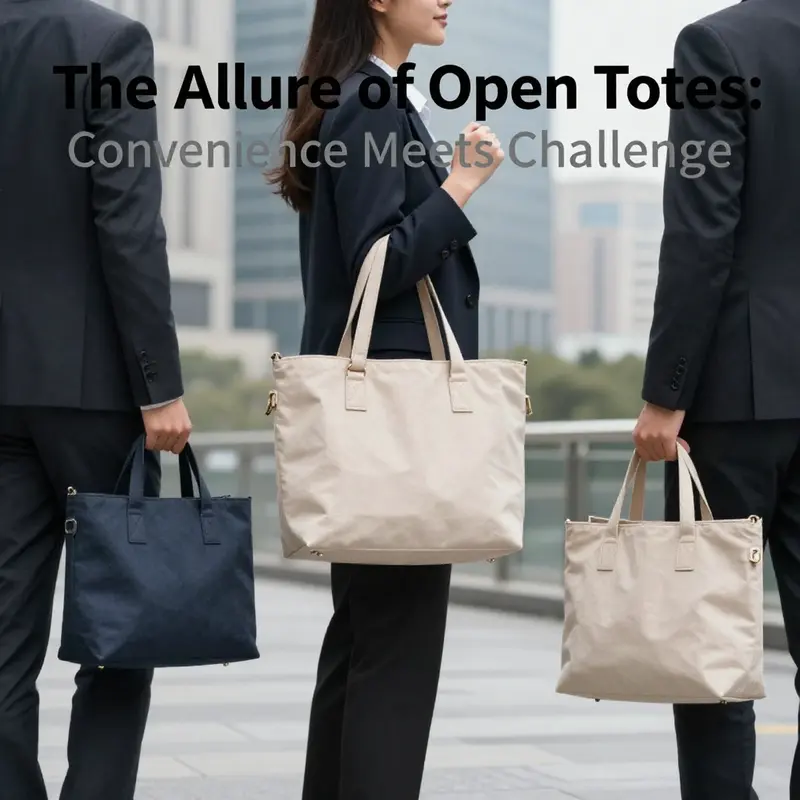
Open tote bags represent a blend of fashion and functionality in today’s fast-paced business landscape. Their appeal lies in the convenience of instant accessibility, allowing users to quickly reach for essentials like phones, keys, or laptops. However, as business owners, understanding the inherent vulnerabilities of these bags is crucial. The lack of closure mechanisms poses security risks, making them less ideal in bustling urban environments. The following chapters will explore the advantages of open totes, the security concerns they present, and the design considerations necessary for striking a balance between functionality and aesthetic appeal.
Opening Up Convenience: The Open Tote’s Promise, Perks, and Practical Trade-Offs

An open tote bag arrives in a closet as a straightforward promise: a single, wide mouth that invites the hand to reach in and the eye to scan its contents in an instant. It is a design born of immediacy, a response to the rhythm of daily life that favors speed over precision and simplicity over systems. In many ways, the open tote embodies a deliberate restraint—the absence of flaps, zippers, and dividers that would otherwise partition space or slow down a quick grab. This is not merely a bag; it is a lifestyle cue. It suggests confidence in one’s routine and a comfort with keeping the essentials within easy reach, from a spare sweater on a brisk morning to a laptop that might tomorrow be needed for a coffee shop presentation or a quiet moment of drafting an email between meetings. Its wide, unfettered opening is both a design choice and a philosophy: if you can see what you have without digging, you move through your day with fewer pauses and less friction. The appeal is not superficial. It aligns with contemporary preferences for minimalist aesthetics and streamlined function. The open tote is generous in silhouette, often prized for its clean lines, soft edges, and the casual ease it lends to outfits. It complements a lifestyle that values adaptability—the ability to slip in groceries on the weekend, a lunchbox, a water bottle, a tablet, or a gym shift after work—without the friction of a latch or a zipper that might require a moment of attention when you’re juggling keys or a phone. In office corridors, cafes, and on short commutes, this ease translates into a practical advantage: you can see and retrieve what you need in a heartbeat, and you don’t have to plan a precise path to access each item. The interior, by design, is a single space—a canvas awaiting whatever you choose to carry that day, with no partitions to constrain the way you pack or the way you move. This openness resonates with a certain honesty about the way we live. We don’t always want to segment our lives into neat compartments; sometimes we want to move through a space with fewer barriers, to react to the moment with a bag that behaves like a natural extension of our own pace. The appeal extends beyond convenience. The open tote often serves as a canvas for a casual yet stylish statement. Its minimalist frame invites a range of textures and materials, from soft canvas to lush leather, from matte-coated fabrics to even something a little more eco-conscious. The absence of a closing mechanism foregrounds the fabric’s character and the bag’s silhouette, letting color, grain, and shape carry the mood. A bag that embraces the casual ethos of daily life invites stickers of personal meaning—an app-enabled device tucked away in a safe pocket, a notebook peeking from the top, or an understated scarf draped over the lip. Yet even as this openness invites immediacy and a casual chic, it also invites a quiet chorus of cautions that cannot be ignored. The same reasons that make the open tote so appealing—its speed, its visibility, its unencumbered space—also create vulnerabilities that come with urban living and busy routines. In a crowded subway car, a bus stop with a throng of commuters, or a festival line where personal space collapses into a shared, moving crowd, an open top can become a window—one that is easy to peer into and, more troubling, easy to access. The risk here is not only of opportunistic theft but of a more mundane, everyday form of misfortune: spilled drinks, dropped items, or the simple misplacement that happens when the bag is set down and then moved away from. The risk of spill is particularly pronounced when you bend over to pick up a backpack or a child’s water bottle, and the bag shifts its balance. A single gust of wind, a stray elbow, or a hurried reach can cause items to tumble or slide out of reach, especially if the bag’s opening is wide enough to invite a stray sleeve or the edge of a laptop to press against the rim. This is the paradox of the open design: its very advantage—unhindered access—creates a susceptibility to both accidental and intentional losses that a zippered alternative might mitigate. The visibility of contents is another double-edged aspect. It makes it easy to locate something at a glance, which is a real boon when you’re trying to find a charger, a notebook, or your keys in the middle of a busy morning. But visibility also means that strangers can appraise what you are carrying quickly, a concern that becomes more than purely theoretical in dense urban settings or when you travel through highly crowded areas. The open topology invites a straightforward risk calculus: the more you value speed and ease of use, the greater your exposure to potential misplacement or loss in uncertain spaces. In the end, the decision to embrace an open tote sits at the intersection of personal habit and environmental risk. For many, the bag remains a trusted ally in routine tasks, a ritual that streamlines everyday errands and reduces the friction that can accumulate over a long workday. For others, especially for those who traverse crowded transit lines, attend large events, or carry items of notable value, the open tote’s footprint on security and contents retention becomes a more significant factor to weigh. The same design that makes grabbing a phone or a wallet effortless can also make it easier to leave something behind or to advertise one’s possessions more openly to the world. It is important to acknowledge that the open tote is not a universal solution; rather, it is a design that excels in particular contexts and falters in others. The practical choice, then, is not simply to adopt or reject the open tote; it is to read the day’s context and to imagine how your bag will behave in that context. In an office or a cafe with a steady, controlled environment a few steps from your desk, an open tote can be almost invisible, sliding in and out with a natural grace. In those moments, accessibility becomes a form of efficiency, not merely a convenience. You can swap a charger for a notebook, slip in a spare sweater, or grab a quick bite without interrupting momentum. Yet when the setting grows noisier and more unpredictable—on a packed train platform, at a weekend market, or during a charity run through a crowded street—the same bag can feel exposed, almost temptingly accessible to the wrong attention. The balancing act is why many readers imagine a spectrum rather than a binary choice between open and closed designs. If speed and ease are your baseline, the open tote offers a direct, almost tactile connection to your daily items. If security is the stronger priority, you may lean toward a design with a closing mechanism, even if it introduces an extra step to access. And somewhere between those poles lies a middle ground that a growing number of designers and users are exploring. There is a quiet practicality in recognizing that the best approach often rests in flexibility rather than commitment to a single solution. For many, a bag with a magnetic snap, a partial closure, or a top that remains open despite a discreet closure at higher-risk moments can deliver the feeling of openness while preserving a layer of protection. A magnetic snap, for instance, is not a feature that merely slows a thief; it provides a quick confirm-and-close action that keeps items from slipping out when the bag is bumped or set down. An expert note, cited in recent discussions about bag design, suggests that this middle ground—“If you value quick access but still want some protection, consider a magnetic snap closure—it offers a middle ground between openness and security”—has resonated with urban users who are balancing instinctive reach with a need for reassurance. The practical upshot of these insights is that the open tote can coexist with more guarded designs in a given wardrobe. Rather than viewing openness as an absolute, the modern user can experiment with layered practices: use an interior pouch for loose items you want to keep together, employ a lightweight water bottle sleeve to prevent leaks from spreading across the entire interior, and accept that some days will call for a more secure approach than others. The open tote’s interior is hospitable to these small, adaptable strategies. Fortunately, you do not need a factory-installed partition to begin reaping the benefits of organization. A simple, lightweight organizer or a set of fabric pouches can transform the interior into a workable system without losing the bag’s fundamental charm. These organizers can be chosen to align with the bag’s color and texture, creating a cohesive look that preserves the minimal aesthetic while reigniting practical order. The cost, in many cases, is modest and the payoff in reduced rummaging and quicker retrieval is considerable. In day-to-day life, the difference between rummaging for a phone and simply lifting it from a clearly defined pocket or pouch is not trivial; the improvement compounds as routines become more complex. The open design does not demand perfection in organization; rather, it sets a canvas in which a user can adapt, adjust, and evolve the way they carry. It invites a flexible approach: you can carry less on certain days, or you can add a lightweight sleeve for a laptop or tablet that eases the fear of jostling items if the tote is tipped or moved abruptly. This adaptability is a big part of the open tote’s appeal. It suits people who value casual, unstructured ease and who do not want to be enslaved by a rigid packing plan. For those who need to juggle several tasks in a single afternoon, the open tote becomes a portable workspace, a personal command center that travels with ideas, notes, and devices in a way that feels natural rather than forced. Yet the realities of modern life demand a sober assessment. If you plan to carry valuables or work gear to a crowded city environment, you should consider a compromise that preserves speed while offering protection. A zippered top provides a barrier against accidental spills, while shielding the contents from quick access by others. The tension between accessibility and security is not about one feature being inherently superior; it is about situational fit. In environments where visibility and quick action are assets—such as quick coffee runs between meetings or campus life—the open tote shines. In settings where personal safety and valuables matter more, a bag with a closure can reduce risk without completely dulling the instinct to reach for what you need. For those who want a gentle middle ground, the literature and practical advice converge on a single idea: the option of magnetic closures or partial closures that offer quick access while still providing a line of defense. This nuance is not about abandoning openness; it is about designing for a lived experience in which context matters as much as preference. The open tote’s openness is thus best understood not as a universal prescription but as a design logic that prioritizes human speed, visibility, and simplicity. It is a tool tuned to the tempo of everyday life, capable of supporting a minimal, adaptable routine. It thrives when your day consists of back-to-back tasks that require you to grab something quickly, stash a moment of contentment in the form of a snack or a book, and move on without interruption. It falters when your surroundings demand greater security, or when the risk of spills becomes a constant reminder that an open opening is a potential liability. Readers who are weighing this choice can visualize their typical routes: commute patterns, typical bag contents, and the kinds of moments in which speed matters most. If your career or daily life includes periods of fast transitions—standing on a platform, stepping into a bus, moving through a crowded market—the open tote will be a faithful companion most of the time. If, however, you frequently carry valuables or pass through areas where security concerns are heightened, the same analysis argues for considering a different top closure or a hybrid approach. The dialogue between form and function here is ongoing. Designers continue to test variations that deliver the best of both worlds: the instinctive reach and the broad interior of an open tote, paired with a closure system that can be engaged in moments of heightened risk. The market’s response to this tension has included models that maintain generous interior space while incorporating discreet, easily accessible closures or magnet-fastened top elements that can be used quickly with one hand. The practical takeaway is simple: your bag is not just a container; it is a tool intended to reduce friction in your day while navigating the world’s unpredictability. In some weeks, openness will be your default operating mode, letting you slide notebooks and devices in and out with the ease you crave. In others, a quick, secure closure will be your safety net, ensuring your belongings remain yours in the most crowded of places. For readers who want to explore a broader range of options without sacrificing accessibility, consider the middle-ground approach and explore tote designs that blend openness with a secure option. On days when speed and visibility trump everything else, you can rely on the raw openness; on other days, the same bag can be used with a light external precaution and a storage strategy that keeps items contained without introducing a heavy, time-consuming process to access them. The open tote thus emerges as more than a mere bag choice. It is a statement about how one moves through space and how one prioritizes ease over enclosure, adaptability over rigidity, and transparency over concealment. It invites you to participate in a small experiment each morning: do you want to see what you carry at a glance, or do you want to ensure that what you carry stays put even as you navigate a crowded environment? The answer will shift with context, mood, and the day’s demands. For those who crave a practical balance, a simple step forward is to acknowledge the virtue of choice itself. If you choose openness for the majority of daily tasks, you can still equip yourself with a lightweight, portable system—an interior pouch or small bag that slides neatly into the open space and can be pulled out whenever you need to consolidate items for security or transport. If, by contrast, you opt for openness but want to reduce risk, consider strategies such as keeping essentials in a compact, easily secured sleeve or using a bag with a magnetic or partial closure that can be engaged in moments of high activity. The key is to acknowledge that the best solution is often the one that aligns with how you actually live your day. This alignment requires observation, a willingness to adjust, and a readiness to reframe what you look for in a bag. It asks you to examine not just what you want to carry, but how you want to carry it, where you will place it when you pause, and how you respond when the bag is bumped or when you remove it from your shoulder to exchange items. When readers connect these practical considerations to a broader sense of personal organization, a clearer picture emerges of open tote usage that is both satisfying and sustainable. The open tote becomes a dependable companion not because it is perfect for every scenario, but because it consistently complements the user’s approach to daily life: flexible, visible, fast, and intentionally uncomplicated. And if you decide that speed remains the essential criterion for most of your days, you can lean into the open design while bringing along a few clever habits that preserve safety and order. You may find yourself using a compact interior organizer simply as a quick-release station for items you know you reach for often, or you might keep a small clip or snap device to secure keys and ID while the bag remains open and accessible. You might also consider the rhythm of your own movements: when you are seated, you can unfasten the top just enough to glance at the contents; when you rise and move, you close the opening to minimize the risk of spillage and exposure. The conversation around open totes, then, is not about choosing right or wrong but about choosing what fits your life and your risk tolerance at any given moment. It is about recognizing that design is a responsive partner, not a rigid rulebook. The decision to adopt or adapt an open tote is a declaration of how you wish to navigate the balance between ease and security, between a clean, minimalist footprint and the practical complexity of daily carrying. As you weigh your preferences, you may also enjoy a broader reflection on how to integrate design with behavior: how you pack, how you move, where you set the bag down, and how you recover belongings when you stand up. In that reflection, you will discover that the open tote’s greatest strength lies not simply in its ability to reveal its contents at a glance, but in its ability to encourage a flexible, mindful approach to everyday carry. For readers curious about alternatives that preserve speed while offering more protection, a quick look at zipper-enabled designs is a natural extension. They maintain the open-access feel while adding a line of defense, a practical compromise that can be decisive in many urban settings. On days when you need to keep things secure without sacrificing speed, the choice becomes clear: the best bag for that moment is the one that aligns with your actual path through the day. If you want to explore more about how zipper closures can alter the safety and functionality balance in tote design, you can read a deeper analysis that compares the gains and trade-offs of open versus zipped tops. For a broader sense of how zipper-equipped totes perform in real-world use, see this external discussion. tote bags with zippers. This perspective complements the ideas discussed here and can help readers map their daily routes to the bag that best suits their pace and risk tolerance. External readers seeking a broader analysis of whether a zipper truly enhances security in daily carry can consult an external resource that weighs the evidence and contrasts scenarios in which open and closed designs each shine. For a deeper dive into this topic, see the external analysis at https://www.thestraight.com/2025/11/27/zippered-vs-open-tote-bag-does-a-zipper-really-keep-your-stuff-safe/.
Open Tote Bags in Focus: Accessibility, Vulnerabilities, and Securing Everyday Essentials
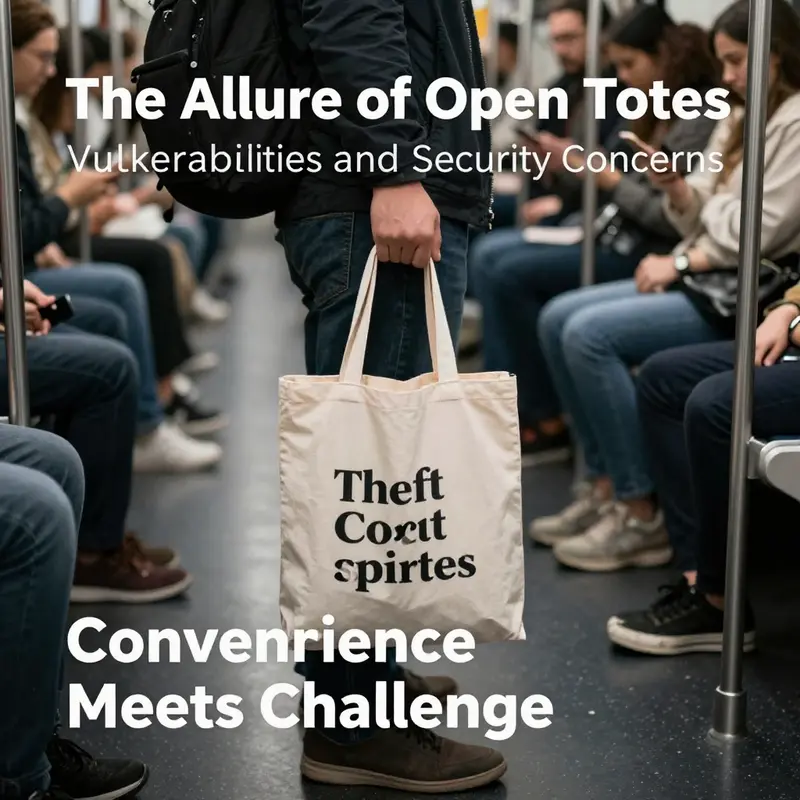
The allure of an open tote bag lies in its openness. Its wide, unrestricted opening invites a tactile immediacy, a feeling that one can reach in and out without hesitation. This is not merely a fashion statement; it is a practical philosophy. In many daily routines, the ability to see and retrieve items at a glance carries tangible value. An open top means you can scan the contents without rummaging through a zipper or a clasp, and you can grab a phone, a wallet, a set of keys, or a charger in a heartbeat. This ease is particularly prized in environments that feel low risk and familiar: a quiet office, a downtown cafe, a campus hallway, or a short, predictable commute. The visual accessibility of the bag interior can also be comforting for those who want minimalist, clean lines that emphasize function over form. When the goal is a streamlined, versatile silhouette that can transition from work to weekend errands, the open tote often looks and behaves as a blank canvas on which daily life can unfold.
But as the open design reveals the interior, it exposes it as well. The unhindered access that makes an open tote user-friendly is inseparable from vulnerabilities that become pronounced in busy cities, crowded venues, and transit hubs. In crowded subways, at a bustling festival, or along a crowded sidewalk, the probability of accidental spills rises — an errant umbrella, a sudden nudge, or a dropped coffee can push items out of reach, or out of the bag entirely. Even in calmer environments, the absence of a closure means contents have less barrier against the elements and the attention of others. The risk is not only physical spillage but also the more human threat of theft. Skilled distractions or momentary lapses can turn the moment of reaching into a disappearing act; a wallet or phone exposure becomes an opportunity for pickpockets who exploit the openness designed for convenience. In the everyday dance of moving through public space, open totes can become a weak link between intention and security, a paradox that designers and users alike must acknowledge.
These vulnerabilities are not simply hypothetical. They arise from a mismatch between the bag external presentation and the environmental contexts in which it is used. An open tote performs best where risk is limited — an office desk, a quiet cafe corner, a library table, or a home office where the bag can remain within sight and reach. It is less well suited to transit platforms, crowded concerts, or street fairs where personal space is at a premium and hands are busy with bags, coffee cups, or shopping. The very openness that helps you locate items immediately — no zippers or flaps to open — also means there is less mental and physical barrier to items slipping out or being accessed by others. It becomes a question not only of what you carry, but where and how you carry it. A device can sit at the top of the bag, a wallet at the edge, and a set of keys dangling, all within easy reach, yet all more exposed to unintended hands or accidental drops.
From a design perspective, this tension between accessibility and protection invites a spectrum of responses. On one end, a true open tote embraces its nature, relying on the simplicity of a single, unobstructed entry. On the other end, designers offer strategies to preserve the sense of ease while adding modest protective elements. Magnetic snaps, for example, can deliver quick access while introducing a light buffer against unintended entry. They hold the opening just enough to deter casual grabbing while still allowing rapid entry when needed. However, even magnetic closures are not a perfect shield; they require a balance of strength and ease, and they can still fail under certain conditions or with repeated use. The most robust solution for many users remains a full zipper, a closure that creates a secure boundary but also demands a deliberate action to access, thus slowing down the moment of retrieval. Some designs experiment with partial closures or hidden pockets that maintain a visually open silhouette while tucking away the most valuable items. The idea of a middle ground between openness and security can be described as: if you value quick access but still want some protection, consider a magnetic snap closure; it offers a middle ground between openness and security.
Even with closures, the matter of contents retention remains a practical concern. An open top does not just grant visibility; it permits items to migrate with movement. When a tote is tilted, bumped, or set down, items can shift and slide toward the opening, increasing the likelihood of accidental loss. In a scenario where you are navigating stairways, stepping onto buses, or turning a corner while carrying a laptop or a notebook, the risk becomes real. Users have long responded by layering in interior pouches, zipped compartments, and smaller organizers that act as anchors within the broader interior. These add-ons help maintain order and reduce the chance that a critical item will slip away at the wrong moment. Yet they come with a cost — more components to manage, more purchase decisions to make, and an added sense of busyness inside the bag. The minimalist aesthetic that initially attracted the open tote — clean lines, a single large space, a studio-like simplicity — begins to scale toward function-driven complexity.
The security concerns tied to open totes also connect to personal habits and situational awareness. In quiet environments, one’s focus is easily diverted by a conversation, a notification, or a momentary distraction. In such moments, an open interior becomes a stage for subtle theft or for inadvertent misplacements. This is not only a matter of how the bag is designed but also how it is used. The sit-down moment at a cafe, the hurried bag swap on a crowded platform, or the unsteady placement of a bag on a chair or bench — all of these can translate accessibility into risk. For some users, the risk is a philosophical one as well as a practical concern: does a bag that is so openly accessible telegraph trust and openness in daily life, or does it invite unnecessary attention to assets that remain better protected? The answer will differ with context, temperament, and daily rhythm, but the underlying point is clear: the balance between speed and safety is a dynamic equation, not a one-size-fits-all rule.
In light of these considerations, the open tote becomes less a single product category and more a category of situations. There are moments when the simplest possible design — an open top, a single large interior — fits the task perfectly. In those moments, the bag is a partner in efficiency, not a barrier to it. In other moments, the same bag might feel too exposed, demanding a rethink of what ownership looks like when security is a real concern. The open tote thus invites users to become design-savvy participants in their own daily security. Instead of relying on the bag alone to shield valuable items, users can curate what they carry, where those items sit within the bag, and how they position the bag in space. For instance, placing a wallet in a secure interior pocket, keeping a phone in a snug exterior sleeve, or selecting items that stay within the inner bounds when the tote is used in transit can all reduce risk without sacrificing the primary advantage of accessibility.
The practical path forward, then, is one of nuanced choice rather than binary replacement. If quick access remains a priority, a middle-ground closure system can deliver meaningful protection. The design possibilities range from magnetic snaps to light zippers, from hidden compartments to detachable pouches. The important thing is not to abandon the ethos of openness but to acknowledge that openness has a price in crowded settings. For some users, the risk is acceptable; for others, even a moment of exposure is unacceptable. In that sense, the open tote is not merely a bag but a small case study in risk management: a portable platform where visibility, speed, and security must be negotiated in real time.
For readers seeking practical options, there is a spectrum to consider. Some designs offer a roomy interior with a breathable, unlined feel that enhances quick scanning of contents and reduces the cognitive load of searching. Others prioritize interior organization with shallow, configurable pockets that help items maintain their place, even when the bag is contorted by movement. Yet others tilt toward more robust protective features, including minimal closures that still constrain the bag’s opening during transit. The decision is not simply about a feature; it is about how often one operates in environments where risk is present and how much security one is willing to trade for ease of access. The open tote thus invites a daily negotiation that reflects personal risk tolerance, context, and lifestyle. It remains a design paradox in the sense that its most visible virtue is inseparably tied to its most visible vulnerability.
In this light, a reader can begin to see why a shared vocabulary for discussing open totes matters. The conversation moves beyond abstract aesthetics to tangible attributes: openness versus security, visibility versus privacy, ease of retrieval versus retention of contents. It moves from a simple preference for a bag to a quiet analysis of where and how one spends time, how much one carries, and how much risk one is willing to accept in pursuit of convenience. It also opens the door to a broader conversation about how bags are designed in the first place. If the aim is to create a product that can adapt to a wide range of environments, then designers might look for features that do not force a single outcome. A bag could be engineered to transform from an almost-open tote into a more secure companion with a quick adjuster, a switch that toggles the level of openness. In practice, this could look like a tote that has a detachable inner sleeve, or a semi-rigid frame that creates a defined mouth when needed. Such innovations would preserve the minimalist elegance of an open silhouette while offering the protective discipline that urban life often demands.
The choice to write about open totes in the context of vulnerabilities does not undermine their virtues. It strengthens the understanding that every design decision has consequences, and those consequences are most meaningful when they are recognized in the field—during real use, in real transit, and in real moments of practical need. To readers who value both accessibility and protection, the path forward lies in a thoughtful combination of materials, forms, and closures. It is less about rejecting openness and more about learning to pair it with smart safeguards. The practical implication is clear: evaluate your typical environments, identify your most frequently carried items, and map them to a packing strategy that respects both speed and security. If the moment demands unimpeded visibility and rapid retrieval, an open tote can shine. If the surroundings demand a barrier against casual theft or accidental loss, a closure—whether magnetic, zipper, or a hybrid design—offers a prudent compromise that preserves the bag’s core purpose without compromising the user’s peace of mind.
In moving toward a more secure openness, interior organization remains a cornerstone. Even a modest investment in small, dedicated pouches can substantially diminish the risk of losing track of items. The eye is drawn first to what is visible, and a well-organized interior reduces the cognitive load of searching through a scattered interior. A few strategically placed pouches for phones, wallets, and keys create an internal architecture that can be accessed with speed but without inviting chaos as the bag moves. A simple, sturdy divider, one or two shallow compartments, and a secure pocket can transform a bag’s interior into a controlled space that still breathes with the light, open aesthetic. This approach honors the original design intent while acknowledging the realities of daily life, where movement and crowding are inevitable.
The broader implication for readers is a reframing of how we assess bag choices in urban living. The open tote is not an adversary to security; it is a design statement about how we balance visibility with discretion. The trade-offs are real, and the decision to use or not use an open tote should be informed by context and personal priority. If you do not want to give up the advantages of rapid access, you can lean into a middle ground that preserves openness while introducing targeted protections. If, on the other hand, your world is a constant stream of crowded spaces, a more secure closure may be the wiser path. Either way, the design conversation is moving toward adaptability—toward totes that can respond to a changing environment without requiring a user to switch to an entirely different bag every time the setting shifts.
As this chapter closes, the reader is reminded that the open tote needs and vulnerabilities are not mere limits but guides to better practical choices. The strongest open totes are those that acknowledge the need for balance. They offer a generous, visible interior when the situation allows, and they present safer options when the moment demands. The psychology of accessibility—our desire to see and reach quickly—meets the physics of movement and crowd dynamics in cities where risk is a factor. The result is not a single verdict but a continuum, a spectrum of configurations that empower people to tailor their bags to their days. The open tote remains a compelling emblem of modern life: simple, adaptable, and honest about its strengths and weaknesses. It is in the nuanced intersection of ease and protection that meaningful design emerges, and in that space readers can discover thoughtful ways to carry what matters most, with both confidence and clarity.
For readers seeking a tangible way to explore this balance, consider the closure options described on dedicated tote pages that address the practical middle ground between complete openness and full security. tote-bags-with-zippers offers a concise look at how a zipper can provide a reliable boundary without sacrificing the sense of immediacy that many users value. Such references can guide a reader toward informed choices, helping to pair personal routines with appropriate bag features. If the aim is to keep the interior visible yet protect the essentials, a weighted approach to internal organization—prioritizing high-use items near the top and within secure pockets—can be an effective compromise. The practice of thinking about a bag as a daily tool rather than a static accessory encourages ongoing refinement, as user needs evolve with work, travel, and life’s changing rhythm.
In closing, the open tote is more than a bag; it is a micro-laboratory for everyday risk management. It invites users to weigh the benefits of immediate access against the reality of moving through crowded spaces. It asks designers to craft interiors and closures that respond to the nuanced demands of real life. And it challenges readers to align their bag choices with the contexts in which those choices will be exercised. The result is a more intentional approach to carrying—one that honors the elegance of openness while recognizing that security is a practical, necessary counterpart. To move from theory to daily use, start by mapping your typical routes, noting where an open interior serves you best and where you would prefer a discreet boundary. In doing so, you will find that the open tote can still be a reliable daily companion, even as you incorporate thoughtful features that protect what you carry. External resources can amplify this understanding, offering broader perspectives on privacy, security, and design ethics in everyday objects. For a broader discussion on personal security in everyday items, see https://www.eff.org/issues/privacy.
Open Tote Design as a Living Interface: Balancing Accessibility, Security, and Style
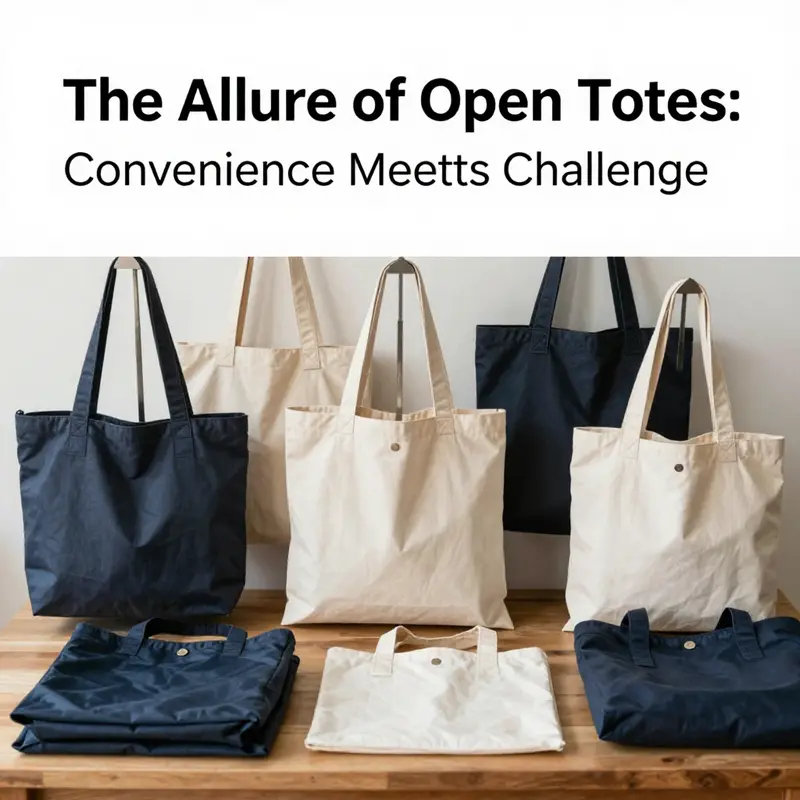
An open tote bag functions like a living interface between the wearer and the surrounding world. Its wide, unobstructed mouth invites touch, signals ease of use, and invites a steady stream of exchanges—papers, devices, groceries, or a spontaneous purchase from a corner kiosk. In this sense, the open tote is less a container and more a choreography of daily movement. The design challenge is not simply to maximize capacity or to minimize weight; it is to create a portable platform that respects how we live, work, and move through crowded spaces while still presenting a clear, cohesive style. This balance between practicality and appearance is not a luxury but a practical necessity for many users who want easy access without sacrificing their signature look. When the bag is opened wide, it should feel welcoming to the hand and intuitive to the eye, revealing its contents with a glance rather than a rummage. Yet this immediacy is not without cost. The same openness that makes retrieval effortless also leaves items more exposed to the world’s clutter and to the risk of pilferage. The open top becomes a stage where both the value of the contents and the owner’s choice about visibility come into sharper relief. In a city environment, where transit, cafes, and coworking spaces intersect, the open tote becomes a compact test case for how design can reconcile two often conflicting imperatives: ease of access and protection of belongings.
Designers approaching open totes begin with the interior as the heart of the bag’s identity. The interior must be spacious enough to swallow a laptop, a notebook collection, a handful of groceries, or a weekend’s worth of gym gear, yet organized in a way that prevents things from shifting into a chaotic jumble when the bag is tilted or bumped. A sturdy interior framework helps in preserving shape and distributing weight evenly across the body, preventing fatigue during long carries. The straps, in turn, must be robust enough to support heavy loads while remaining comfortable over the shoulder. Fabric choices play a decisive role here. Fabrics that resist abrasion and offer some give—such as cotton canvas, durable polyester, or recycled blends—provide a balancing act between sturdiness and comfort. The materials influence not only performance but also the bag’s environmental footprint, which matters to many buyers who see their purchases as a small act of responsibility as well as a fashion statement. For example, the selection of fabrics and finishes often mirrors the broad spectrum of what one might find in fabric tote bags for women, where natural fibers and recycled content are used to achieve a balance between texture, weight, and sustainability. fabric tote bags for women offers a practical lens on how texture and weight interact with daily use, especially in warm climates or on busy commutes.
The minimalist aesthetic that characterizes many open totes complements their functional strengths. Clean lines, generous negative space, and a restrained palette create a silhouette that is versatile enough to pair with formal office wear, casual weekend outfits, or school attire. The absence of a closure, while iconic, also puts the onus on thoughtful detailing. Subtle internal pockets, reinforced stitching at stress points, and a carefully shaped base can protect items and reduce the rate at which contents migrate toward the bag’s mouth. These details are not mere embellishments; they are functional choices that extend the bag’s life and improve the user’s experience. When a bag feels well made, the open top becomes less of a liability and more of a deliberate design feature—a way to frame the owner’s life rather than a mere vessel for belongings.
Material selection emerges as a decisive design lever in this context. Cotton canvas offers breathability and a tactile quality that many users associate with everyday practicality. It grows sturdier with use and can be finished with coatings or wax treatments to improve water resistance without compromising its natural hand. Polyester and other synthetic blends bring higher resistance to abrasion and lighter weight, which can be essential for a bag intended to be carried all day, every day. Recycled materials introduce a dimension of environmental responsibility, appealing to a growing cohort of buyers who want aesthetics to align with ethics. The resulting mix of texture, weight, and finish can set the bag’s tone—from rugged and utilitarian to refined and minimalist. The open tote, therefore, becomes a vehicle for material storytelling, speaking to the wearer’s values as well as their daily tasks.
Design choices extend beyond raw materials to a bag’s silhouette, hardware, and finish. A monochrome, neutral base—black, leather, khaki, or stone—offers maximum versatility and signals a professional or scholarly vibe. Patterned options, including botanical or abstract motifs, introduce personality and can be used to reflect the wearer’s mood or seasonal style, but they must be chosen with a careful eye for how they interact with a wardrobe and with the bag’s open character. The absence of a zipper can be offset by architecture within the bag: interior dividers that act as organizational rails, easier-to-grip pockets that stay accessible even when the bag is full, and reinforced seams that keep items from spilling when the bag is tipped or set down. The overall effect is a clean, uninterrupted surface that still hosts a carefully curated internal ecosystem.
The chapter’s core design choices also include a closer examination of color and pattern. Solid colors in neutral tones suit formal settings and work routines where a bag reads as a professional extension of the wearer. In these contexts, the open top remains unadorned, letting the silhouette carry the style. On the other hand, floral or botanical patterns are appealing for casual, bohemian, or seasonal looks, providing a visual contrast that can energize a wardrobe with minimal effort. Pattern selection, however, must be mindful of personal color palettes and the bag’s footprint in a crowd. A loud pattern on a bag that sits at the center of attention can clash with an outfit or make the bag itself feel louder than the wearer’s intent. Designers increasingly recognize that patterns should harmonize with typical daily wear, preserving the bag’s ability to blend into a professional environment while still offering a moment of expressive charm when desired.
Within this framework, the absence of a closure becomes an ongoing conversation about security and organization. The risk of accidental spills—coffee sloshing or a bottle tipping—requires attention to bottom construction and edge finishing. A reinforced base or a subtly gusseted bottom can improve stability when the bag is put down, while internal pockets help anchor items and reduce the chance of items sliding in unpredictable ways. Yet, in crowded or high-traffic environments, the open top invites careful design thinking about how to reclaim quick access without making theft easier. Here, a magnetic snap closure emerges as a practical compromise to many users who demand rapid access but still want a layer of protection. It can be subtly integrated so that it does not interrupt the bag’s visual simplicity, preserving the open feel while offering a moment of closure when needed. This middle ground is not a retreat from openness; it is an acknowledgment that accessibility and security can coexist through thoughtful, unobtrusive hardware and clever compartmentalization.
To translate these design principles into real products, artisans and engineers often begin by mapping a user’s typical movements. They study how a bag sits at the hip during walking, how it behaves when a person leans to reach for a notebook, and how weight shifts when the bag is full and carried across long distances. Ergonomics matters as much as aesthetics because comfort underpins consistent everyday use. The most elegant open tote in theory becomes impractical if it causes shoulder strain after a workday or if it slouches in a corner when set down. The goal is a container that remains responsive to the wearer’s motion, offering effortless reach while staying stable and balanced. In practice, this means choosing straps with a comfortable width, stitching that distributes load without creating pressure points, and reinforcement at critical stress points where a loaded bag would otherwise flex and sag.
The conversation about open totes also intersects with broader standards and performance expectations that guide production and material testing. Industry guidelines emphasize durability, water resistance, colorfastness, and the resilience of closures or their alternatives. While the open top may deprioritize a full closure system, it should not ignore the realities of wear, abrasion, and daily contamination. Designers often consult technical guides and standards that highlight how fabrics perform under repeated flexing, how coatings wear over time, and how stitching behaves as loads increase. These insights help ensure that the bag performs consistently across seasons and user scenarios, from a quick coffee pickup to a full-day conference. For readers who want to dive deeper into the technical dimensions of tote bag construction and performance, a comprehensive reference on material properties and industrial standards provides a valuable roadmap beyond everyday aesthetics.
The design conversation does not stop at material choices and hardware. The symbolic meaning of the open tote—its clean lines and uncluttered interior—can support a lifestyle that prizes simplicity and efficiency. For individuals who want to project a calm, organized look, the bag’s interior becomes a microcosm of their routine: a predictable, legible system where items have defined places. This is not merely about keeping pockets tidy; it is about creating a mental map that reduces friction in daily life. When the interior strategy succeeds, the wearer experiences the sense that everything has a home, and the open mouth merely acknowledges that home is flexible enough to evolve as needs change. In such cases, the bag ceases to be a passive vessel and becomes an active partner in daily choreography.
From a retailer’s perspective, the open tote’s design language must remain relevant across environments and seasons. A timeless silhouette with adaptable fabric choices and thoughtful internal organization offers longevity that mirrors consumer expectations of value. Even as fashion cycles turn, the core virtues of accessibility and simplicity—paired with reversible or interchangeable elements like removable pouches or modular inserts—help keep the bag from feeling dated. The most successful designs achieve a balance where practicality informs aesthetics and style enhances usability. The result is a bag that reads as modern without being transient, practical without compromising personality, and approachable for a wide audience while still allowing for personal expression through color, texture, and interior configuration.
Beyond the shop floor, this approach to open tote design extends to storytelling and education. Consumers increasingly want to understand how a product is made, what materials are used, and how the design decisions translate into everyday performance. Designers can cultivate trust by communicating the rationale behind material choices, such as why a heavy cotton canvas might be preferred for its tactile richness or why a recycled blend can offer a lighter weight with a smaller environmental footprint. In this context, the open tote becomes a narrative vehicle—an artifact that embodies both craft and practicality. When a consumer holds such a bag, they are not just evaluating a product; they are engaging with a design philosophy that respects both ease of access and the dignity of personal belongings.
In closing this exploration, it is essential to acknowledge that the open tote’s strengths lie in its clarity of purpose and its willingness to address its trade-offs with grace. The design balancing act—between spacious interior and stable carry, between minimalist beauty and nuanced organization, between the absence of a full closure and the need for some protection—offers a framework for thinking about how everyday objects shape our routines. The goal is not to deny risk but to reduce it through thoughtful features that align with how people live and move. In this sense, open tote design becomes a disciplined, human-centered craft: a continuous dialogue between form and function, aesthetics and practicality, openness and security. For readers curious about the deeper technical standards guiding these choices, the journey is worth pursuing through industry resources that illuminate how materials perform under stress, how finishes age, and how designers translate performance data into everyday reliability. External resources such as established guides for material properties and performance metrics can provide a rigorous complement to the design philosophy outlined here. For a deeper dive into technical standards, see the external reference that charts the contours of designer tote bag performance in industrial contexts: https://www.alibaba.com/showroom/designer-tote-bag.html. As the field evolves, the open tote remains a compelling case study in how a simple opening can become an invitation to thoughtful design, a doorway to daily efficiency, and a canvas for personal style that travels with the wearer rather than dictating their routine.
Final thoughts
Open tote bags offer an appealing solution for business owners seeking functionality without unnecessary complexity. Their accessibility makes them ideal for environments where quick retrieval is essential. However, the vulnerability to theft and item loss cannot be overlooked, especially in busy urban settings. As the demand for versatile and stylish accessories grows, balancing these characteristics becomes imperative. By paying attention to design elements that can enhance security while maintaining accessibility, business owners can comfortably incorporate open totes into both personal and professional contexts.