
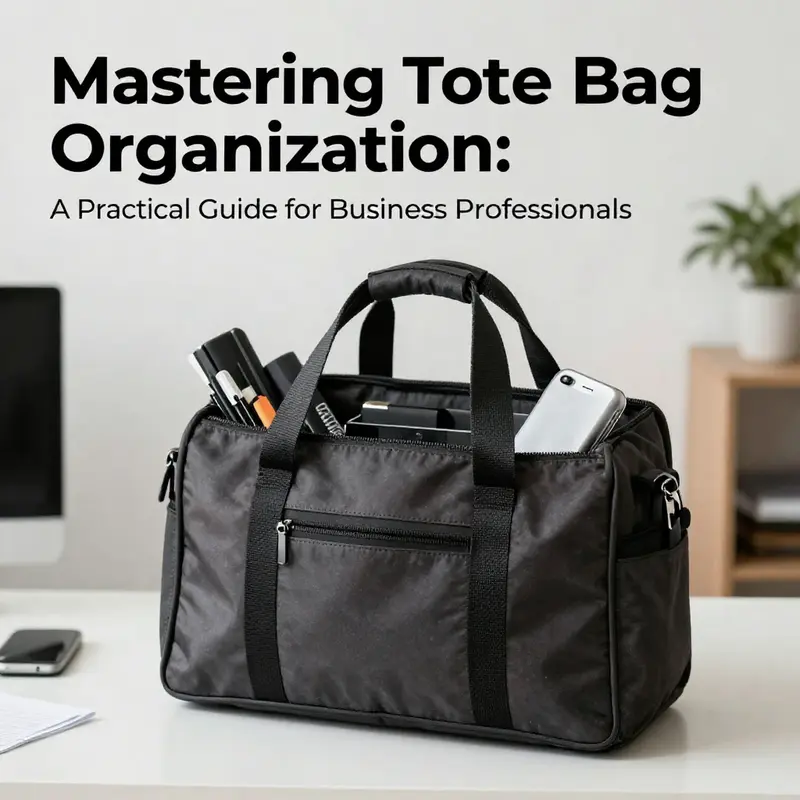
Organizing your tote bag is not just about aesthetics—it creates a seamless workflow as you move through your daily business routines. For professionals who are constantly on the go, a well-ordered tote becomes a valuable tool for productivity. This guide outlines how to structure your bag by defining functional zones, using smart organizers, and adopting best practices for auditing and updating contents. From rolling clothing to selecting the right inner organizers for different bag types, each section provides actionable steps to elevate your tote organization. Implement these strategies to enhance operational flow and project a polished professional image.
Zone by Zone: Transforming Your Tote into a Focused, Fast-Access Carryall
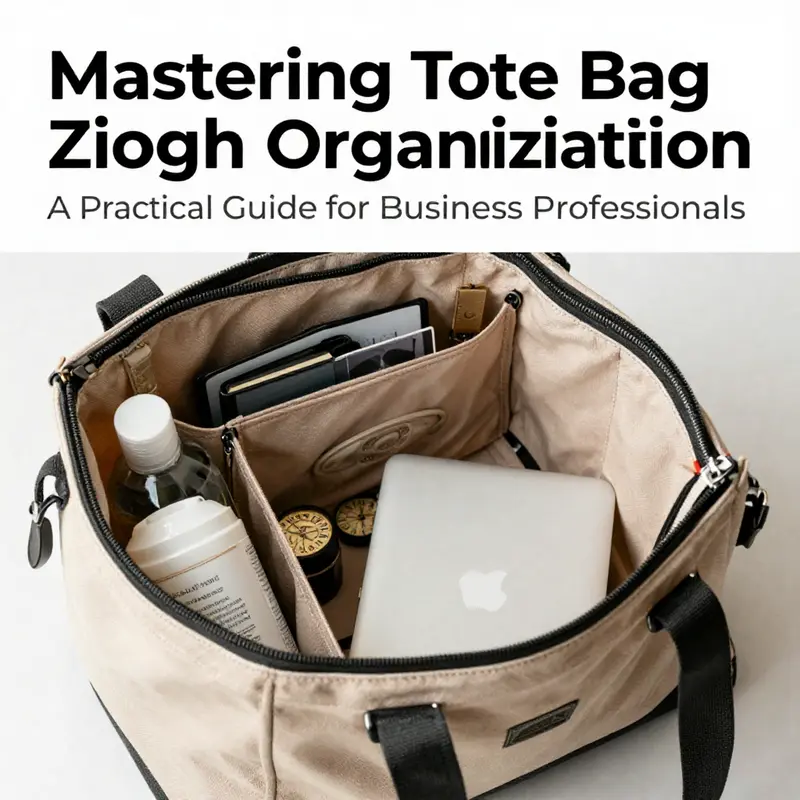
A tote bag falls into disarray not because you carried too much, but because its interior lacks a sensible map. When you treat the bag as a tiny, portable workspace or wardrobe, defining functional zones becomes a practical act of design. Zone by zone turns a chaotic jumble of items into a concise system, making retrieval instinctive and keeping the bag’s silhouette clean. The core idea is simple: assign dedicated spaces for items that share a function or a rhythm of use, then place those spaces where you can reach them without digging through everything. The result is a tote that feels engineered for your routines rather than a catchall you unpack only when you get home.
Begin with the essentials zone, a compact pocket of the bag containing the items you grab first in the morning and carry through the day. Think of it as a front desk for your daily routine: wallet, phone, keys, ID, transit card. Keep these items in a pocket or a small organizer near the top edge of the tote so a quick grab suffices to head out the door. The personal zone follows—an area that holds items you want handy but not always in sight. Here you place sunglasses, lip balm, a compact hand sanitizer, perhaps a small notebook or folded receipts. The aim is not to overload this zone; instead, curate a quick-access cluster that you can lift in a single motion when you need it.
Next comes the work zone, a compact, slightly more structured section for professional or academic essentials. A slim notebook, a slim tablet or petite laptop, chargers, pens, and important documents belong here. The trick is placement: position this zone toward the center or the upper middle of the bag. Keeping these items in one consolidated area reduces the ritual of rummaging and keeps you ready for a meeting, classroom, or coffee shop work sprint. The wellness zone then captures hygiene items and health-related necessities—hand sanitizer, tissues, medications, perhaps a small lip balm for quick touch-ups. This zone benefits from proximity to the top or a side pocket you can access without overturning the entire bag. The objective is to minimize friction; you want to feel you could refresh yourself and press on without a pause for scouring.
A flexible, or flex, zone completes the core structure. This is the space for items that vary with your day: a reusable water bottle, a light scarf, a compact umbrella, a grocery tote you picked up midweek, or a change of clothes after a gym session. The flex zone acts as a cushion for spontaneity, a catch-all that you can reassign each morning based on your plans. For many people, this zone is easiest to place at the bottom or in a larger, collapsible pouch that can slide in or out with minimal disruption. When you use a flexible space well, you’re not overpacking; you’re optimizing capacity so that the bag remains balanced and comfortable to carry.
Side pockets deserve a special mention because they extend the bag’s usability beyond the main compartment. Water bottles, portable batteries, and other compact essentials can sit in these auxiliary pockets where they are easy to reach yet visually contained. The trick here is to ensure every inch serves a purpose. Side pockets should be sized to the item they hold, avoiding loose slippage and preventing the interior from turning into a jumbled cave behind zippers and fabric dividers. The aim is speed and clarity: you should reach for a water bottle and be back in action within moments, not wade through layers of items.
To translate zoning into real-world results, invest in small, zippered pouches or fabric organizers that physically separate each zone. Labeling them—think simple tags like “Tech,” “Hygiene,” or “Work”—adds clarity and speeds retrieval in the moment. When you open your tote, you should be met with an orderly map rather than a fog of clutter. A practical example is to place a slim tech sleeve for cables and adapters near the top of the work zone. A fold-over cosmetics pouch with clear pockets can cradle everyday personal items in the wellness zone. For broader visibility, clear or mesh packing cubes help you recognize what’s inside at a glance, reducing the urge to rummage. Overpacking with too many containers defeats the purpose; the goal is modular, compact inserts that maximize space without turning the tote into a game of Tetris.
For totes that regularly carry clothing—such as a gym outfit or a compact change of clothes—the rolling or bundling method shines. Roll garments tightly to minimize space and reduce wrinkles, then place heavier items at the bottom to improve weight distribution and access. Heavier items anchor the bag, making it easier to lift and carry with balance. When you set the heavier items down on a table or seat, they form a base that prevents the bag from tipping and keeps the lighter items from being crushed. This mindset—weight at the bottom and visibility at the top—helps your posture too, as you won’t feel the bag tug at your shoulder when you reach for a document or a phone.
Auditing the bag before reorganizing is more than a housekeeping ritual; it’s a strategic calibration. Empty the tote and lay out every item, then categorize with a measured eye. Discard anything expired, broken, or unused. Then rate frequency: daily essentials like your phone or wallet belong in top-accessible zones; occasional items—a compact umbrella or a spare charger—fit in less accessible areas or are reserved for the flex zone. This audit is an ongoing practice, not a one-off clean, so schedule a weekly reassessment to maintain efficiency and reduce cognitive load. The goal is to keep only what you truly need and to ensure every item earns its place in the zoning system.
Choosing the right inner organizer hinges on bag type. If you own a natural-fiber tote, such as a straw bag or canvas style, built-in compartments are rare. In these cases, a washable liner can protect delicate items from snagging on rough fibers while offering an easy surface to clean. Collapsible, modular pouches can be removed and washed, maintaining a tidy interior and reducing the risk of fiber interference with hardware or zippers. This approach preserves the bag’s aesthetic while giving it the structure of a multi-pocket system, so you don’t have to abandon the bag’s natural charm for practicality.
Planning ahead with a packing list is a disciplined habit that pays dividends in daily life. Before packing, define the trip’s purpose: commuting, traveling, or casual outings. Draft items you will need for the itinerary—then review the list the night before and trim non-essentials in the morning. The goal is a light, purposeful tote that travels with intention rather than inertia. When you approach your day with a prepared layout, the bag stops feeling like a grab bag at the edge of your home and becomes a reliable partner in your routine.
If you’re seeking a concrete example of how a designated tech pocket integrates with the broader zoning concept, you can explore a practical reference: tote bag with computer sleeve. This serves as a reminder that the zoning framework can adapt to different bag shapes and routines without losing its core logic. And for a broader understanding of how large totes can be organized to reduce stress, a broader external guide offers complementary perspectives on space management and daily carry efficiency: https://www.bustle.com/life/smart-strategies-to-organize-a-large-tote-bag-for-stress-free
Compact Order, Clear Access: How Smart, Compact Organizers Turn Tote Bags into Portable Workspaces
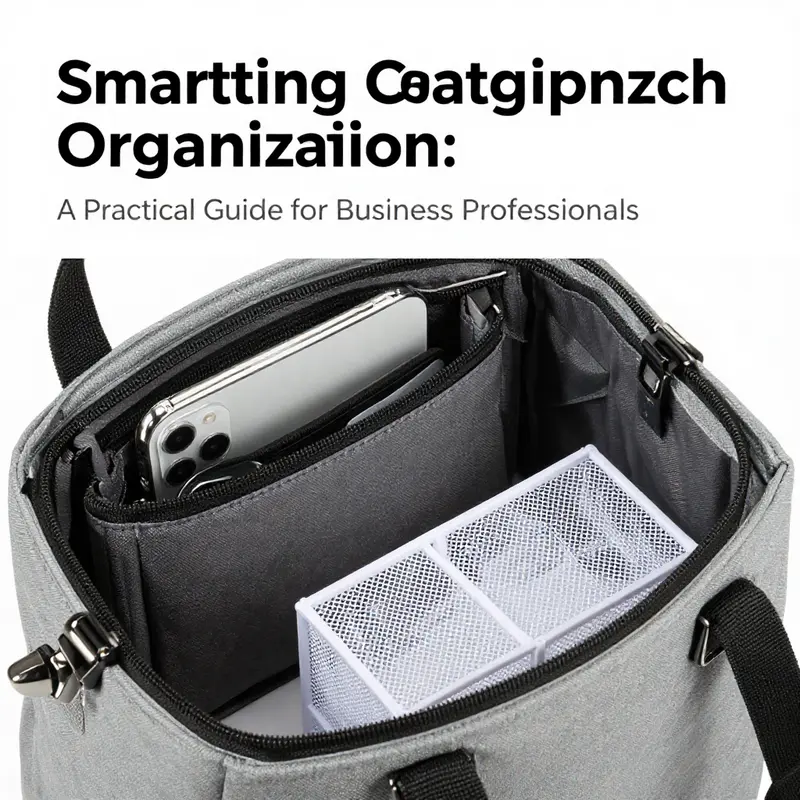
A tote bag can be a surprisingly capable command center once you treat it as a compact system rather than a loose heap of items. The aim of smart, compact organizers is not to cram more into the bag, but to create clearly defined pockets and zones that hold the essentials exactly where you expect them. When you design your tote around these tiny, purpose-built inserts, you gain instant visibility and effortless retrieval. The most effective interiors are not just tidy; they are responsive to daily patterns, adapting to how you move from home to office, from bus to meeting, from errands to a weekend change of plans. The simplest way to begin is to think in terms of interior architecture rather than a jumble of individual items. A multi‑compartment insert, a collapsible bin, and a set of slim pouches can transform a bag’s interior from chaos to a miniature, mobile workspace. These interior organizers are designed to fit snugly inside your tote, holding their shape and keeping items from shifting as you walk or ride. They act like tiny rooms within the bag, each dedicated to a function, so you never have to rummage to locate a charger or a lip balm again. The goal is balance: enough structure to preserve order, enough openness to prevent bulk from crowding the bag’s top or bottom, and enough flexibility to accommodate the unexpected.
Accessibility is the cornerstone of practical design inside a tote. Place frequently used items—phone, keys, transit card, lip balm—in an easily reachable top-layer pocket or a quick-access sleeve. When you know your most-used items have a designated home at the rim of the bag, you eliminate the mental overhead of searching. You can also use small, labeled pouches to keep these items visually distinct and findable at a glance. For instance, a tiny pouch labeled Tech can hold cables, adapters, and earbuds; a Hygiene pouch can keep hand sanitizer, tissues, and medications neatly contained. The labels don’t just reduce digging; they reduce decision fatigue. You know the exact spot to reach for your transit card, your charger, or your hand cream, which is a small but meaningful upgrade to your daily routine. A single, well-placed pouch can save seconds that accumulate into a smoother day; it’s not glamorous, but it’s profoundly practical.
Materials matter as much as layout. When you choose interior organizers, you are choosing how the bag will age with you. For totes made from leather or other structured materials, select organizers that complement the bag’s lines without adding bulk. Lightweight, water-resistant fabrics and recyclable materials can deliver durability without unnecessary weight. If your tote is a natural fiber bag that tends to snag or shed fibers, consider a washable liner or collapsible, modular pouches that can be removed and cleaned easily. The simplest consideration is to balance protection with accessibility: you want your items to be shielded from abrasion and crushing, yet easy to reach when needed. The modern approach favors multi-functional inserts—a sleeve that holds both a tablet and a notebook, a pouch that can double as a mini clutch for meetings, or a small bin that can be folded away when not in use. The result is a tote that behaves like a modular micro‑studio—structured enough to protect, pliant enough to adapt.
Seasonal rotation is another powerful, understated strategy. Your tote can be reconfigured to suit the season, swapping in lighter, breathable organizers for summer and a slightly heavier, weather-resistant setup for winter. The core system remains the same, but the components shift to respond to climate and activities. In practice, you might keep a compact tech sleeve and a labeled set of pouches constant, then vary the external shell and the arrangement of the contents to reflect the season’s needs. A summer kit might emphasize hydration and sun protection, with a slim bottle sleeve, a small towel, and a compact umbrella tucked into the Flex Zone. In winter, you might lean on a protective liner, a larger zippered pouch for gloves and a compact scarf, and a sturdier, rainproof insert to maintain shape and preserve contents in damp weather. This seasonal rhythm keeps the bag feeling fresh and highly functional year-round, without overloading it with items you won’t use daily.
Among the interior tools, the concept of a top-layer quick access zone deserves emphasis. Place items that you reach for the most—your phone, a set of keys, your transit pass, a small lip balm—into a shallow, easily accessible pocket or a shallow pouch that sits near the opening. This small shift in placement yields a disproportionate improvement in everyday efficiency. The top layer should feel almost tactile: you should be able to locate the item by touch as well as sight. For items that you want to keep separate yet still accessible, use labeled, transparent pouches. Transparency reduces the need to peek inside each pouch, and labels create a predictable home for each item, especially when you are juggling multiple bags or sharing a tote with someone else. Keeping like items together in a consistent system makes your bag behave more like a workspace than a storage closet, and this is the essence of smart organization.
A note on integration with the bag itself helps this system feel cohesive rather than add-on. For bags that lack built-in structure, an insert or liner can introduce form without imposing rigidity. A washable liner creates a soft boundary that protects delicate items from snagging on rough fibers, while collapsible pouches or modular dividers provide the adaptability needed for changing loads. The idea is to create a private, portable cabinet inside the tote that you can rearrange as you please. If a bag has more flexible materials, lean on collapsible options that can be tucked away when not in use, freeing space for unexpectedly bulky items. The interplay between the bag’s own character and the organizer’s design matters: the most elegant systems respect the bag’s silhouette while offering clear, durable, and practical compartments.
To connect these ideas with a broader collection of approaches, consider this practical nudge: for bags that lack adequate zipper closures or interior dividers, the creation of a dedicated liner that can be zipped closed around the contents adds a layer of security and keeps smaller items from rolling around. See a practical reference on tote configurations that address zipper constraints and interior protection tote-bags-with-zippers.
The ongoing discipline of organizing a tote bag comes down to a simple habit loop: set up once with a thoughtful system, then perform a quick weekly audit to maintain efficiency. A weekly check helps you trim items you no longer need, replace worn pouches, and reassess how the space is used. The audit should focus on daily essentials like your phone and wallet, items you use occasionally like an umbrella or spare charger, and items that drift into the bag only to become clutter. When you keep the system lightweight and modular, you can adjust it in seconds without dismantling the entire interior. The small, deliberate steps—checking for wear, rotating seasonal components, and keeping a few flexible pieces ready—turn a tote from a passive container into an active ally.
In this way, the interior becomes a living, adaptable workspace rather than a static bag. The beauty of smart compact organizers lies in their ability to breathe with you: they hold your essentials securely, protect what matters, and invite you to move through your day with intention. The result is not merely tidier gear but a smoother rhythm to routine tasks, a calmer carry, and a bag that feels designed around you rather than you adapting to it.
For broader ideas and further product-thinking inspired by these principles, you can explore related layouts and seasonal approaches in external guidance that focuses on tote organization and essential pouches. This broader perspective complements the interior strategy described here and offers additional ways to tailor a tote’s interior to your lifestyle. External resource for tote organization insights.
Compact Confidence: Mastering Rolling and Bundling for Tote-Bag Clothing
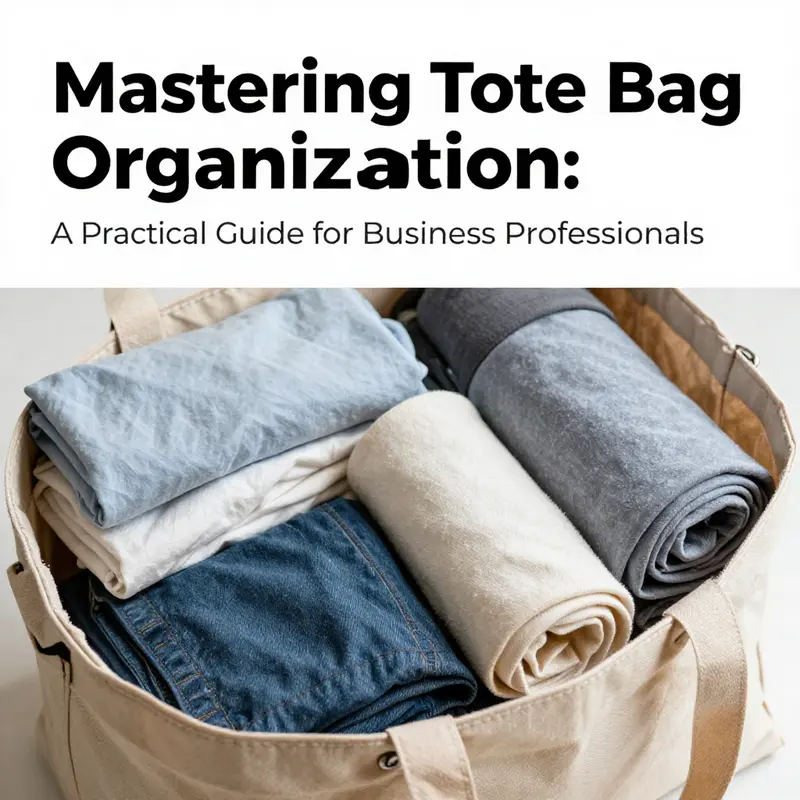
A tote bag can be more than a simple carrier; it can feel like a tiny, adaptable wardrobe on the move. When you approach it with a rolling and bundling mindset, clothing becomes a sequence of compact shapes that nestle together with precision. The goal is not just to fit more into a tote, but to preserve fabric integrity, reduce wrinkles, and keep essentials instantly accessible. Rolling and bundling tap into a simple truth: soft, flexible fabrics respond best to compression, while heavier, stiffer materials need a different arrangement to prevent bulk from forming in the bag’s center. In practice, this means visualizing your tote as a well-organized system where each garment has a defined place, and every fold or roll serves a purpose rather than simply filling space.
Rolling is a straightforward technique that pays dividends when you pack soft fabrics—cotton tees, lightweight knits, and airy dresses. The idea is to roll items into tight cylinders that slide together like puzzle pieces. Studies from textile compression research in 2025 suggest that rolling soft fabrics can reduce packed volume by as much as 30 percent compared to traditional folding. This isn’t a claim about obliterating all space; it’s about making the most of what your bag can hold without sacrificing the clothes themselves. In a tote, where access matters, those tight rolls create visible seams of order; you can identify what you need at a glance because the rolls form a predictable row of compact blocks rather than a loose heap.
Heavier fabrics, however, behave differently in a tote. Jeans, wool trousers, jackets, and structured dresses tend to resist compression when rolled. The roll can become bulbous at the center, wasting space and making access more difficult. For these items, a hybrid approach works best: fold them strategically and place them as base layers or fill gaps between rolled garments. Think of heavier pieces as stabilizers that ground the lighter rolls, rather than as items to be rolled into their own compact cylinder. The shift in technique—from rolling every item to pairing rolling with selective folding—transforms how a tote carries weight and maintains shape. This balance helps prevent bulges that poke at the bag’s seams and keeps handles comfortable when you carry the bag over longer periods.
To put these ideas into a flowing packing rhythm, begin with lightweight, wrinkle-resistant fabrics. Roll such pieces and place them along the bag’s bottom and sides, creating a firm, continuous base. Heavier items—jeans, a compact jacket, or a wool blazer—should be positioned around the rolled blocks to provide structural support. The aim is to form a layered, stable core that resists shifting when you move. If space allows, tuck smaller garments or accessories into remaining pockets between rolls. This small step can recover a surprising amount of space and keep items from rattling during transit.
A practical rule of thumb emerges from this approach: treat your tote as a vertical organizer, not a flat canvas. Visualize the bottom as a compact foundation built from rolled soft fabrics, with heavier pieces anchoring the perimeter. When you place items, consider how the bag’s opening will access them. Heavier, bulkier items usually belong closer to your body, near the tote’s back panel, so you don’t have to dig through layers to retrieve something quickly. Lighter, rolled garments should occupy the outward-facing front sections where you can see and reach them without disturbing the rest of the arrangement. This mindset aligns with the broader notion of defined zones, a concept you may have encountered in previous chapters, but adapted here specifically for clothing packing within a tote.
When you introduce organization aids, the method becomes even more reliable. A slim tech sleeve can cradle chargers and adapters that would otherwise contribute to a tangled jumble and risk catching on fabric edges. A fold-over cosmetics pouch, clear on the inside, can hold emergency basics such as a compact sewing kit, spare buttons, or small accessories that would otherwise drift into the bag’s corners. In addition to these inserts, consider a washable liner or collapsible pouches for heavier foldable garments. These tools create structure, protect fabrics from snagging on rough tote fibers, and simplify cleaning should a spill occur. The utility of a modular setup is not merely in space saved but in the ease with which you can refresh the bag’s contents after a busy day.
A thoughtful inclusion in this system is the concept of a dedicated “Feel-Good Layer.” This is a small grouping of items that you want to be able to access without unstacking everything—perhaps a change of socks and a light scarf for quick adjustments in changing weather. Placing this layer near the top or in a side pocket means you can address immediate needs without displacing larger, rolled blocks. It also helps you avoid overpacking, because you introduce a clear hierarchy: base rolls for capacity, heavier pieces for stability, and a top layer for daily comfort items.
Integrity of fabrics matters as much as space. Light, delicate, or easily snagged fabrics deserve extra care. A sturdy liner in washable cotton or canvas can protect these delicate pieces from rough tote fibers while also giving you a clean, contained space to pull items from. If your tote lacks built-in compartments, collapsible pouches become essential; they offer removable structure and make re-packing after a day out a painless exercise rather than a scavenger hunt. The result is a bag that feels organized rather than overwhelmed—an important distinction when you need to switch outfits or quickly access the correct garment during a busy day. As you refine this system, you’ll notice the bag’s weight distribution shifts toward a more balanced center of gravity, reducing shoulder strain and making travel feel lighter overall.
If you want to see how these concepts translate into a practical link for broader tote organization ideas, explore a related option that people often pair with daily carry routines: a tote bag with a computer sleeve. It’s a compact accessory that can be integrated into your folding and rolling system by separating a lightweight laptop sleeve and a few cables from the core clothing blocks, helping you preserve the bag’s silhouette and keep tech items distinct from garments. This subtle separation can prevent fabric snagging and ensure you can retrieve a device without disturbing your carefully packed clothing. tote bag with computer sleeve acts as a reminder that even when you prioritize clothing compression, separate compartments for electronics can coexist with a rolling strategy, preserving both space and organization in a single carry system.
The continuity between this chapter and the broader article lies in recognizing that organization is not a one-size-fits-all technique. It’s a choreography: roll the right fabrics, fold where necessary, layer for stability, and deploy inserts that protect and delineate. The act of rolling and bundling becomes not a rigid method but a flexible toolkit tailored to your bag’s size and your itinerary. If you’re packing for a city jaunt, a gym session, or a weekend away, the same core ideas apply: reduce air, create coherent blocks, and maintain easy access to essentials. And as you review your tote’s contents weekly—removing items you won’t use, refreshing the top layer, and rebalancing weight—you’ll notice how the bag’s behavior adapts to your routine, becoming less a receptacle for odds and ends and more a dependable partner in daily life.
For those who want additional context on how compression techniques compare with folding, a well-regarded external resource surveys the trade-offs and practical implications of rolling versus folding. It’s a helpful piece for refining your approach and confirming that the simple act of rolling can yield real benefits in space, wrinkle reduction, and accessibility. You can find that discussion here: https://www.popularmechanics.com/travel/g28469718/packing-tips-rolling-vs-folding/
Audit-Grade Organization: Systematic Assessment as the Cornerstone of Tote Bag Hygiene, Durability, and Design

Audit-Grade Organization begins with a quiet commitment to repeatable checks rather than one-off decluttering sessions. The idea is not to convert your tote into a rigid box, but to anchor it with a disciplined, lightweight framework. A practical starting point is to imagine a formal audit process translated for daily use: set standards, create a simple checklist, and schedule regular reviews. In the industrial and commercial space, organizations pursue certification and structured inspections to guarantee safety, hygiene, and environmental responsibility. The Global Recycled Standard (GRS) is a prominent example. It requires annual third-party audits to verify recycled material content and responsible production practices across the supply chain. While you are not running a textile facility, the spirit of that process offers a powerful template for personal organization. The goal is to ensure that the tote you depend on remains trustworthy in form and function, from the moment you sling it over your shoulder to the moment you set it down at night.
The core of any robust audit is a clear checklist. For tote bags used in broader contexts—whether in a workplace, at a market, or during travel—the inspection covers four interrelated domains: structural integrity, cleanliness, wear and tear, and contaminants. Structural integrity asks whether seams hold, whether the bag retains its shape when loaded, and whether fasteners still function as intended. Cleanliness is not merely about appearance; it is about hygiene and safety, especially for reuse in food-related contexts or in environments where cleanliness directly affects performance. Wear and tear tracks long-term durability: frayed threads, faded prints, broken zippers, or compromised handles tell a story about a bag’s lifecycle. Contaminants, the final category, require vigilance for anything that could degrade safety or degrade the bag’s performance—residue, odors, or residues from previous uses. In a personal setting, this translates into a practical habit: inspect your tote after daily use, note any issues, and address them before they escalate.
An effective audit also means documenting what you find and prioritizing action. In the industrial world, this might involve formal reporting with corrective action plans. At home, a simple digital or physical log can suffice. Record the item, the observed condition, and the step you will take to remedy it—whether that is washing the bag, replacing a compromised liner, or reassigning a section for a more critical purpose. The act of writing things down converts vague concerns into concrete tasks, and it makes maintenance easier to sustain over time. This habit dovetails with earlier organizing strategies, where zones and labels were used to speed retrieval and reduce rummaging. In a way, an audit reinforces those zones by ensuring they endure through repeated use and changing needs.
A meaningful part of the audit discourse concerns materials and sustainability. In professional contexts, certification schemes examine how bags are produced and what they are made from, with a focus on recycled content and ethical sourcing. Although a personal tote is not a factory, the logic remains valuable: choose and preserve bags that inspire confidence in their materials and construction. When you consider the lifecycle of your tote, you naturally make choices that align with environmental values. If a bag cannot withstand regular use or repeatedly fails to meet hygiene standards, it becomes a signal to replace or repair—an act that reduces waste and preserves the bag’s usefulness. The broader takeaway is to separate emotional attachment from functional necessity. An audit mindset helps you determine when to repair, when to upcycle, and when to retire a bag that no longer serves its purpose well.
The practical mechanics of auditing also invite a closer look at inner design features. The most obvious utility comes from internal organization—zones, pouches, and sleeves that keep items in their assigned places. From a designer’s perspective, it is valuable to evaluate how well a bag supports consistent organization over time. Features such as internal stiffeners or molded panels can prevent unwanted flopping and promote a polished silhouette, while water-resistant materials shield contents from weather and spills. Security features, such as RFID-blocking pockets or strap designs that deter theft, add a safety layer that many users underestimate in daily routines. When you apply an audit lens to these features, you see not merely how a bag looks but how it behaves under repeated use, how it resists infrequent damage, and how quickly you can access your essentials when needed. The assessment becomes less about fashion prestige and more about reliability, dignity of design, and long-term practicality.
A concrete way to weave internal organization with audit practice is to consider the tote’s inner ecosystem as if you were evaluating a small, portable workspace. Think of a dedicated laptop sleeve, a slim tech pouch for cables, and a compact hygiene kit tucked into a labeled zone. The idea is not to stock every conceivable item but to curate a minimal, high-utility set that can be audited for relevance weekly. If you keep a notebook or a digital tablet in your work zone, you can apply a rolling audit: remove items you haven’t used in the last week, reallocate space to items that will be needed soon, and replenish supplies such as tissues or sanitizer as they run low. In this sense, the interior becomes a living checklist rather than a fixed arrangement. A practical tip is to favor transparent or clearly labeled pouches. The visible contents speed inspections and reduce rummaging—an outcome that aligns with the aim of a smooth, efficient carry.
To connect the internal audit to external cues, you can experiment with a single, precise prompt before each reorganization session: if a zone cannot confirm accessibility to its items within three seconds, reassess its layout. If a container shows signs of wear that could affect performance, consider a replacement or reinforcement. And if persistent grime or odor appears despite regular cleaning, treat it as a signal to pause, clean more thoroughly, or temporarily repurpose the bag for lighter use. This reflective loop keeps your tote aligned with how you live—fast, practical, and responsible.
An additional layer of perspective comes from linking the personal audit to broader industry standards. Within B2B procurement or strategic sourcing contexts, assessing suppliers involves evaluating technical capability, trust, responsiveness, and adherence to sustainability standards. If you are selecting a bag for a team or for recurring use across a small enterprise, these criteria translate into a set of practical questions: Will the bag perform under daily stress? How quickly can replacements be obtained? What are the material guarantees, and how will maintenance be managed? While most readers will operate on a smaller scale, adopting this mindset helps you decide when to repair versus replace, how to budget for ongoing maintenance, and how to plan for seasonal needs—perhaps a lighter bag for summer travel and a sturdier one for daily commuting.
As you close each audit cycle with renewed clarity, you can integrate a final check that anchors everything in ongoing practice: reassess weekly, revise zones as needs shift, and maintain a living balance between function and aesthetics. The ratio of accessible essentials to bulk items should reflect your real-life use, not a theoretical ideal. The aim is not perfection but coherence—a state in which the bag supports your routines, enhances your efficiency, and remains a source of confidence rather than a source of friction. To explore a broader perspective on how different tote configurations address resilience and usability, you can examine case constructs from interior design and industrial packaging, translating those principles into practical, small-scale decisions in your own bag. For example, when you consider the potential for a dedicated laptop sleeve or a compressible packing module, you glimpse how an integrated system could transform a daily routine from a scramble to a streamlined ritual. See tote bag with computer sleeve for an example of how inner compartments shape user experience without sacrificing flexibility.
In sum, the discipline of audit and assessment, when applied to tote bags, yields tangible benefits: enhanced safety and hygiene, improved durability, clearer organization, and greater satisfaction in daily use. It also elevates your choices by inviting you to consider materials, construction quality, and lifecycle impact. The practice bridges practical know-how with ethical consideration, turning a simple carry into a lasting partner in your everyday life. And while the formal certification frameworks provide a rigorous blueprint for manufacturers, the same logic can empower individual users to demand better—from their own bags and from the conversations they have about what they carry and why. External reference: for a deeper dive into how third-party audits validate recycled content and responsible production in textile goods, you can consult the Global Recycled Standard resources from Textile Exchange: https://textileexchange.org/programs/global-recycled-standard/.
Inside the Tote: Selecting an Inner Organizer that Transforms Access, Order, and Everyday Style
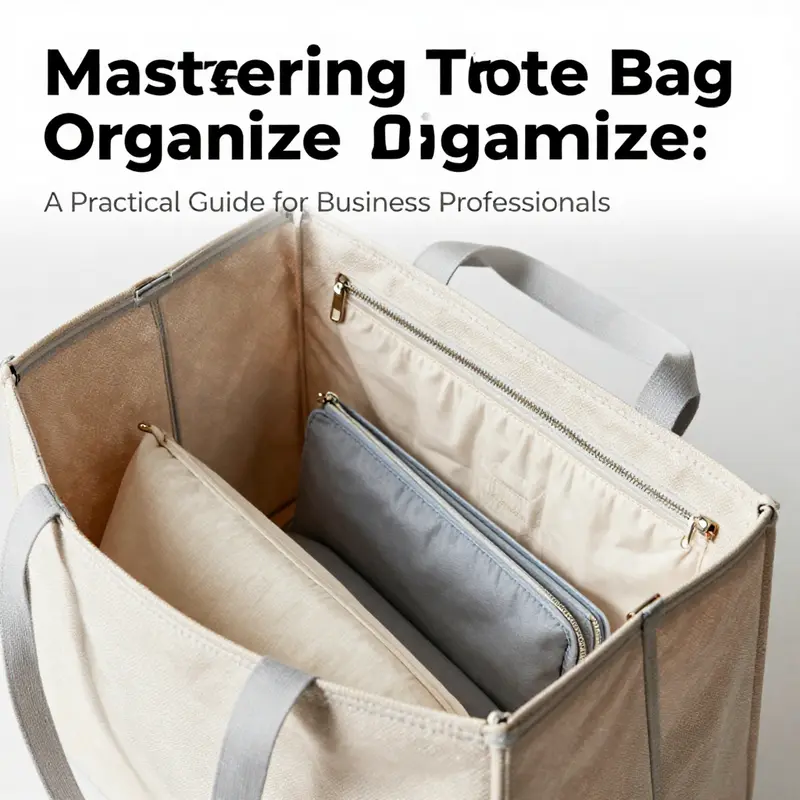
The inner organizer is more than a simple insert; it is the quiet architect of how a tote feels in daily life. When you choose the right structure for your bag, you unlock immediate access, balanced weight, and a sense of calm that helps you move through a day with intention rather than rummaging through a sack of randomness. The goal is not to graft a rigid system onto a flexible bag, but to invite a responsive organization that respects the tote’s material, its size, and the way you actually use it. In this sense, the choice of an inner organizer becomes a design decision as much as a practical one, shaping how often you reach for your keys, how quickly you find your phone, and how neatly your documents stay when a train jolts or a café table wobbles.
Material and durability are the first quiet signals. Lightweight yet tough fabrics—think nylon or polyester with a water-resistant coating or a waterproof lining—offer protection without weighing you down. The last thing you want is an organizer that soaks up every spill or snag from a rough fiber or a zipper that catches on a tote’s seams. A protective liner inside not only guards delicate items but also makes cleaning easier if you’ve carried beverages, cosmetics, or medication. In practice, this means opting for a structure that can shrug off rain, sweat, and occasional misplacement rather than absorbing every little spill. The durability question is also about longevity. An organizer should resist frequent loading and unloading and hold its shape even when the bag is only partly full. A simple, reinforced edge or sturdy stitching often matters more than a flashy exterior, because it preserves the interior’s ecosystem over months of daily use. If you value security, consider pockets with RFID-blocking potential for cards and passports; while this is a bonus feature, it can substantially reduce the risk of data skim during commutes or travel.
Size and fit matter just as much as materials do. The interior dimensions of your tote determine what kind of organizer you can use and how snugly it will sit. Before choosing, measure the bag’s depth, width, and height at the most usable point. An organizer that is slightly smaller than the tote’s interior creates space around the edges, reducing bulk and letting you slide items in and out with ease. A well-fitted insert stays put when you move, so you won’t chase items that have begun to drift toward the bottom or the sides. Removability is a critical feature here; if the bag doubles as a work tote one day and a casual carry the next, a removable or modular organizer lets you reclaim the structure when you need it and carry the essentials separately when you don’t. The ability to unzip or detach sections also means you can clean parts of the organizer or the tote itself without a complicated disassembly. A common but powerful approach is to choose a core shell that holds the shape of the bag and then add modular pouches that can be rearranged or removed as your day unfolds.
Compartmentalization is where the organizer earns its keep. A thoughtful layout mirrors your daily workflow. A padded, dedicated sleeve for a laptop or tablet protects the device while keeping it accessible in crowded spaces. Zippered pockets for wallets, keys, and phones keep small valuables secure and easy to locate. Open mesh or fabric pockets offer quick grabs for sunglasses, earbuds, or a charger. A built-in pocket for documents or a slim pen holder makes meeting-ready items easy to extract during a coffee shop stop or at the office front desk. These compartments are not just about separating items; they create a predictable rhythm inside the tote, so you stop instinctively reaching into a scramble and start reaching for the right zone. If your life requires frequent changes in routine—perhaps you hop between office, gym, and a library—you’ll appreciate the flexibility of a system that can morph from a tight, work-centric core to a looser, more expansive setup for weekend errands. A flexible design invites you to keep the bag clean and organized without feeling constrained by a rigid template.
Portability and ease of use complete the practical arc. A truly usable organizer is not a permanent fixture; it should be easy to lift out, wash, and refresh. Removable cores or modular sections allow the tote to double as a standalone travel or tote-within-a-bag, and adjustable straps or handles on the organizer can convert it into a small crossbody or handheld accessory when needed. The days you carry a lot of items—lunch, notebook, and a spare sweater—require a slightly sturdier, more sectional approach; lighter days call for fewer compartments and less weight. It is not about having more pockets but about having the right pockets—for comfortable weight distribution, for quick access, and for reducing rummaging. If your tote is natural fiber or a canvas blend, a liner that protects against snagging and dust is especially valuable. A washable, collapsible insert is ideal here; it locks in structure while remaining simple to clean and restore after a trip to the gym or market.
Style and aesthetic coherence should not be an afterthought. The right organizer supports your fashion choices rather than clashing with them. Neutral colors such as black, gray, or navy tend to harmonize with most totes and outfits, preserving a streamlined impression even when you load the bag with a variety of items. If you prefer a bit of personality, a subtle texture or a matte finish adds depth without shouting for attention. The inner organizer’s utility should translate into the outward silhouette of the tote: a bag that holds its shape, resists sagging, and projects an intentional, organized vibe. The beauty of a well-chosen organizer is that it can make a simple tote look curated, turning everyday carry into a polished statement of efficiency rather than a chaotic scramble of goods. For scenarios that demand simplicity, a single-color liner that fits your bag’s size and shape can be a quiet, reliable backbone; for moments when you want a touch of flair, a coordinated accent within the same palette can offer a refined edge.
Of course, modular and feature-rich options invite careful consideration. The most valuable features go beyond basic compartments. Consider a pocket design that prevents items from slipping out when the tote is opened at a café counter or on a bus. Magnetic closures or reinforced zippers provide quick, secure access while maintaining longevity under frequent use. A water-resistant zipper or seam offers practical protection for items that inevitably meet a little rain or condensation. For those who value security and order, an organizer with dedicated slots for documents or a pen loop can help you stay ready for meetings without scattering papers across the bag. Importantly, the choice should align with your tote type. For natural fiber bags that lack internal dividers, a washable liner or collapsible modular pouches become the skeleton that structures your day without harming the bag’s texture or finish. In such cases, the goal is to maintain a stable interior that won’t snag, tear, or shed fibers with movement.
To bridge the practical with the actionable, consider a ready-made baseline option that embodies the principle of thoughtful zoning: a cohesive core unit with a laptop sleeve, a few zippered pockets, and flexible panels that can be reconfigured as your day evolves. For those who want a concrete step forward in implementing these ideas, a practical choice is a tote bag that includes a dedicated computer sleeve; it represents a logical starting point for aligning function with form. See a practical example here: tote bag with computer sleeve.
Ultimately, choosing the right inner organizer is about matching your bag to your routines, not forcing your routines into an ill-fitting container. It is about transforming a tote from a generic carry-all into a tailored, responsive workspace. Empty the bag, measure it, and imagine your day in terms of zones that flow into one another rather than a pile of items that compete for space. The best organizers disappear into the tote’s silhouette while quietly sharpening your ability to retrieve what you need, when you need it. And if you ever worry that you’ll forget something essential, remember that a well-planned interior is less about memory and more about design—design in which every pocket has a purpose, every item has a home, and every return to the bag feels like a small act of choreography rather than a chaotic rummage. For broader perspectives on organizational gear, explore external guidance that reviews and synthesizes user needs with product design at https://www.thestraight.com.
Final thoughts
Organizing your tote bag should be viewed as an essential investment in productivity. By defining functional zones, using compact organizers, and regularly auditing contents, you can maintain an efficient system that keeps essentials accessible and neatly arranged. Implementing these techniques not only improves daily operations but also helps you project a professional image as you carry your essentials with confidence.