
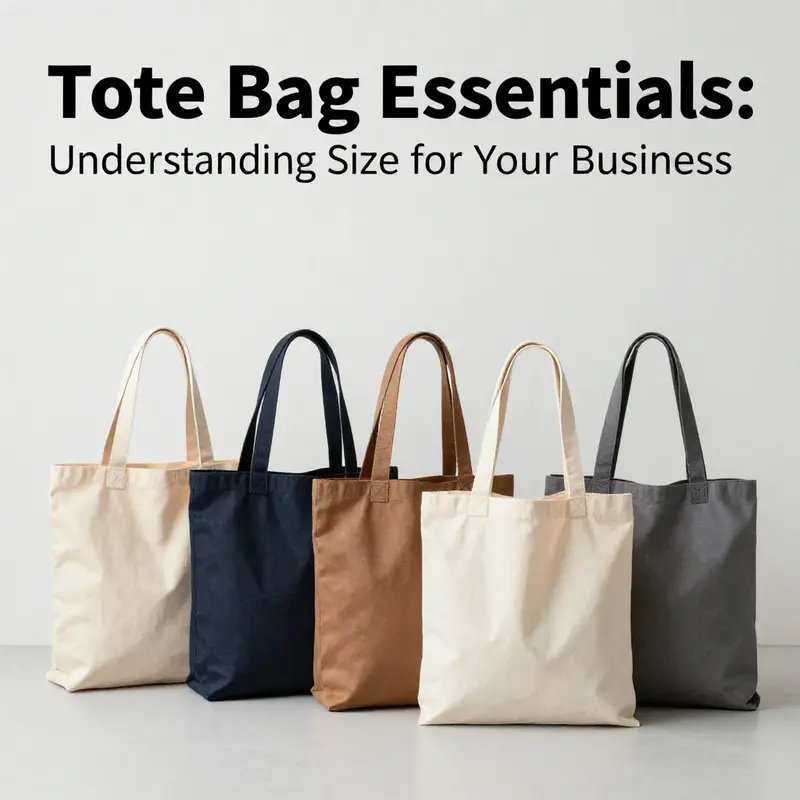
The versatility of tote bags makes them popular among various businesses for promotional purposes, daily logistics, and customer convenience. Understanding how big a tote bag is can significantly affect its functionality and appeal to your target market. In the chapters that follow, we will delve into the common sizes of tote bags, the factors influencing size selection, and how each size plays a pivotal role in specific business uses.
Sizing Up the Tote: A Deep Dive into How Big a Tote Bag Really Is and Why It Matters

The question of how big a tote bag should be is less a single numeric answer than a dialogue between your daily rituals and the bag’s geometry. Tote bags exist across a spectrum of sizes because people use them for a spectrum of purposes. The same bag that serves as a sleek commuter brief for one person can become a grocery-hauling workhorse for another. There is no universal standard size, and that ambiguity is not a flaw but a reflection of how fluid the relationship is between form and function. When we ask, how big is a tote bag, we are really asking: what load will you place into it, how will you carry it, and where will you be when you reach for it? The dimension categories that commonly reappear—small, medium, and large—offer a practical mental map, but they are best understood not as rigid boxes but as ranges that accommodate different needs and bodies. Height, width, and depth, the three axes of any tote’s external form, together determine how the bag sits at your side and how much interior real estate you have for the objects that matter most to you.
In the most widely used framework, tote bags are measured by height, width, and depth (sometimes called thickness). This trio of measurements translates directly into what you can physically fit inside. A compact bag with a height around 10 to 14 inches, a width of 12 to 16 inches, and a depth of 4 to 6 inches will carry the essentials with minimal bulk. Think phone, wallet, keys, a small notebook, and perhaps a couple of personal items. This is the niche where a tote doubles as a daily grab-and-go companion. It is large enough to be practical, yet small enough to feel nimble and easy to handle across crowded sidewalks or transit platforms. The smaller end of the spectrum is particularly valuable for those who prefer a bag that remains close to their silhouette rather than one that swings heavily at their side. It also tends to pair well with lighter loads, where every additional inch of height and width would translate into unused space or unnecessary weight.
Move up a notch, and the medium tote becomes the default workhorse for many people. Typical medium totes stretch from about 15 to 18 inches tall, 16 to 19 inches wide, and 5 to 7 inches in depth. This size strikes a balance between portability and capacity. It comfortably accommodates a laptop up to about 13 to 15 inches, plus notebooks, documents, a water bottle, and personal extras. For students, freelancers, or professionals who carry a mix of technology and paper, the medium tote often hits the sweet spot between being unobtrusive enough for city travel and capacious enough to keep all daily essentials within reach. The practical scaffolding here lies in the interior organization: a single, tall cavity can swallow a laptop sleeve, a notebook, and a planner, while internal pockets keep smaller items from getting lost in the bottom. The medium tote, then, is not merely a larger version of the small tote; it represents a design philosophy that favors a generous core space paired with thoughtful, accessible organization.
The large tote enters the conversation as soon as the load grows beyond the typical workday gear. Large totes commonly exceed 19 inches in height, with widths of 20 inches or more and depths of 7 inches or greater. These dimensions are designed for abundant capacity, the kind of bag that can carry groceries, gym clothes, or a full day’s supply of items for travel. A large tote is a bag that can transition from a shopper to a weekend traveler with minimal rearrangement. It invites you to reimagine what “carry” means: not just a place for items but a portable threshold between home and elsewhere. Yet the enlarged scale also raises practical considerations. A bag that is tall enough to sweep the ground when you walk or wide enough to look unwieldy on a crowded subway becomes less about convenience and more about deliberate usage. The depth, which can run into the seven-to-ten-inch range or more, matters for bulky objects like a folded sweater, a textbook, or a water bottle with a wide mouth. The optimization challenge for large totes, therefore, is not simply about stuffing more in but about balancing capacity with manageable weight and a comfortable carrying experience.
As general guidance shifts from category to category, the underlying aim remains constant: the bag should be proportionate to the user. A 2026 guide emphasizes that the ideal tote size is not dictated by fashion trend or brand aesthetics alone but by how the bag fits the person who carries it. The same bag that looks balanced on one shoulder can appear oversized or undersized on another, depending on height, torso length, shoulder width, and posture. In practical terms, this means you should visualize how the bag rests when it is carried. A tote with a broad width can sit comfortably on a taller frame when the strap length and cut keep the bag at a natural height; match that width with an appropriate strap drop, and the bag remains stable rather than sliding awkwardly across your hip. Conversely, a bag that is too tall for your frame may drag along the ground, and a bag that is too short or excessively wide can pull at the shoulder, causing fatigue after a few hours of wear. The relationship between body proportions and tote geometry is not merely anatomical; it shapes daily comfort, posture, and even how readily you access the items inside.
But size is not the only variable that contributes to usability. A tote’s depth, or thickness, has a substantial effect on internal organization and the ease with which items are retrieved. If the depth is too shallow, bulky objects press against the zipper or the top edge, creating a squeeze that can frustrate any routine trip to the bag’s interior. If the depth is too generous, the bag can swallow items that should be kept within easy reach, inviting a rummaging habit that slows you down. The middle ground—neither overly shallow nor absurdly deep—tends to support a flexible repertoire of contents: a slim laptop, charger, a notebook or two, a travel umbrella, a small makeup bag, and perhaps a light lunch alongside a reusable bottle. This balance often emerges in the medium range, but the specific items you carry, your day’s rhythm, and your tolerance for rummaging all push toward a tailored choice.
Importantly, volume estimates illuminate what the outside measurements imply for actual storage. A catchy heuristic is to convert the external dimensions into a rough usable capacity. Multiply height by width by depth, and then divide by 61 to translate cubic inches into liters, a conversion approximate enough for planning. For example, a medium tote measuring 16 inches tall, 18 inches wide, and 6 inches deep yields (16 × 18 × 6) ÷ 61 ≈ 28 liters of space. That figure represents not a perfect metric but a practical compass for deciding whether a bag can accommodate your intended day’s load without forcing you to rearrange your life around it. If you routinely carry books or a larger laptop, you may find that 28 liters feels snug but sufficient; if you shoulder gym clothes and a change of clothes, you might want a larger envelope of space. The point is not to chase a precise liter count but to align your anticipated content with the bag’s physical envelope so that the bag remains an ally, not a liability.
The discussion of size inevitably flows into questions about fit and comfort. The best trio of dimensions in the world won’t compensate for a bag that sits wrong on your frame. The alignment of the bag with your body is practical physics: it affects not only comfort but posture, muscle engagement, and even the likelihood that you’ll reach for your bag when you need something. The principles that guide fit are simple: the bag should sit close to your body, not swing far from your center of gravity, and it should be easy to lift from the ground or shoulder without straining your back. If a bag is too wide, it can press against your hips and ride unsteadily, especially when you’re navigating stairs or boarding a crowded bus. If the bag is too tall, it can tip forward and catch the heel of your shoe or brush against walls, making every step feel imprecise. The height-to-body ratio matters, as does the strap length—long enough to hang comfortably at your side or over your shoulder, but not so long that the bag drapes to knee level or slides into the lower back when you bend or twist.
In practice, choosing a tote size becomes an exercise in forecasting your typical day. If your commute requires weaving through crowds, you’ll value a size that remains controllable in motion. A large tote, for example, can double as a conveyance for multiple bags or as a travel companion, but its bulk can slow you down on busy sidewalks or when the doors of a train slide shut. A small tote may feel agile and light, yet it risks leaving essential items at home when a longer day demands more gear. The medium tote often emerges as a practical default for many people because it tends to accommodate a laptop, notebooks, and water bottle without appearing oversized. The selection process, however, should involve a quick mental inventory of what you typically carry. Do you routinely pack a tablet or a small textbook? Do you prefer to drink from a wide-mouthed bottle? Will you need a sweater or a compact umbrella on most days? These questions guide the choice more reliably than chasing an abstract ideal of “the perfect size.”
To ground these reflections in real-world decision making, consider a tangible pivot point: the idea of trying different sizes in your own routine. If you have access to a store that allows you to test carry, place a representative load in a bag of each size and walk for several minutes. Notice how the bag sits on your shoulder, how easily you can reach items at the bottom, and whether you feel strain at the end of the trial. If you lack such access, you can simulate the experience with a tote that you already own by filling it with typical items and wearing it during daily tasks to observe how it behaves. The aim is not to accumulate opinions about fashion silhouettes but to cultivate a sense of how the bag’s geometry interacts with your everyday cadence. This is where the concept of “fit” becomes actionable: it translates into less rummaging, quicker access, steadier movement, and a reduced risk of shoulder soreness or back tension after a day’s wear.
As you pursue this practical inquiry, you may notice how size interacts with materials, structure, and construction. A tote’s stiffness, the firmness of its sides, and the presence of internal removable pouches all influence how the bag holds its shape when not full and how it behaves when loaded. A bag with a soft, flexible body may feel spacious in theory but collapse around its contents when light, making access slower and less predictable. A bag with a reinforced base and structured sides often feels more stable, which can be comforting when carrying heavier loads such as books, a laptop, or a water bottle. The depth of the bag can either invite a more organized interior or encourage a looser arrangement that resembles a mound of items rather than a clear, accessible workspace. These qualitative aspects intersect with the numeric dimensions to determine the overall usefulness of a tote for your day-to-day life.
The final piece of the sizing puzzle is how a tote’s size aligns with your broader lifestyle patterns. If you travel frequently, a larger capacity can be indispensable for packing toiletries, a compact outfit, and reading material for layovers. If your routines are office-centric and you carry a laptop, documents, and a lunch, a medium tote often provides ample space without compromising mobility. If your life is fueled by errands—grocery stops, gym sessions, or costume-fitting days—a larger tote may be warranted for flexibility, even if it requires a moment of adjustment during transit. Size is thus less about chasing a universal metric and more about calibrating the bag to support your daily choreography. The ideal size emerges when the bag feels like an extension of your routines rather than a gatecrasher to your day.
This is where the practical advice from the sizing literature can be helpful. The literature emphasizes that “the ideal” is highly personal and depends on planned loads and carrying preferences. It also reminds us that what feels comfortable for a short test can feel burdensome after hours of use. With this awareness, you can approach tote shopping as a process of calibration rather than a destination. The goal is to find a bag that respects the balance between capacity and convenience, one that encourages you to bring what you need without inviting you to overpack or overexert yourself.
To tie these considerations back to actionable criteria, you can think of three decision knobs you adjust as you size up a tote. The first knob is height, which influences whether the bag sits at your side, beneath your elbow, or brushing your knee if you’re tall. The second knob is width, which affects whether the bag drapes gracefully from your shoulder or creates a broad silhouette that demands space on crowded sidewalks. The third knob is depth, which governs how many items can be organized inside without creating a bottomless pit of clutter. In real life, you rarely adjust these knobs in isolation; materials, strap design, pocket layout, and closure types interact to shape the final impression.
For readers who want a concrete starting point while still preserving flexibility, a practical baseline is to consider a medium-size tote as your initial benchmark. If you’re curious to explore a reference that translates the abstract numbers into a tangible option, you can examine the Medium-size tote, which captures the general sweet spot between compact daily use and expanded capacity. Medium-size tote is a useful anchor for understanding how height, width, and depth interact with typical daily loads and how the interior layout supports organization without forcing you to sacrifice portability. This internal link serves as a bridge between theory and practice, helping you translate the sizing language into a real-world choice without getting lost in a sea of specifications.
As you broaden the search, you’ll also encounter bags that emphasize alternative traits—material resilience, water resistance, or portability through collapsible design. Size does not exist in a vacuum, and the conversation about tote dimensions should be read alongside these other attributes. The user experience hinges not only on how much a bag can hold but how easily you can locate, retrieve, and protect those items on the go. A bag made from a sturdy material with a well-thought-out interior can feel smaller in practice because its contents stay orderly and accessible. Conversely, a bag that looks spacious but uses a poor organizational system may feel unreliable because you spend more time sifting through the interior in search of what you need. In short, size is a necessary, but not sufficient, condition for fit. The total experience emerges from how the dimensions are realized in the bag’s construction and how that construction aligns with your daily movements.
In closing, the question of “how big is a tote bag” invites a holistic appraisal rather than a single measurement. The three-dimensional framework—height, width, and depth—provides a practical vocabulary for comparing bags. The three size categories—small, medium, and large—offer a heuristic for immediate shopping decisions, while the deeper questions about body fit, posture, and daily cadence separate casual browsing from mindful purchasing. The most reliable way to pick a tote is to imagine your ordinary day in advance: the route, the items you routinely carry, the objects you’d rather not leave behind. If you can visualize these elements clearly, the right tote size reveals itself not by a number on a tag but by the bag’s willingness to support your daily routine without demanding a compromise in comfort or efficiency. The ideal tote is the one that feels like it was made for you, regardless of whether it sits on the boundary between small and medium or sits comfortably within a medium-to-large perch. The answer, then, is less about a universal standard and more about a personalized balance that keeps your day moving smoothly rather than slowing you down.
External insights can broaden this framework for broader audiences and different lifestyles. For broader context on tote sizing, consult an external resource. https://www.thestraight.com/
Sizing the Everyday Tote: A Considered Look at How Big Your Bag Really Needs to Be

Size is the most visible yet most deceptive part of a tote bag. It seems straightforward at first glance: you pick a width, a height, and a depth, and you’re done. But in practice, the question “how big is a tote bag?” opens into a broader inquiry about your life, your routine, and how you move through space with the things you carry. There is no universal standard size. The market offers a spectrum—from dainty day-in-and-out companions to cavernous workhorses that double as moving vans for groceries and gear. The meaning of “big” in this context is not just about how much you can cram inside. It is also about how the bag sits against your body, how it distributes weight, how quickly you can reach for a phone, a charger, or a pen, and how easily you can maneuver through a crowded train or a busy street without juggling the bag in your arms or on your shoulder. In short, size is a material fact and a lived experience all at once.
To understand size in a tote, it helps to start with three concrete dimensions: height, width, and depth. These are the external measurements that give the bag its silhouette and largely determine what can fit inside. Unlike the inventories of backpacks or suitcases, totes rarely carry a standardized volume label in liters or quarts. Some brands may boast a roomy interior, but the visible measurements can be misleading if a bag is slouchy and the sides give way to gravity, or if a structured bag holds its shape but narrows the usable space with stiff walls or awkward internal partitions. In practice, you have to read the bag as a whole: its outer dimensions, the way it sits on your body, and the way its interior is organized. A tall, narrow tote can visually feel large, but it may fail to accommodate a standard file folder or a tablet without bending or wedging. Conversely, a wide but shallow bag may look generous yet struggle to keep taller items upright or secure a water bottle without tipping.
Thinking about size this way invites a practical habit: imagine the items you carry every day and test how they would fit. If you routinely bring a laptop, notebook, and a water bottle, you’ll need a bag with enough interior depth to stand up to the weight and a height that keeps the top from tipping over when you set it down. If your day involves a lot of walking or a longer commute, the bag’s balance matters as much as its capacity. A bag that feels light and balanced when you’re standing still can become a burden when you’re navigating stairs, sidewalks, or a crowded bus. A well-chosen tote should feel like an extension of your arm rather than a ballast that forces you to alter your gait or posture. The dynamics of carrying—how weight shifts as you move, how the strap or handles rest on your shoulder, and how the bag sits against your hip or torso—are as important as the simple numbers on a tag.
A practical way to translate those dimensions into real capacity is to think in terms of rough internal volume. In this vein, many shoppers find it helpful to multiply height by width by depth to get a raw cubic measure, then translate that into a rough liter figure. The math is straightforward, though the interpretation is nuanced. For a tote that measures 14 inches in height, 12 inches in width, and 6 inches in depth, the external volume would be 14 × 12 × 6 = 1008 cubic inches. If you divide that by 61, you obtain roughly 16.5 liters of theoretical capacity. This conversion is only approximate because internal walls, seams, pockets, and the bag’s material all press inward or outward and can dramatically affect usable space. A slouchy canvas tote may swallow more items because its fabric yields, while a stiff leather tote with firm panels may hold precisely what the measurements suggest or slightly less because rigid sides intrude on the interior corners. The key is to use the volume figure as a rough guide, not a gospel truth, and to pair it with qualitative assessments of shape, structure, and organization.
The way a bag is made also changes how its size feels to the hand and to the body. A slouchy tote, even with generous depth, can appear roomier than a structured leather tote of the same measurements. Fabric with soft drape tends to expand to accommodate oddly shaped items—an umbrella tucked into the side seam, a sweater folded behind a laptop, a book pressed into a corner—without immediately signaling the bag’s true capacity. In contrast, a structured tote with rigid panels and carefully placed pockets compresses or channels space in predictable ways. That perception of space is important because it affects how comfortable the bag feels after a long day. Perceived space matters as much as real space for everyday use. The same trio of dimensions can translate into a bag that feels liberating in one moment and just barely sufficient in the next depending on fabric, lining, and interior architecture.
Your body matters too. A big bag can be a blessing for those who carry a lot, but if the bag sits too high or too wide on your frame, it can tug on one shoulder, interfere with your posture, or make you reel when you step off a curb. A 2026 guide on bag fit emphasizes that the bag should fit you as much as you fit it. If you are tall and your shoulders are broad, a taller bag can balance your proportions without creating a trailing hem on the ground or forcing you to lift your elbow to keep it from grazing your hip. If you are shorter or have a narrow shoulder line, a bag that is too tall can ride too high and feel less stable when you move. The same principle applies to width. A bag that is too wide for your torso can slip off your shoulder or swing uncomfortably as you walk, while a bag that is too narrow might feel constraining and force you to leave essentials behind. The choreography of carrying—how you lift it from a chair, how you swing it onto your shoulder, how you reach for a zipper or a pocket—depends on your height, belt line, and how you typically move through space. The recommended balance is not a universal law but a personalized calibration that you learn through trial, reflection, and a bit of trial and error.
In the end, the best size for any tote answers a simple question about daily life: what do you carry, how far do you walk, and how often do you switch between different modes of transport? A student who needs textbooks, a tablet, and a few study aids will favor a medium tote with enough depth to keep items upright and a few internal pockets to separate papers from electronics. A parent who must slip diapers, snacks, changes of clothes, and maybe a small blanket into the bag will reach for a larger tote with a robust lining, perhaps water resistance, and a wider opening for quick access when fatigue sets in. A traveler or commuter who wants a bag to double as a carry-on or a day bag will tend toward an oversized tote with secure compartments for travel documents, electronics, and personal care items. Each profile uses size as a tool to accomplish tasks with less friction, not as a symbol of status or a shelf for fashion bravura. The most successful bag choice arises from listening to the specifics of daily life and letting the bag respond to those specifics with proportional balance, accessible pockets, and a silhouette that feels natural against the body.
For those who want a quick mental model, a simple heuristic can help. If you rarely carry a laptop, a medium tote roughly in the 14–17 inch width and 15–20 inch height range often hits a sweet spot for daily use. If you frequently carry a laptop, textbooks, a water bottle, and perhaps gym gear, you’ll likely want a larger tote that brings depth into play—think 17–20 inches in width and 18–22 inches in height. If your life leans toward minimalism, a compact tote in the lower end of the spectrum might be all you need. And if your life is rich with tasks—from remote work to errands, from parents’ duties to travel—consider a bag that can stretch a little, with a resilient lining and flexible closure. The right size feels less like a fixed number and more like a configuration that reduces friction, improves access, and supports comfort over long days.
The design and the material you choose further influence how size translates into experience. A bag cut from stiff leather or a high-density polymer may keep its shape and feel sturdy, giving a sense of contained capacity even when it’s not full. A bag of breathable canvas or a pliant textile can seem unexpectedly roomy when empty but tighten quickly once loaded with everyday items. The texture of the material, the weight of the handles, and the softness or firmness of the strap all contribute to how comfortable a bag feels when worn. A roomy interior is not always a blessing if it’s hard to locate items when you need them. Thoughtful interior organization—pockets, slots, and secure compartments—can make a moderate-size bag feel as capable as a larger one by reducing rummaging time and keeping items in their place. In contrast, a bag with too many shallow pockets or unmarked compartments can create a sense of disorganization that makes even a large bag feel chaotic. The most satisfying totes balance exterior measurements, internal architecture, and the physical ergonomics of wearing and using the bag.
If you are planning to shop with this in mind, there is value in a targeted approach that combines measurement literacy with practical testing. Start by laying out the items you carry most often on a table. Measure them and consider their tallest dimensions. A notebook that sits upright, a laptop with a protective sleeve, a water bottle, a small umbrella, chargers, a makeup case, and perhaps a day planner—these are good proxies for an everyday load. Now imagine tucking them into a bag. When you simulate loading, check the vertical clearance—the distance from the bottom of the bag to the top edge—and the depth you’ll need for the thickest items. If you can simulate the daily routine: put the bag on, adjust the strap length, walk a few steps, lean slightly to the right to navigate a doorway, and then remove a few items without spilling the contents, you begin to understand whether the bag will truly meet your needs. This method is more reliable than relying on a single number on the product page, because it engages your body and your habits directly, which is where tote size becomes meaningful.
For readers who want a concrete path to applying these ideas, consider visiting a condensed, practice-oriented resource that discusses tote sizing in everyday terms. A useful,.medium-size example is available on a dedicated tote guide page that centers on what a moderate-size tote can hold and how its dimensions translate into real-world use. Medium-size Tote Page. This anchor helps you connect theory with practice and reminds you that size is a variable tuned to your daily life rather than a fixed attribute you must chase. It’s easy to fall into the trap of assuming that bigger is always better. But the most successful tote choices preserve a balance between capacity, weight distribution, and ease of access. They feel intuitive to carry, and their internal geometry supports your routines without forcing you to adjust how you move or how you organize yourself at the start and end of each day.
The journey to choosing the right tote size is not a one-off decision but a continual calibration. Your body, your tasks, and your environments shift with seasons, responsibilities, and even health. A bag that fits your life perfectly this month might feel a touch too bulky next season if your routine becomes lighter or more mobile. The beauty of a good tote is its flexibility—the ability to scale its usefulness without requiring a brand-new purchase. That does not always mean choosing the biggest option available, but rather selecting a silhouette whose dimensions allow you to optimize your daily rituals, your posture, and your energy throughout the day. In the same way that shoes suit different activities—from walking to running—totes suit different types of days. A capable tote invites you to carry what you need without overburdening yourself, and to retrieve items with ease rather than contorting your body to reach into the bag.
The topic of size also invites a broader reflection on how we perceive accessory weight and space. A tote bag is a kind of portable workspace, a transitional object between home and the many micro-environments we inhabit, from a coffee shop desk to a conference room to a child’s car seat on a weekend trip. The size you choose will influence how you feel about the day’s tasks. If the bag is too large, it might become a visual reminder of everything you carry and thus a source of mental clutter as you transit from place to place. If it’s too small, you might feel compelled to leave essential items behind, which adds a different form of cognitive load: the quiet anxiety of needing something and not having it at your fingertips. Size, in this sense, becomes a practical instrument of psychological ease as much as a physical capacity issue.
As you consider the decisions you’ll make when shopping for a tote, you can begin to weave together the technical measurements with the lived experience. The height, width, and depth give you a structural map of what is possible. The interior layout and the material give you a sense of how comfortable it will be to use. Your own body proportions and daily rhythm give you the cue about how the bag will behave in motion. When all these threads align, you arrive at a size that does not merely accommodate items but supports efficiency, reduces fatigue, and harmonizes with your everyday movements. The goal is not to find a bag that merely holds more, but one that makes your daily life feel a little easier and a little more organized with each use.
For readers who want to deepen their understanding beyond anecdotal testing, the broader literature on bag sizing suggests that practical experience often beats theoretical capacity. Real-world use demonstrates how internal pockets, zipper closures, and the stiffness or softness of the bag influence how much one can carry and how accessible each item remains during the day. In the end, the right tote size is intimately tied to you: your height, your stride, your work or study patterns, and how you move through your living and working spaces. The right size is not a one-size-fits-all prescription; it is a personalized, dynamic decision that becomes clearer as you reflect on your routine, adjust your expectations, and test bags against real tasks rather than just imagined needs.
External reference for further reading on practical tote sizing and real-life use cases: The Strategist’s tote bag size guide. https://www.thestrategist.com/tote-bag-size-guide
How Big Is a Tote Bag? Selecting Size by Use, Fit, and Everyday Balance
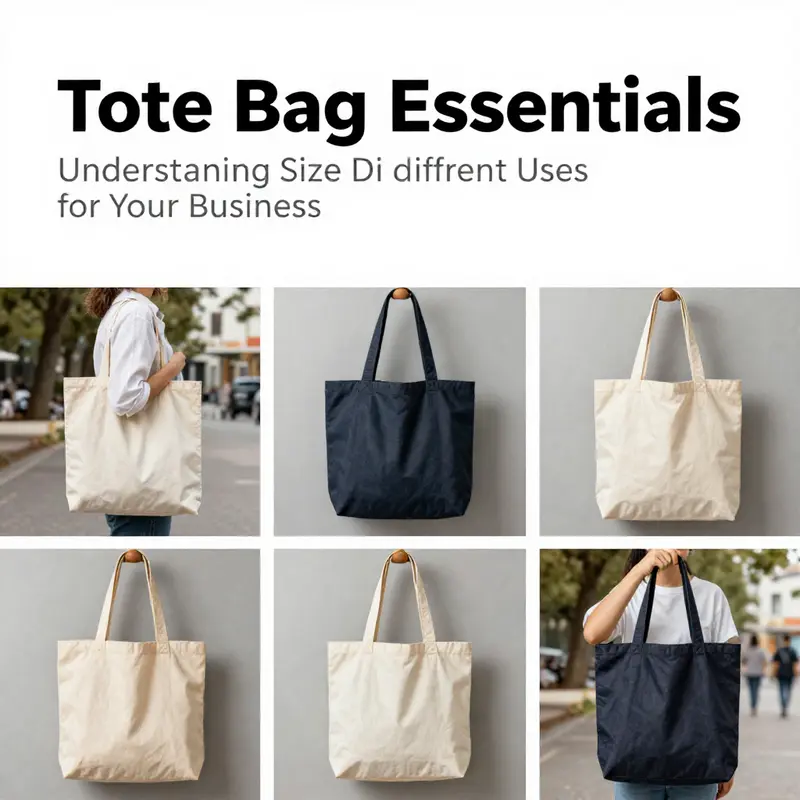
Size is more than a number; it is a relationship between what you carry, how you move, and where you take a tote bag. In tote bag discussions, translating dimensions into daily behavior helps choose a size that feels balanced for your body and routines. The right size respects your frame and your tasks, and keeps the bag comfortable to use. Start with intended use, then consider how the bag sits on your frame, how heavy the contents are, and how you want to move through a day that may include walking, standing, commuting, bending, or reaching. Size becomes a practical design problem as much as a fashion concern, since context and load matter beyond the bag’s exterior.\n\nTo ground the idea, think in three common use cases: everyday errands, work or office duties, and weekend or casual outings. Each case has typical ranges for height, width, and depth, and each has its own logic for how a bag in that size feels balanced and easy to live with. The ranges are approximate and vary with brand choices, materials, and construction. A tote’s height, width, and depth influence not only capacity but also silhouette, balance on the body, and how the bag sits when you move. Handle length matters as much as the body measurements; a bag that is too tall can drag, while handles that are too short can press into the shoulder.\n\nConcrete dimensions help anchor the idea. For everyday errands, a medium tote often lands in roughly 12–16 inches tall, 14–18 inches wide, and 5–7 inches deep. This space fits a laptop or tablet, notebook, water bottle, wallet, keys, and a light jacket or umbrella without becoming unwieldy. For work or office life, a larger, more structured medium or lean large might be around 16–18 inches tall and 14–18 inches wide, with a depth of 6–8 inches to accommodate a laptop, documents, and chargers while preserving a professional silhouette. Weekend or beach outings call for bigger, more open totes, roughly 18–22 inches tall with a base that measures 18–22 inches in width and a depth of 6–9 inches, ready to hold towels, a change of clothes, snacks, and a book.\n\nUnderstanding internal space also matters. A tote’s internal layout, pockets, and compartments can reduce usable capacity even when overall measurements seem large. The material and structure influence how much you can fit before the bag starts to feel heavy or bulky. The balance between soft and structured silhouettes affects how the bag shifts against your body as you move; a structured tote helps keep items from shifting, while a soft tote adapts to its contents.\n\nThe relationship between size and comfort is driven by the handle or strap system. A longer shoulder drop changes how weight distributes, and wider straps can reduce pressure points. Importantly, many bags offer adjustable straps or multiple carry options to tailor fit to different outfits, weather, or activities.\n\nPractical heuristics can guide a first choice. If the bag sits too high or feels unstable on your frame, you may need a shorter or longer strap or a smaller height. If the base bulges when you bend over, you may be overestimating depth or overpacking. If the bag is heavy even when empty, you might be at a size that is too large for your typical load. In short, aim for a size that feels natural for your daily rhythms, not a universal standard.\n\nAs a concrete reference, a medium tote around 12–16 inches tall, 14–18 inches wide, and 5–7 inches deep is often a versatile starting point for urban life. It tends to balance capacity with manageability, and can be organized with interior pockets and modular features to support a smooth daily routine. For those who need more space, a slightly larger tote within the same overall proportions can accommodate heavier loads while preserving ease of movement. For lean days, a smaller tote offers nimble convenience for essentials. The key is to match the bag’s geometry to your height, arm length, and posture across typical activities.\n\nTo explore practical anchoring, you can consult resources such as a medium-size tote guide, which translates measurements into real-life use cases and connects inches to daily routines. External references can help you translate the math of inches into the feel of a strap and organization of pockets: Medium-size tote guide: https://alltotebags.com/medium-size-tote/.\n\nIn sum, the right tote size balances capacity, comfort, and personal fit. Start with your frame measurements and compare them to the bag’s height and handle length. If needed, choose a model with adjustable straps or a slightly deeper or shallower profile. The goal is a bag that remains comfortable and practical across the typical patterns of your week, not a fixed standard. The best bag for today may change tomorrow as your routines evolve, and that adaptability is the essence of choosing by use, fit, and everyday balance.
Final thoughts
The size of a tote bag not only affects its function but also influences customer satisfaction and brand representation. By understanding the common sizes, considerations for selection, and the suitability for various uses, business owners can make informed decisions that enhance their offerings. Choosing the right tote bag size is essential for ensuring that they serve the needs of both the business and its customers effectively.