
In a world increasingly conscious of environmental impact, eco-friendly tote bags emerge as a crucial asset for businesses looking to resonate with eco-aware consumers. These reusable bags, generally made from sustainable materials like organic cotton, jute, or recycled plastics, not only meet consumer demand for practicality and aesthetics but also align with global sustainability goals. As more businesses make the shift to eco-friendly products, it’s vital to understand the multifaceted benefits of eco-friendly tote bags. This article delves into the sustainability aspects that make these bags a responsible choice, examines their positive economic impact on consumer behavior, and highlights current fashion trends and customization options that appeal to a diverse market.
Threads of Change: The Sustainability Journey of Ecofriendly Tote Bags
Every day, as a chorus of shoppers reaches for a tote to replace disposable bags, the sustainability story of ecofriendly totes unfolds in a quiet, practical script. The bag is not just a carrier; it is a portable expression of values, a wearable statement about how products are designed, used, and disposed. The sustainability of ecofriendly tote bags rests on a holistic balance between material innovation, lifecycle thinking, and the habits of the people who carry them. In the following exploration, we trace how choices at the level of fiber and form ripple outward to influence waste streams, energy use, and the health of ecosystems. This is not a single solution but a choreography of decisions that, when aligned, can reduce the footprint of everyday shopping. The story begins with the materials themselves, for the footing of any sustainable tote is its composition. Different fibers and, increasingly, smarter polymers shape not only the bag’s performance but its potential to participate in a circular economy. Recycled paper tote bags, for instance, rely on post-consumer or post-industrial waste streams. They stand as a practical way to divert waste from landfills and to reduce the demand for virgin wood pulp. The benefit is immediate in some contexts: lower deforestation pressure, a smaller energy footprint in the early stages of production, and a message about using what would otherwise be waste. Yet this option is not without caveats. Paper, even when recycled, can be less durable in damp conditions, and the structural integrity of a tote may depend on finishes or coatings that complicate recycling at the end of life. The material science behind these bags is not static; it evolves with process improvements, including more robust fiber treatments and the adoption of coatings that balance water resistance with recyclability. Even so, the durability expectation remains central. A tote that lasts for hundreds of uses multiplies the environmental savings, because the emissions and resource use associated with the creation of each bag get amortized across many trips, purchases, and storage contexts. Bioplastics enter the conversation as another path toward renewable resources. Polylactic acid, or PLA, is derived from renewable feedstocks such as cornstarch, and in the right conditions, it can biodegrade. The key caveat is that industrial composting facilities are often required for true degradation, and home composting is rarely sufficient. Without accessible disposal environments, PLA may simply persist in landfills, where its degradation timeline becomes uncertain. Those realities push designers to think carefully about end of life when choosing bioplastics. They also stimulate the exploration of blends and multilayer structures that preserve barrier qualities while enabling recycling through established streams. Then there are natural fibers, including cotton and canvas, which have long held the appeal of durability and reusability. Organic cotton, with its reduced pesticide load, presents a lower environmental burden than conventional cotton in some cases, though water usage remains a central consideration. The durability of canvas often makes it suitable for hundreds of uses, which is essential given the disproportionate impact of producing a single bag if it wears out after a handful of uses. The balance among these materials rests on real world use, context of purchase, and the infrastructure around disposal. Beyond the fiber choice, the design and functionality of tote bags amplify sustainability in practical, everyday ways. A tote is not merely a means to an end but a tool that can push habits toward lower waste and longer life. Features like removable insulated liners demonstrate how a tote can transition from a simple carrier to a mini cooler for perishables. By enabling shoppers to transport cold items without resorting to disposable packaging, these design choices cut down on plastic usage at the point of purchase. The liner itself becomes a modular component, which means it can be replaced or upgraded as needs evolve, further extending the bag’s useful life. Moreover, reinforced stitching and sturdy handles translate fibers into resilience. When a bag can bear heavy groceries, laptops, books, and work gear without showing signs of strain, it stays in daily circulation longer, reducing the frequency of replacement purchases and the associated production costs. The emphasis on durability also reframes care as a sustainability practice. Many bags are machine washable, a practical feature that supports hygiene and reuse. Each wash cycle, when conducted with mindful water and energy use, contributes to a longer lifecycle. The upshot is that a well maintained tote can outlast multiple disposable alternatives, turning a single purchase into years of service and fewer plastic bags entering waste streams. Equally important is the broader concept of circularity, which has become a governing principle for product design and retail initiatives. Circularity asks designers to anticipate what happens when a bag reaches the end of its life and to build paths for return, repair, repurposing, or recycling. Some brands experiment with take back programs, inviting customers to return old bags for repurposing into new products or for recycling into material streams that can reenter the manufacturing cycle. Such approaches shift responsibility away from a one way transaction toward a continuous loop, reinforcing the idea that sustainability is not achieved by a single feature alone but by an entire system in which design, consumption, and disposal interlock. The consumer plays a crucial role in this system, and behavior is the hinge on which environmental benefits swing. The most significant gains come not from occasional use but from consistent, habitual use of a tote bag. Each morning when a shopper chooses to carry the same bag, or when a commuter opts for a reusable tote instead of a disposable bag, the demand for single use plastics declines. The math is simple but powerful: repeated reuse multiplies the environmental dividend. In practice, many totes become more than carriers; they become organizers, fashion accessories, and even travel essentials. A bag can serve as a clothes organizer on a short trip, a space for school or work supplies, or a compact storage unit during a move. Each reimagining extends the bag’s life and defers the need for new resources. This versatility also helps avoid the temptation to discard and replace as fashion or trends shift. When a bag is adaptable, its value proposition remains relevant across years and seasons, which lowers the consumer habit of impulsive replacements. Yet individuals must also respect care guidelines to preserve performance. Washing temperatures, gentler cycles, and air drying can extend the bag’s life and preserve material integrity. Proper care reducesWear and tear, helping the tote withstand frequent use and resisting the urge to toss it when a small snag appears. The social dimension of sustainability cannot be ignored. Brand responsibility, in turn, becomes a visible signal of whether a tote is more than a marketed object. As companies articulate their sourcing, manufacturing, and waste management practices with transparency, shoppers gain confidence in the integrity of the product. Minimalist designs that prioritize longevity, ethical sourcing, and clear communication about production processes communicate a deeper commitment to the environment. When a brand communicates its supply chain realities—where fibers originate, how dyes are treated, how far a bag travels, and who fills the roles in production—it invites a shared culture of responsibility. Consumers begin to align their values with corporate action, and the societal shift toward low impact living gains momentum. The material truth of sustainability also sits within a broader context of standards and performance benchmarks. The field has grown increasingly rigorous as researchers and practitioners refine the way we measure impact across life cycles. For readers seeking a technical anchor, the Green Shopping Bag Nonwoven Guide, which covers performance, properties, and types for industrial applications, offers a comprehensive reference point. It helps translate ideas about eco friendly tote bags into measurable criteria such as durability, moisture resistance, load capacity, and end of life options, anchoring choices to verifiable data. With that grounding, we can appreciate how a bag balances practicality with responsibility. When you compare materials, you do not simply count the number of trees spared or the kilograms of waste diverted. You weigh durability against energy use, you consider water footprints, and you examine how easily a product can reenter the material cycle after its useful life. This holistic lens is essential if tote bags are to fulfill their promise over time. The consumer’s habits themselves can become part of a broader environmental education. Simple shifts, such as keeping a tote in a readily accessible place, making a habit of taking it to the market or library, and using it consistently for multiple trips, collectively reduce the expenditure of energy, water, and raw materials that would otherwise occur with disposable bags. The practical fiction that the tote is merely a fashion item gives way to a more truthful understanding: it is a living part of a system, shaped by design choices, how it is used, and what happens when it reaches the end of its life. The act of choosing a tote becomes a small, daily act of stewardship that, stacked across thousands of households, can alter waste management at scale. The design community has learned that durability is a form of ethics. A bag that remains useful through season after season demonstrates a respect for the resources invested in its creation. It also reduces the pressure to churn out new styles every year, slowing down the cycles of production and the associated environmental costs. In practice, that means thoughtful selection of materials that meet performance needs while staying compatible with recycling streams. It means using pigments and finishes that do not hinder recyclability. It means stitching and hardware that resist wear and can be repaired rather than discarded. It also invites a broader cultural conversation about how everyday objects participate in our life cycles. When people begin to imagine a tote bag not as a disposable commodity, but as a long term companion with multiple roles, the social norms around consumption begin to shift. The tote becomes a small infrastructure in daily life, quietly replacing countless plastic bags, and the cumulative effect is measurable. It is not only about the bag in your hand but about the habits you foster and the expectations you set for the marketplace. In discussing sustainability, the lifecycle perspective cannot be ignored. The cradle to cradle mindset asks designers to consider reuse, recovery, and repurposing at every stage. This is where collaboration among material science, product design, waste management, and consumer behavior becomes essential. A successful tote is not just strong; it is modular, repairable, and easy to disassemble for recycling or repurposing. It is designed with the capacity to accept changes in user needs and market conditions without becoming obsolete after a single season. The economics of sustainability also come into play. A higher upfront cost for a durable tote can be justified by its long service life, especially when it replaces several disposable alternatives. The market response to durable, stylish, and responsibly produced bags suggests that consumers are willing to invest in quality if the total cost over time is understood. Yet price signals alone do not guarantee impact. The transparency of production and the credibility of environmental claims matter as much as the bag’s performance. When a company communicates its sourcing, its labor practices, and its approach to reducing energy and water use with data and third party verification, it helps build trust. Trust, in turn, encourages broader adoption. The internal strategy of a bag’s design, then, is a blend of materials science, practical usability, and ethical storytelling. The consumer, who carries the bag from home to market to workplace, becomes part of a feedback loop that can influence industry standards. If shoppers reward longevity, repairability, and clear end of life pathways, brands will align their product development to those priorities. The result is a market that values not only the product but the system that sustains it. This is the core of sustainability in ecofriendly tote bags: the realization that a simple object, used and reused in daily life, can be a node in a larger network of responsible production, thoughtful consumption, and deliberate disposal. And yet a critical ingredient remains, one often left implicit in discussions of materials and life cycles: consumer access to information. Without clear, accessible information about how a bag was made, what fibers were used, how it should be cared for, and what end of life options exist, the best intentions can falter in the face of confusion. Transparent communication becomes a form of tool making—giving people the knowledge they need to participate in a circular system rather than leaving them to guesswork. In closing this section, it is worth returning to the practical implication of all these considerations. The sustainability of ecofriendly tote bags is not an abstract principle; it translates into concrete choices at the point of purchase, in daily use, and at the moment of disposal. A bag chosen with an eye toward durability, repairability, and appropriate end of life can reduce the need for virgin materials, limit energy use across its lifecycle, and help reframe consumer culture toward long lived, multifunctional objects. It is a story that connects individual habits to collective outcomes, and it invites ongoing dialogue between designers, manufacturers, retailers, and shoppers. For readers exploring practical examples of how design translates into daily practice, consider the section on women’s canvas tote bags, a category that illustrates how simple material choices and thoughtful construction can sustain style and function across many seasons. womens canvas tote bags. This link provides a concrete entry point into understanding how durable natural fibers meet everyday needs while aligning with sustainable values. As we move forward in this chapter, the conversation shifts from what makes a tote sustainable to how society can foster a culture where reuse is the norm and where the end of life becomes a gate to new beginnings rather than a wasteful conclusion. In that light, the importance of standards, accountability, and open information becomes clear. The broader landscape includes not only the fibers and fabrics but also the systems that collect, process, and return materials to productive use. Standards and performance criteria help ensure that sustainability claims are credible, not marketing. When researchers and practitioners document performance across real life conditions, they create a shared language that enables continuous improvement. The external reference to established guidelines underscores the value of a rigorous framework to interpret the environmental trade offs involved in tote bag production. It reminds us that sustainability is a long horizon project, not a single milestone. For readers who wish to deepen their understanding of standards and technical properties related to eco friendly handbags, a reliable external resource offers structured guidance on materials, processing, and end of life considerations. This broader knowledge base supports better decision making for both producers and consumers, helping to align personal preferences with planetary needs. In the end, the sustainability of ecofriendly tote bags rests on a convergence of thoughtful material choice, durable design, responsible production, and committed use. When these elements come together, the tote transcends its everyday function and becomes a practical instrument for reducing waste, lowering emissions, and shaping a culture that treats goods as resources rather than disposable items. The challenge and opportunity lie in maintaining that alignment across countless decisions, across countless shopping trips, across countless days. If we can keep that alignment—materials that perform without compromising end of life, designs that invite repair and reuse, and consumer behaviors that prioritize longevity—we will see tote bags that truly live up to their potential as tools for sustainable living. For readers seeking a deeper dive into technical standards and cross industry benchmarks, the external reading mentioned earlier offers a rigorous foundation to connect practical product choices with measurable environmental outcomes. Understanding eco friendly handbags is not a distant ideal; it is a practical framework that helps translate value into responsible action. In the next chapter, we will turn to concrete strategies for retailers and households to increase the longevity of tote bags, optimize their care routines, and expand the pathways that keep materials circulating rather than ending as waste. This is where theory meets daily life and where small, consistent actions accumulate into meaningful environmental gains. The journey of ecofriendly tote bags is ongoing, but each mindful choice today moves us closer to a more sustainable shopping culture, one bag at a time.
Carrying Change: The Economic Ripples of Ecofriendly Tote Bags on Consumer Behavior
The gentle weight of a reusable tote in the hand signals more than a shopper preparing to carry groceries or books. It marks a shift in everyday choices, a shift that travels beyond wallets and checkout lines and into the rhythms of the economy. Ecofriendly tote bags have moved from novelty to necessity, from niche accessory to durable staple in a circle of consumption where use values, environmental concerns, and practical reliability intersect. In this space, consumer behavior is not simply about preference for a pretty print or a sturdy strap. It is a set of patterns that reveal how people make decisions over time, how they translate ethical awareness into repeated actions, and how those actions, when aggregated, reshape markets and livelihoods. The economic impact emerges first as a change in what people buy and how often, but it deepens as new supply chains, design practices, and policy cues coevolve with that change. The result is a feedback loop where durable, reusable bags reinforce sustainable routines, which in turn widen the market for green goods and the jobs they create while incentivizing brands to invest in better materials and smarter production. This is not a simple substitution of one bag for another; it is a broader reorientation of consumer priorities, a realignment of price signals, and a reconfiguration of value that carries through the retail ecosystem in tangible ways.\n\nAt the core of this reorientation lies a familiar theory translated into daily shopping behavior. The Theory of Planned Behavior offers a useful lens: the intention to bring a reusable bag to the store is shaped by attitudes toward the bag, perceptions of social norms, and the sense of control over the action. Attitudes are not only about virtue signaling; they involve practical assessments of reliability, cleanliness, and usefulness. A bag that is easy to wash, strong enough to carry a full load, and adaptable for carrying diverse items like perishables or electronics becomes a persuasive artifact. Perceived social norms matter as well. When neighbors, coworkers, and community groups visibly embrace reusable bags, the act of carrying one becomes less a personal choice and more a shared standard. Perceived behavioral control catches the eye in pricing, availability, and marketing. If a retailer offers a small incentive, such as a discount or loyalty point for bringing a bag, if the bags are widely available in the aisle, and if clear signage communicates the practical benefits, more people feel empowered to change their routine. The behavioral science is not a dry formula; it is a living set of cues that guide everyday decisions, and those cues are increasingly tuned to sustainability as a mainstream concern rather than a niche topic.\n\nPricing and convenience emerge as twin engines of adoption. A higher up front price may deter spontaneous purchases, yet it can be justified by long term savings and superior durability. The math becomes part of the spoken language of shopping. Consumers begin to weigh the upfront cost of a bag against the cumulative expense of purchasing single use plastic bags week after week, year after year. A bag that lasts through countless cycles of wear and wash reduces the recurrent outlay, and that projected saving gradually blends with a tacit sense of environmental value. This is not merely about saving money; it is about reducing the ongoing clutter of waste and the hidden costs of plastic production and disposal. Retailers respond to this logic by positioning ecofriendly tote bags as long term investments rather than disposable accessories, framing them as practical tools with a lower lifetime cost and a smaller ecological footprint. The market gradually shifts toward products that balance price, performance, and sustainability, with buyers becoming more discerning about materials, construction methods, and end of life options.\n\nThe material choices behind ecofriendly totes play a decisive role in how the purchasing public perceives value. Bags made from organic cotton, jute, hemp, or recycled fibers carry different implications for cost, longevity, and environmental impact. A heavy duty tote stitched to resist abrasion and equipped with reinforced handles provides tangible reassurance to a shopper who routinely carries heavy loads of groceries, textbooks, or work gear. The idea of durability matters as much as the aesthetic. A clean, minimalist design with practical details such as inner pockets, a secure closure, or a wipeable lining enhances daily usefulness. These are features that translate into repeat purchases and longer replacement cycles, which in turn influence demand, supplier planning, and manufacturing capacity. The perception of long lasting value often intersects with a shopper’s personal narrative about stewardship and responsibility, reinforcing word of mouth and recommendations within social circles. The design and material story then becomes a powerful driver of brand loyalty, even as new players enter the market with innovations such as plant based bioplastics or recycled content that broadens the spectrum of available choices.\n\nThe economic ripples extend beyond the cash register. When demand for ecofriendly tote bags grows, it stimulates a variety of green industries and creates jobs along the value chain. Sourcing sustainable materials requires new kinds of expertise, from farmers who grow organic cotton or flax to suppliers that process recycled fibers into usable fabric. Designers, engineers, and garment makers collaborate to translate environmental goals into functional products that meet real world needs. Logistics and supply chains adapt to handle the flows of raw material, finished goods, and returned or recycled components. All of this adds to local and regional employment, often with an emphasis on skilled labor and small batch manufacturing that can bolster community economies. The production side thus sees higher capacity utilization, better utilization of waste streams, and opportunities for circular practices. In turn, more robust green supply chains invite investment and spur innovations such as more efficient dyeing processes, scalable recycling of post consumer textiles, and better end of life management. The net effect is a more resilient regional economy that can weather fluctuations in other sectors by leaning into sustainable consumer demand.\n\nThe market dynamics around ecofriendly tote bags also reveal a nuanced layering of price segmentation and value propositions. There is room for both affordability and premium positioning, depending on the target consumer and the intended use. A basic tote may serve daily errands and school duties, pleasing shoppers who want a simple, reliable option that does not demand a large upfront investment. A higher end tote, with features such as insulation, multiple compartments, laptop sleeves, or weather resistant finishes, can command a premium price and attract professionals and families who plan to use it as a work essential as well as a personal tote. This tiered approach helps retailers diversify their portfolios while expanding the total addressable market. It also reinforces the economic logic of sustainable shopping: customers who recognize the value of durability and adaptability may be willing to pay a bit more upfront for a product that reduces the need for ongoing purchases and waste. The result is healthier margins for manufacturers and retailers, which funds further product development and marketing aimed at deeper penetration of sustainable consumer segments.\n\nThe aesthetic and functional evolution of these bags matters as well. A tote that blends practicality with style invites not just utilitarian use but social signaling. Fashion consciousness can coexist with environmental intent, leading to a product category that is both fashionable and responsible. Consumers who care about appearance no longer need to compromise on values; they can select a bag that reflects personal taste while aligning with environmental aims. This alignment expands the appeal and broadens the consumer base to include urban professionals, students, travelers, and family shoppers who prize both form and function. The broader fashion ecosystem responds to this demand by producing more varied prints, textures, and colors that sustain interest and encourage longer use cycles. The combination of durable build, thoughtful compartments, and seasonal style options makes the tote more than a tool; it becomes a portable statement about a lifestyle grounded in sustainability. In this way, a single purchase can catalyze a daily habit that reduces plastic waste, lowers plastic bag demand, and contributes to waste diversification in a direction that benefits the environment and the economy alike.\n\nA practical but often underappreciated aspect of the economic impact is how knowledge and trust travel through communities. As customers see peers routinely choosing reusable totes, retailers begin to provide clearer guidance about end of life options, washing instructions, and care maintenance. Simple acts such as teaching customers to wash bags to maintain hygiene translate into higher perceived value and longer product lifespans. When care routines are well understood, fewer bags are discarded due to hygiene concerns, diminishing the hidden costs of disposal and supporting a longer product life. This prolongation of usefulness feeds back into demand stability and inventory planning, helping retailers forecast orders with greater accuracy and reduce waste in production and distribution. The cumulative effect strengthens the rational case for sustainable goods and eases the transition for households that are balancing budgets with environmental concerns.\n\nIn some communities, incentives and educational efforts amplify uptake. Retailers and local authorities sometimes implement programs that reward customers for choosing reusable options, whether through small discounts, loyalty rewards, or partnerships with schools and community groups. These measures transform the act of bringing a bag from a personal habit into a social norm that carriers forward into generations. When a marketplace consistently reinforces the value of reuse, the behavioral inertia against single use grows stronger, and the market experiences steadier demand growth. Such conditions create a more predictable business environment for suppliers of sustainable materials and for manufacturers who invest in durable, repairable designs. This is the essence of a thriving green sector: demand signals that reward quality, a supply chain that can scale with responsible sourcing, and a consumer base that values the long arc of environmental benefit alongside practical utility and cost effectiveness. The interplay among these factors explains why ecofriendly tote bags have become a catalyst for broader conversations about consumption, waste reduction, and the possibility of a more circular economy.\n\nThe broader policy and industry context adds another layer of influence. Standards for materials, recyclability, and end of life management help reduce uncertainty for buyers and investors alike. Certification schemes and environmental labels provide a quick, trusted shorthand for quality and sustainability. When such frameworks are widely recognized, they lower the perceived risk of adopting new packaging and bag practices, facilitating greater market penetration. This not only benefits consumers who gain confidence in their choices but also benefits producers who can align their operations with clear benchmarks, driving efficiency and innovation across the board. The economic benefits extend beyond individual transactions; they shape how businesses compete, how new supply chains are formed, and how urban economies position themselves as hubs for sustainable retail. In this sense, the tote bag becomes a microcosm of the shift toward responsible consumption, a symbol of how ordinary tools can carry extraordinary implications for jobs, markets, and the health of the planet.\n\nThere is also a cautionary dimension that helps explain why the narrative of economic impact must be carefully balanced with attention to fairness and transparency. Consumers are increasingly savvy about greenwashing, and a misalignment between claims and outcomes can erode trust and stall progress. When brands overstate the environmental benefits or obscure the true costs of production, shoppers recall the practical value of honesty and rigorous standards. In such environments, performance metrics extend beyond price and durability to include verifiable environmental performance and social impact. The most enduring successes in this space come from products and brands that consistently demonstrate tangible benefits in their materials, processes, and end of life outcomes, while maintaining accessible price points and clear communication about how the bag fits into a sustainable lifestyle. The best case scenarios show an ecosystem where truthful claims build confidence, which in turn fuels continued investment in materials innovation and better manufacturing practices. This alignment strengthens the consumer economy by reinforcing a chain of trust that encourages repeat purchases and long lasting relationships with retailers who are perceived as responsible and transparent.\n\nAs this chapter threads together behavior, economics, and policy, it becomes clear that ecofriendly tote bags are more than just a shopping accessory. They are a realistic instrument for shaping daily routines, a driver of job creation in green industries, and a signal of a growing market that rewards durability and clear social value. The ongoing dialogue among designers, manufacturers, retailers, and consumers will determine how quickly and smoothly the transition unfolds. The population of shoppers who embrace reusable bags is not a fixed block but a dynamic cohort that evolves with education, convenience, and visibility. When the shopping experience supports easy access to durable, easy to care for totes and when incentives align with sustainable practices, adoption accelerates and the ordinary act of bringing a bag to the store becomes part of a larger pattern of thoughtful consumption. In that pattern lies the economic promise of ecofriendly tote bags: a measurable uplift in demand for sustainable products, stronger employment in green value chains, and a social and environmental dividend that grows as more people choose to carry change in their everyday routines. For readers curious about current consumer momentum and how data translate into behavior at the checkout, the topic remains vibrant and worth watching, as markets continue to adjust to evolving norms and the climate of responsible retail. See tote bags trending for a snapshot of how shoppers are signaling this shift in real time. tote bags trending\n\nBeyond the immediate market effects, a longer horizon emerges where ecofriendly tote bags contribute to a broader reimagining of everyday objects as reusable resources within a circular economy. Long lived goods that attract repeated use can become part of a resilient local economy that values repair, resale, and upcycling. In such a regime, use cycles lengthen, waste streams shrink, and the cost of ownership declines relative to disposable alternatives that leave environmental footprints at every stage. The social value attached to sustainable choices grows as more people participate, and with it, the capacity of communities to invest in sustainability projects and innovation. The economic impact then transcends price tags and margins, becoming a driver of cultural change about how people live, shop, and interact with the planet. It is a transformation that unfolds gradually, with every shopper who selects a durable tote contributing to this collective arc. The cumulative effect of thousands or millions of such decisions is a meaningful shift in consumption patterns, a shift that influences education, employment, and the priorities of businesses that must respond to evolving expectations. In this sense, the tote bag stands as a practical, everyday reminder that economic systems can align with ecological ones when consumer behavior, policy cues, and industry innovation push in the same direction.\n\nExternal context enriches the picture. The research on consumer preferences emphasizes that data and behavior illuminate the pathways through which people translate values into spending. It is not a one time event but an ongoing process in which awareness, accessibility, and affordability intersect with personal and social norms to produce durable change. As more households experience the practical benefits of reusable bags and as retailers integrate supportive incentives and clear messaging, adoption will continue to unfold in a way that strengthens both market efficiency and environmental outcomes. Those who study markets and consumers can track this progress not only through sales measures but also through indicators of loyalty, durable goods turnover, and the purity of supply chains. The interplay of these signals helps explain why ecofriendly tote bags have earned a sustained place in modern retail ecosystems and why their economic footprint is likely to expand as technology and design push the boundaries of what a simple bag can achieve. For readers seeking a broader analysis of consumer preference and behavior, external research provides a helpful context and corroborates the pattern described here. See the linked external resource for a comprehensive view of how data shapes consumer choices in sustainable shopping. https://www.forbes.com/sites/forbestechcouncil/2026/01/28/consumer-preferences-what-data-and-behavior-tell-us/
Threading Values and Vision: The Future of Customizable, Eco-Friendly Tote Bags
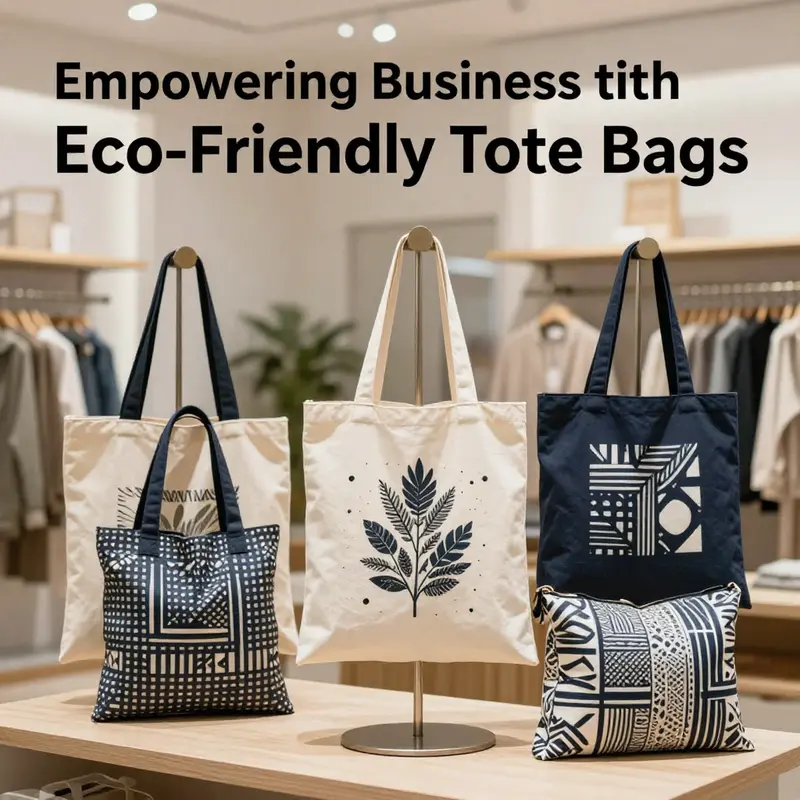
In the everyday choreography of city life, a tote bag is more than a carrier. It is a statement, a partner in motion, and a pledge to care for the world we share. Eco-friendly tote bags have evolved from niche convenience to durable canvases for personal expression, blending utility with ethics. This chapter explores how design, materials, and manufacturing ethics come together to create totes that last for years, not seasons. It discusses minimalist silhouettes, responsible sourcing, and the role of customization in inviting customers to participate in storytelling as they select colors, monograms, and finishes. It also examines transparency in supply chains, the use of digital design tools to preview options, and the importance of repairability and lifecycle thinking. Looking ahead, the chapter envisions a future where style and stewardship advance in tandem, giving consumers a practical yet expressive way to reduce waste while staying true to their identities.
Final thoughts
Eco-friendly tote bags represent more than just a sustainable shopping option—they embody a growing movement towards responsible consumerism and environmental stewardship. Businesses that incorporate these bags not only meet consumer demand for eco-conscious products but also position themselves as leaders in sustainability. By understanding the foundational benefits related to sustainability, economic impact, and fashion trends, businesses can effectively leverage eco-friendly tote bags to enhance their brand image and contribute positively to global efforts in reducing plastic waste. Adopting these practices ensures that both businesses and consumers engage in a cycle of sustainability, contributing to a healthier planet and a greener future.