
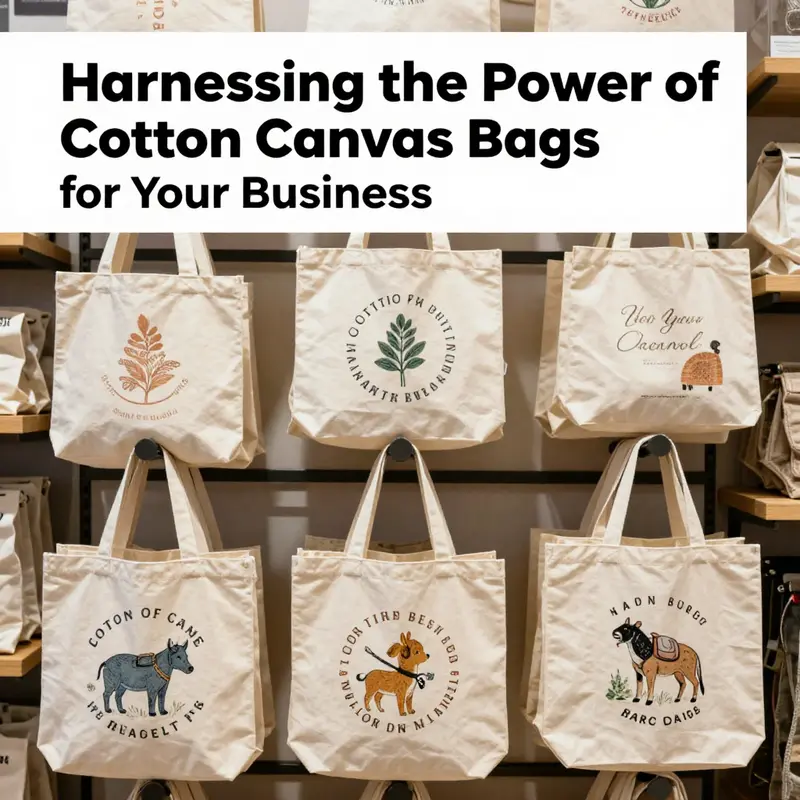
Cotton canvas bags are increasingly recognized for their versatility and durability, making them highly sought after by businesses aiming for effective merchandising and sustainable branding. This article dissects the landscape of cotton canvas bags, detailing the various types and their uses, providing a thorough market analysis, assessing their environmental impact, and discussing customization and sourcing options. As businesses strive to adopt eco-friendly practices, understanding the multifaceted advantages of cotton canvas bags can empower owners to make informed decisions that resonate with their brand values and consumer preferences.
Thread and Purpose: Exploring the Durability, Design, and Everyday Roles of Cotton Canvas Bags
Cotton canvas bags sit at the quiet intersection of practicality and style. Made from tightly woven cotton fabric, they carry the hallmarks of endurance and simplicity: a sturdy hand, a natural texture, and a surface that accepts color and branding with a calm confidence. The fabric’s heft gives bags a tactile confidence that plastic or synthetic alternatives struggle to match, while the natural fibers carry an eco-friendly aura that resonates with people who want responsible choices without sacrificing everyday usefulness. This chapter moves through the spectrum of cotton canvas bags, tracing how each variant meets a particular need, how the craft behind them sustains quality, and how their reuse redefines consumption in a world that increasingly bets on durability. In doing so, it becomes clear that the appeal of cotton canvas is not just in what the bag can hold, but in how long it can keep doing so—the visual appeal aging gracefully as it wears in rather than wear out.
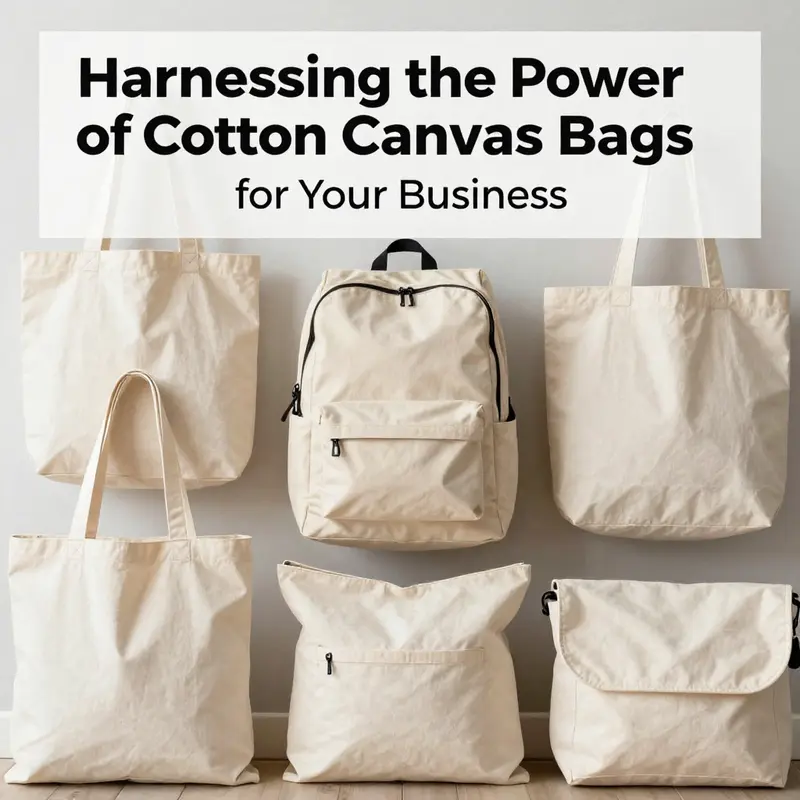
Among the most familiar forms are tote bags, backpacks, and messenger bags. A tote, with its open-top design and robust double handles, invites spontaneous errands, beach days, or a quick run to the market. It is the workhorse of informal life, a reusable alternative to the throwaway bag, and a blank canvas for branding or personal expression. The simplicity of a tote—its unclosed, inclusive opening—belies the thoughtful stitching and weight distribution that keep it comfortable even when loaded. A well-made canvas tote balances wide shoulder distribution with reinforced seams at stress points, ensuring the bag remains functional after repeated trips to the market, library, or studio.
Backpacks in canvas blend durability with comfort. They are favored by students, urban commuters, and travelers who want hands-free mobility without compromising on structure. The fabric’s rigidity helps the pack keep its shape, protecting contents from minor bumps. Yet canvas backpacks also become comfortable over time as straps soften and air out after daily use. The design can include padded shoulder straps, reinforced stitching, and multiple compartments that help users organize supplies, notebooks, chargers, and a water bottle. While canvas excels in load-bearing tasks, it is worth noting that its water resistance hinges on finishes or coatings. Pure canvas, if untreated, absorbs moisture, which can add weight. The practical takeaway is that canvas shines in dry or moderately damp environments and shines even more when a simple wax or spray finish offers a protective edge without hardening the bag’s character.
Messenger bags sit at the confluence of practicality and professional poise. A single adjustable crossbody strap and a flap closure give the wearer quick access to documents, a laptop, or a tablet while keeping essentials secure. Inside, many styles feature a padded laptop sleeve and organizational pockets designed to reduce clutter during commutes or classes. The aesthetic is minimalist but not spare: a clean silhouette that pairs well with both casual and business attire. The construction often emphasizes reinforced seams and durable hardware, not for flash but for reliability during day-long use. In this way, the messenger bag becomes less about trend and more about a dependable daily companion that can withstand city wear and seasonal changes in weather, office moves, and travel delays.
Beyond these everyday carriers lie bags designed for more specialized needs within fashion, retail, and industry. Garment bags, for instance, serve a distinct role in preserving clothing during transport and storage. They lean on stronger canvas and reinforced seams to safeguard garments, whiles zippers and closures guard the contents against dust and accidental exposure. In retail settings, garment bags help maintain a garment’s silhouette and cleanliness from showroom to showroom, or from warehouse to boutique floor. In this context, the material’s robustness translates into repeated use across cycles of display, sale, and shipment, extending the value of the items transported rather than shortening their lifecycle.
Other canvas formats expand the bag’s function beyond carrying clothes. Stationery bags organize office supplies, notebooks, pens, and personal tools. Their neat compartments and straightforward designs turn clutter into order, enhancing focus and productivity in a way that feels almost invisible. They fit naturally into larger backpacks or operate as standalone organizers. For students and professionals alike, such organizers keep materials accessible and neat, turning a simple carry into a workflow tool that supports sustained attention and efficiency.
Laptop bags represent a convergence of protection and professionalism. Canvas laptop bags emphasize secure closures, padded interiors, and a thoughtful arrangement of pockets that keep devices, chargers, and documents separate and easy to reach. The draw toward canvas in this niche often reflects a desire for a material that looks refined without being precious, one that can take a daily beating without losing its edge. While canvas is not inherently waterproof, it offers substantial resistance when paired with proper linings and weatherproof accents. The result is a bag that communicates competence and reliability, becoming a staple for professionals who travel between meetings, classrooms, and coworking spaces.
Cosmetic bags built from canvas reveal the material’s versatility in micro-scale use. They can house makeup, toiletries, or small accessories, with multiple pockets and soft linings that protect delicate items. The canvas texture lends a natural elegance to beauty-focused packaging, and the bags’ durability means they can endure frequent use—whether tucked into a larger tote or carried by hand. This is a category where the surface itself becomes part of the product’s appeal: a tactile, washable material that looks better as it ages and gains a patina of daily life.
A distinct thread runs through many canvas formats: men’s bags that blend ruggedness with refinement. Canvas bags aimed at this audience often incorporate leather accents, sturdy hardware, and roomy compartments. The result is a rugged-but-polished aesthetic capable of serving as a briefcase substitute, a travel pouch, or a practical daily bag. The appeal here is not only function but also a sensory statement—the texture of the fabric, the weight of the hardware, and the contrast between the natural fibers and any leather or metal details create a look that communicates durability and purpose without shouting for attention.
From a materials perspective, cotton canvas is valued for its tight weave and dense fibers. This construction supports load-bearing capacity, resisting tears and offering a predictable surface for printing or embroidery. The fabric’s natural breathability and biodegradability further enhance its appeal in a market increasingly wary of plastic and synthetic substitutes. The color palette—ranging from bare undyed canvas to a spectrum of dyed finishes—lets brands and individuals express mood, seasonality, and identity without complicated production steps. Yet even as the surface accepts design, the canvas is forgiving in wear. Light scuffs and gentle creases often accrue with use, but these marks can become a signature of character rather than a fault, a visual reminder of journeys taken and supplies carried.
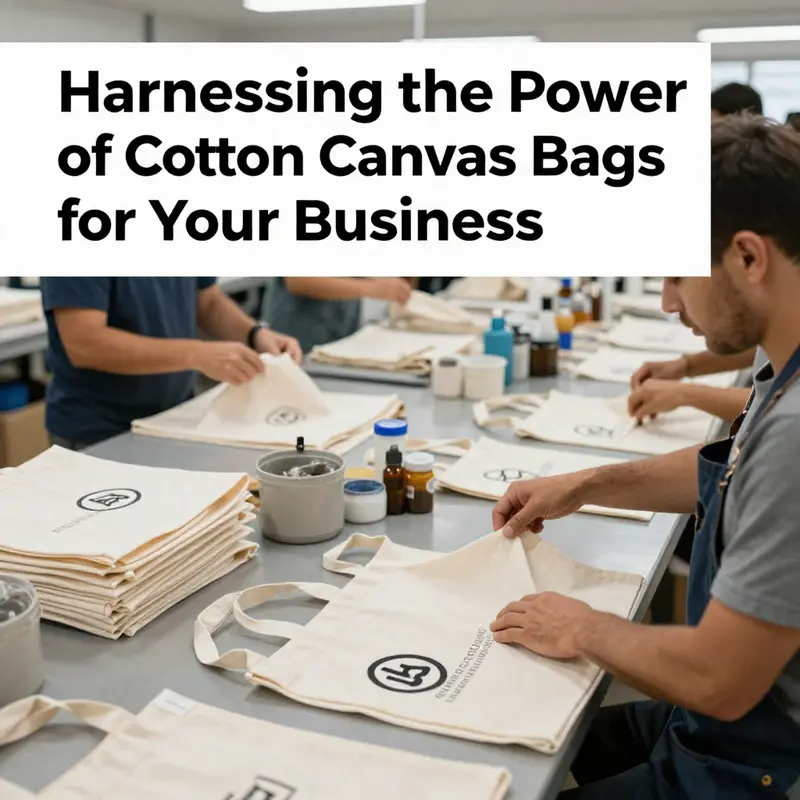
The business landscape around cotton canvas bags reflects this enduring appeal. Vendors describe a layered value proposition that marries durability with customization. Customization can occur at multiple levels: from basic color choices and logo placements to more complex features like waterproof linings, zippered closures, and built-in laptop sleeves. For promotional programs, the ability to brand canvas bags adds a practical dimension to marketing: a reusable canvas tote with a logo endures through countless shopping trips and travel days, turning a simple product into a quiet ambassador for a brand’s values. The economics of customization vary with quantity. For instance, wholesale rates can start from a fraction of a dollar per piece for very large orders while smaller runs command higher unit costs due to setup, materials, and production time. Even within this spectrum, customers can secure blank, high-quality pieces at competitive prices when production scales rise, enabling a practical pathway for organizations to adopt sustainable packaging or promotional tools.
The role of customization extends into the realm of OEM and ODM services. This means clients can partner with manufacturers to design bags that meet specific use cases—be it a particular interior layout for professionals, a water-repellent exterior for travel, or an enhanced zipper system for jewelry bags that protects delicate contents. The fashion and retail sectors leverage these capabilities to produce limited editions or seasonally themed lines, while educational and corporate programs might prioritize durability and reusable practicality. Across these applications, the canvas’s simplicity becomes a strategic asset: it accepts branding without overwhelming it, and its humble appearance often allows logos and colors to shine without competing with flashy hardware or synthetic finishes.
Care and maintenance, though sometimes overlooked in conversations about materials, matter for the lifecycle of canvas bags. A few practical practices can extend the useful life of a bag and maintain its appearance. Regular brushing to remove surface dust, gentle spot cleaning with mild soap, and air-drying away from direct heat help preserve the fabric’s integrity. For backpacks and bags used in wetter environments, a light exterior protection can help: a wax-based finish or a breathable waterproof coating can create a barrier against moisture while preserving the bag’s pliability and shape. The goal is not to create a waterproof fortress but to sustain a bag that can weather daily use without becoming stiff or brittle. Proper storage—keeping bags out of prolonged dampness and avoiding overloading pockets—also preserves seams and handles, ensuring that strength is retained across years of service. In this sense, cotton canvas isn’t merely a material; it’s a partner in a long-running relationship with the owner’s routines.
The interconnectedness of bag types, materials, and uses makes cotton canvas a distinctive player in contemporary bag design. Its versatility arises not only from a broad catalog of styles but also from a shared understanding of what the fabric can endure. A consistent thread across jewelry bags, backpacks, messenger bags, garment bags, stationery bags, laptop bags, cosmetic bags, and men’s bags is the possibility of thoughtful construction. Features like padded compartments, reinforced seams, sturdy straps, flap closures, and selective interior organization transform canvas into a portable toolkit rather than a simple container. The result is a family of products that can be tailored to different contexts—retail displays, classrooms, offices, workshops, travel journeys—without losing the core qualities that make canvas desirable in the first place: durability, an understated aesthetic, and a capacity to age with character.
For readers who want to explore the broader landscape of canvas bags and track current design and market trends, the tote category alone offers a revealing glimpse into how consumer preferences shift toward sustainability, customization, and practicality. An ongoing conversation in the market highlights the evolving relationship between form and function; tote bags, in particular, demonstrate how a simple shape can serve a diverse array of needs while remaining a credible platform for branding. See how tote bags are trending and evolving across styles, finishes, and functionalities at this resource: tote bags trending.
The durability narrative is complemented by a marketing one. Businesses that adopt cotton canvas bags as promotional items or retail packaging tend to emphasize reuse and longevity in their messaging. The practical story—this bag will be used again and again, carrying meals, books, tools, or essentials—resonates with consumers who value accountability and quality. Consumers, in turn, respond to the tactile appeal of canvas—the way it softens with wear, the way ink or embroidery takes to its surface, the pride in owning a bag that feels grounded in craft. This mutual reinforcement—durability as a selling point, branding as an enhancer of daily life—creates a compelling cycle that sustains demand across both consumer and promotional channels.
As this exploration winds through the categories and uses of cotton canvas bags, a simple principle emerges: the bag is a tool for living that respects materials, takes on personality through design, and persists as a practical choice long after alternative options fade from view. The canvas surface acts like a blank page that readers and brands can fill with meaning—whether that meaning is everyday utility, a professional silhouette, or a statement about sustainability. The future likely holds more nuanced blends and finishes, more targeted interior layouts, and even smarter inclusion of protective features that keep electronics safe without compromising the fabric’s natural character. Yet the core truth remains: cotton canvas bags offer a durable, adaptable platform for carrying life forward. They are not merely accessories but everyday infrastructure—reliable, reusable, and quietly stylish, built to meet the demands of work, study, travel, and personal life in a world that increasingly asks for responsible choices without surrendering ease.
External resource for practical construction guidance can be found here to complement this overview: The Spruce Crafts – How to Make a Canvas Tote Bag.
Weaving Durability into Demand: A Cohesive Market Portrait of Cotton Canvas Bags
Cotton canvas bags sit at an intersection of durability, sustainability, and everyday practicality. Their appeal rests not merely on the cotton fibers themselves, but on a fabric story built around structure, longevity, and the quiet promise that a well-made bag can carry more than weight—it can carry meaning. When we examine the market for these bags, we see a tapestry of use cases that broadens beyond simple utility to encompass branding, lifestyle, and responsible consumption. In this chapter, the market is not treated as a folder of numbers but as a living ecosystem where fabric weight, weave tightness, and finish choices translate into real-world outcomes for consumers, retailers, and corporate partners seeking durable, reusable alternatives to disposable packaging and throwaway totes. The narrative unfolds across several dimensions: the fundamental definition of the product, the evolving demand, the spectrum of applications, the macro trends driving growth, and the competitive dynamics that shape the supply chain from raw fiber to finished bag in hands around the world.
At its core, cotton canvas bag design is defined by structure rather than mere cotton content. The fabric is engineered for strength through high-density weaving, typically in heavier weights, producing a material that resists tearing and maintains form even when carrying heavy loads. This is the distinction that often gets overlooked in casual discussions about tote-like products. A light cotton tote made from a soft, pliable fabric can be pleasant to carry but will often yield to sustained weight and repeated use. In contrast, cotton canvas bags are built to endure hundreds of uses, making them a practical choice for daily shopping, travel, and work commutes. That durability, in turn, fuels a market expectation for reliability and value, reinforcing the notion that these bags are long-term fixtures in a consumer’s wardrobe rather than disposable tools. Within this framework, the market segments begin to crystallize: everyday shopping bags, premium branding pieces, fashion-forward carryalls, and specialized forms for work and travel—all anchored by the core canvas fabric’s integrity.
From a definition standpoint, the difference between a cotton tote bag and a cotton canvas bag lies in weight and weave rather than origin. A tote bag typically utilizes a lighter, plain weave fabric in the range of four to eight ounces per square yard, emphasizing softness and flexibility. These bags suit light loads and casual carrying, such as books, papers, or a few personal items. Cotton canvas bags, however, employ heavier weights—often around ten to fourteen ounces per square yard—with a tighter weave to deliver superior tensile strength and resistance to abrasion. This combination makes them the workhorse of the category, capable of supporting groceries, bulk items, and heavy gear without compromising their shape. For buyers and designers, understanding this distinction is essential because it informs everything from strap attachment strategies to closure options, gusset design, and interior organization features. The design language shifts from simple, open-top utility to thoughtful, reinforced constructions that balance aesthetics with rugged performance.
Market demand for these bags has expanded in tandem with a few powerful macro drivers. One is the global shift away from single-use plastics toward reusable options. This shift has elevated canvas bags from a niche accessory to a consequential everyday instrument for sustainable living. The durability of canvas bags aligns with a philosophy of reducing waste, as households find themselves turning to products that can shoulder groceries, beach gear, and daily essentials for years. Another driver is the role of canvases in corporate and promotional campaigns. High-quality, reusable bags perform double duty: they carry goods and carry a brand’s message. In contexts ranging from conferences to retail events, a well-constructed canvas bag serves as a moving billboard, delivering visibility far beyond the initial transaction. These functional and promotional aspects feed each other, expanding the market beyond traditional retail into a broader ecosystem of branding, experiential marketing, and corporate gifting.
The applications of cotton canvas bags span several broad arenas. In everyday life, they function as robust shopping bags and multi-purpose carryalls that can endure heavy groceries, gym gear, or beach paraphernalia. For students and professionals, canvas backpacks and messenger-style bags provide durability with reinforced stitching, padded compartments, and organizational features designed to protect devices and documents under daily wear and travel. The appeal here is not only resilience but also a sense of permanence—an item that ages with use yet continues to perform. In the context of branding and promotions, canvas bags offer an elevated canvas for logos and messaging. Their weight, texture, and finish convey quality, while their reusability sends a message about a brand’s commitment to sustainability. Some buyers also explore specialized forms such as travel totes, duffel-style bags, and jewelry or jewelry-like packaging bags that combine aesthetics with functional closure systems and protective linings. Even within these specialized forms, the underlying canvas fabric remains the anchor: a material chosen for its balance of heft, durability, and the potential for long, repeated cycles of use.
From a market demand perspective, the canvas bag segment benefits from a combination of consumer preference shifts and business-to-business strategies. Consumers increasingly seek long-lasting items that justify higher upfront costs with extended lifespans. They weigh the material’s perceived value, the craftsmanship of the stitching, and the feasibility of customization, including color, finish, and branding options. For businesses, canvas bags are attractive because they can be customized at scale with reliable colorfastness and durable print methods, making them cost-effective promotional items that yield lasting exposure. The economics of production and customization are nuanced: wholesale and bulk orders can bring unit costs down significantly, but the level of customization influences pricing. For example, standard custom-printed tote bags can enter wholesale channels at lower per-piece prices when order volumes climb into the tens of thousands, while smaller runs require higher unit costs to cover setup and printing expenses. Blank, high-quality canvas tote bags designed for branding may be available at even lower base prices for large runs, offering an appealing proposition for retailers and marketing teams seeking sustainable alternatives to plastic packaging.
The competitive landscape for canvas bags centers on more than price. Quality, design, and supply-chain transparency have become differentiators as buyers demand assurance about material sourcing and manufacturing practices. In a global market, manufacturing hubs with established capabilities in heavier-weight fabrics and reliable finishing processes dominate the supply chain. Yet the competition is evolving: brands strive to combine durable construction with responsible production practices, such as sustainable dyeing, organic or recycled fibers, and non-toxic finishes. The market thus rewards those who can articulate a clear value proposition that blends performance with environmental stewardship. This is not a race to the bottom on price but a balance among cost, durability, aesthetics, and ethical manufacturing. As a result, trading ecosystems increasingly emphasize long-term partnerships, traceability, and collaborative product development, with suppliers able to demonstrate consistent quality across large runs and varied product forms.
However, the journey is not without its challenges. The most visible is the perception that a durable canvas bag comes with a higher upfront cost compared with disposable plastics or lighter-weight fabrics. While the lifetime value often justifies the investment, consumer habits take time to shift, and some segments may require more education about the long-term savings and reduced environmental impact. Another hurdle is the resource footprint of cotton farming itself. Even when using responsible farming practices and low-impact dye technologies, the lifecycle of natural fibers includes water use, agricultural inputs, and processing energy. The industry responds with innovations such as organic or recycled cotton, alternative fiber blends, and improved dyeing processes that minimize water and chemical use. These advances do not erase the environmental considerations but rather advance the conversation toward more sustainable production and end-of-life strategies, including repairability and compostability where feasible.
Looking ahead, the canvas bag sector is poised for steady growth driven by consumer demand for durable, reusable products and by corporate strategies that see bags as a scalable, sustainable asset. The trajectory suggests that designers and manufacturers will continue to optimize for longevity, aesthetics, and brand compatibility. Innovations in construction—such as reinforced seams, improved hardware, and protective linings—will extend product life while enabling more sophisticated styling options. At the same time, the market will increasingly emphasize transparency about materials and processes. Buyers want to understand where the fabric comes from, how it is woven and finished, and whether the product aligns with broader environmental and social governance goals. The result is a market that values not only the bag itself but the story of its making, from fiber origin to final use, and the opportunity to place a reusable bag at the center of sustainable consumer ecosystems.
Within this evolving landscape, a few practical patterns emerge for readers seeking to understand and engage with the market. First, the price architecture is influenced by volume and customization. Bulk orders for branded campaigns can significantly lower per-unit costs, while smaller runs incur higher unit prices but may offer tighter control over design and lead times. Second, the fabric’s weight and weave are not merely technical details; they are signals of performance and reliability. Heavier canvases translate into bags that endure more wear, carry greater loads, and retain their shape longer—qualities valued by both consumers and corporate buyers. Third, the marketing language around canvas bags increasingly leans on sustainability credentials, with buyers seeking products that are reusable, repairable, and produced with responsible practices. The narrative becomes as important as the product, and that narrative is reinforced by durable design choices and transparent sourcing.
To connect these insights with practical pathways, consider how a brand or retailer might approach product development in this space. Begin with defining the target use case: daily groceries, campus commuting, or corporate gifting. Then select a canvas weight and weave that aligns with the intended load and desired finish. Decide on reinforcing details like double stitching at stress points, sturdy handles, and reinforced base panels that resist abrasion. Think about closure options, interior pockets, and exterior branding opportunities that maintain the bag’s form and durability. Finally, partner with suppliers who can demonstrate stable quality across large runs and who can provide documentation or certifications related to fiber origin, dye chemistry, and worker welfare. In other words, successful market performance rests on a blend of robust fabrication, careful design, and responsible, transparent partnerships. And for readers who want a concrete sense of how related product forms can be positioned within an integrated retail or branding strategy, explore this practical guide to tote categories and their accessory options, which provides a concise framework for such decision-making. tote bag with computer sleeve
As the market evolves, the canvas bag remains more than a simple object. It becomes a platform for sustainable behavior, for corporate storytelling, and for everyday practicality that can withstand the tests of use and time. The fabric’s enduring character mirrors a broader consumer shift toward products that balance function, form, and responsibility. When shoppers pick up a heavy canvas bag that looks and feels built to last, they are signaling a preference for items that promise performance and longevity, rather than convenience alone. The market responds in kind by rewarding durability with broader appeal and longer life cycles, a dynamic that sustains demand in a competitive, quality-driven landscape. In a sense, the canvas bag’s journey from raw fiber to trusted companion is a narrative about how societies imagine durability—how materials, processes, and people converge to create everyday objects that endure.
For readers who want to explore further technical considerations about material strength in this space, a comparative study of canvas versus cotton tote bag strength provides a rigorous, data-driven perspective on how woven structure translates into performance under load. This external reference helps ground the qualitative understanding of durability in measurable outcomes and can inform procurement and design decisions as the market continues to mature. https://www.sustainablematerialslab.com/research/canvas-vs-cotton-tote-bag-strength-comparison
Weaving Ethics into the Carry: The Sustainability Footprint of Cotton Canvas Bags
Cotton canvas bags sit at a crossroads where practicality, aesthetics, and responsibility intersect. They are not merely containers for goods; they reveal how choices about farming, processing, and reuse ripple through ecosystems and communities. To understand their sustainability, we must look beyond the surface appeal of a sturdy, reusable bag and examine the lifecycle from seed to shelf to stewardship. Only then can we gauge whether the canvas bag truly lowers the burden on the planet compared with disposable plastics and other alternatives, and under what conditions it does so most effectively.
At the core of the discussion lies a stark contrast: a natural fiber, grown in fields, offers potential environmental benefits when managed thoughtfully, yet certain practices around conventional cotton farming carry heavy ecological costs. Conventional cotton farming is resource-intensive in ways that are easy to overlook when the focus is on the bag’s longevity. Water use can be immense; estimates point to as much as 20,000 liters of water to produce a kilogram of cotton. This figure is not just about irrigation volume—it translates into river basins, aquifers, and downstream communities whose water security can be affected by farming patterns elsewhere. The footprint extends further into soil health and watershed quality because conventional cotton relies heavily on synthetic pesticides and fertilizers. Data aggregated by global conservation groups show cotton farming accounts for a disproportionate share of pesticide usage relative to its land area: a small portion of global cropland but a sizable fraction of insecticides and pesticides.
The argument for canvas bags, then, rests on a simple premise: a bag that lasts longer and is reused many times can, over its lifetime, reduce the environmental impact compared with single-use options. The strength of canvas comes from its density and durability. A fabric that resists tearing, holds its shape, and withstands repeated loading has a practical advantage in a world saturated with throwaway goods. Yet durability is not a license to ignore how the bag is produced. The textile’s ecological profile reflects the farming system, the fiber’s processing, and the energy and chemicals used during manufacturing. Opting for a bag made from organic cotton or hemp, rather than conventional cotton, can alter the balance in favor of the environment. Organic cotton farming avoids synthetic pesticides and fertilizers, which helps protect soil ecosystems and reduces chemical runoff. Hemp offers its own advantages: it is a fast-growing fiber that typically requires less water and naturally resists many pests, reducing the need for inputs. Even when hemp is not the chosen path, knowing how the fiber is cultivated provides a clearer lens on sustainability truths.
Beyond farming, the processing stage of canvas bags matters. The journey from fiber to fabric involves ginning, spinning, weaving, dyeing, and finishing. Each step consumes energy and water and may involve various chemicals for dyeing, scouring, and finishing that can alter the bag’s overall footprint. While canvas is generally robust enough to endure hundreds of uses, its true environmental advantage emerges once the product is put to work with a disciplined habit of reuse. A landmark assessment from a UK environmental agency highlights a key threshold: a cotton bag must be used at least 131 times to achieve a lower carbon footprint than a single-use plastic bag. Canvas, by virtue of its durability, reaches that threshold more rapidly than many other bag fabrics, provided it is used consistently and for its intended purpose. This insight reframes the purchase decision: the environmental payoff of a canvas bag accrues over repeated trips, not on day one of ownership.
Consumers thus become actors in a lifecycle story. When a canvas bag is crafted from organic cotton or hemp, and when it is used day after day for years, the bag’s environmental advantages accumulate. The emphasis shifts from Is this bag green? to How will I use this bag, and for how long? In practice, this means choosing products that reflect responsible farming and transparent supply chains. Organic cotton avoids a suite of synthetic inputs, and hemp grows quickly with relatively modest irrigation needs. Both options frequently align with certifications and farming practices that encourage soil health and biodiversity. In other words, the bag’s true sustainability is not a feature of the fabric alone but a function of upstream choices and downstream behavior.
A broader lifecycle perspective helps illuminate the tradeoffs and opportunities. The fabric’s density and durability are indispensable, but so are the finishing processes. A bag with waterproofing, reinforced seams, or a lined interior may offer enhanced functionality and longer service life. The question becomes how to balance performance with environmental impact. If a coating or dye adds significant chemical load, does the bag still offer a net environmental benefit after years of reuse? The answer depends on the specifics: the dye chemistry, whether the coating is water-based or solvent-based, and whether the finish impacts end-of-life disposal. In some cases, a simple, well-constructed canvas bag without heavy coatings may deliver a cleaner lifecycle profile, assuming it is used and cared for properly.
The end of a canvas bag’s life raises additional considerations. Natural-fiber products can be composted or repurposed under certain conditions, but coatings, threads, or hardware can complicate disposal. A truly circular approach seeks to maximize reuse, repair, and repurposing while minimizing waste. Repair networks, upcycling ideas, and local textile recycling streams are all pieces of the puzzle. The model shifts from design for disposal to design for durability and adaptability. In this frame, a bag becomes a long-term companion rather than a disposable commodity. This is not merely an environmental preference; it reflects a design philosophy that treats materials as resources to be stewarded rather than as expendables.
The consumer’s role in achieving genuine sustainability cannot be overstated. Choosing canvas bags made from certified organic cotton or hemp aligns with farming practices that reduce chemical load and water use. But it is equally important to acknowledge that even organic cotton is not universally superior if grown under inefficient systems or shipped long distances. Localized production, efficient logistics, and seasonal materials can further reduce the bag’s footprint. The reuse imperative is equally crucial: a bag that is carried and cared for regularly—washed and stored properly and used for years—fulfills its purpose as a sustainable alternative. In this way, the bag’s environmental profile is a collaborative outcome of farming, manufacturing, and personal habit.
Educating consumers about these dynamics helps demystify sustainability claims. Not all natural fibers are created equal, and the farming method, water use, and processing determine whether a green bag is truly green. This nuance matters for educators, retailers, and designers who seek to communicate honest, actionable information. As one researcher in sustainable textiles has observed, the difference between a green fiber and a truly green product often lies in the details of supply chains and usage patterns, not in a blanket label. The implication for retailers and brands is clear: transparency about sourcing, certifications, and lifecycle expectations strengthens trust and empowers informed choices.
In the real world, people gravitate toward bags that blend function and ethics. A canvas bag that is sturdy enough to carry groceries, resilient enough for commutes, and adaptable enough for travel provides a compelling platform for sustainable behavior. When such bags are paired with a commitment to reuse—carrying them to markets, schools, or offices rather than defaulting to disposable alternatives—the environmental gains multiply. The narrative is not that canvas is perfect in every scenario, but that its sustainability potential is realized through responsible sourcing, durable design, and habitual reuse. This synergy between product design and daily practice is what ultimately transforms a simple bag into a meaningful environmental choice.
null
null
Final thoughts
The demand for cotton canvas bags continues to grow as businesses embrace sustainable practices and consumers seek stylish, reusable alternatives. Understanding the types of bags available and their applications, combined with a solid market analysis, can guide businesses in making choices that align with modern eco-conscious values. Furthermore, embracing customization options allows brands to enhance their visibility while supporting an environmentally friendly message. By leveraging cotton canvas bags, businesses can effectively appeal to a broader audience and contribute positively to environmental sustainability.