
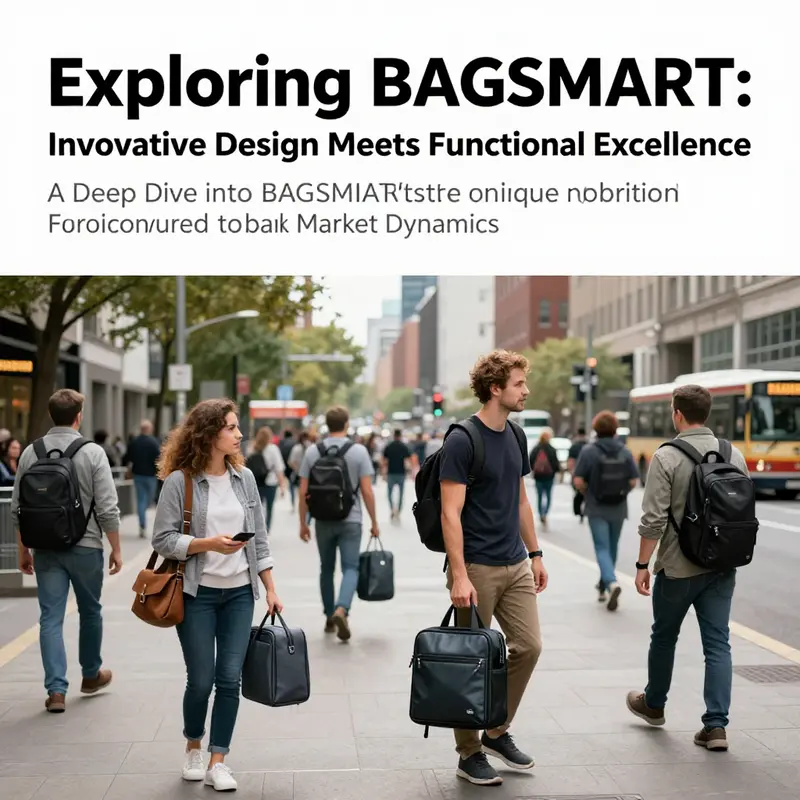
BAGSMART, a pioneering brand under Xiamen Xinweifa Industrial Co., Ltd., represents an innovative venture into the world of luggage and bags. With a mission centered on genderless aesthetic design, the brand emphasizes fun, freedom, and comfort in all its products. This article is designed to inform business owners about the multitude of ways BAGSMART has successfully carved out its niche in a competitive market. Covering aspects from its brand overview and design philosophy to supply chain management and user experiences, this exploration underscores how BAGSMART is redefining modern travel accessories. Each chapter will provide insights that are crucial for understanding BAGSMART’s influence and operational strategies in the global market.
Design Without Boundaries: How BAGSMART Transforms Genderless Aesthetics into Smart Travel Solutions

BAGSMART unfolds as a case study in how a modern travel brand can fuse design philosophy with practical engineering, turning a collection of everyday objects into a cohesive, forward‑looking ecosystem for movement. Rooted in the urban port of Xiamen and steered by a design team educated at a prestigious global school, the brand announces its intent from the first glance: to challenge conventional lines between masculine and feminine aesthetics while delivering products that feel both intimate and universally usable. The founders’ ambition is not merely to craft bags but to craft an experience of travel itself—one where form serves function without sacrificing personality. This dual aspiration—fun, freedom, comfort—forms the backbone of a brand story that travels as far as its products do. In this sense BAGSMART operates less as a conventional label and more as a living system where design language, material science, and user need co‑evolve across borders and climates.
Behind the aesthetics lie a network of capabilities that extend well beyond a single product line. The company maintains dual research and development hubs—one on the mainland and another across the ocean—dedicated to translating imaginative ideas into durable, scalable manufacturing. A sprawling production base, measured not just in square meters but in its potential to iterate, rests in Tong’an District of Xiamen. Eight lean production lines hum with precision, while a suite of thirteen testing systems critically screens resilience, water resistance, zipper durability, and structural integrity. This approach reflects a broader philosophy: quality is proven through rigorous testing, and pass marks must endure the realities of daily life, long journeys, and sudden changes in weather or packing strategy. In practice, this means that the brand doesn’t rely on heroic one‑off moments of design genius alone; it builds a reliable architecture that can adapt as travelers’ needs shift.
The brand’s design ethos, described succinctly as genderless aesthetics, seeks to remove traditional boundaries that have long divided product lines along gendered lines. It’s a conscious reframing of what a bag can be: not a symbol of identity but a flexible tool that accommodates a wide spectrum of uses, bodies, and outfits. The core idea is to distill romance and comfort into a tangible object that remains quietly sophisticated whether paired with casual streetwear or more formal urban ensembles. It is a design principle as much about restraint as about revelation—an insistence that beauty can be achieved through proportion, materials, and finish rather than conspicuous branding or overt signaling. In a marketplace crowded with loud logos and overt statements, BAGSMART chooses a discreet footprint: subtle hardware, clean lines, and a restrained color palette that increases the likelihood of cross‑season, cross‑scene appeal. The minimal branding is not about hiding identity but about ensuring the bag remains a versatile stage for the wearer’s own story.
At its core, the product philosophy centers on what the company describes as smart, sensible, and aesthetically enduring travel companions. The product family spans backpacks, totes, travel cases, wallets, and everyday carry—each placed on a common platform of modularity, lightweight construction, and robust materials. A key design decision involves selecting materials and structures that resist the daily rigors of commuting and weekend getaways alike. The goal is to offer products that are light enough to forget they are on the back but sturdy enough to feel unshakable during a chaotic transit day. In practice, this means high‑density fabrics, thoughtful seam construction, and attention to load distribution that minimises fatigue during long wear. The result is a line that communicates modernity through simplicity and efficiency, rather than novelty for novelty’s sake.
A closer look at the brand positioning reveals a deliberate emphasis on “smart travel solutions.” The company targets the mid‑range segment—consumers who want durable goods with a strong design language and practical features, without paying a premium for brand prestige alone. In this framing, the bags become more than containers; they are everyday partners that enable a more efficient rhythm of life. Features like wide, supportive shoulder straps, contoured back panels, and strategically placed pockets translate into real‑world benefits, from reduced neck tension on crowded commutes to easier access during a long layover. The modular storage approach—dividing belongings into clearly defined compartments—meets the needs of people who value organization as a route to mental clarity when traveling. Where some brands emphasize show, BAGSMART leans into flow, asking users to feel the bag’s inner logic rather than merely admire its outward silhouette. This logic is reinforced by a digital supply chain that tracks product development from concept through mass production, ensuring that quality, safety, and performance standards are embedded at every stage of the journey.
Another domain where the brand’s philosophy becomes tangible is in the engineering of ergonomic comfort. The latest iterations of the core backpack design demonstrate a careful synthesis of lightness and support. The overall weight of a typical bag sits near the lower end of its category, with shoulder straps broadened to distribute load more evenly and to curb the tendency for shifting or bouncing during movement. The back panel employs a three‑dimensional mesh that actively channels airflow, reducing moisture buildup and improving comfort in warm climates or during lengthy commutes. The weight, the fit, and the breathable surface all converge to create a more comfortable experience without sacrificing carrying capacity or protection. Meanwhile, the bag’s internal architecture—its panels, dividers, and pockets—reflects a deep understanding of how people think about packing today. A backpack that holds a laptop, a notebook, a water bottle, and a few daily essentials in a logically arranged system is less about clever tricks and more about a consistent logic—one that makes the bag immediately usable and hard to outgrow.
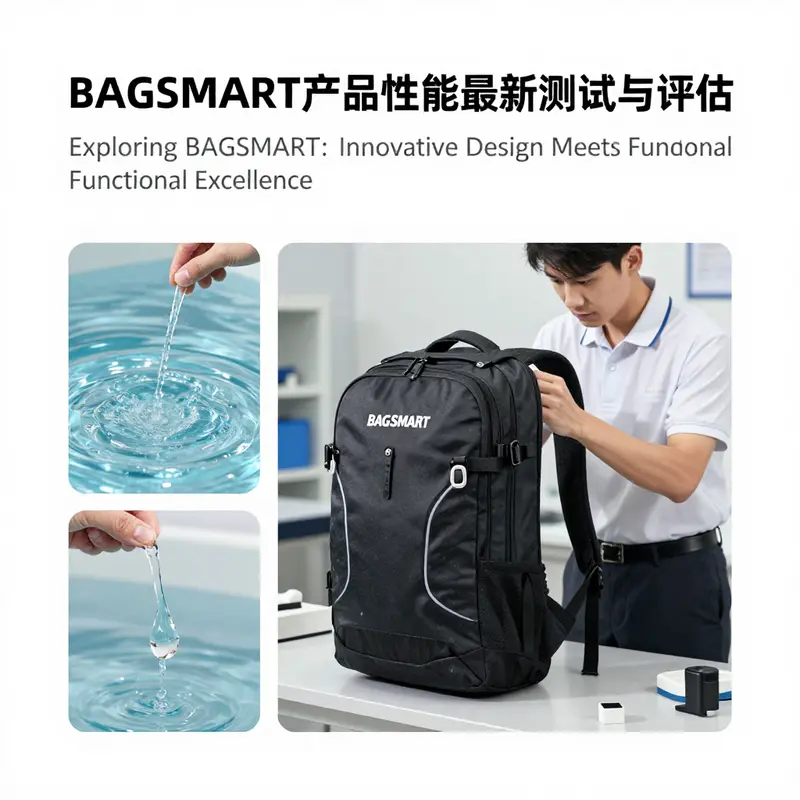
Material choices reinforce this approach. The brand’s fabrics are designed for durability and water resistance, critical for urban travel and unpredictable weather. The commitment to practical protection is echoed in testing protocols that simulate common hazards: a bag dropped from shoulder height, liquids spilled over the surface, and sustained use of zippers through thousands of cycles. For instance, high‑density textile fabrics undergo waterproof tests under controlled conditions to ensure that a light shower or a quick spill does not compromise the contents. While the hardware and details receive attention, the overall impression remains one of calm restraint rather than aggressive feature‑bloat. The intention is clear: a bag should be dependable enough to travel everywhere, with a quiet confidence that does not demand constant attention from its owner.
In the portrait of a flagship experience, the brand’s attention to micro‑details becomes most evident in the everyday realities of use. Without naming specific models, the textural quality of finishes, the subtlety of branding, and the practicalities of access and protection come together in everyday tests. Independent compartments, soft velvet lining in select pockets, and a set of nested organizational elements illustrate the belief that order is a form of comfort. Add to this the promise of intelligent design in the form of dedicated spaces for electronics, documents, and power sources, and the bag reads as a carefully engineered workspace on the move. Even the most modest feature—a compact pocket for quick access—speaks to a philosophy that every inch of space is meaningful when considered from the perspective of a traveler who must improvise a routine on the fly.
The market response to this approach has been robust. In key e‑commerce ecosystems, consumer feedback highlights a strong sense of value: high performance at a reasonable price, reliable durability, and a modern, understated style that resonates with a wide audience. Reviewers repeatedly note how the products’ understated aesthetics complement diverse wardrobes and occasions, from office commutes to weekend adventures. The blend of practical benefits and contemporary sensibilities helps explain why the brand has achieved a global footprint across more than 150 countries and regions. This geographic breadth is not just a testament to distribution channels; it reflects a design language capable of transcending cultural preferences while remaining anchored in universal human needs—safety for belongings, ease of use, and a sense of personal ease while traveling.
From a supply‑chain perspective, the brand’s digital approach to development and production underlines a modern industrial mindset. A seamless loop links product concept, engineering validation, material selection, and mass production, with continuous feedback flowing back from field use to inform future iterations. Such a loop supports ongoing refinement rather than episodic improvements. It also anchors the brand’s commitment to long‑term quality—an ethos of durability and reliability that matches the growing demand for “smart” gear that stays relevant over multiple travel seasons. In this sense, the brand’s value proposition extends beyond a single purchase. It promises a longer‑term travel partnership in which customers can rely on predictable performance, thoughtful design, and a brand voice that respects their autonomy and style.
For readers who want to explore a concrete example of the design logic in action, the Bagsmart tote family offers a practical window into how form and function interlace. The tote line embodies the same principles of restrained branding, modular organization, and attention to the sensory feel of materials, proving that the brand’s genderless aesthetic can manifest across different carriers without sacrificing personality. To glimpse how the tote’s everyday utility translates across outfits and contexts, consider Bagsmart tote; this reference point illustrates the brand’s ability to balance utility with subtle style in a single, easy‑to‑carry package.
As a concluding note, BAGSMART’s trajectory highlights a broader trend in contemporary travel goods: brands that blend design rigor with practical engineering to create products that feel timeless in a world of rapid change. The emphasis on genderless aesthetics does not signal a departure from performance; it signals a recalibration of what performance can look and feel like when it is allowed to be quiet, confident, and adaptable. The company’s global reach and steady track record in independent testing and consumer feedback underscore a philosophy that values long life, thoughtful details, and a design language that speaks to diverse travelers without forcing a single story. In the discourse of modern mobility, BAGSMART positions itself as a thoughtful partner for every mile—and for every moment—in between.
External reference: https://www.bagsmart.com
Design Without Borders: How Bagsmart Turns Genderless Aesthetics into Everyday Mobility
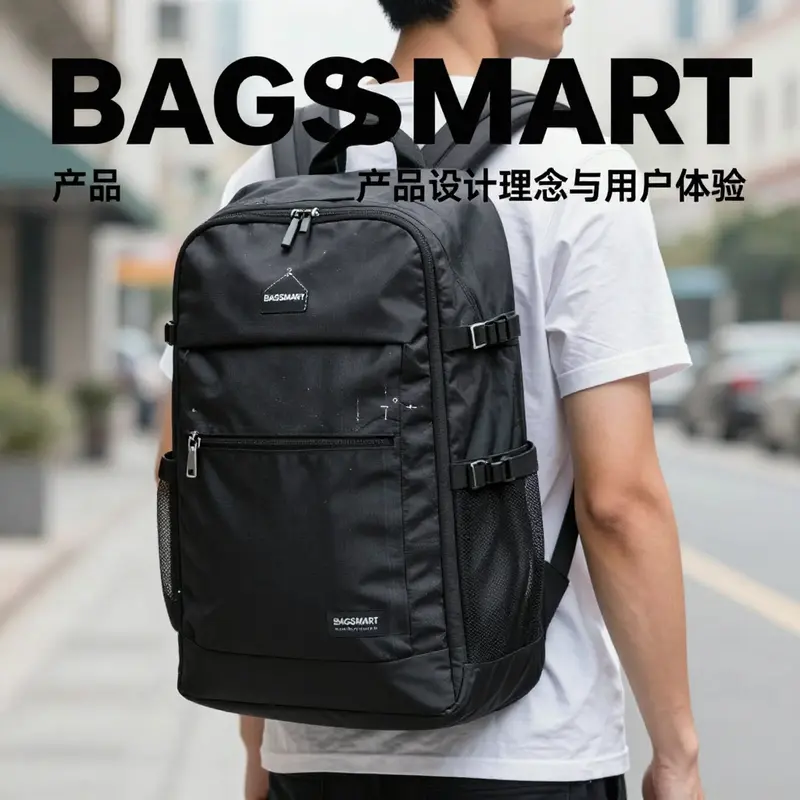
BAGSMART emerges from a design ethos rooted in a simple yet ambitious idea: make everyday carry objects that honor fun, freedom, and comfort, all while dissolving traditional gendered cues. The brand, shaped by a team trained at a renowned design school and led by designers who have worked with major fashion houses, treats a bag not merely as a container but as a flexible companion for life’s varied tempos. In this frame, the bag becomes something more than a product—it is a small architecture for daily movement, a portable stage for self-expression, and a storage system that respects both body and rhythm. The core premise is genderless aesthetics, but the deeper aim is more provocative: to redefine how form can support function without sacrificing personality. This is not about stripping away character to achieve a neutral look; it is about stripping away unnecessary barriers so that every user can shape the bag’s meaning around their own life. It is a design invitation to move freely through space and time, with a sense of ease intact even as demands shift from work to study, from urban commuting to weekend getaways.
From the outset, the philosophy centers on a triad of values—fun, freedom, and comfort—that influences every detail, from silhouette to material choice to the arrangement of pockets. The design team, drawing on a global sensibility, treats color not as mere decoration but as a tool for versatility. The palette leans toward understated tones—grays and subtle neutrals with gentle contrasts—that pair easily with work attire, campus wear, or leisure outfits. Yet the look remains quietly contemporary, with lines that favor clarity over ornament and gestures that feel confident rather than flashy. This balance between restraint and freshness is deliberate: it ensures that a bag can accompany a professional on a commute without clashing with a formal wardrobe, while still offering visual interest that makes a personal statement in more casual settings. It is in this negotiation between simplicity and character that bags become legible as a lifestyle choice rather than a status symbol.
In practice, the design process translates these abstractions into a coherent user experience. The team treats the bag as a modular system capable of adapting to the wearer’s day-to-day rituals. The result is a product line that emphasizes function as a design language—where every seam, every panel, and every fastening is chosen for a reason. The materials are selected not only for durability and weather resistance but also for their environmental footprint, reflecting a growing commitment to sustainable design. The aim is to reduce waste, extend product life, and minimize ecological impact without compromising tactile quality or visual appeal. This yields a collection that feels substantial yet approachable, capable of elevating routine tasks into moments of ease and satisfaction. An example of this spatial thinking in daily use can be seen in the Bagsmart tote bag, illustrating how thoughtful space planning translates into effortless accessibility. Bagsmart tote bag.
The practice of achieving such harmony between form and function rests on a careful reimagining of how compartments are organized and how access works. The design emphasizes intuitive reach and rapid retrieval, so essential items can be located by touch or sight without a meticulous rummage. Independent laptop sleeves ensure device protection while keeping cables, chargers, and documents neatly separated. Velvet-lined pockets cushion delicate items like glasses or keys, while mesh or elastic pockets enable quick-grab storage for items in transit. The overall architecture of storage is not a gimmick but a disciplined response to how people live today—multi-tasking, device-driven, and often on the go. The idea is to let structure disappear into usefulness; a well-organized bag should feel almost transparent because it doesn’t demand cognitive effort to locate what is needed next. In this sense, the bag becomes an extension of the wearer’s intention, supporting rather than directing the day’s choices.
Ergonomics are central to the experience because comfort translates directly into sustained mobility. The shoulder straps are wider, padded with high-resilience foam, and adjustable to reduce pressure across the shoulders even when the bag is fully loaded. A sternum strap helps stabilize weight and minimize sway during brisk walking or urban cycling, while the back panel uses three-dimensional mesh foam to promote airflow and minimize heat build-up on hot days. The back-wearing experience is designed to be breathable and cool, a detail that matters in environments where daily routines can stretch across long periods of standing, commuting, or outdoor exploration. The overall weight of the bag is kept deliberately light—just enough to feel robust without becoming a burden—so that it remains a facilitator of movement rather than a barrier. The design also tends toward a low-profile exterior, with minimal logos or branding; the idea is that the bag’s quality and utility speak for themselves, and the wearer’s personal style should be the focal point of any ensemble.
The practical strength of the design is reinforced by the choice of materials and reliability in testing. The fabric blend is engineered to resist water and soil, helping items stay secure in unpredictable weather or crowded carry-on situations. Zippers are selected for smooth operation under repeated use, with attention to operability even when fingers are cold or wet. The hardware, from zipper pulls to buckles, is treated to withstand daily friction, ensuring longevity through years of routine loading and unloading. The goal is a long-term partnership between user and bag, where wear patterns tell a story of travel, study, and work, rather than a narrative of planned obsolescence. The digital supply chain governing production enables precise quality control across components, assuring consistency across batches and geographies. In a world of rapid product evolution, this emphasis on stability and sleep-at-night durability helps users trust that a single bag can accompany them through seasons of change.
Behind the scenes, the brand’s approach to development is deeply rooted in data-driven learning and iterative refinement. The company maintains a digitized pipeline that captures user feedback, performance metrics, and field observations from multiple markets. This information loops back into redesigns and improvements, ensuring the product remains aligned with living patterns rather than chasing fleeting trends. The result is a family of bags that can cross boundaries—between formal and casual wear, between short commutes and longer journeys, between one city and another—without demanding a new wardrobe or a separate set of accessories. It is not merely a matter of scale or capacity; it is the sense that every feature exists for a reason, and each reason is anchored in the lived experiences of everyday travelers.
A factor that often emerges in user discussions is the balance between capacity and lightness. The design philosophy treats space as a resource, something that must be managed with discipline so that it serves the wearer rather than the product’s own ego. The result is a sense of freedom: you do not have to choose between carrying enough for a busy day and moving with comfort. Instead, the bag seamlessly accommodates essentials—laptops, notebooks, water, reading material, a charger, and perhaps a lightweight jacket—without forcing the wearer into a larger, heavier silhouette. The aesthetic remains understated and versatile, enabling a smooth transition from a morning train ride to a late afternoon meeting, then a casual dinner with friends. This fluidity embodies the brand’s mission to remove friction from daily life while preserving a sense of personal style.
The reception to this philosophy in the marketplace reinforces the argument that design can be both thoughtful and accessible. Consumers frequently note that the products deliver a strong value proposition: efficiency of organization, comfort during long wear, and a look that remains modern yet timeless. In many markets the feedback emphasizes not only performance but also reliability and the confidence that comes from dependable service and clear after-sales policies. The combination of functional credibility and aesthetic neutrality makes the bags useful across a wide range of contexts—from campus corridors to office hallways to weekend trips. In essence, the design philosophy translates into a kind of quiet confidence that accompanies the wearer throughout the day and across different life moments, inviting a sense of ease rather than a jolt of novelty.
Taken together, the design and user experience strategy reveals a broader ambition: to create a portable living space that travels with the user without imposing a single lifestyle onto everyone. The emphasis on genderless aesthetics is not about erasing identity but about expanding the spectrum of how one can express it through a functional object. The bag becomes a canvas for personal narrative, a cooperative partner in daily rituals, and a constraint-free platform on which people can build their own stories of movement. In this light, Bagsmart’s approach to design is less about chasing the newest feature and more about refining the relationship between a person and their belongings—so that the act of carrying becomes a subtle act of living well. For readers curious to explore how these principles translate into specific product forms and everyday use, a deeper look at the Bagsmart tote bag can be found through the linked resource above, which illustrates the practical realization of the brand’s spatial philosophy.
External resource: https://www.bagsmart.com
From Sketch to Suitcase: How BAGSMART’s Lean, Digital Supply Chain Elevates Genderless Design into Reliable Travel Solutions

BAGSMART stands as a compelling case study in how a modern luggage brand can fuse radical design with a disciplined, data-driven execution model. Its core philosophy—genderless aesthetics paired with fun, freedom, and comfort—requires a supply chain that is not only responsive to ever-changing design ideas but also rigorous enough to protect the integrity of those ideas as they move from concept to consumer. This balance is not incidental; it is engineered. The brand relies on a dual hub structure, with development centers in two continents and a network of global operations that knit together research, design, production, logistics, and marketing into a single, coherent flow. In practice, this means that the act of imagining a bag and the act of building it are performed in a synchronized cadence. Ideas are tested quickly, refined through data, and then scaled with lean precision. The result is a portfolio of products that can wade confidently into more than 150 countries and regions while maintaining a common thread of design identity and reliability.
At the heart of this approach is a relentless commitment to quality. BAGSMART operates a 20,000-square-meter production facility in a core manufacturing district, where eight lean production lines run with a disciplined rhythm. The phrase lean production is not just a slogan here; it represents a deliberate organizational choice to reduce waste, optimize flow, and extract value at every step. In a market where novelty can drive impulse purchases, this discipline prevents the collapse into excessive SKUs or inflated costs that often accompany rapid design exploration. The company complements its in-house capabilities with a dedicated development ecosystem that spans both Asia and North America. Two primary R&D centers not only nurture creative exploration but also ensure that engineering constraints are understood up front, shaping designs that are as feasible to manufacture as they are compelling to carry. A distributed yet tightly governed network of four global operations centers reinforces this mindset, ensuring that products can be localized for different markets without sacrificing the core BAGSMART experience.
The digital backbone of BAGSMART’s supply chain is what translates ambition into consistent performance. A fully integrated system connects research, design, production, logistics, and marketing so that each step informs the next. This integration pays dividends in several ways. First, it shortens the distance between a concept and a tested prototype. Designers no longer wait for long cycles to see how a fabric behaves when assembled into a bag; instead, performance data travels in near real time to the design team, prompting iterative refinements before any tool is set to work. Second, digital coordination reduces latency across manufacturing and distribution. By aligning production schedules with demand signals and design iterations, the company avoids overproduction while preserving the flexibility to reallocate capacity as trends shift. This is especially important for a brand that wants to preserve a consistent identity—its signature blend of minimal branding and thoughtful, practical features—across different consumer contexts.
A distinctive aspect of BAGSMART’s approach is the deliberate cadence of output. Rather than generating new products at unsustainable speed, the company embraces a rhythm that prioritizes quality and cost control. Each launch is the culmination of an extended period of development, testing, and data feedback that ensures the final product not only performs well but also aligns with the broader aesthetic and functional vision. In practice, this means a careful balance: exploration is encouraged, but it is bounded by measurable quality gates and cost parameters. The outcome is a portfolio that feels cohesive rather than opportunistic, a set of bags that share a design language while offering a range of practical solutions for modern movement.
Quality is not a one-off checkpoint but a living discipline embedded throughout the value chain. BAGSMART maintains a dedicated product technology laboratory equipped with a broad suite of tests that cover materials, components, assembly, and finished goods. The philosophy here is preventive and continuous. Statistical process control tracks critical process variables as they happen, enabling immediate corrective actions before deviations become defects. Six Sigma methodology provides a structured framework for reducing variation, while ISO quality standards anchor the organization in internationally recognized best practices. The company’s data-centric mindset ensures that every unit of feedback—whether from a lab test, a field return, or a consumer review—loops back into the design and production teams. The result is not merely a reactive fix but a systematic improvement that raises baseline reliability over time. Such closed-loop learning is essential when the goal is to translate innovative form into durable function across a global network of consumers with diverse climate, usage patterns, and expectations.
The tangible expression of this integrated approach is visible in a flagship experience bag that embodies BAGSMART’s philosophies without relying on extravagant logos or showy details. The bag is designed to protect a laptop in a highly specific way, with a dedicated compartment that secures the device while a bottom clearance and a mid-structure夹层—a layered divider—provide a balanced, multi-axis form of protection. A slim, contoured back panel uses a three-dimensional mesh foam to promote airflow and comfort during urban commutes and longer journeys alike. The suspension on the shoulder straps is deliberately wide, about six centimeters, and filled with high-resilience foam to dampen movement and reduce fatigue. The straps connect to a sternum strap that can be adjusted to stabilize the load, a design choice that minimizes lateral sway when navigating crowded streets or busy transit systems. The overall weight is kept low, an intentional decision to maximize carry comfort over hours of wear, even when the bag is fully loaded. The detail language is restrained: a subtle etched brand mark on the zipper pull as a quiet signature rather than a loud declaration. In color and construction, the bag is engineered to harmonize with a broad range of outfits and environments, offering a versatile, almost universal aesthetic.
This level of engineering does not emerge by accident. The supplier and production teams operate under a digital regime that makes material science, structural integrity, and human factors converge in a sustained dialogue. The 1200D high-density nylon used in key components delivers durability and water resistance, while a comprehensive waterproof testing protocol—using a standardized method and a precise quantity of water—validates performance under real-world exposure. Zippers, essential to the bag’s longevity, undergo extensive life-cycle testing to ensure smooth operation after thousands of open-close cycles. Beyond the hardware, the stitching, seam strengths, and edge finishes are evaluated to withstand abrasion and daily use in multiple climates. The data from these tests feeds back into both the selection of materials and the tooling strategies used in manufacturing. As a result, quality is baked into the process rather than finessed at the end, a distinction that matters when the goal is to deliver consistent performance for a worldwide audience.
In the daily operations of a global brand, concepts live in conversations across teams, and a brand like BAGSMART demonstrates the power of storytelling with a measurable backbone. One small but telling detail illustrates the philosophy: the design team actively uses experience-driven data—how a bag behaves when carried over varied distances, in different weather, and across diverse body types—to shape the next cycle of refinement. The manufacturing teams, in turn, translate those refinements into repeatable processes that can scale without losing fidelity. The logistics network is structured to preserve this fidelity as products move from the factory floor to warehouses, distribution centers, and ultimately to consumers around the world. Even in the retail environment, the feedback loop remains active, as returns data and consumer reviews are translated into design and production improvements with a speed that would have been hard to imagine a decade ago.
For those who want to see how these principles translate into accessible choices, the Bagsmart tote provides a practical, tangible example of the brand’s ethos in action. This particular line embodies the balance between portability, structure, and minimal branding that defines BAGSMART’s aesthetic. The tote’s design emphasizes ease of use, intelligent organization, and unobtrusive style, making it a practical reference point for how form and function converge in BAGSMART’s supply chain philosophy. Bagsmart tote The internal link is a nod to readers who want a more concrete sense of how the brand translates its design language into everyday utility, while the broader narrative continues to emphasize how a disciplined supply chain underpins such everyday reliability.
The market response to this integrated approach has been affirming. Reviews on major platforms consistently highlight the value proposition: high quality at a competitive price, thoughtful storage, and durable construction that holds up across travel and daily use. Consumers often note the brand’s ability to combine style with practicality, a combination that resonates with young adults pursuing independent, autonomous lives. The feedback is not merely anecdotal; it reinforces the design-to-supply chain loop BAGSMART has built. When a global consumer base expects both novelty and consistency, a lean, digital, quality-centric model offers a compelling route to satisfaction. The supply chain’s ability to adapt to regional preferences without fragmenting the brand identity is especially important in a world where tastes vary with geography and climate. By maintaining a core design language and a disciplined production system, BAGSMART can deliver products that feel local yet uniform in standard.
The synthesis of lean manufacturing, digital coordination, and proactive quality management does more than support growth. It also advances sustainability—an increasingly critical dimension in consumer electronics and accessories. Reducing waste through careful planning, minimizing overproduction, and capturing learnings early in the development cycle all contribute to a smaller environmental footprint. The ability to reuse data across cycles means that each new product consumes fewer materials to reach the same or higher levels of performance. In sum, BAGSMART’s supply chain is not simply an efficient machine; it is a learning organism that grows more capable as it accumulates experience, feedback, and discipline. This is a brand that understands how to sustain design ambition while preserving reliability across a global stage, a balance that is essential for the long arc of a brand built on a contemporary, genderless aesthetic.
External resource: https://www.bagsmart.com
null
null
From Local Craft to Global Signal: Bagsmart’s Consumer Voices and Brand Influence Across Markets
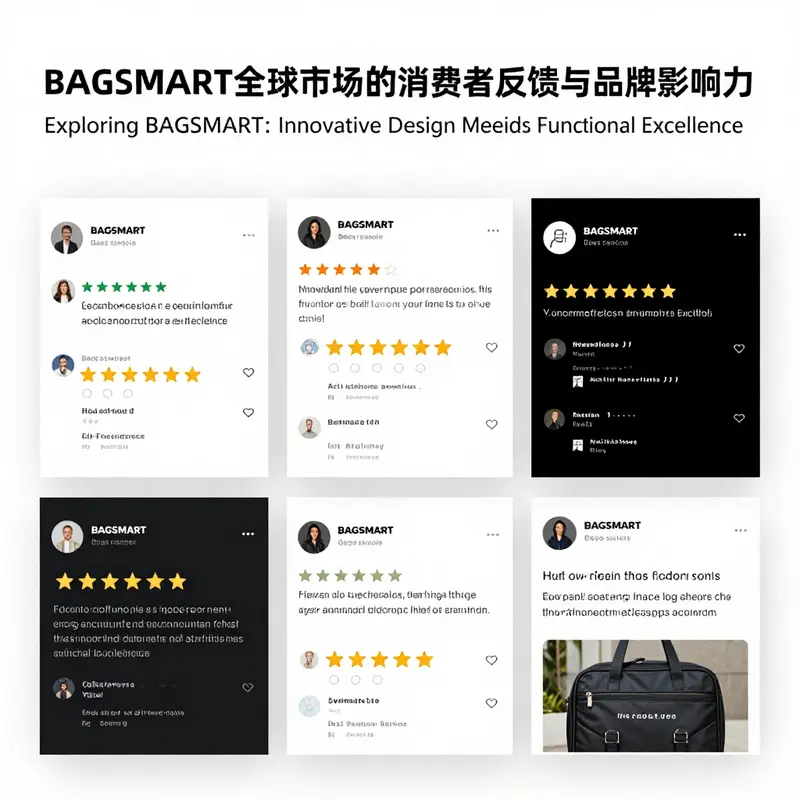
BAGSMART’s evolution from a regional craft project to a globally recognized design brand illustrates how listening to consumers shapes perception at scale. The brand builds trust through durable construction, thoughtful details, and a design language that blends practicality with a sense of play. Feedback from users in diverse markets informs material choices, internal layouts, and the balance between subtle branding and everyday utility.
Across regions, Bagsmart’s strategy emphasizes reliability, modular organization, and comfort, translating in practice to products that feel intuitive from the first use. The brand’s global reach is anchored by a network of research and manufacturing hubs that support rapid prototyping and rigorous testing, ensuring consistency without sacrificing local relevance.
Marketing emphasizes authentic storytelling, user-generated content, and social-first tactics that reduce the distance between brand and buyer while preserving a premium, understated aesthetic. The result is a global presence that remains locally resonant, with a shared language of quality, efficiency, and calm that travels across borders.
Final thoughts
BAGSMART has emerged as a leader in the luggage industry by adhering to its core values of fun, freedom, and comfort while maintaining a strong commitment to quality and innovation. Every aspect of the brand, from its unique design philosophy to effective supply chain management and positive consumer feedback, paints a comprehensive picture of a brand fully aligned with the evolving needs of modern travelers. In a marketplace that increasingly values aesthetic and functionality, BAGSMART’s approach serves as a model for aspiring brands aiming to carve their niche in this dynamic industry.