
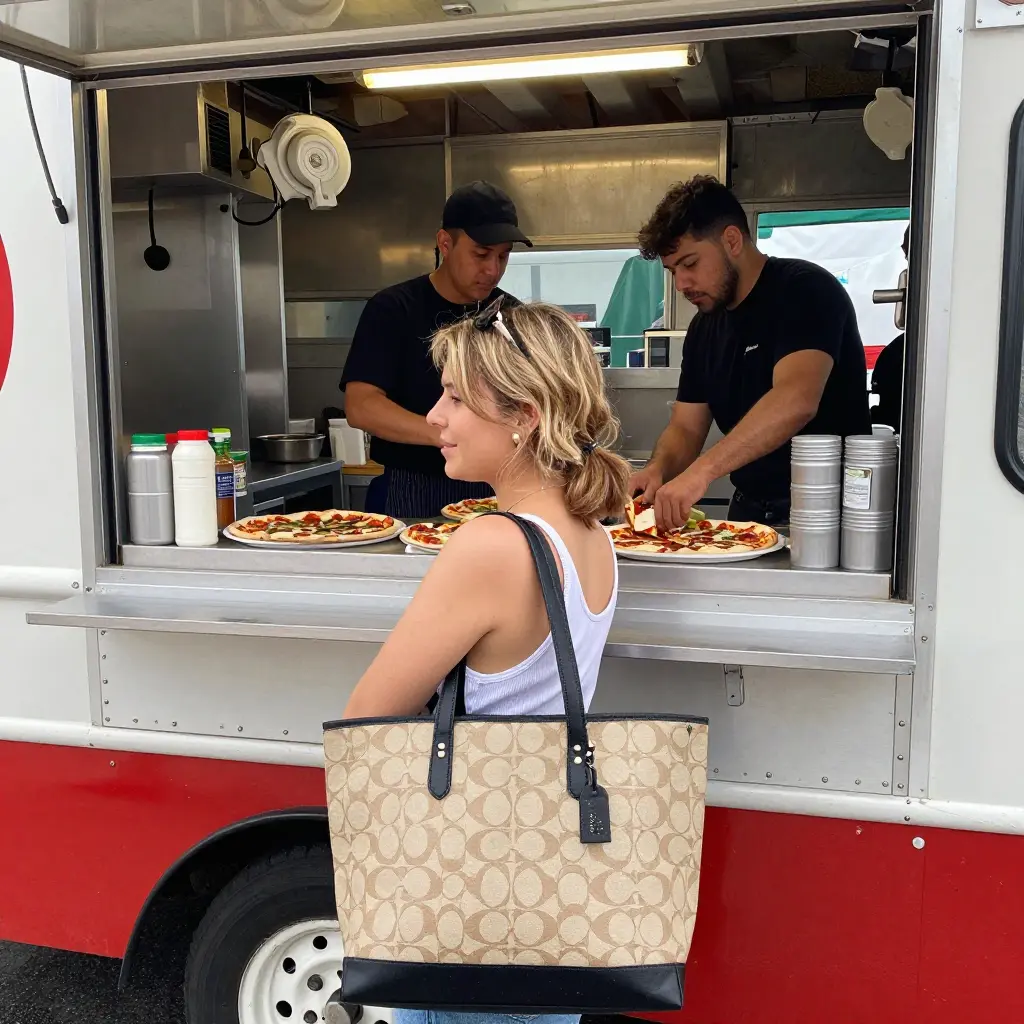
The Anatomy of a 12-Hour Pizza Truck Shift
Work a 12 hour shift on a pizza truck and your whole day happens inside a few square feet. No back office, no locker, no staff room. Whatever you need travels with you.
Most operators figure this out on day one. When the line is long, there is no walking to a shelf. The day gets built around what fits in the cab, on the counter, and in a bag you can reach without turning around.
The service shift runs 8 a.m. to 8 p.m. Here is how a typical day around it breaks down:
- Pre-dawn prep and load-in (5:00-7:00 a.m.). Dough, sauce, cheese, and propane load first. Then the personal items: keys, phone, a charged power bank, and a small bag for wallet and cards. Everything has to be out of the depot before sunrise.
- Commute to the pitch (7:00-8:00 a.m.). The truck rolls to the market or lot. A mid-size tote keeps licenses, permits, and a spare apron within reach for the first stop.
- Service rush (8:00 a.m.-1:00 p.m.). Orders stack up fast and hands stay busy, so order slips, pens, and sanitizer sit on the counter edge in a compact tote or crossbody.
- Mid-shift restock (1:00-3:00 p.m.). Refill dough and toppings from the cooler. This is also the window to eat, refill water, and restock personal supplies before the crowd returns.
- Evening peak (3:00-8:00 p.m.). The biggest crowd arrives after work. A sturdy carry-all holds backup cash, phone chargers, and a light jacket for when temperatures drop.
- Breakdown and clean-down (8:00-9:30 p.m.). Scrub surfaces, pack away the food, stow the tools. Wipe down the personal bags too.
- Drive home (9:30-10:00 p.m.). The same tote that held prep gear now carries receipts, dirty towels, and a tired operator.
The rule holds all day: if it is not within reach, it does not exist. Operators who plan their carry setup finish the shift with fewer surprises. A roomy coach tote handbag works as a mobile home base, holding personal essentials and light work gear without slowing anyone down.
Use this quick-reference table to match a tote’s format and capacity to a specific part of the shift.
| Tote Model | Approx. Capacity / Size | Best For | Material / Durability Notes | Recommended Use Case |
|---|---|---|---|---|
| Coach tote handbag | About 8 L; 12″ x 10″ x 4″ | Order pad, pen, phone, personal items | Coated canvas with leather trim; wipes clean easily | Front-counter order taking during the dinner rush |
| Coach tote, large format | 16-19 L; about 15″ x 12″ x 6″ (size guide) | Tablet, cash pouch, spare aprons, prep tools | Structured base and reinforced handles hold their shape under load | Opening prep and cash reconciliation |
| Laptop work tote | 14-16 L; fitted 15″ padded sleeve | Register tablet, charger cables, clipboard | Padded compartment; water-resistant lining | POS setup and admin work between orders |
| Tote bag with zipper | 12-15 L; full zip top | Cash, keys, receipts, sauce packs | Zip closure keeps contents secure and contained | Cash handling and secure storage on the go |
| Women’s canvas tote | 18-22 L; open-top | Bulk napkins, pizza boxes, cleaning cloths | Heavy cotton canvas; machine washable | Back-of-truck restocking and end-of-night cleanup |
Read it top to bottom like a shift timeline. Light, structured totes suit front-of-house order taking; larger open-top styles carry bulk supplies at the back. Match capacity to the task first, then check whether the material and closure can take the way that part of the shift treats a bag.
What Pizza Truck Operators Actually Carry
A twelve-hour pizza truck shift is half kitchen, half mobile office. Everything an operator relies on sits within arm’s reach of the service window, and it has to survive flour dust, grease, and rain. That is why many operators treat a dedicated coach tote handbag as a portable station rather than a purse.
Order pads and pens. Paper still matters. Menu cards, allergen sheets, and a backup order pad cover the moment a screen dies or a customer wants to write something down. Keep pens in an exterior pocket so nobody digs around while a line forms.
A tablet or point-of-sale device. The POS is the register, the menu board, and the receipt printer in one. Keep it in a padded sleeve against the tote’s back wall, where keys and a water bottle cannot crush the screen.
Cash and card readers. Card readers have to stay dry and charged. A coin pouch keeps bills sorted for tip changes, and a zippered pocket keeps the reader away from loose receipts and crumbs.
Gloves and towels. A busy shift burns through a box or two of food-safe gloves, so keep refills in a side pocket. A stack of clean towels handles spills, and a small bag for used ones keeps them away from everything else.
Personal items. Keys, wallet, phone, and any daily medication go in one interior zippered compartment. Keeping them together means no pocket-patting during a rush and no hunt for a key fob at closing.
A water bottle and a change of apron or shirt. Heat, flour, and sauce make a mid-shift change a real need. A water bottle slots into an exterior sleeve; a spare apron or shirt folds flat across the bottom.
Why one bag beats six pockets. Separation is the point. A tote with clear compartments lets an operator find a pen, a card reader, or medication without moving anything else. Choosing a coach tote handbag style with defined sections makes that split automatic. For work that mixes kitchen and front-of-house, the structure is operational, not decorative.
Where a Coach Tote Handbag’s Space Goes
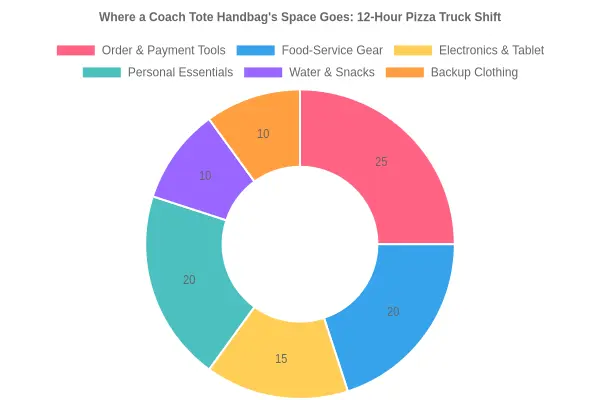
Legend:
| Slice | Category | Share of Capacity |
|---|---|---|
| 🩷 | Order & Payment Tools | 25% |
| 🔵 | Food-Service Gear | 20% |
| 🟡 | Electronics & Tablet | 15% |
| 🟢 | Personal Essentials | 20% |
| 🟣 | Water & Snacks | 10% |
| 🟠 | Backup Clothing | 10% |
What This Chart Tells You
This doughnut chart shows where a coach tote handbag’s capacity goes during a 12-hour pizza truck shift. Order and payment tools take the largest share at 25%; food-service gear and personal essentials claim 20% each. Electronics, water, snacks, and backup clothing split the rest. The split explains why overloading hurts: a bag packed past capacity crowds out essentials, slows service, and wears out straps before the last pie leaves the window.
Why Coach Tote Handbags Fit the Mobile Culinary Routine
Park the truck, wipe the counter, open the service window. That is when a bag gets tested. A coach tote handbag earns its place through features that answer the problems that show up mid-shift, not through how it looks in the prep line.
A structured shape that holds form
A soft, slouchy bag collapses the moment you set it down, and pens, receipts, and sauce-stained notes end up on the floor. Coach totes hold a firm, structured body, so they stand upright beside the driver’s seat, under the prep counter, or on the folding stool by the window. When a workspace turns chaotic fast, that structure is the difference between grabbing what you need in one motion and digging through a collapsed pile.
Reinforced straps that survive the load
Keys, phone, a bank card reader, a spare apron, and a small first-aid kit add up fast. Coach reinforces the handles and attachment points, so the stitching holds up after weeks of being tossed onto the passenger seat and yanked off a hook.
Zippered main compartments and interior pockets
A covered main compartment keeps contents from spilling on the road, where sharp turns and potholes do their worst. Inside, slip pockets and dividers keep order pads, loyalty cards, and pens from tumbling together, so a reach finds each one where you left it.
Wipe-clean, durable materials
Flour, olive oil, and marinara do not stay on hands. A smooth exterior in black leather or coated signature canvas wipes down in seconds, which is what gets the bag through a full 12 hour shift and the ones after it.
A size that fits the tightest spots
The right tote tucks beside the driver’s seat or slides under the prep counter without scraping the floor or blocking your path. Add up those details and a coach tote handbag becomes gear you can rely on, not an accessory that folds under pressure.
How a Tote’s Compartments Map to a 12-Hour Shift
A well-designed tote is about logistics more than looks. Treat it as a mobile filing cabinet: every zone has a job, so you are not digging for a pen while an order waits.
The zones divide up by how often you reach for what they hold:
- Main compartment — the heavy, spacious core for bulkier gear you reach for regularly.
- Front pocket — quick access to whatever you grab a dozen times a day.
- Interior slip pockets — slots that keep small tools and personal items from tangling together.
- Laptop/tablet sleeve — a padded slot that keeps a device upright and safe.
- Side pocket — the outside spot for whatever you need without opening the bag.
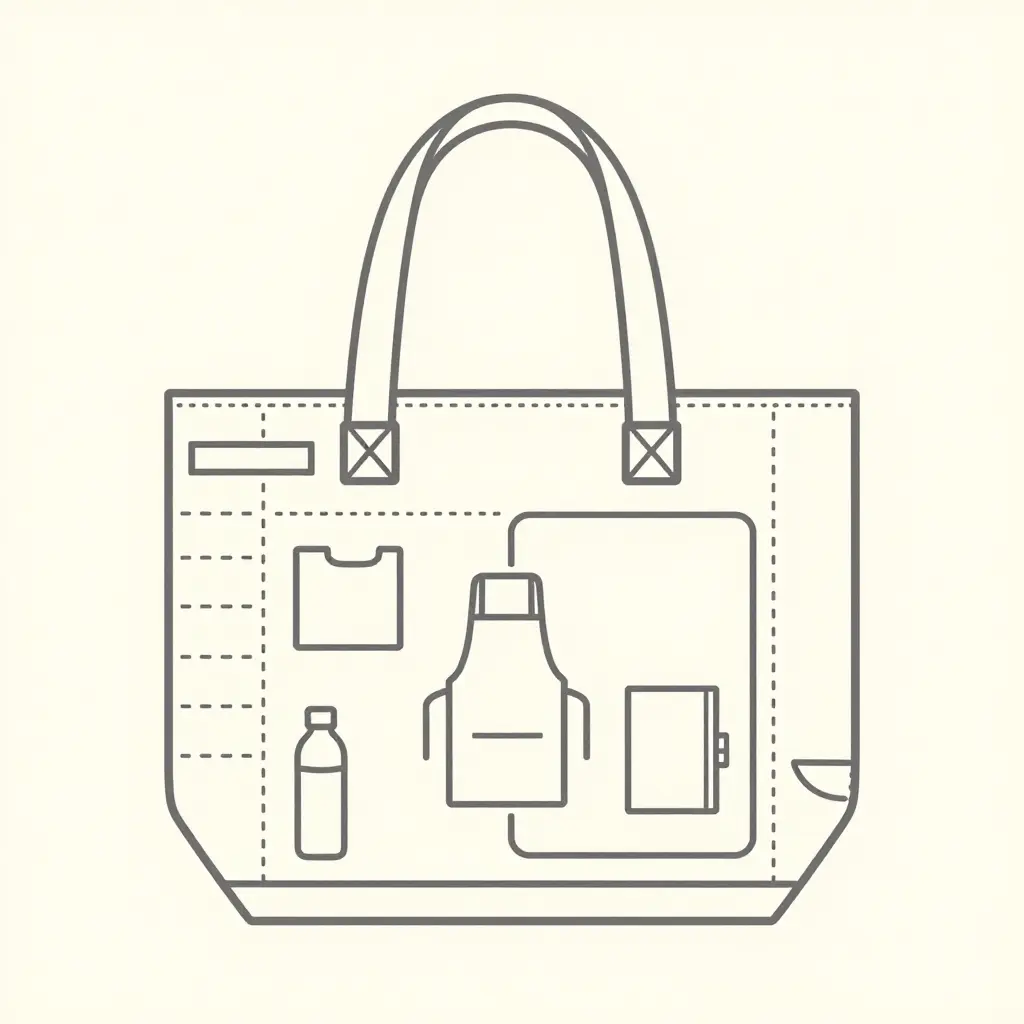
Match each zone to how often you use it: the more often you grab something, the closer it should be. Get that layering right and a fast service rush stays manageable.
The 12-Hour Shift Carry Checklist
Service and Orders
- Order pad plus two backup pens, so one dead pen does not stall a queue.
- Phone with the POS app and a charged power bank, so mobile payments keep working when the truck outlet fails.
- Printed menu cards and an allergen sheet, so you can answer customer questions without shouting over the oven.
- Folded backup tote for bulk produce runs; durable Ted Baker tote bags handle extra dough trays.
Personal Care and Comfort
- Insulated water bottle — twelve hours near a 500-degree oven means drinking constantly.
- Rolled microfiber towel and hand sanitizer for wiping grease and dough off between rushes.
- Lip balm, sunscreen stick, and hair ties to protect skin and keep hair back on long outdoor shifts.
Safety and Maintenance
- Heat-resistant gloves and a small first-aid kit; burns and cuts happen, and treating them quickly keeps service moving.
- Compact flashlight and spare propane lighter, because power dips and pilot lights fail mid-rush.
- Multi-tool and a roll of duct tape for a wobbly handle or a loose sign, without a trip to the toolbox.
Cash and Admin
- Lockable cash pouch and change rolls to keep tips secure and change ready for the first walk-up.
- Shift log notebook and business cards to track inventory and turn regulars into catering clients.
- One sturdy carryall with a wipe-clean lining; a coach tote handbag’s interior survives flour, sauce, and grease.
Truck service arrives in bursts, so arranging these items by frequency of use turns each reach into a reflex. Pens, sanitizer, and the phone go in the easiest outer pocket; first-aid and maintenance gear tucks deeper. The hierarchy shaves a few seconds off every transaction, and over hundreds of orders those seconds add up.
Choosing the Right Tote for Your Operation
No two shifts look the same, so no single tote fits everyone. The right bag depends on how you work, how many people are on the truck, and how long you are on your feet.
Solo Operator vs. Two-Person Truck
Solo, you are driver, cook, cashier, and cleaner at once. The bag has to stay put, open with one hand, and keep essentials where your fingers expect them. A structured tote with a wide mouth and a secure top earns its keep here; our guide to tote bags with zippers covers how a good closure handles sauce splashes and door slams. On a two-person truck you split the load, so a slimmer shoulder bag leaves room for your partner’s gear.
Running Orders on a Tablet vs. Paper
Paper tickets are light and forgiving: a medium tote swallows a stack, a pen, and a receipt book. Tablet operators need padding and quick access instead. A dedicated tech pocket protects the screen from the jostle of a busy curb, and a bag that stands upright means you are not digging one-handed while a line grows.
Adding a Laptop for Admin
If you close out inventory, answer emails, or post to social after the rush, the bag doubles as a mobile office. Pick a padded laptop tote bag for women sized to the screen you actually carry, and check the internal layout before you commit. A dedicated tote bag with a computer sleeve keeps the machine away from greasy utensils and paperwork, so nothing gets crushed when you set the bag down.
A Lightweight Canvas Option for Hot Days
In summer, heavy leather is a punishment. A breathable fabric tote bag cuts the weight, dries fast, and shrugs off dust from the lot. Many operators keep one canvas bag for hot days and a heavier coach tote handbag for the shoulder seasons; rotating bags extends the life of both.
The Takeaway
The best tote matches your setup, not someone else’s. Solo or paired, tablet or paper, laptop or light: pick the bag that fits how you work and then stop thinking about it.
Frequently Asked Questions
What size coach tote handbag fits a pizza truck operator’s daily gear?
For most operators, a medium to large style around 15 to 18 inches wide works. It holds an order pad, a tablet, a wallet, keys, and a light jacket without turning bulky. Many coach tote handbags also come in 12 to 14 inch versions for lighter loads, so measure your gear first. Check the listed dimensions and strap drop to confirm the bag sits comfortably on your shoulder through a service.
How do I keep order pads and electronics protected in a tote?
Choose a tote with a padded laptop sleeve or an internal divider so the tablet stays away from pens and greasy wrappers. Put the tablet in a soft sleeve, and sandwich the paper order pad between two stiff folders so it does not curl. Keep food-handling items in an outside pocket, where spills cannot reach the electronics.
Are zippered totes better for a moving truck?
Generally, yes. Zippered closures keep contents in place when the truck stops and starts, and a full zip keeps out dust, flour, and road debris over a long 12 hour shift. Open-top styles are fine for a bag that stays on the counter, but a zip matters more if you drive between stops. Browse tote bags with zippers for options with secure closures.
How do I clean a tote used around a food truck?
Empty it completely, then wipe the lining with a damp cloth and mild soap. On coated or nylon interiors, a disinfecting wipe usually handles grease and crumbs. Let the tote air-dry fully before reloading, and hand wash fabric styles to protect their shape and color.
What should a new operator carry on their first 12 hour shift?
Start with an order pad, a charged tablet or phone, a spare battery pack, pens, a small first-aid kit, and a water bottle. A lightweight jacket and a change of apron cover the temperature swings. Keep cash, keys, and cards in a zippered inner pocket so nothing goes missing when the line gets busy.
Bringing It All Together
Running a food truck is part logistics, part endurance sport, and the difference shows on a long service day. Solo owner or small crew, pizza truck operators depend on the same reliable set of tools and personal items to get through a demanding 12 hour shift. Dough scrapers, proofing trays, gloves, thermometers, spare aprons, a phone charger, a water bottle: the list rarely changes. How well you carry it does.
Organization is where you save that time. A dedicated spot for every item cuts down on frantic searching and dropped tickets, and the end of the day is calmer. A structured carry system keeps what you reach for most within reach, instead of buried in a jumbled bin.
A well-chosen coach tote handbag fits those demands. Durable construction, roomy main compartments, and pockets that separate paperwork from personal gear are the mix you need when one bag does double duty. If you are weighing options, browse a range of coach tote handbags and match capacity and layout to how you actually work instead of guessing.
The right tools, kept organized in a bag that fits the job, make a long 12 hour shift easier to get through. Before your next service day, take a few minutes to review your carry setup and fix whatever is slowing you down.