
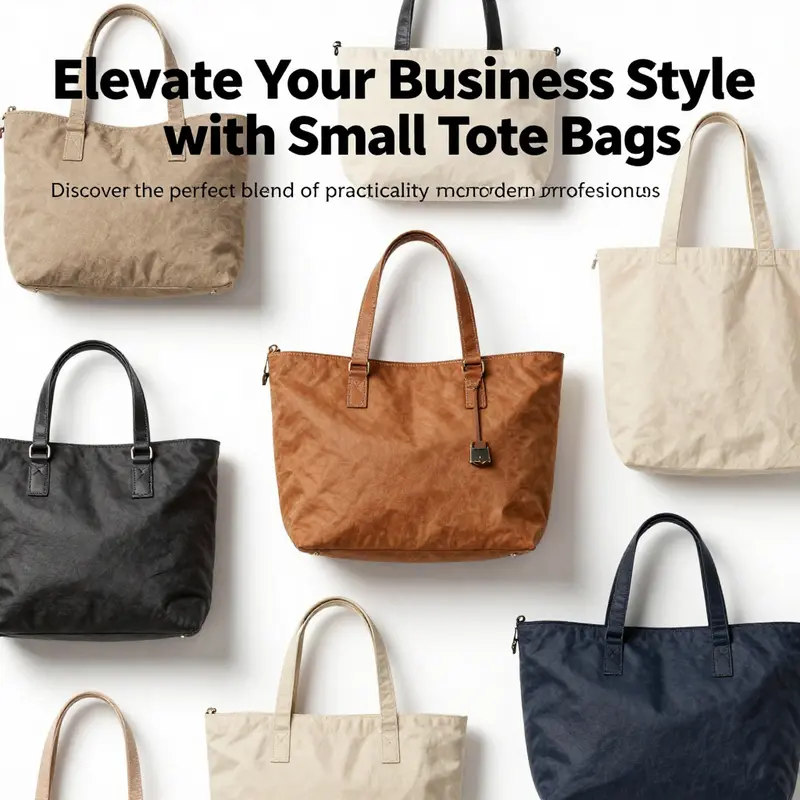
Small tote bags are more than just a stylish accessory; they encapsulate a practical solution for business owners seeking efficiency and organization without sacrificing aesthetics. These bags invite a minimalized packing approach, compelling users to focus on essentials. The chapters ahead will explore their practicality in depth, the harmonious styles and proportions they offer, ways to accessorize effectively, how they enhance organization, and the transformative impact they can have on your business lifestyle.
Small Tote, Big Sense: How Practicality Shapes the Small Tote Bag

A small tote bag is not a smaller afterthought. It is a deliberate choice that channels restraint into usefulness. When crafted with intention, a compact tote offers a measured balance of form and function. Its size encourages smarter packing, its structure supports daily routines, and its materials and details determine how reliably it performs. This chapter explores how thoughtful design transforms a modest silhouette into a dependable everyday ally.
Start with shape and structure. A well-made small tote typically uses a rectangular or slightly trapezoidal profile. Structured sides and a flat base keep the bag upright. That stability matters. Upright posture prevents the bag from collapsing and hiding contents at the bottom. It also makes visual inventory simple: you can spot what you need without digging. Stiff panels, discreet reinforcement at the corners, and a stable bottom often achieve this, while invisible stitch lines preserve a clean exterior.
Internal layout is equally important. A single cavernous compartment can become a trap for essentials. Small totes succeed when they add clarity through organization. Think pockets sized for specific items: a zippered pocket for valuables, a shallow slip for cards or transit passes, and an elasticated pouch for small cosmetics. These cues direct users to place items thoughtfully rather than tossing them in. A practical opening angle—slightly wider at the top—also aids retrieval. Small design choices like a magnetic or simple top closure offer security without slowing down access. When these elements come together, the bag supports quick commutes and compact packing habits.
Materials define longevity and ease of care. Durable canvas, full-grain or pebble-grain leather, and treated textiles each bring distinct benefits. Canvas tends to be light and forgiving, ideal for casual days. Quality leathers offer structure and age gracefully. Water-resistant coatings and stain-repellent finishes extend active wearability. Reinforced handles and secure strap attachments prevent premature wear. The sum of these choices determines whether a small tote remains useful year after year, or frays into a short-lived accessory.
Ergonomics deserve close attention. A small tote must carry daily essentials without stressing the body. Wide handles distribute weight across the hand or shoulder. Adjustable, removable straps expand carrying options and reduce strain. Crossbody wear shifts load to the torso, while hand-held or crook-of-arm carry keeps the bag close in crowded spaces. Thoughtful strap length and padding make transitions comfortable. Over time, these small details protect posture and keep the bag from becoming a burden.
Capacity is about intent, not volume. The ideal small tote is sized to carry a curated set of items. Typical contents include a phone, wallet, keys, sunglasses, a small cosmetic case, and a compact umbrella or thin notebook. Limiting the bag to essentials creates two benefits. First, items are easier to find and remove. Second, the user learns to prioritize what they truly need. This practice of deliberate selection supports faster routines and reduces the cumulative load on shoulders and spine. Rather than seeing a small tote as restrictive, it becomes a tool that streamlines daily life.
Versatility is another practical virtue. A small tote that adapts to varied roles replaces several single-purpose bags. Removable straps turn a polished hand-carry into a relaxed crossbody. A neutral palette—black, camel, navy, or muted two-tone—pairs with many outfits. Minimal ornamentation keeps the bag appropriate in both professional and casual settings. When a single bag fits a meeting, an errand run, and an evening out, it reduces decision fatigue and promotes consistent use.
Durability matters in the details. Strong stitching, bar-tacked stress points, and corrosion-resistant hardware extend a tote’s functional life. Lightweight metal feet protect the base from abrasion. Zippers that glide smoothly reduce frustration and protect contents. Inside, linings with abrasion resistance or easy-clean finishes keep the interior tidy. These features require modest investment but repay it with years of reliable performance.
Aesthetics and proportion influence perception and comfort. For smaller frames, a scaled-down tote preserves visual balance. Large, oversized bags can overwhelm proportions and disrupt an outfit’s harmony. Conversely, a compact tote aligns with a refined silhouette and supports layered dressing. Clean lines and restrained trims deliver a wardrobe-friendly look. The right scale also encourages mindful packing, reinforcing the bag’s practical advantages.
Practicality also shines through in weather resilience. Urban life exposes bags to coffee spills, rain, and accidental stains. Water-resistant fabrics and protective coatings make maintenance easier. A bag that resists moisture and repels stains reduces anxiety about daily mishaps. It also lowers the maintenance burden, allowing users to focus on their day rather than bag care.
Adaptable interiors add another layer of usefulness. Pockets designed for modern essentials—phones, small power banks, and earbuds—improve daily workflows. A padded sleeve for a compact tablet or a thin laptop increases the bag’s work-readiness. Yet, that sleeve must be sized appropriately to preserve the bag’s shape. Modular inserts or removable organizers can convert a simple tote into a highly organized companion for travel or work days. These inserts make it easy to swap contents and maintain order across different activities.
Sustainability and long-term value often intersect with practicality. Choosing durable materials and repairable designs extends a bag’s life. Simple, timeless design avoids quick trend cycles, encouraging prolonged use. When a small tote performs reliably and stays relevant, it reduces the impulse to replace items frequently. That makes intentional design a practical choice for both users and the environment.
Finally, practical design changes user behavior. A small tote nudges people toward clarity and intent. Packing becomes a quick decision rather than a chore. Retrieving essentials takes seconds. The bag becomes a quiet enabler of routines. It supports movements between meetings, transit, and leisure without fuss. When a bag fits into these daily flows, it feels less like an accessory and more like a tool that smooths everyday life.
For those seeking a small tote that combines structure, organization, and adaptability, consider options that emphasize reinforced construction, clean interior layouts, and weather-resistant finishes. If a compact sleeve for electronics is important, look for a model designed to preserve shape while protecting devices. And if you want a reference point for testing real-world usability, expert product reviews can be helpful. For detailed evaluations that focus on functionality and build quality, consult hands-on reviews from established tech and product analysis outlets: https://www.cnet.com/.
null

null
Subtle Luxuries: Accessorizing a Small Tote for Style and Everyday Efficiency

Across city sidewalks and quiet cafe corners, the small tote has earned a reputation not for cramming more but for guiding you to carry less with more intention. When the bag sits at your elbow, you feel the rhythm of the day shaping itself around what you actually need. Its typical dimensions, about ten to thirteen inches wide and nine to eleven inches tall, invites a disciplined approach to belongings. Not every item deserves a place inside; the limit becomes a gentle editor of your routine. The result is a daily companion that supports rather than demands attention. Designers across modern studios speak of this philosophy as a balance between efficiency and aesthetics: a bag that looks poised, carries essentials reliably, and never competes with your outfit for the spotlight. A celebrated designer once remarked that a truly good bag should not be a burden in your wardrobe, but a quiet hand that keeps your life moving. In this frame, the small tote’s charm lies in its internal architecture as much as in its exterior silhouette: a few carefully placed pockets, a zipper guard, and open sleeves that welcome the items you reach for most. It is not about empty bragging space; it is about organizing space that deducts friction from your day.
Accessorizing, then, becomes a choreography rather than a decoration. The right touches emphasize the bag’s scale and purpose while preserving its clean lines. The simplest technique is the idea of ‘bags within bags’—placing a compact pouch or clutch inside the tote, using a texture that contrasts with the outer leather or fabric. A satin or metallic interior piece peeks at the edge, hinting at curated taste without shouting. This small reveal communicates a story: that your belongings are not scattered, but carefully assembled for how you move through a city or a workplace. Next, charm clusters offer a way to personalize without overpowering the design. A few minimalist shapes—hoops, initials, or tiny keys—on the zipper pull or a side ring can reflect moments in your life, a quiet nod to your mood, or a memory you want to keep accessible. The effect remains restrained and timeless, avoiding gimmickry while rewarding you with a glance that feels intentional rather than accidental. Then there is movement and flair, where a tassel or a fringe can play with the bag’s lines. A leather tassel, when paired with a structured tote, adds a touch of sophistication; beaded fringes lean into a more eclectic, exploratory vibe. The key is to balance weight and texture so the ornamentization does not tilt the bag toward whimsy or casual neglect.
Functional versatility is the practical pillar of accessorizing small totes. Detachable strap extensions let you switch from a handheld carry to a shoulder or crossbody silhouette in seconds. Swapping short handles for longer straps in contrasting textures—woven cotton, chain-link metal, even a slim velvet strap—transforms the bag’s personality to suit a meeting room, a coffee run, or an evening stroll. The change is visual as well as tactile; it signals a shift in purpose without changing the bag itself. Inside, interior organization matters just as much as external embellishment. Slim, luxuriously finished pouches or zip inserts in silk or satin peek through when the bag is open, offering a sense of quiet opulence while keeping the contents orderly. The simplest rule is to reserve the deepest pocket for a small notebook or card wallet, a second pocket for a phone or earbuds, and a slim sleeve for a lipstick or compact. When the pieces are arranged with care, the bag feels larger than it is because you are not scrambling for things you forgot you own. That is the paradox of efficient minimalism: size constraint becomes an ally, not a limitation.
Outfit matching often emerges from the bag’s own restraint. A neutral-toned woven tote finds harmony with a light linen shirt and pale denim, producing a breezy, Mediterranean-like vibe that reads as effortless rather than forced. In the office or a boardroom corridor, a more structured black or navy tote—kept clean of heavy hardware—speaks of professionalism and discipline. The bag’s quiet sophistication does not clash with the suit or the dress; it supports them, like a calm arena that frames your movements. The overall effect is that the small tote becomes a stagehand for your life: it places the spotlight on you by staying out of the way, letting you translate mood, intention, and skill through your choices rather than through conspicuous display. This aligns with the idea that a well-chosen tote does not merely carry items; it carries a persona—one that is polished, efficient, and mindful about what is revealed and what remains private. The result is a look that is easy to recalibrate from day to day, depending on what the day asks of you, where you travel, and whom you meet.
To take this understanding into practice, consider how you measure value in a bag beyond capacity. The small tote’s worth is steeped in its ability to reduce excess, streamline your routine, and elevate your outfit with subtle equity—material quality, precise seam work, and the quiet glow of good leather or fabric. The design supports you without shouting, and that is what makes it the antithesis of mere trend. The strategic accessorizing described here is not about adding clutter but about tuning the instrument of daily life. If you pause to examine your own routine—the items you reach for at the start of a workday, the way you move through a transit hub, the moments when you pause to glance at your reflection—you discover that the small tote is most valuable when it feels invisible yet present. It removes friction from a familiar path: a phone slips into a front pocket for quick access, a wallet sits snug in a zip pocket, keys find a safe place in a slim sleeve, and a lipstick waits in a lined opening for when a quick touch-up is needed. The result is a gentle hierarchy of items that respects your time and your silhouette, allowing the whole outfit to read as deliberate rather than hurried.
For readers seeking further inspiration on how to adapt these ideas to different styles and occasions, there is a broader conversation about tote aesthetics and versatility that you can explore in the ongoing discourse around trends. tote-bags-trending. Beyond the practical, this exploration invites you to imagine the small tote as a flexible reflex—an accessory that tunes itself to your routine rather than forcing a change in it. As you experiment, you may discover that the best small tote for you is not simply the one that fits a set of items, but the one that encourages you to carry only what truly elevates the day. In this frame, the accessory becomes a personal assistant of sorts, whispering reminders to keep the essentials close and the distractions at bay. The result is a look that feels cultivated, not contrived; deliberate, not ceremonial. And when your bag works with you, not against you, your confidence tends to rise in parallel with the crisp, focused lines of your outfit. For added insight on complementary styling ideas, you can consult broader resources on home and wardrobe care, color coordination, and texture pairing, such as the resources offered by reputable lifestyle editors and design enthusiasts. For more ideas on how to refine a jacket, sunglasses, and shoes to match a compact carry, see the external resource linked at the end of this discussion.
To close this circle, remember that the small tote is not a compromise but a refined instrument of daily life—one that invites you to define what you carry, why you carry it, and how you carry it with quiet confidence. For further inspiration on style ideas that balance form and function, explore The Spruce.
Small Totes, Big Rhythm: Efficiency and Organization for Everyday Carry
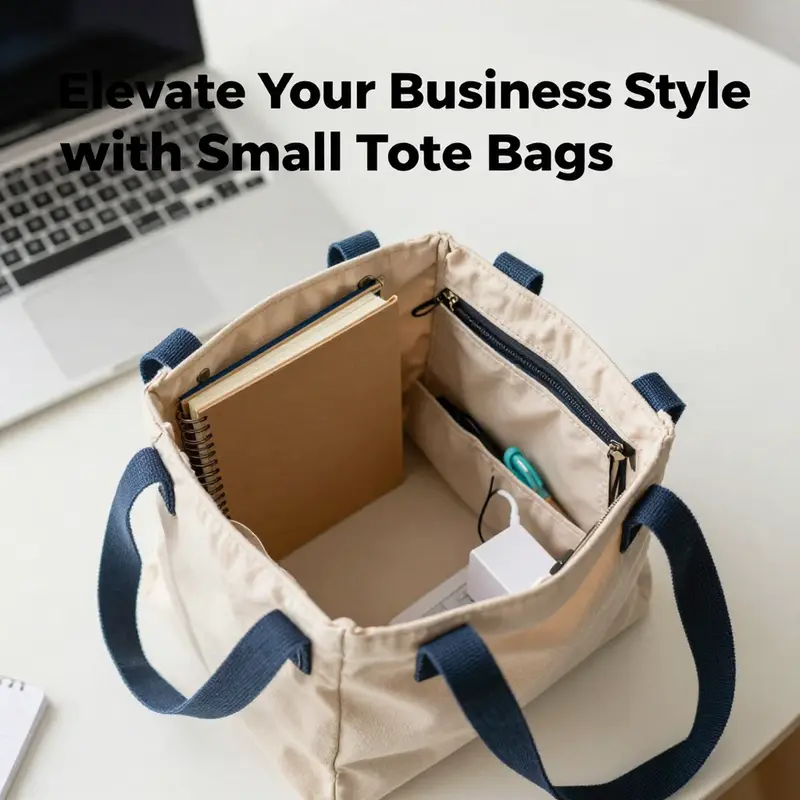
A small tote bag is often mistaken for a pared-down workhorse that cannot carry enough to matter. In truth, its value lies in its design—an invitation to efficiency, clarity, and a poised daily rhythm. When space is limited, every item earns its place, and the bag becomes less a receptacle and more a streamlined extension of the wearer’s routine. This chapter explores how intentional planning, layered packing, and light-touch organization transform a compact tote into a daily partner that supports rather than interrupts the flow of the day. The core insight is simple: efficiency in a small bag emerges not from cramming more items inside, but from curating a purposeful set of essentials that are easy to access, easy to transfer, and easy to live with. It is about balance—between function and aesthetics, between readiness and restraint—and about cultivating a carry that feels almost invisible while quietly elevating every moment it touches.
The first guiding principle is a minimalist audit. Before you ever begin packing, invite a moment of inventory almost ritual in its restraint. Examine your day as it unfolds: what are the items you truly reach for in the course of a normal day? The answer will almost always be a compact list that can be carried with calm efficiency. An urban lifestyle organizer emphasizes this idea by comparing the process to a kitchen drawer system: assign a home for each item so you know exactly where to return it and where to retrieve it. In practice, this means dividing items into three broad categories. Core essentials are those items you expect to touch most often—phone, wallet, and keys. Situational needs are items you reach for less frequently but cannot do without when the moment calls for them—sunscreen, a small notebook, a compact umbrella. Emotional comfort items are the little rituals that brighten the day—perhaps a lip balm, a compact hand lotion, or a favorite mint. The key is not to overfill with duplicates or items that rarely see the light of day. The goal is precise, not expansive. This audit process, while deceptively simple, creates a baseline of confidence: you carry only what genuinely serves your present life, and you return items to their assigned place with the same intention you bring to a tidy kitchen drawer.
Having identified a lean core, the next layer of discipline is the layered packing method. Think of the tote as a small city with zones—each zone designed for a rhythm of use. The base layer anchors heavier or less frequently accessed items, such as a slim notebook, a tablet, or a folded extra layer when weather shifts. The middle layer is the intermediate zone for moderate-use objects—lunch containers, a spare scarf, perhaps a lightweight book—items you want within easy reach but not at arm’s length all day. The top layer is the front bench, where your most-used items reside for rapid access: wallet, phone, keys, and a pair of sunglasses. This stratification makes sense only when it’s backed by simple, repeatable habits. In other words, you should be able to refresh your bag’s contents in under two minutes at the start of the day, and again in under a minute when you return to a cafe or office and need to grab what you left behind. The person who embodies this approach often emphasizes the elegance of routine: a predictable flow that reduces anxiety and preserves energy for the tasks that truly matter.
One practical strategy that emerges from this approach is compartmentalization, even when the bag lacks built-in pockets. The solution is to use slim, lightweight pouches that conform to the bag’s curves rather than rigid boxes that waste space. A dedicated electronics pouch keeps the phone, charger, earbuds, and USB sticks together in a compact bundle. A wallet and ID organizer securely holds cards, cash, and keys in a single, organized unit. A toiletry roll-up can house lipstick, hand sanitizer, and tissues in a neat strip that slides into the base or middle layer without upsetting the balance. A pen and notebook sleeve protects against ink leaks while ensuring you can jot notes on the go. The beauty of this approach is not just order; it is portability. When you need to switch bags or move quickly between locations, you can lift out your entire “core kit” and relocate it with minimal friction. To keep the system light and adaptable, limit yourself to no more than three pouches, and choose flexible materials—nylon, neoprene, or soft fabrics—that bend with the bag’s shape rather than rigid organizers that mandate a strict interior map.
Weight is a real, measurable factor, even in the compact tote. Experts advise keeping tote loads under a fraction of body weight to ease shoulder and neck strain. In practical terms, this translates to a sensible ceiling for daily carry: stay mindful of the total load, aiming for a balance that allows you to move with ease through doors, stairs, and elevators. The idea is not to shun all heavier items but to ensure that if an object is essential, its weight is justified by real use. A well-structured small tote quietly respects the body’s ergonomics, letting the wearer carry more life, not more luggage. The effect of this discipline goes beyond comfort. It cultivates a sense of confidence—an understated assurance that your everyday carry is aligned with your pace, your schedule, and your values.
Style and proportion naturally respond to efficiency. When a bag is visually compact and proportionally tuned to the wearer’s frame, it supports a look that feels deliberate rather than crowded. The small tote’s silhouette tends to harmonize with the modern urge for clean lines and restrained color palettes. Neutral tones—black, tan, or charcoal—often read as versatile and professional, capable of harmonizing with a broad range of outfits, from tailored business looks to casual cafe moods. Because the bag is not trying to do more than it should, its aesthetic cleanly complements rather than competes with the wearer’s overall style. In this light, the small tote reveals a subtle power: it does not shout; it punctuates. It becomes a quiet anchor for daily rituals, a poised counterpoint to the often restless tempo of urban life.
The practical and the stylistic converge most clearly when one experiments with real-world scenarios. A professional who moves through meetings, transit, and quick coffee runs benefits from a bag that holds essential documents, a digital device, and a few little comforts without turning into a burden. A student or freelancer—constantly on the move between libraries, coworking spaces, and lunch errands—appreciates a bag that can be emptied and reorganized in seconds between venues. And a commuter who sometimes faces rain or wind will value the ability to slip in a small umbrella or a compact rain cover without disassembling the bag. The small tote, in these moments, becomes less about capacity and more about stewardship: it teaches you to steward your time, your possessions, and your appearances with a calm, practiced ease. The result is a life where the carry is unobtrusive yet consistently reliable—a kind of stylish quietude that supports rather than dictates the day.
If you want to translate this approach into practice, you can explore compatible accessories that are designed to weave seamlessly into the small tote’s logic. For instance, consider a compact sleeve that slips into a dedicated pocket or layer on the base, offering additional protection for a laptop or a tablet and providing a stable anchor for heavy items. A slim, flexible organizer for cables and chargers can reside in the electronics pouch, ensuring that cords never become a tangled mess. And when you need to transfer your core kit to another bag, the system’s modularity shines: each pouch contains a tightly curated subset of items, and the entire kit moves as a single unit. This is not about overengineering but about intelligent pairing—an approach that respects the bag’s size while maximizing its practical reach. For readers who want to see a tangible example of this logic in action, a detailed guide on one such compact configuration is available here: tote bag with computer sleeve.
As we close this exploration, it bears repeating that the heart of efficiency in small tote bags lies not in stuffing more but in choosing better. It is the discipline of a deliberate, yearned-for simplicity that ultimately transforms a compact carry from a nuisance into a trusted companion. The small tote’s promise is not merely to hold essentials but to elevate the experience of carrying them—reducing clutter, speeding access, and enhancing the overall sense of poise in daily life. When you pack this way, the bag stops being a passive container and becomes a conscious instrument of your life’s tempo.
For readers seeking further practical inspiration, real-world tips on organizing small totes in daily life are compiled in a concise guide that emphasizes minimalism, layered packing, and mindful weight management. It offers a grounded perspective on how tiny changes in routine can yield a steadier, more efficient day. External reference: https://www.realsimple.com/lifestyle/organization/small-tote-bag-organization-tips. By anchoring the conversation in concrete, accessible techniques, the discussion remains anchored in usefulness while inviting personal adaptation. The ultimate takeaway is clear: a small tote, when designed and used with intention, can quietly support a life that moves with confidence, efficiency, and quiet elegance.
Small Totes, Big Shifts: Transforming Everyday Life with a Minimalist Companion

Scarcity of space does not diminish appetite for style. A small tote bag appears not as a compromise but as a deliberate act of daily redesign. It embodies a shift from carrying more to carrying only what matters, a shift that quietly rewrites how we move through the day. In this light, the tiny footprint of a compact bag becomes a stage for efficiency and elegance, a steady hand that steadies the rhythm of everyday tasks without shouting for attention. The small tote, with its modest width and measured height, invites a different mindset: a practiced discernment about what deserves a spot inside, and a confidence that what is essential can be retrieved with ease when needed. This is not about restraint for its own sake; it is about a smarter choreography of items that supports focus, mobility, and calm in the midst of a busy city routine.
From a practical standpoint, the typical dimensions of a small tote hover around the 10 to 12 inch width and about 9 to 11 inches in height. Those numbers matter more than they first appear because they shape a user’s decision about what truly belongs inside. When the space is intimate, the mind becomes precise. A phone, a wallet, keys, a lipstick, perhaps a compact umbrella or a slim notebook—these essentials slip into place with deliberate ease, and the rest remains outside. In that sense, a small tote acts as a constraint that liberates, nudging the owner toward a form of organized minimalism. Rather than a passive container that swallows everything, it becomes a partner in daily selection, encouraging quick judgments and reducing the weight of clutter. This kind of intentional packing aligns with broader movements in sustainable fashion, where quality and purpose outrun quantity and impulse.
The value of a well designed small tote extends beyond what it can carry. The interior layout matters as much as the exterior silhouette. A thoughtfully organized interior, with a zippered pocket for valuables and a set of slip pockets for smaller items, turns the bag into an adaptive tool rather than a mere fashion accessory. The feature set is less about adding pockets for the sake of it and more about creating a pocketing logic that mirrors the user’s routine. A secure zip compartment keeps essentials close at hand yet protected, while open pockets allow quick access to frequently used items like transit cards or a compact mirror. The result is a sense of ease that emanates from the bag itself—every item knows where it lives, and every access is swift. In this way, the small tote becomes less a bag and more a personal system that travels with the wearer.
Style and proportion foster a visual harmony that is particularly compelling for urban dwellers who want to avoid the heaviness that too-large bags can create. The small tote tends to pair better with contemporary silhouettes, especially when the bag’s scale mirrors the wearer’s frame and the outfit’s lines. In a crowd of oversized totes that seem to overwhelm, a well proportioned small tote provides balance, drawing the eye along a clean line from shoulder to hip and through the fabric above. Neutral tones—deep black, soft beige, and taupe—offer the most versatility, but careful color choices can also sharpen a look. A small tote in a restrained palette finishes a look with a quiet confidence, one that communicates that the wearer values restraint and polish as much as utility. It does not shout; it confirms the wearer’s commitment to a refined, composed presence. The aesthetic appeal lies not in the bag’s novelty but in its disciplined elegance, a reminder that good taste often favors restraint over excess.
Beyond aesthetics, the small tote carries a practical philosophy that translates into daily life. It integrates effortlessly with a capsule wardrobe, a concept built on a curated set of pieces designed to mix and match across occasions. The bag’s compact form makes it easier to layer with different outfits, whether during a morning commute, a midafternoon coffee run, or an evening at a gallery opening. Its light footprint reduces fatigue, which in turn supports a longer, steadier pace through the day. When every item in the bag serves a purpose, the overall experience becomes smoother. The wearer feels less burdened by decision fatigue, and the day feels lighter as a result. This is the quiet efficiency that a small tote can foster, a subtle but meaningful upgrade to everyday life.
The concept of intentional carry also opens space for personal expression and identity. A small tote encourages choosing materials and finishes that reflect one’s values and daily needs. Durable fabrics, discreet hardware, and a finish that resists wear all contribute to a sense of reliability. Personalization, when approached thoughtfully, can further enhance this bond between bag and user. Even small touches, such as initials or a restrained pattern, can transform a practical item into a personal companion that travels through the hours with you. Such small acts of customization become part of a larger practice: shaping objects to fit a lifestyle rather than bending a lifestyle to accommodate objects. This mindset aligns with the broader idea that a small bag, carefully chosen and carefully used, is not a constraint but a chance to reaffirm personal standards of efficiency and taste.
As the daily routine shifts toward streamlined choices, the small tote also demonstrates how fashion can support sustainable behavior without sacrificing style. When space pushes for mindful packing, consumers naturally avoid overfilling and overbuying. The bag’s size acts as conscious feedback, signaling when more is simply more, and when less—when a carefully selected handful of items can cover a full day’s needs. In this sense, the small tote is a teaching tool as much as a carrier. It helps cultivate a habit of mindful consumption, encouraging a preference for durability, classic silhouettes, and versatile colors that endure beyond seasonal trends. The impact extends beyond the bag’s own life; it informs a shopper’s approach to other purchases, nudging a broader shift toward lasting quality over rapid turnover.
The idea of a small tote being a partner in everyday life also finds resonance in how people present themselves in professional and social contexts. The bag often occupies a middle ground between casual ease and formal poise. Its size allows it to slip into a work setting without dominating it, while its clean lines and restrained hardware can elevate a look that would otherwise feel undernourished by too much accessory. This balance matters because it preserves personal authority: a bag that carries itself gracefully without shouting becomes a quiet ally that keeps pace with a person who moves quickly through meetings, errands, and moments of spontaneous social exchange. The best small totes perform this balancing act without effort, making the wearer feel composed, capable, and in control of their day.
To appreciate the cultural moment that small totes inhabit, consider the way trends bend toward minimalism and purposeful design. A bag in the small category is not a relic of a bygone era of abundance; it is a response to contemporary demands for clarity and efficiency. The appeal lies not in novelty but in reliability, in a design that resonates with people who value the time saved by a well organized interior and the quiet confidence that comes from presenting a poised, uncluttered exterior. In a marketplace that often urges constant expansion, the small tote offers a contrary, liberating proposition: that less can indeed be more, and that a compact companion can hold a life lived fully without becoming a burden.
For readers drawn to the dialogue between form and function, the small tote serves as a practical lens through which to view everyday elegance. It illustrates how materials, dimensions, and interior architecture converge to shape a user’s daily rituals. It also invites a moment of reflection on one’s own carry habits—what is it that you would pick if you could remove one or two items from your current load? The answer may reveal more about your priorities than a long shopping list ever could. And if you want to explore how trends in bag design translate into everyday practice, a quick detour to a current snapshot of bag styles can be illuminating. See the section on tote bags trending for a sense of how minimalism and practicality are influencing choices right now. tote bags trending
In sum, the small tote is not merely a size category; it is a philosophy of daily life. It is a deliberate practice of selecting, organizing, and carrying with intention. Its charm lies in its restraint and its power lies in how efficiently it supports the day’s demands without becoming a burden. It encourages a mode of living that prizes clarity over clutter, pace over hesitation, and quality over quantity. As we move through work, errands, and casual moments, the small tote remains a reliable, unpretentious partner—neither flashy nor invisible, but consistently present, quietly aligning the wearer with a sense of control and grace. The transformation is gradual, but its effects accumulate: a lighter load, a more purposeful routine, and a refined sense of personal style that fits a modern cadence without sacrificing comfort.
External resource for further perspective: https://www.voyageur.co.uk/collections/totes
Final thoughts
Small tote bags are not merely a fashionable addition; they serve a crucial role in enhancing the daily efficiency and style of business owners. By encouraging intentional packing and elevating outfits, they ensure that professionals look polished while eliminating clutter. For the modern business-minded individual, embracing a small tote bag is an investment in both aesthetics and organization, fostering a lifestyle that is as efficiently executed as it is stylish.