
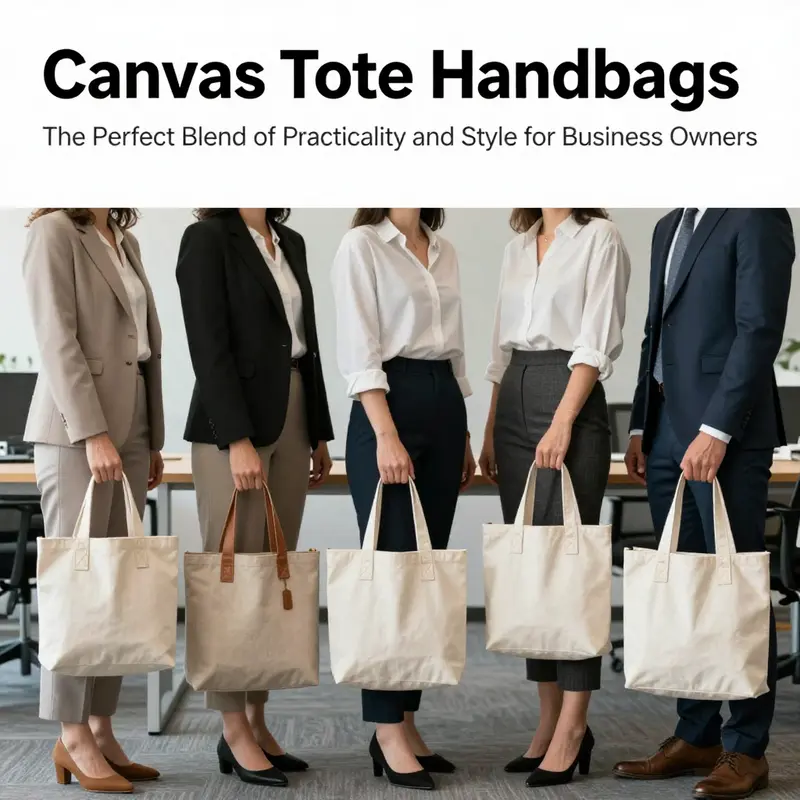
In today’s eco-conscious market, canvas tote handbags stand out as an ideal choice for businesses looking to merge practicality with aesthetic appeal. These lightweight, durable bags are not just everyday carryalls; they serve as a canvas for self-expression and branding. Business owners must understand the multiple facets of canvas tote bags, from their design and practicality to customization trends and societal impact, to leverage their potential fully. Each chapter unpacks these elements, offering insights into why integrating canvas totes into your product line can be a game-changer for your brand.
Carrying Purpose: The Durable Design and Everyday Elegance of Canvas Tote Handbags
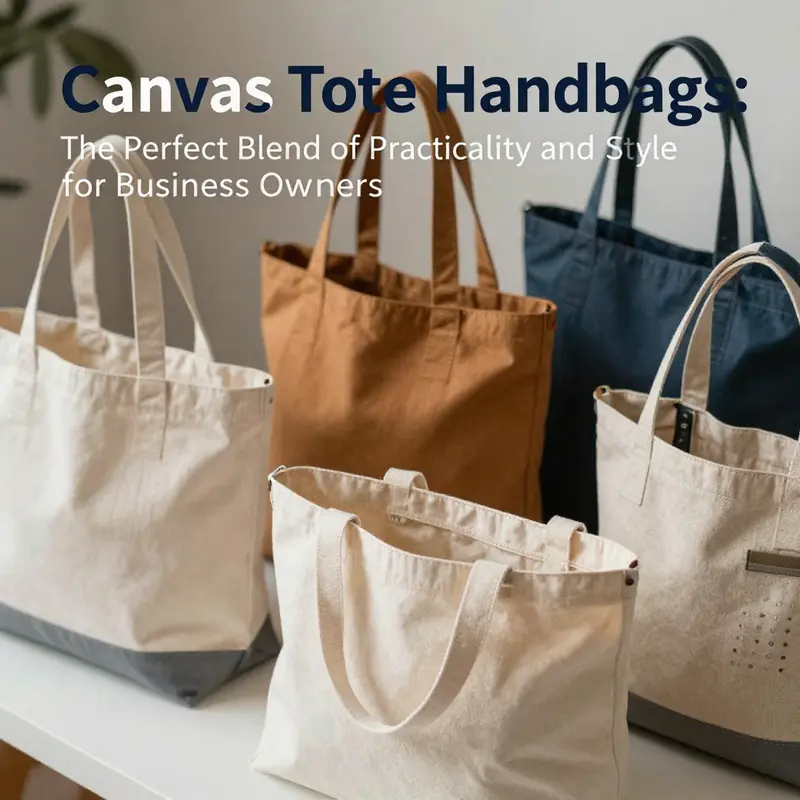
Canvas tote handbags sit at the intersection of rugged practicality and quiet sophistication, a combination that keeps them central in modern accessory wardrobes. Their appeal rests not only in capacity but in a resilient design that survives the demands of daily life while staying remarkably adaptable to changing contexts. The material itself—tightly woven cotton or cotton blends—provides a foundation that is at once simple and trustworthy. It resists tearing and abrasion when new, offers a lightness that makes commutes and errands feel less burdensome, and, with careful care, can carry the weight of a busy day from morning caffeine runs to late-evening library returns. The beauty of canvas as a carrier is that it reads as utilitarian without being merely functional; it invites personalization, and that dual promise—substance plus space for self-expression—has helped it endure as a mainstay in households, workplaces, and creative communities alike.
Size, shape, and accessibility form the practical backbone of canvas totes. They typically present a wide opening and a rectangular base, a geometry that maximizes interior capacity without sacrificing stability. The standard footprint—roughly around 14 inches by 15 inches—generously accommodates notebooks, folders, or a small laptop; oversized versions stretch to as much as 17 inches across, expanding the range of items that can be carried. This openness is a deliberate design choice: it simplifies loading and unloading, which is especially valuable when juggling a variety of items—books for class, groceries after a weekend market, gym gear on a busy Monday, or a batch of art supplies for a studio session. With no rigid interior walls to segment the space, users enjoy a forgiving interior that can expand as needed, which is exactly what makes the tote so compelling for daily use.
Yet the same openness that makes canvas totes so practical also exposes a vulnerability. Without built-in padding or stiffening layers, the bag relies on the strength of external stitching and seam reinforcement. When a tote is overloaded or carries unevenly distributed weight, stress concentrates at the corners and where straps attach, driving sagging and, over time, potential deformation. Repeated moisture exposure, UV light, and friction can gradually weaken fibers, leading to fading, thinning, or even small tears at stress points. These realities are not flaws so much as design truths, and they shape how people choose, maintain, and style canvas totes. Understanding these dynamics helps explain why many users treat totes as workhorses rather than treasures, while still expecting them to age gracefully with weathered character rather than sudden failure.
To counterbalance these limitations, reinforced stitching, thoughtful seam placements, and sometimes additional shoulder strap support can extend a tote’s life. Some designs incorporate crossbody straps or longer handles that help distribute weight and reduce the stress that would otherwise accumulate at one point. In practice, many totes benefit from a hybrid approach: the open-top convenience remains, but with stronger attention to edge finishing and handle attachment. And while upgrades like interior compartments or padding may drift away from canvas’s spirit of simplicity, a few well-placed features—such as a small internal pocket for keys and a protective base panel—can preserve organization without sacrificing the bag’s essential character. The result is a durable, adaptive piece that remains comfortable to carry across a range of activities, from a quick stroll to the market to a uncertain commute on a rainy day.
The practical virtues extend beyond capacity and resilience. Canvas totes are frequently designed for easy care, a factor that resonates with busy lifestyles. Many bags are machine-washable or at least straightforward to wipe clean, which is a significant advantage for a bag that inevitably encounters spills, dust, and grime in the course of travel and daily errands. The fabric’s ability to absorb dyes and prints further enhances versatility; it accepts embroidery, screen printing, and dyeing with surprising fidelity, transforming a sturdy workhorse into a platform for personal expression. This capacity for customization unlocks a broad spectrum of aesthetic options—from quiet, monochrome palettes to bold graphic statements that reflect values, moods, or affiliations. In this context, canvas tote bags become more than containers; they become portable canvases on which wearers can inscribe identity, ethos, and everyday stories. For readers exploring a broader range of options, one may examine the evolving landscape of options available to women who favor canvas in everyday wear: women’s canvas tote bags.
The evolving aesthetic of canvas totes marks a shift from plain practicality toward a more considered, contemporary presence. Minimalist, subtle branding and nature-inspired motifs have become common, signaling a quieter form of self-expression that aligns with mindful consumption. The apparel and accessory industry has observed a move away from loud logos toward designs that communicate values through meaningfully restrained typography, negative space, and botanical or ephemera-inspired imagery. In this light, canvas totes function as wearable statements about personal ethics and lifestyle choices rather than as mere accessories. This is especially relevant in urban environments where the tote’s casual silhouette reads as approachable elegance rather than casual misfit. Across different settings—whether a morning gallery visit, a coworking session, or a weekend escape—the bag remains a versatile partner that harmonizes with a broad range of outfits and occasions.
From an industry perspective, the canvas tote occupies a unique space between mass accessibility and individualized style. Its affordability brings a democratized form of elegance to everyday dressing, while its potential for customization broadens the horizon for self-expression and brand storytelling. In promotional contexts, canvas totes have long served as practical, reusable carriers that extend a brand’s reach far beyond a single event. The design language—whether through a restrained graphic, a thoughtful message, or a nature motif—translates into a quiet, portable billboard for personal beliefs and organizational values. This blend of accessibility and customization contributes to their enduring relevance in a fashion system that increasingly values both responsibility and individuality. The canvas tote is not merely a bag; it is a portable surface for ideas, a canvas that wears the wear of daily life as a mark of character rather than a flaw to be hidden.
The conversation around canvas totes in contemporary styling also encompasses how they fit into more curated wardrobes. While they do not always conform to the polished look associated with leather or structured luxury, canvas totes offer a different form of refinement—a casual, curated ease that can be elevated through styling choices. The principle echoes a broader fashion sensibility that values function without sacrificing poise. Even within more formal ensembles, a well-chosen canvas tote can anchor an outfit by providing a grounded, tactile contrast to sharper lines or more delicate fabrics. The secret lies in thoughtful pairing: a classic, crisp silhouette on top, with a tote that carries a tactile warmth and an understated finish on the bottom. The notion of pairing a canvas tote with tailored clothing has become a subtle expression of modern taste, a visual cue of confidence and practicality working in harmony. In this spirit, the idea of jnsqean—a playful nod to a specific styling approach—reminds us that a tote can be much more than a utilitarian tool; it can participate in the choreography of a well-composed look without shouting for attention.
As design sensibilities evolve, the canvas tote continues to adapt to new uses and new kinds of travel. Its open-top configuration makes it naturally well-suited for a weekend escape or a quick gym session, where load flexibility is a strength rather than a limitation. A robust washable surface makes it a reliable companion for trips where wet clothes or sandy gear are likely, while its soft geometry keeps it easy to stash in a car trunk or overhead compartment. And because canvas is inherently forgiving, it provides a forgiving space for bulky items that would feel cramped in more structured bags. This adaptability helps explain why the canvas tote remains a staple through seasonal transitions, bridging the gap between practical necessity and casual, everyday chic.
The linkage to broader fashion trends is also worth noting. Contemporary trend reports emphasize a shift toward durable, environmentally conscious materials and designs that honor longevity over disposability. Canvas tote bags offer a tangible expression of this ethos: a reusable alternative to single-use plastics, a product that can be mended, embellished, and kept for years. In practice, this resonates with a generation that values transparency, durability, and personal storytelling in the items they choose to carry. Designers and makers are leveraging canvas’s versatility to craft bags that feel at once familiar and fresh—through refined color palettes, tactful texture mixes, and prints that speak to cultural moments without being ephemeral or disposable. Such versatility ensures that the canvas tote continues to be a carrier not just of goods, but of ideas, values, and memories that accumulate with use and time.
For readers seeking deeper context on current design directions and material performance, external reading that captures 2026 trends provides an illuminating backdrop. The latest industry coverage highlights how designers are embracing restrained branding, botanical motifs, and prints that convey mindfulness and environmental awareness without overt commercialism. The conversation around these tendencies emphasizes that the canvas tote is not simply a product but a flexible, communicative object within a larger eco-conscious fashion ecosystem. External resources underscore how the material’s performance characteristics support a spectrum of uses—from daily errands to weekend explorations—while its aesthetic evolution invites personal resonance through pared-back sophistication or vivid, nature-inspired storytelling. External reading: Canvas tote bag design trends (Vogue Business) — https://www.voguebusiness.com/fashion-trends/canvas-tote-bag-design-trends-2026.
Carrying the Load: Durability, Design, and the Quiet Limits of Canvas Tote Handbags
Durability in canvas tote handbags often feels less like a binary judgment of flaw or perfection and more like a dialogue between material heft, construction craft, and the realities of everyday use. The canvas itself, typically a tightly woven cotton or cotton blends, has built a reputation for toughness. When you lift a tote that feels substantial in your hands, you are feeling the sum of a thousand tiny decisions: the density of the weave, the weight of the fabric, the quality of the stitches, and the way the bag is assembled at its most stressed points. The typical advantages are clear. Canvas offers a lightness that leather cannot rival for weight, a forgiving surface that resists scratches in casual settings, and a surface that can be easily customized with prints, logos, or graphics. In daily life, these traits translate into a bag that can carry groceries, books, a gym outfit, or a laptop charger with confidence, especially when the weight is spread over broad, well attached handles and reinforced corners. The material’s high tensile strength under normal use means that with proper care, many canvas totes can comfortably shoulder 20 pounds or more without immediate catastrophe. The real test, however, is not just raw strength but how a bag behaves when confronted with repeated cycles of loading and unloading, rain, sun, and the inevitable rough edge of real world travel between subway carriages and coffee shops.\n\nThe durability story hinges on three core factors: weave density, fabric weight, and construction quality. Weave density matters because the tighter the threads are packed, the less susceptible the surface is to abrasion. In practical terms, this reduces pilling and fraying that can occur along the top edge or near the seams after repeated contact with rough surfaces. Higher thread counts translate into greater resistance to the fabric being worn thin at the corners where the bag naturally bears weight. Fabric weight, often expressed in ounces per square yard, is another practical measure. Canvas built in the 10 to 14 oz/yd2 range tends to deliver noticeable resilience, especially when paired with a dense weave. Lighter canvases are still adequate for everyday use, but they demand more careful handling and shorter cycles of heavy loading before signs of stress appear. The final piece of the durability puzzle is construction quality. Double or triple stitching along stress points—handles and corners—can dramatically extend a tote’s lifespan by distributing load more evenly and preventing seam failures that would otherwise propagate tears. Box stitches at the points where handles meet the body create a robust anchor, and bar reinforcements can further reduce the risk of straps pulling away from the fabric as the bag grows heavier. When a bag is built with these techniques, the interior seams often stay clean and intact, providing a reassuring sense of structural integrity even after months or years of frequent use.\n\nYet durability is not merely about strength. It is about how a bag ages under the pressure of daily life. Canvas, unlike leather, lacks a patina that signals growing character with time. It does not develop a naturally protective finish as it ages; instead, it presents wear in a manner that speaks to use: faint fading where sunlight hits, subtle creases that map the bag’s most common configurations, and occasional fraying at the edges where the fabric has repeatedly flexed. Moisture is canvas’s often unseen antagonist. Cotton-based canvases can weaken when exposed to sustained dampness, particularly if the bag is overloaded. In those moments, the fibers can stretch and the seams may begin to separate at the most stressed points. Stains, odors, and mildew add another layer of complexity. Canvas readily absorbs moisture and smells, and if damp storage becomes a habit, odor can linger and mildew can take hold. Cleaning and drying become essential maintenance practices rather than afterthoughts. The resulting care routine is not merely about aesthetics; it is a practical discipline that preserves the fabric’s tensile properties and the integrity of stitched seams. A bag that is allowed to dry thoroughly after a rain or spill, and that is kept in a ventilated space rather than a damp closet, will naturally resist the sullying effects of moisture longer than one that sits damp or crumpled in a corner.\n\nAgainst this backdrop, the choice between canvas and its common alternatives becomes a question of priorities. Synthetic substitutes, particularly vegan leathers or synthetic blends, can offer resistance to certain kinds of wear and a consistent surface. But these materials often fall prey to their own forms of fatigue. They may crack or peel after extended sunlight exposure or friction, particularly where the material experiences bending or folding at the corners. In many cases, canvas has a longer real-world life with regular use, even if it requires more attentive care. It is not a flawless material, but it does deliver a practical, affordable, and customizable option that can keep pace with busy schedules, heavy errands, and weekend trips when used with mindful limits on load and proper maintenance. The trade-off is in structure. Because canvas favors a flexible, unlined interior design, it relies on the bag’s outer construction to bear the brunt of weight, not on interior padding or stiffening layers. The absence of a rigid frame means that the force concentrates at the bag’s corners and along the straps. If you consistently load a canvas tote past its comfort threshold, you will likely notice slow, cumulative sagging or a degree of long-term deformation at the worst-stressed points. It is a subtle, almost anatomical truth: a canvas tote endures through reinforcement at the critical stress points, not through a sacramental finish that makes heavy use disappear.\n\nThe practical implications for shoppers, then, revolve around how to read a canvas tote’s durability before purchase. A quick inspection at the point of sale can reveal much about future performance. Begin with the interior seams. Clean, tight double-stitching is not just a cosmetic detail; it is a predictor of long-term resilience. Covert corners often tell a story of care—box stitches or bar tack reinforcements at the handle attachments give a bag the capacity to distribute weight more evenly, reducing the likelihood of sudden seam failure when the bag grows heavier as the day unfolds. The attachment points themselves deserve attention. If the handles appear to be simply sewn into the body without reinforcement, the bag might be more susceptible to stretching and eventual detachment under heavy use. A reinforced handle construction, which can include extra stitching lines or cross-stitch patterns, suggests a more disciplined approach to load distribution. The base, too, matters. A bag with a slightly reinforced rectangular base or a simple bottom panel that is reinforced through stitching can resist the sag that otherwise emerges as the interior fills with items. Such design choices do not transform canvas into leather, but they do create a more stable platform for daily life.\n\nIn the conversation about durability and design, the role of care cannot be overstated. The maintenance tips that accompany canvas totes speak to a broader truth about sustainability and value. A well-made canvas tote can last five years or more with frequent use, a horizon that dwarfs the lifespan of many single-use plastics or cheaper, less robust options. This durability is not achieved by accident; it is the product of deliberate design choices and disciplined care. A practical routine might involve a routine inspection after major trips or seasonal storage to identify any loose stitching or minor fraying early, long before a fabric pull becomes a tear. If a stain occurs, it is advisable to treat it with gentle, fabric-safe cleaners and to avoid aggressive bleaching that can weaken the weave. After rain or spills, drying the bag completely becomes a non-negotiable step to prevent mold and odor. The more proactive the maintenance, the longer the canvas will withstand the daily ritual of loading, transporting, and retrieving.\n\nAn ongoing discussion within the broader tote category concerns aesthetics and identity. The basic canvas tote’s appeal lies in its simplicity and redeployability. It can be dressed up or down with the right styling choices. For a more professional or a more curated look, a canvas bag works best when paired with structured silhouettes and tailored fabrics. The contrast is deliberate: the soft, flexible body of canvas against the crisp lines of a blazer or a smart shirt creates a balanced aesthetic that communicates practicality without sacrificing polish. The fashion conversation around canvas totes increasingly recognizes the value of customization. Meaningful, culturally relevant designs, prints that reflect environmental consciousness, and brand identity all shape consumer preference. In practice, this trend turns the bag into a canvas for personal expression and brand storytelling alike. While a plain canvas tote is a reliable workhorse, a thoughtfully printed version can become a signature piece that fits a range of occasions, from casual weekends to light professional settings, provided its structure and weight are managed.\n\nThe durability story, then, is not a claim of invincibility but a framework for informed use. The tote’s real-world life hinges on a balance: ensure the fabric weight and weave density meet your needs, confirm robust construction at key stress points, and commit to a care routine that respects the material’s limits. For many shoppers, that balance is achieved through selecting a canvas tote with a heavier weight and reinforced stitching, and by using it in ways that respect its flexible nature. The bag can comfortably carry groceries, books, or gym gear when it is not pushed beyond its capacity or treated as a substitute for an actual backpack with built-in padding. For heavier loads—such as laptops or files encountered during daily commutes—a tote with a well-designed interior or an optional liner can mitigate wear on the shoulder straps. The balance between capacity and comfort is essential; the canvas tote invites a practical, everyday carry that can adapt to varied needs, yet it demands an awareness of its own limitations.\n\nOne cannot separate durability from the larger context of consumer priorities. Affordability, environmental considerations, and the ease of customization all shape the tote’s appeal. Canvas stands out as a relatively affordable material, offering a compromise between price and performance that appeals to a broad audience. Its environmental footprint, especially when sourced from responsibly produced cotton, adds a value proposition that resonates with shoppers who aim to reduce waste and support sustainable practices. The ability to customize a canvas tote—through color, print, or even embroidery—enables a broad audience to express personal style while maintaining practicality. The fashion industry’s design trends, as reported by industry observers, indicate that the category is evolving to embrace bold yet contextual patterns that reflect contemporary values. This evolution does not erase the material’s limitations but reframes them. The best canvas totes become not just utilitarian objects but part of a broader conversation about how we carry our daily worlds with us, how we reuse and repurpose, and how we balance aesthetics with function in a landscape dominated by fast, disposable options.\n\nAt a practical level, choosing durability requires a holistic view of how the bag will be used. If you anticipate frequent heavy loads, seek a canvas tote with heavier fabric and reinforced corners. If your lifestyle involves wet weather or damp storage, choose a bag with tighter seams and consider treating the fabric with a mild water-repellent spray designed for natural fibers. If you require more structure for professional settings, you can layer a simple insert or liner inside the bag to create a more defined interior. The inner space, free of rigid compartments, can be made more usable through inserts or organizers that help stabilize items without compromising the bag’s signature openness. The absence of a zipper or interior dividers is part of the design ethos of canvas totes; it preserves accessibility and expandability, but it also means the user must be mindful of item placement to avoid overstuffing the corners. The ideal approach blends careful packing with reinforcement strategies that protect the bag’s seams and handles, allowing the interior space to be used in a flexible, dynamic way.\n\nAs readers consider this chapter within the broader article on canvas tote handbags, it is important to acknowledge that durability is not a standalone metric. It is a living, evolving practice that depends on how the bag is built, how it is used, and how it is cared for over time. The durability narrative includes the material’s intrinsic properties, the precision of the stitching, the quality of the attachments, and the user’s habits. The conversation about canvas totes continues to reflect a broader shift toward sustainable, adaptable fashion—one that values reusability alongside style. In this sense, canvas tote bags offer a practical counterpoint to more structured or more expensive options, providing a canvas for daily life that can be reliable and expressive at the same time. The future of the category may well hinge on innovations that strengthen corner and strap attachments without sacrificing the bag’s light, flexible character, as well as on design approaches that balance durability with the desire for bold, meaningful visuals that can be worn and carried with pride. The canvas tote remains a living artifact of how we choose to carry our everyday lives: simply, efficiently, and with a touch of personal meaning.\n\nFor readers who want to explore related avenues beyond durability—care routines, design trends, and real-world feedback from users—the category of bags described here continues to expand. A useful way to situate these insights is to consider how the end user interacts with a canvas tote across different contexts: a quick trip to the farmers market, a day at the library or campus, a weekend trip, or a casual workday that blends professional and casual elements. The tote’s flexible interior, its forgiving fabric, and its capacity for customization all contribute to a tool that is at once practical and expressive. It is this blend of utility and possibility that sustains the appeal of canvas tote handbags and drives ongoing conversations about how such bags can continue to improve in durability while embracing the style and values of the wearers.\n\nIn closing, durability for canvas tote handbags is a layered quality rather than a single attribute. It emerges from the synergy of weave, weight, and construction, reinforced by attentive care that respects the fabric’s strengths and acknowledges its limitations. The result is a bag that can serve for years, adapting to shifts in lifestyle and fashion while remaining a dependable companion for everyday journeys. The durable canvas tote is, in effect, a practical emblem of modern carry culture: unpretentious, capable, and capable of aging with the wearer when treated with reasonable care and respect for its design boundaries. This understanding helps buyers approach purchases with a more informed eye, balancing price, performance, and personality in a way that honors both form and function. And as fashion continues to evolve, the canvas tote’s enduring appeal lies in its capacity to be a consistent, adaptable vehicle for daily life—one that respects the past with its robust, time-tested construction and looks forward to the future through its open, customizable interior and its silhouette of uncomplicated, honest carrying power. The canvas tote bag endures not because it insists on perfection, but because it offers dependable performance, practical beauty, and a platform for personal expression that remains relevant across seasons and contexts. External resource: https://www.voguebusiness.com/fashion-trends/canvas-tote-bag-design-trends-2026
Designing Identity: How Customization Is Redefining Canvas Tote Handbags
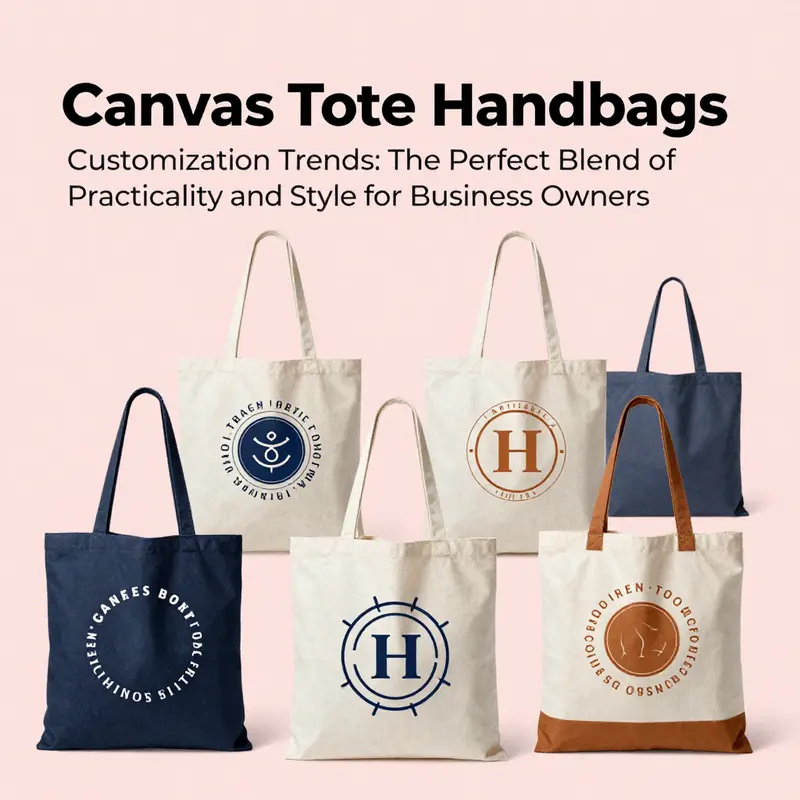
Customization as Creative Utility
Canvas tote handbags have evolved beyond simple carryalls. Today they act as canvases in both literal and figurative senses, where personal voice and practical needs meet. Customization trends in 2026 emphasize identity, durability, and purposeful function. Consumers expect a tote to say something about them while still performing reliably day after day. That expectation shapes design choices, materials, and the methods by which customization is applied.
Personal expression now drives many purchasing decisions. Buyers choose motifs that align with values, whether those are environmental commitments, cultural references, or understated statements of taste. The most successful custom designs rely on clarity. Clear messages, legible typography, and strong composition let a tote make an instant impression without visual noise. Clean, restrained layouts often communicate more than dense graphics. This restraint feels intentional and modern, and it pairs easily with varied wardrobes.
Minimalist typography has become a central technique for expressing intent. Short phrases, single words, or concise slogans in sans-serif or neutral serif fonts read as calm and confident. Designers pair a bold headline typeface with a lighter companion for any supplementary text, and they rarely use more than two typefaces per design. Limiting type use preserves hierarchy and ensures the message remains readable at a distance. Placement matters too: centered text on natural canvas yields a classic look, while a low-corner placement creates a quieter, more curated statement. The use of negative space around typography is deliberate; empty areas accentuate the words and let the tote breathe visually.
Alongside typography, botanical and nature-inspired imagery continues to grow in popularity. But the trend in 2026 is not for delicate, fussy florals. Instead, designers favor bold, simplified plant forms rendered with confident strokes and flat color fields. These illustrations reference environmental themes without becoming overly literal. They read as contemporary art pieces when scaled across the bag’s face or as small, emblematic clusters in a corner. Such imagery works well on natural-hued canvas where the fabric’s texture gives depth to otherwise flat printing.
Negative space is used as an active design element. Short messages tucked near the base or a side seam feel intentionally placed rather than an afterthought. This technique provides balance when paired with larger illustrations. It also gives a tote the kind of quiet sophistication that suits both casual and semi-professional environments. Designers are treating empty space with the same care they give inked areas; the result is more mindful, composed bags.
Functional customization has matured beyond novelty. Users expect features that solve everyday problems. Internal zip pockets, reinforced bases, and full zipper closures are now common options. These features matter for commuters, students, and travelers who need security and organization. Reinforced strap attachments and cross-bracing stitches reduce stress on high-load points. When customization includes structural improvements, the bag’s lifespan extends, lowering the overall environmental cost.
Material choices intersect strongly with customization. Canvas blends that integrate recycled fibers offer a tactile, responsibly sourced foundation for prints and embroidery. Tighter weaves accept finer detail during printing, while heavier duck canvas resists abrasion better and maintains shape. Some makers offer laminated or coated canvas for water resistance. Each material responds differently to customization methods: screen printing soaks into natural canvas, pigment prints sit on the surface and give a matte graphic finish, and embroidery adds texture and a handcrafted feel. Understanding how a chosen technique interacts with fabric determines the final look and durability.
Print and production techniques themselves carry aesthetic and practical trade-offs. Screen printing remains the most robust choice for solid, long-lasting graphics. It provides rich color saturation and resists fading when cured properly. Digital direct-to-garment printing excels at complex, photo-real motifs and small batch personalization. Heat transfer vinyl offers crisp edges for typographic designs but can feel less integrated with the fabric. Embroidery adds tactile dimension and perceived value, especially for logos or small icons, but it can stiffen the canvas where worked heavily. Patches and appliqués make an immediately changeable statement, letting owners evolve a bag’s look over time.
Customization is also about scale and intent. For personal use, bespoke touches—monograms, birthdates, or a favorite icon—create attachment. For brands and organizations, customization must balance visibility with taste. Simple, iconic marks placed thoughtfully can turn a tote into an effective piece of wearable promotion without overwhelming the design. When used as merch, tote bags perform best when they offer genuine utility, high-quality finishing, and an aesthetic that owners will want to keep using. That retention builds long-term brand visibility without contributing to fast-fashion waste.
Sustainability is not merely a marketing line. It affects fabric sourcing, dye choices, printing chemistry, and packaging. Consumers increasingly ask about the origin of fibers and the conditions under which bags are produced. Transparent supply chains and low-impact inks matter. Water-based inks and low-VOC treatments reduce environmental harm while giving a pleasing finish on natural canvas. Some makers now offer cradle-to-cradle takeback programs or repair services that keep a favorite tote in circulation longer. These practices align customization with longevity rather than disposability.
Accessibility of customization has grown thanks to better on-demand manufacturing. Small batch digital printing and modular production lines let independent designers offer highly personalized totes without huge minimum orders. That accessibility has broadened the range of available aesthetic voices. Customers can commission a limited run for a creative project, a small event, or a personal drop. At the same time, thoughtful mass customization techniques allow manufacturers to deliver consistent quality at scale.
Designers should consider proportion and scale carefully when customizing. Large graphics work well on oversized totes but can overpower smaller standard sizes. Vertical illustrations emphasize height; horizontal placements accentuate width. Designers who think beyond the bag’s face—wrapping prints around the sides, placing small marks on straps, or adding a contrasting interior lining—create multi-dimensional experiences. Functional touches such as a hidden interior message pocket or a discreet external key loop increase delight without altering the visual identity.
Color palettes tend toward muted, nature-derived tones, punctuated by occasional saturated accents. Natural canvas, washed linen tones, and earthy dyes remain popular backgrounds because they complement most wardrobes and allow prints to stand out. When designers choose bright colors, they use them sparingly to create focal points and maintain longevity across changing fashion cycles.
Typography choices extend beyond legibility to evoke mood. A clean geometric sans suggests modern minimalism. A hand-lettered script feels personal and artisanal. Type treatments that maintain generous tracking and clear contrast avoid muddiness on textured canvas. Designers pair typographic styles with imagery in ways that feel cohesive rather than tacked on.
Customization also influences how a tote is styled. A well-designed canvas bag can bridge casual and polished looks. When working with tailored clothing, choose a tote with a muted palette, structured base, and subtle hardware. That combination reads as intentional and curated. For weekend or beach contexts, oversized canvases with bold botanical prints and wide straps focus on comfort and statement.
Small details matter. Reinforced bar tacks at strap joins, boxed bottoms for shape retention, and shaded interior linings elevate perception. Hardware choices such as matte metal D-rings or molded zipper pulls provide durability without flashy branding. Even the choice of thread color for visible seams contributes to the overall composition.
For designers developing custom collections, a useful rule is to design with restraint. Limit fonts and palettes, consider how prints scale across different bag sizes, and prioritize longevity through both materials and construction. Thoughtful customization is less about maximal ornamentation and more about creating a meaningful, durable object.
Finally, customization is a dialogue between maker and owner. When customization options are presented transparently, customers make informed choices that reflect their needs and values. Clear information about fabric weights, print permanence, and care instructions leads to greater satisfaction and longer use. When a tote is treated as an extension of personal identity, it becomes indispensable rather than disposable.
For shoppers exploring styles and practical options for women’s canvas designs, consider reviewing curated selections for fit and finish at this resource on women’s canvas tote bags: women’s canvas tote bags.
For a deeper look at current industry thinking on canvas tote design trends, material performance, and consumer preferences, the following external analysis offers comprehensive insights: https://www.voguebusiness.com/fashion-trends/canvas-tote-bag-design-trends-2026
Everyday Statements: How Canvas Totes Shape Sustainable Style and Social Signals
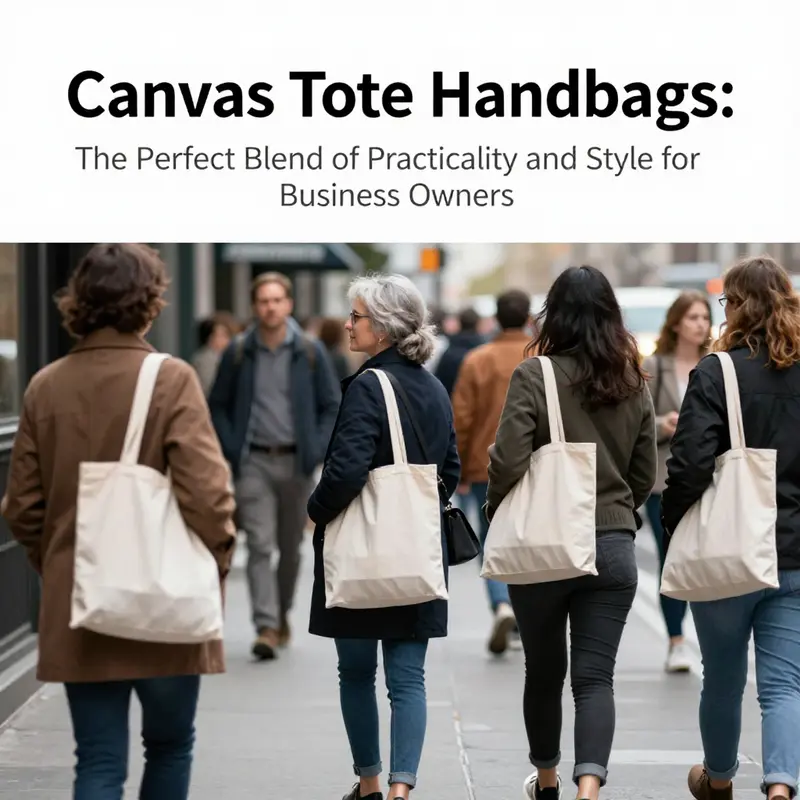
Everyday Statements: How Canvas Totes Shape Sustainable Style and Social Signals
Canvas tote handbags are more than carriers of daily essentials. They are compact cultural artifacts. Their plain silhouettes and durable cotton weave make them practical. They also make them highly readable. People interpret a tote’s graphics, wear, and condition as signals about values, habits, and social identity. This chapter traces how those simple rectangles became tools for environmental messaging, personal storytelling, retail strategy, and civic engagement. It looks at how durability and customization converge, and how the tote’s position between utility and style transforms behavior at the individual and collective levels.
The material logic behind the canvas tote matters. Tightly woven cotton and cotton blends give these bags a tactile honesty. They show age rather than hide it. Where a glossy accessory disguises scuffs, a canvas tote records use in visible ways. Stains, faded prints, and softened handles become legible marks. They tell a story of repeated trips to market, to work, or to events. That visible history is part of the appeal. It aligns with values that prize longevity over trend cycles. People who choose canvas often prefer objects that earn character through use rather than through constant replacement.
Durability shapes impact beyond aesthetics. A canvas tote that replaces many single-use plastic bags reduces waste. The math is straightforward: a single reusable bag used repeatedly displaces dozens, perhaps hundreds, of disposables. But the environmental story does not end there. Fiber quality, manufacturing methods, and consumer maintenance determine a tote’s real footprint. A well-made bag that lasts for years has a lower environmental cost per use than one that tears or fades quickly. Consumers are starting to judge canvases by those criteria. They consider stitch reinforcement, strap attachment, and fabric weight as proxies for longevity. These practical details inform purchasing decisions and influence how markets respond.
Customization amplifies social meaning. A blank canvas invites intervention, literally. Embroidery, screen prints, and sewn-on patches transform neutral sacks into personal billboards. This is not merely decorative. Customization allows wearers to broadcast affiliations, humor, causes, and aesthetic preferences. A tote with a subtle stitched monogram functions differently from one with a loud graphic slogan. Both act as forms of nonverbal communication, but each occupies a different register of public life. In this way, the tote becomes a portable identity device, one that is affordable and democratic.
Because they are inexpensive to produce in bulk, canvas totes have also become staples of promotional culture. Organizations distribute them to signal values. Retailers and event organizers use them to extend branding into daily life. When a tote circulates widely, it functions as moving advertising. Yet the sustainability message carried by many branded canvases complicates that commerce. The public expects genuine commitment to environmental practices, not hollow gestures. Consequently, brands are increasingly accountable for the materials they choose and the life cycle of their merchandise. This pressure nudges companies toward higher-quality canvases and more transparent supply chains. It also encourages creative collaborations with local makers and artisans who add cultural depth to otherwise generic items.
The tote’s role in retail reflects broader shifts in consumer priorities. Shoppers now weigh access, ethics, and aesthetics simultaneously. They want pieces that work for daily logistics and express values. This dual demand has pushed designs away from novelty alone. As consumers seek functional styling, designers answer with reinforced bases, structured linings, and internal pockets. Those technical upgrades help canvases sit in professional contexts and bridge casual and business settings. They do not erase the tote’s approachable character. Rather, they expand where and how it can be used. The result is a bag that remains rooted in utility while gaining versatility.
Social practices around ownership and care matter too. The culture of repair is returning to mainstream fashion through items like canvas totes. Simple fixes—restitched seams, replaced straps, patched undersides—extend a bag’s life and carry visible evidence of attention. Repairing a tote becomes an expression of value that counters disposable consumption. It also fosters local economies. Menders, independent stitchers, and small workshops find demand from owners who prefer to fix rather than replace. This recurrence of craft challenges the dominant throwaway model and builds networks of skill and exchange.
Canvas totes also function in political and civic spheres. They travel to rallies, to farmers markets, and to community events. Their surfaces host messages that mobilize, celebrate, or protest. Because they are affordable, many groups can distribute them quickly, making a collective visual presence achievable. A sea of similar bags at an event reads like coordinated action. That visual unity strengthens group identity and multiplies a message beyond the immediate crowd. In this way, the tote is a tool for both individual expression and organized persuasion.
Economic accessibility is a defining feature of the tote’s social impact. Unlike luxury accessories, these bags are within reach of many incomes. That accessibility democratizes the act of visual signaling. When a mark or slogan appears on a tote, it is visible across socioeconomic boundaries. This broad presence flattens certain class distinctions in public spaces. At the same time, the market offers premium canvases with refined detailing for those who want elevated versions. The coexistence of budget-friendly and premium options invites cross-category borrowing and hybrid styling.
The tote’s influence extends into cultural production. Artists, illustrators, and local makers use canvases as low-risk platforms. Small runs of screen-printed designs reach audiences directly. Independent designers experiment with limited editions, building community through scarcity and storytelling. These creative strategies change consumption patterns. They make ownership meaningful beyond brand recognition. A unique print can carry provenance, connect to a local scene, or support an artist’s practice. That connection embeds cultural capital in an otherwise simple object.
Public behavior around packing and transporting goods has adjusted too. The generous capacity and open-top design encourage consolidation. People pack fewer plastic bags and consolidate items into the tote, which drives different shopping habits. The tote becomes a cognitive cue for mindful consumption. When the bag is visible and intended for reuse, shoppers are more likely to plan purchases and avoid impulse packaging. That subtle shift reduces waste and changes everyday routines.
Design trends around canvas totes reflect a balancing act between timelessness and relevancy. Minimalist palettes remain popular, as do bold, issue-driven graphics. The most resonant designs often combine restraint with a clear message. They are legible from a distance and durable in terms of aesthetic taste. These trends matter because they determine which messages persist in public view. A classic design that ages well has a longer communicative lifespan than a fleeting fad.
The social footprint of canvas totes also includes secondary markets. Used bags circulate in thrift stores, swap meets, and online marketplaces. This resale network is part of a growing circular economy. It extends useful life and redistributes value. People sell or swap totes not just because they no longer need them, but because tastes shift or storage needs change. The resale ecosystem reinforces the tote’s role as a durable good rather than a disposable commodity.
Finally, the tote’s ubiquity influences perceptions of taste and formality. It has normalized a more casual approach to everyday attire. That normalization allows for hybrid dressing, where a tote complements both relaxed and tailored outfits. Styling choices make the difference. A simple canvas with refined finishes reads as intentional, even in semi-formal settings. This flexibility strengthens the tote’s social role. It is no longer only a market bag. It is an accessory that negotiates the border between function and presence.
As the tote continues to travel through public life, its social significance will evolve. Materials may become more regenerative. Supply chains might grow more transparent. Communities will keep using the canvas surface to tell stories, make claims, and display affiliations. For those interested in cultural and environmental dynamics, the tote is a clear, everyday case study. It shows how a modest object can carry complex values across neighborhoods, events, and decades. For practical guidance on contemporary design and sustainability conversations around canvas totes, see this further reading: Canvas Tote Bags: Sustainability and Fashion.
For examples of how these bags vary by audience and purpose, explore resources focused on women’s styles, such as this guide to women’s canvas tote bags: women’s canvas tote bags.
Final thoughts
Canvas tote handbags represent more than just functional carryalls; they encapsulate the ethos of sustainable fashion while allowing for personal and brand expressions. By understanding their design and practicality, acknowledging their limitations, and embracing customization trends, business owners can effectively position their brands in this competitive market. Additionally, leveraging the societal impact of these bags can enhance customer loyalty and engagement. As canvas totes continue to gain popularity, integrating them into your offerings can not only meet consumer demand but also elevate your brand’s visibility and relevance.