
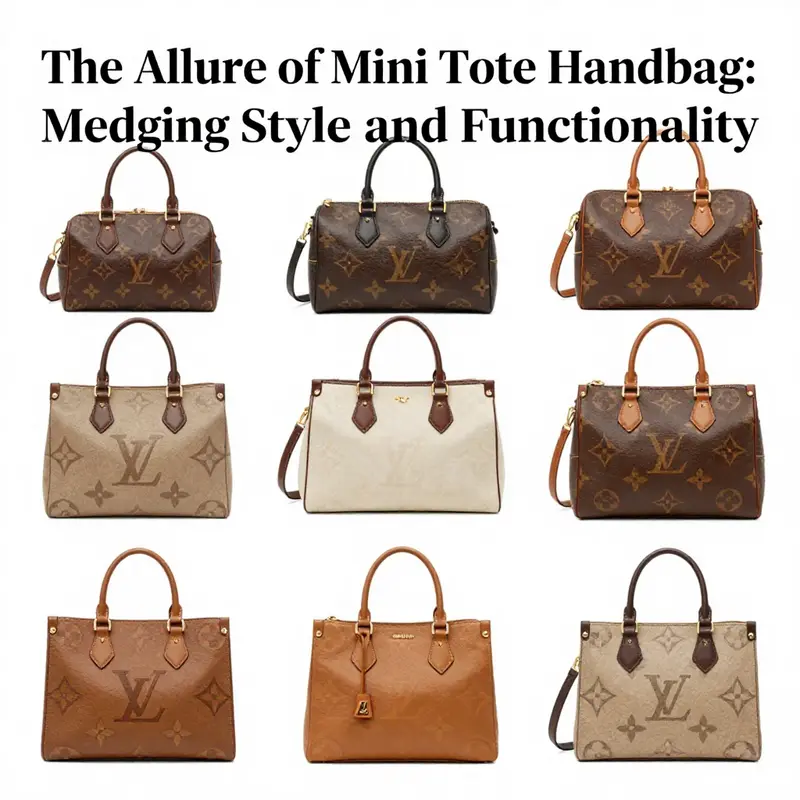
Mini tote handbags have emerged as a cornerstone of contemporary style, offering utility without sacrificing elegance. This guide explores the trends shaping the mini tote market, the craftsmanship behind these bags, and how they fit into both luxury and accessible fashion. We also examine functional features and their cultural significance, providing insights for business owners looking to leverage this category.
Sized with Purpose: The East-West Mini Tote and the New Language of Small Luxury
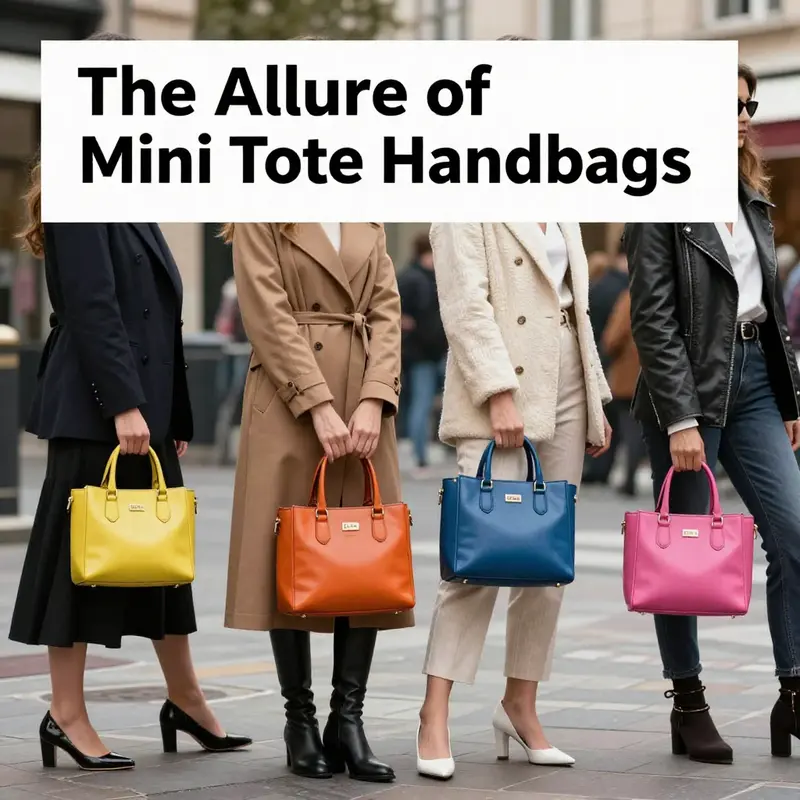
The mini tote has moved beyond a mere trend of proportion. It has become a functional philosophy for a culture that prizes portability without surrendering polish. In a year when daily life blurs between work, errands, and social moments, the mini tote offers a discreetly capable alternative to bulkier companions. It is not simply about smaller dimensions; it is about recalibrating what a daily bag can carry and how it carries it. The result is a silhouette that reads as intentional rather than incidental, a small luxury with a big voice in contemporary wardrobes. As designers recalibrate across ateliers and runways, the East-West shape—the bag that stretches horizontally rather than vertically—has surged back into prominence. Its elongated line flatters a range of outfits, from tailored suits to casual denim, and it invites a new kind of restraint: a bag that holds the essentials with room to spare while maintaining a silhouette that never looks crowded. This is not minimalism for its own sake. It is a refined, statement-making practicality that suits modern rhythms where every item must earn its space and its style credit.
The East-West influence is evident in how mini totes are reimagined through texture, color, and material. Designers tease the classic’s geometry with subtle curvature, or push the dimensions just enough to create a more dramatic horizontal profile. Material choices underscore the double demand of luxury and durability: leather that ages with a quiet patina, coated canvases that resist daily wear, and carefully chosen linings with interior pockets that make organization feel almost effortless. The result is a bag that looks refined in the morning and remains trustworthy as the day folds into evening. The concept of durability is no longer a matter of rugged endurance alone. It now includes how a bag ages, how its hardware wears, and how its seams hold up under the subtle stresses of a busy life. In this sense, the mini tote earns its place not by flaunting its capacity but by proving that its design is calibrated to maximize usefulness without compromising its aesthetic clarity.
Functionality and luxury sit at the heart of the current mini tote dialogue. The best examples of this hybrid approach combine premium materials with practical features that feel intuitive rather than bells and whistles. Removable straps offer versatility—convert from handheld to shoulder carry in a heartbeat, or detach to slip the bag into a larger tote or a suitcase during travel. Inside, a thoughtfully arranged layout—zip pockets, slip compartments, and a few cleverly placed organizers—transforms the idea of “carrying a few essentials” into a reliable daily ritual. Users want a bag that keeps a phone safe, a wallet secure, keys easy to find, and perhaps a compact cosmetic or a slim charger neatly tucked away. The emphasis on high-quality hardware, robust stitching, and protective finishes is not mere showmanship. It is a pledge that a mini tote can withstand urban realities—the sudden rain, the crowded commute, the foyer of a restaurant—while preserving the subtle luxury of its maker’s craft.
Beyond the surface, the refined aesthetic of the mini tote tells a broader story about how fashion is negotiating excess. The trend leans toward pieces that speak with quiet confidence rather than loud branding. Clean lines provide a stage for the bag’s architecture to shine, while the best examples invite close inspection of craftsmanship: the evenness of the edge painting, the symmetry of the stitching, the way a leather panel drapes and holds its shape with a natural, almost living quality. Yet this is not a mood confined to the rarefied world of couture. The refined mini tote translates easily into day-to-night wear, suited to a client who moves between meetings and social gatherings with equal ease. Its versatility rests not only in its looks but in its capacity to adapt to changing outfits and evolving personal styles. The clean, tailored feel is what anchors the bag in a broad range of wardrobes, while its ability to make a subtle statement—through color, texture, or structural detail—ensures it remains memorable without shouting.
Material choice in 2026 reflects a tension between timeless craft and contemporary ethics. Leather remains a beloved favorite for its tactile warmth and the sense that a piece will endure as a lifelong companion. Yet the conversation about sustainability has opened doors to responsibly sourced materials and finishes that minimize environmental impact. Coated canvases, high-quality synthetics, and alternative leathers offer pragmatic pathways for those who want the luxury experience without compromising their values. The attitude toward the material continuum also feeds the designer’s interest in patina and aging as a feature rather than a flaw. A mini tote that gathers character over time—through scrapes, color deepening, and a softened edge—can feel as personal as a favorite pair of shoes. This evolving relationship between bag and wearer reinforces the idea that luxury is not a static ideal but a living one, shaped by daily use and mindful care.
The public’s appetite for these bags is shaped by a broader cultural readiness to blend function and elegance. Many urban dwellers juggle work, errands, and social calendars in a compact rhythm, and a bag that supports that tempo without becoming a burden is highly valued. For professionals, a mini tote can replace a larger tote when a lighter, more portable option is all that’s required. For travelers, the same bag can compress into a carry-on kit while still accommodating essentials for short city stops. The fashion conversation now recognizes that a smaller silhouette can be the smarter, more economical choice if it is paired with intelligent design. This shift helps explain why the East-West shape has risen to a modern classic status—its proportions align with how people actually move through space and time.
In markets where retailers seek scalable options, the mini tote also reveals a practical side. The best versions are offered in a range of finishes and price points, from refined goods with couture-grade details to more accessible lines that retain a sense of elevated taste. The lure here is not merely the look but the promise of a product that can be customized, paired with other wardrobe staples, and adapted for different life stages. Some designers have embraced customization as a way to speak to a diverse customer base: monogramming, color-blocked panels, or interchangeable hardware can transform a single silhouette into multiple personality profiles. Wholesale suppliers in many regions have recognized the demand for well-made mini totes and now provide opportunities to source reliable, scalable options for retailers who want to serve a broad audience without sacrificing quality. The result is a market that supports both prestige and practicality, recognizing that small isn’t just a size but a crafted experience.
The niche within the mini tote conversation—the jelly-like, water-friendly variant—highlights another facet of contemporary taste. This playful finish, noted for its vibrancy and flexible texture, expands the category beyond traditional leathers and fabrics. The jelly aesthetic brings a sense of whimsy to the lineup while still delivering on waterproofing and resilience for seaside trips or casual days out. It demonstrates how designers are willing to push the envelope and how consumers respond to playful yet functional options. The broader takeaway is that the mini tote is not a monolith. It is a canvas for experimentation that respects the fundamentals of carry, comfort, and durability while inviting personal expression.
For readers seeking direct pointers to the ongoing conversation within the tote universe, the current landscape is well captured in discussions about tote bags trending. These conversations reflect a widespread reassessment of what “everyday luxury” truly means in a world that moves quickly and expects both performance and polish. Across media, retailers, and editorial features, the mini tote emerges as a reliable shorthand for a modern, adaptable lifestyle. Its success hinges on a delicate balance: a compact form that remains visibly capable and a design language that communicates taste without ostentation. This balance isn’t accidental. It is the outcome of careful choices about proportion, materiality, finish, and construction, all aimed at delivering a bag that can be worn with intention in a crowded cityscape or a quiet gallery opening.
The chapter’s gaze toward future iterations remains hopeful rather than prescriptive. If the East-West silhouette continues to evolve, it will likely do so through subtle refractions—textural contrasts that catch light, new stitching patterns that enhance durability, and color families that offer both versatility and personality. The potential for cross-category collaboration—bridging with small leather goods, travel accessories, and even ready-to-wear accents—could broaden the mini tote’s utility without diluting its refined character. In this sense, the mini tote accomplishes a rare feat: it makes a strong case for less being more, without sacrificing the richness of craft or the depth of style. It offers a compact solution that remains faithful to the idea that a bag is not merely a container but a deliberate extension of the wearer’s intention and mood.
An external perspective on the broader craft and construction of mini totes provides another lens through which to view this evolution. For a deep-dive look at how designers translate concept into form in contemporary bagmaking, see this external resource: https://www.youtube.com/watch?v=examplevideoid. The visual discourse complements the tactile narrative—revealing the careful decisions that turn a simple carryall into a lasting companion. As trends continue to unfold, the mini tote’s appeal lies in its capacity to adapt: to be at once practical and poised, casual yet refined, everyday and special occasion ready. It is in this adaptability that the mini tote earns its place in the modern wardrobe, a concise instrument for personal expression that respects the complexities of a busy life while elevating the ordinary act of carrying.
The Quiet Precision of the Mini Tote: Craft, Proportion, and Purpose
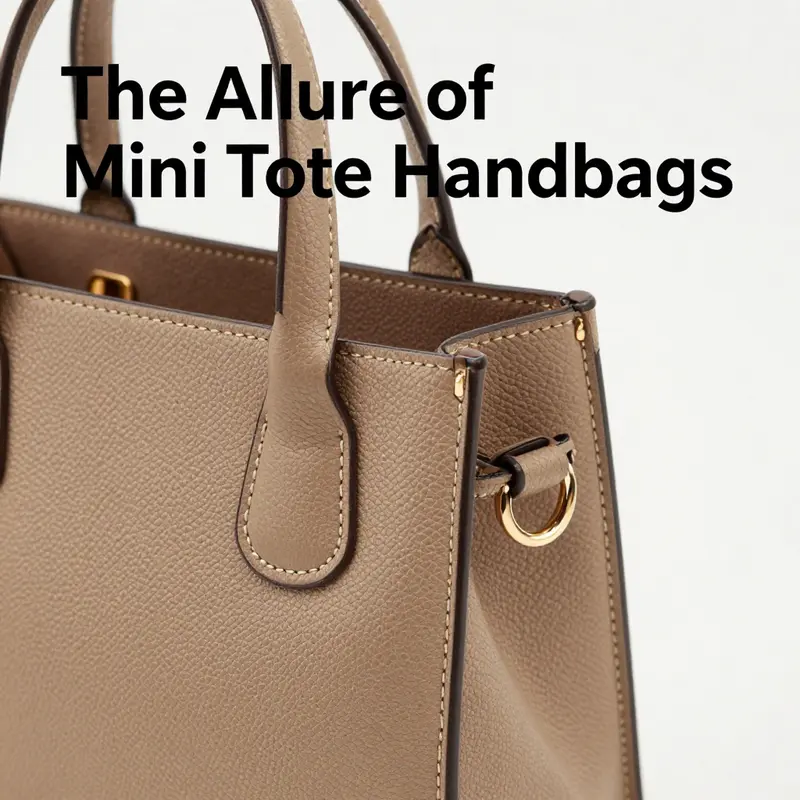
The mini tote occupies a precise space in the wardrobe ecosystem. It is not merely a smaller version of a larger tote, nor is it a ceremonial evening bag dressed up for a single occasion. It is a study in restraint and utility, a compact companion designed to carry the essentials with an elegance that never shouts. In the hands of skilled makers, this silhouette becomes a level of craft where proportion, material choice, and finishing details speak with quiet confidence. The result is a bag that looks self-assured on a conference-room desk, a café counter, or a city sidewalk, and it performs with the reliability that stems from thoughtful construction rather than novelty alone. Designers who pursue this balance treat every seam as a hinge of purpose, every edge as a line of control, and every interior pocket as a carefully placed decision about accessibility and organization. The open-top form, common to many mini totes, is deliberately chosen for speed in daily life—the moment you reach for your phone, your cards, or your keys, the bag must respond with instinctive ease. Yet the open-cut design must not surrender structure. A clean, recognizable silhouette, reinforced corners, and a restrained set of hardware ensure that the bag retains its shape even when lightly loaded. This synthesis—ease of access without laxity in structure—lies at the heart of what distinguishes a well-made mini tote from a merely cute one.
Material choices anchor the discussion of craft. Premium leather remains the most enduring ally for those who value a tactile, responsive surface that gains character with use. Leather offers a warm hand feel, refined drape, and the potential for a patina that poeticizes time. When leather is paired with a canvas or a coated textile, the bag can marry structure with flexibility, resisting daily scrapes and maintaining a crisp edge where needed. Durable canvas, treated for resilience, provides a lighter alternative that wears well in casual settings while still accepting careful detailing—topstitching, edge finishing, and interior linings that reinforce the bag’s long life. The best mini totes often employ a hybrid approach: a leather body with a canvas or coated fabric interior panel, or a leather trim that defines the bag’s outlines while a tougher base protects against scuffs. In every case, the chosen material must respond to the bag’s daily rhythm. A handbag is not merely a decorative shell; it is a tool that must remain useful through seasons of rain, sun, and repeated handling.
The construction tells the story of care. Precision stitching is not decorative flourish but a guarantee of durability. Straight seams, evenly spaced stitches, and balanced tension prevent wear from widening over time. The edge finishing—the final seal along the opening—protects against fraying and uplift in the bag’s silhouette as it carries weight. Hardware, while sometimes understated, serves a crucial role in longevity. Zippers, clasps, and rivets must resist daily tugging and remain smooth to operate after months of use. The interior layout often features pockets placed with foresight: a shallow slip for cards and receipts, a secure zip pocket for valuables, and perhaps a small sleeve that hugs a phone or a compact notebook. These details may appear modest, but together they enable the wearer to maneuver through a day with confidence. The interior lining, chosen for its texture and resilience, completes the story. A smooth, low-friction lining keeps items from snagging, while a darker shade helps conceal everyday smudges. The overall effect is a bag that feels competent, not fussy; a product of measured choices rather than showy flourishes.
Beyond the polished core, craft in mini totes embraces a spectrum of approaches. For the designer who leans into minimalism, the structure itself becomes an art form. Clean lines, restrained branding, and a silhouette that holds its frame with or without a shoulder strap reflect an ethos of quiet luxury. In these cases, the bag’s personality emerges from the interplay of line, proportion, and texture—the way a single light catches a seam or how the leather’s grain changes with each fold. On the other end of the spectrum, artisanal makers explore texture and tactility more openly. Some handcraft mini totes using natural materials like round rattan, weaving a tactile, organic narrative into a compact form. These versions celebrate handwork and imperfect perfection; their open-top layouts invite a casual, breezy charm that pairs well with summer wardrobes or vacation ensembles. The trade-off for this warmth is a different approach to security, so these pieces are typically positioned as lifestyle statements or decorative accents in addition to functional bags. The tension between these modes—industrial precision and handmade individuality—expands the vocabulary of the mini tote, inviting wearers to select a model that aligns with both daily routine and personal temperament.
The appeal of the mini tote, then, lies not only in what it can carry but in how it invites a broader conversation about practice and taste. It is a test case for how a brand translates a concept into a tangible object that endures. A truly successful mini tote balances size, weight, and usability, ensuring that the bag can slip into a commute, a brunch, or a gallery visit without demanding adjustments from the wearer. It must be adaptable enough to work with a blazer at the office as easily as with a denim jacket on a weekend excursion. This adaptability rests on a subtle choreography of design elements: the bag’s proportions in relation to a typical frame, the weight of its hardware, the ease of grabbing and returning items, and the way the surface finish catches light without glare. When these elements harmonize, the result is a bag that feels serene in the hand and confident on the shoulder.
Careful crafting also invites a longer horizon for value. A mini tote that is built with sturdy seams, quality hardware, and a durable lining is less likely to falter after a handful of seasons. The durability is not merely a matter of budgets or resale value; it is a practical promise that a daily companion will continue to function well without requiring frequent replacement. This is especially important when the bag sits in a fast-moving ecosystem of accessories where trends rise and recede. A mini tote that respects timeless proportions and avoids heavy branding remains legible across wardrobes and eras. The ability to pair with a wide range of outfits—from tailored trousers to casual midi skirts—depends on a disciplined approach to color and texture. Neutral palettes, a hallmark of versatile design, support this cross-season adaptability, while occasional colorways provide a playful counterpoint that still respects the bag’s fundamental clarity.
This is where the craft of the mini tote reveals its deeper purpose: a commitment to practicality wrapped in a quiet luxury. The designer’s restraint forces a deeper appreciation for the quality of the materials, the fidelity of the cut, and the intelligence of the interior planning. It is not about making a showpiece; it is about creating a reliable companion that respects the wearer’s time and needs. For consumers seeking to understand the craft beyond the surface, it helps to consider the longevity of a bag’s form and the way it ages. Leather develops a character through use, the patina telling a story of countless days lived in different locales. The approach to patina, finish, and care varies with material choice, but the underlying principle remains constant: a well-made mini tote should feel right from the first touch and continue to earn its place in daily life as time passes.
In exploring the broader landscape of badge-worthy, durable mini totes, a useful touchpoint is to consider how these bags integrate within a retailer’s ecosystem. A credible range blends high-grade materials with accessible care instructions, offering a spectrum that can satisfy both first-time buyers and seasoned collectors. The conversation about design and craftsmanship thus becomes a conversation about the places where fashion meets function, where a bag is not only a statement but a consistent partner across errands, meetings, and moments of pause between activities. For readers who want a practical lens on signature tote concepts—without getting lost in brand-specific terminology—there is a useful resource that frames the enduring value of these designs and their place in a modern wardrobe. External resource: https://www.designerhandbagguide.com/mini-tote-handbag-specs/
The chapter closes with a reminder that the best mini totes are not only about the moment of purchase but about the daily rituals they enable. They transform the small space they occupy into an organized pocket of the day where essentials arrive promptly, where a wallet slides out without a fuss, and where a phone is accessible without rummaging through a deeper abyss. The craft behind this experience—careful material selection, dedicated stitching, thoughtful detailing, and a disciplined eye for proportion—gives the mini tote its quiet authority. In a marketplace crowded with novelty, the mini tote stands as a confident statement of restraint and capability. It is a reminder that elegance can be compact, and practicality can be beautiful when shaped by deliberate technique and patient hands. For those curious to explore beyond the surface of what makes a mini tote feel timeless, the external literature in this field offers a broader framework for assessing craftsmanship, durability, and long-term value. External resource: https://www.designerhandbagguide.com/mini-tote-handbag-specs/
The Small Bag Dilemma: Craft, Value, and Everyday Utility in the Mini Tote

A miniature bag can seem almost paradoxical. It carries the aura of a statement piece while promising everyday practicality. In the evolving world of accessories, the mini tote occupies a curious niche: it is small enough to be lightweight and quick to maneuver, yet capacious enough to handle essential items beyond a phone and keys. The tension between luxury craft and daily usefulness drives much of the discourse around these bags. When evaluating why a consumer might choose a high-end mini tote or a more affordable version, the answer is less about one ideal and more about a thoughtful balance among craftsmanship, function, value, and personal lifestyle needs. The decision process unfolds not in a vacuum but through a lens that considers how a bag moves through a day—from the subway steps to a late dinner, from casual coffee runs to a quick gallery visit. In this sense, the mini tote becomes less a single object and more a system of utility and style that adapts to the wearer’s rhythms. For readers who want a concise snapshot of how mini totes trend across shelves and feeds, a quick overview can be found on tote-bags-trending.
Luxury mini totes sit at the high end of the spectrum, where material choice, craftsmanship, and heritage shape the product. These bags are typically cut from premium leathers, the kind that deepen with age and wear in a way that feels almost inevitable, and they may employ textiles or surface treatments that are crafted to last. The production runs for these pieces are often limited, with an emphasis on meticulous detailing, careful hand-finishing, and resilient hardware that looks quietly powerful rather than flashy. In this tier, the bag is as much an artifact as a daily companion. The craft behind such items frequently translates into longer lifespans and a sense of belonging to a lineage—an idea that resonates with collectors and connoisseurs who value storytelling as part of what they purchase. Yet this dedication to craft brings trade-offs. The most obvious is space. The compact interior, designed to hold essentials—phone, wallet, keys, perhaps a slim notebook or a few personal items—can feel almost claustrophobic if one needs to carry a charger, a larger cosmetics pouch, or a rain-guarded outer layer. And the price point, while a badge of ongoing value, can be a barrier for daily reuse by someone who moves quickly through a crowded city or who rotates several bags through a week to match moods and outfits.
The market performance of luxury mini totes reinforces the idea that style here is closely tied to perceived value. In a decade marked by rapid fashion cycles, some luxury bags have shown resilience in resale value, a phenomenon that makes the category attractive to buyers who view these pieces as investments or long-term companions. The dynamics are nuanced, however. While resale value can be compelling, it often aligns with constraints: limited availability, a preference for pristine condition, and an awareness that the bag’s story is part of its appeal. For a consumer focused on daily utility rather than potential upside in the secondary market, the price-to-utility equation may tilt away from the highest tier toward a more balanced choice. It’s a reminder that luxury, at its core, isn’t merely about materials or name; it is an ecosystem of exclusivity, craftsmanship, and the intangible sentiment of owning a piece that feels singular.
Affordability in this space does not signal a deficit in design or intention. On the contrary, many affordable mini totes are engineered for modern life: lighter materials, smarter internal layouts, subtle hardware, and color palettes that align with current wardrobes. The strategic advantage here lies in accessibility and adaptability. These bags make it practical to experiment with styles, textures, and silhouettes without a large upfront cost. For urban commuters, students, and professionals who navigate shifting schedules, an affordable option can be traded out as trends change or as seasons demand new color stories. The emphasis is often on versatility—how a bag can slip from work to weekend, from a crowded train to a casual dinner—that is, how it behaves under real-world pressures rather than how it performs in a showroom.
Sustainability is a pivotal consideration across both ends of the spectrum, though it manifests differently. Affordable mini totes increasingly leverage eco-conscious fabrics or recycled components, a response to consumer demand for responsible choices without sacrificing look or function. The ability to purchase a stylish, serviceable bag without pressuring budgets makes it easier to rotate hues and silhouettes in step with a fast-paced style cycle. In the luxury segment, sustainability is frequently tied to durability and longevity. The argument is that a well-made bag will outlast several cheaper options, reducing the total environmental footprint if viewed across years of use rather than months. The practical implication is that both ends of the market are moving toward durability, albeit via different routes: one through investment in premium materials and meticulous maintenance; the other through design that prioritizes lightweight usability and repurposability.
Functionality remains the core differentiator when people compare luxury and affordable mini totes. A luxury piece often excels in sensory satisfaction—the texture of the leather, the weight distribution in the hand, the quiet gleam of polished hardware. This is where the bag earns a certain mood—the sense that it feels special every time you pick it up. But the same attention to detail can constrain capacity and internal organization. A compact interior may force compromises about what you carry on a given day, especially if your routine requires more than the essentials. In contrast, affordable mini totes frequently foreground pragmatic design: carefully placed internal pockets, flexible compartments, and a geometry that allows smoother access to everyday necessities. The result is a bag that can be filled and emptied with fewer friction points, a feature that urban life increasingly rewards where time and efficiency matter.
The choice often hinges on lifestyle. For someone whose days revolve around formal meetings, travel-light evenings, and a preference for a bag that communicates a certain status without shouting, a luxury mini tote can be a meaningful companion. It signals a particular standard of craft and a commitment to longevity. For someone who moves through a city with tempo—hopping between gym sessions, groceries, and late errands—a more affordable option, bought with intention and swapped as needed, can deliver the practical advantage of lighter weight and easier maintenance. The value here is not simply monetary but experiential: how a bag fits into a life that shifts gear with the week. Personalization plays a role in both tiers. Customization—whether in color, texture, hardware, or interior layout—helps a bag feel more like an extension of the wearer rather than a generic accessory. In the affordable arena, customization is often more accessible, offering a path to a unique look without prohibitive costs. In the luxury space, customization is elevated to a tailored experience that can include unique finishes, bespoke stitching nuances, and exclusive services.
An important undercurrent in this analysis is the evolving definition of what makes a bag “worth it.” The value proposition for luxury mini totes rests on three pillars: the aura of craftsmanship, the longevity of materials, and the emotional resonance of owning something that feels curated. The value for more affordable options rests on practicality, adaptability, and the capacity to reflect current fashion without requiring a long-term financial commitment. The consumer who wants to curate a capsule wardrobe may opt for a luxury piece as a keystone item, a bag they expect to pass down or to anchor certain formal occasions. The consumer who prioritizes day-to-day interchangeability might choose a rotating set of affordable mini totes that keep pace with evolving outfits and social commitments. In both cases, the bag becomes a portable expression of the wearer’s identity—an accessory that is as much about how it feels when it’s in hand as about how it looks in a mirror.
If there is a takeaway for readers navigating this landscape, it is to consider the daily realities that a mini tote must endure. Think about weight distribution: is the bag comfortable when a full day’s load is carried across a platform, through a transit tunnel, and into a meeting room? Consider durability: how does the bag respond to weather, humidity, and frequent use? And ask about adaptability: can the bag be reconfigured to suit a sudden plan, a different dress code, or a change in your routine? These questions are more predictive of satisfaction than an initial impression of chic alone. It is possible—and increasingly common—for consumers to bridge the gap between luxury allure and everyday practicality by selecting a well-made affordable option that carries a sense of craft and a willingness to evolve with personal style. The modern mini tote, in this sense, becomes less a choice between two extremes and more a dynamic tool for shaping daily experiences.
For readers who want additional context on how these dynamics play out in real-world markets and consumer behavior, the broader literature on resale value and long-term utility offers instructive signals. In particular, a widely cited analysis highlights that certain luxury bags have sustained or even grown in resale value over longer horizons, underscoring the enduring appeal of well-crafted pieces. While this invites consideration of higher upfront costs as a form of long-term planning, it does not negate the practicality of more affordable solutions for everyday use. The key is to align purchases with personal routines and future plans, recognizing that a bag’s value is a function of both its immediate usefulness and its potential to coexist with changing trends and needs over time.
External context and further reading provide a complementary view: https://www.voguebusiness.com/fashion/luxury-handbag-resale-value-2023. This resource helps situate the discussion within a larger market narrative, where the economics of scarcity, branding, and consumer sentiment influence how bags are valued years after their purchase. The takeaway is not to abandon either path but to integrate them into a personal shopping philosophy that emphasizes function, craft, and authentic fit with daily life.
Function Meets Fashion: How Mini Tote Handbags Are Engineered to Work
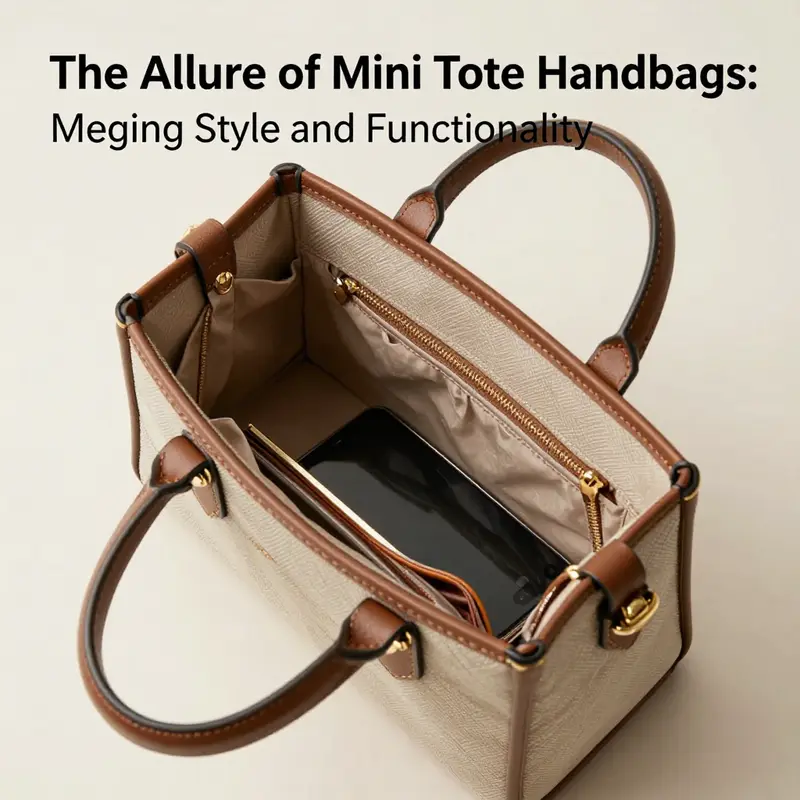
Mini tote handbags condense the features of larger carryalls into a compact, wearable package. Their appeal rests on a careful trade-off between capacity and silhouette. Designers shape small footprints so essentials fit without bulk. That balance requires attention to interior layout, closures, straps, materials, and hardware. When these elements work together, a mini tote becomes not just attractive, but genuinely useful for daily life.
Practical Design Elements
Interior organization is the backbone of a useful mini tote. Thoughtful pocket placement prevents the common frustration of digging for a phone or keys. Many mini totes incorporate a slim zip pocket for valuables and one or two open slots sized for cards or a compact wallet. These pockets are sewn with slightly reinforced seams to resist tearing where stress concentrates. A small, flat pouch for receipts or slips helps keep the main compartment tidy. Designers also consider the vertical dimension: a narrow slip pocket along the lining makes it easy to slide in a phone without it disappearing beneath other items. Lining materials are often chosen for their contrast in color or texture, so small items stand out visually when the bag opens.
Capacity planning goes beyond pocket count. The interior volume must accommodate common essentials while preserving the tote’s shape. Structured bases and internal stiffeners distribute weight and protect the bag from collapsing. Some mini totes include a removable board that keeps the bottom flat and extends the bag’s lifespan. When strategic reinforcement is paired with thoughtfully sized compartments, the bag holds more than its compact size suggests.
Secure closure systems are another hallmark of functional mini totes. Reliable closures guard belongings while allowing quick access. High-quality pull zippers with smooth sliders reduce the chance of snagging. Magnetic snaps offer a compromise between speed and security; they close with ease and resist accidental openings, yet remain simple to operate one-handed. Fold-over flaps with hidden fastenings combine a tidy appearance with practical protection. The choice of closure also affects the bag’s profile: exposed zippers read as sporty or utilitarian, while discreet magnetic closures keep a clean aesthetic.
Durability shows up in hardware, stitching, and materials. Reinforced stitching at stress points—where handles meet body and where straps attach—prevents early failure. Metal hardware is often plated and sealed to resist tarnish from daily handling and exposure. Strap attachments use metal rings or riveted tabs to minimize strain on leather or fabric. For lining fabrics, dense weaves resist abrasion from keys and coins. Edge finishing, like painted or folded edges, protects hems from fraying and imparts a polished look that ages gracefully.
Comfortable carry options expand a mini tote’s usefulness across scenarios. Short, sturdy top handles let the bag be carried by hand or held in crook of arm. For hands-free convenience, adjustable shoulder straps allow the bag to sit close to the body. Longer straps permit crossbody wear, which stabilizes the load during commutes or errands. When straps are detachable, the bag adapts to outfits and activities; a simple swap changes the profile from refined to relaxed. Ergonomic considerations also matter. Rounded straps distribute pressure more evenly. A slight shoulder pad or woven reinforcement at the strap lowers point pressure, making the bag comfortable even when it holds heavier items.
Accessibility is as important as security. Designers often favor wide-mouthed openings that give a clear view of the interior. A gusseted design lets the tote expand slightly to accept bulkier items without overstretching seams. Pull tabs on interior zippers and contrast stitching on pocket edges guide fingers and eyes. Some mini totes include quick-access external pockets for transit cards or tickets. These external features sit flush to preserve the tote’s silhouette while keeping essentials reachable.
Weather resistance and easy maintenance increase a mini tote’s real-world value. Water-resistant coatings and coated canvases repel light rain and spills. When leather is used, finishes that withstand moisture and oils protect the surface and simplify cleaning. Linings with wipeable finishes or removable pouches make maintenance low-effort. Care instructions that accompany the bag should be straightforward, and design choices that reduce staining points lengthen usable life. In practical terms, a bag that tolerates rain and accidental spills stays in rotation far longer than one that requires meticulous care.
Versatility emerges when design choices support multiple settings. A tote with a clean shape, neutral color, and subtle hardware moves easily from casual daywear to evening outings. Convertibility enhances this versatility: a mini tote that transforms via a detachable strap or folding closure accommodates different looks and functions. When internal pockets are modular—attached with discreet snaps or loops—the owner can reconfigure the interior for errands, evenings out, or work. A convertible layout allows the bag to serve as a compact work companion or a refined accessory.
Small technical touches matter. Reinforced phone pockets often feature slight elasticity to hold devices snugly. Key leash loops prevent hunting across the entire interior. RFID-lined pockets protect contactless cards from skimming. Integrated cable pass-throughs let a power bank stay inside while a charging cable exits neatly. These details take a mini tote from basic to purposeful. They also reflect modern carry needs without compromising the bag’s stylistic intent.
Manufacturing and supply choices influence functionality and price. Some suppliers offer bulk-customizable mini totes with options for hardware, lining, and strap length. This allows retailers to match product features to customer preferences. Economies of scale can lower costs, but quality control is crucial. Inspecting stitching, zipper alignment, and strap attachment during production ensures reliability. For buyers seeking specialized features, wholesale sources sometimes provide sample runs before committing to larger orders. This flexibility is useful for businesses and designers testing new configurations.
Sustainability and longevity increasingly shape mini tote design. Materials that age gracefully extend the usable life of a bag. Vegetable-tanned or responsibly sourced leathers develop a patina, enhancing the bag’s character. Recycled fabrics and low-impact dyes reduce environmental cost without sacrificing durability. Modular construction—such as replaceable straps or reinforcements—keeps bags repairable instead of disposable. Thoughtful repair options raise resale value and support more sustainable consumption patterns.
Finally, perceived value depends on how these features translate to everyday ease. A mini tote that fits essentials, closes securely, carries comfortably, and resists wear becomes a trusted companion. When designers prioritize ergonomics, smart pocketing, and durable hardware, the small size stops being a limitation. It becomes an advantage: a compact vessel that simplifies daily carry while enhancing aesthetic expression.
For readers interested in how closure choices impact usability across tote styles, explore this practical guide on tote bags with zippers for a closer look at variations and outcomes: tote bags with zippers.
For more technical specifications, manufacturer guidance, and product care advice, refer to the brand’s official site: https://www.rains.com
Small Yet Mighty: The Cultural Pulse and Practical Allure of Mini Tote Handbags

The mini tote handbag has moved beyond its pocket-sized origins to become a nuanced symbol of modern life. It sits at a curious intersection where practicality, taste, and cultural narrative converge. In many corners of fashion discourse, the tiny tote is celebrated not just for what it carries, but for what it communicates about a wearer’s daily rhythm, priorities, and evolving sense of style. Its popularity has grown with a quiet intensity, riding on the momentum of minimalism without sacrificing the graphic impact of a well-tailored silhouette. This is not merely a trend of size but a shift in how people curate what travels with them through the day. The compact form factors demand a disciplined approach to belongings, encouraging a mindful inventory of essentials. The result is a bag that feels purpose-built for the way many people actually live today: everything that is necessary, nothing more, carried with ease from morning meetings to spontaneous meetups after work.
The aesthetic logic of the mini tote is elegant in its restraint. It values clean lines, structured shape, and a silhouette that remains quietly professional while still inviting a touch of personality. The open-top design, often paired with a smart interior organization and discreet pockets, provides rapid access to keys, a phone, or a wallet. That accessibility matters in a world that prizes speed and efficiency. Yet the open silhouette also communicates a sense of openness and approachability—the wearer is ready for new encounters, new tasks, and new conversations. In this way, the mini tote becomes a portable vignette of contemporary life: a compact stage where work, social life, and personal interests can all perform in close proximity without visual clutter.
Culturally, the mini tote operates as a versatile signifier. It is small enough to be discreet, yet its presence is unmistakable in urban scenes and professional environments. It suggests a certain intention—that the wearer values design that respects the demands of the day while signaling a thoughtful approach to consumption. The bag thus serves as a subtle badge of taste and lifestyle. It marks a balance between curiosity and practicality. In museums, galleries, studios, and boardrooms alike, it acts as a silent partner that enables engagement with art, literature, and cultural practice as much as it carries a phone and a compact wallet. This makes the mini tote a kind of portable cultural artifact: a small object with outsized resonance in how it frames daily routines and personal identity.
The appeal of the mini tote also lies in its versatility. It demonstrates a rare adaptability that fits multiple contexts with ease. A person can transition from a morning commute to a casual lunch with friends, or from a conference room to a café with the same bag slung over a shoulder or gripped by a sturdy handle. The interior layout matters here. A well-considered interior with organizers and pockets helps keep essentials orderly, reducing the mental load of a busy day. The result is a bag that feels reliable and intelligent, a little toolkit for modern life rather than a mere accessory. This practicality resonates with professionals who value efficiency and with creatives who appreciate a wearable canvas that can lend a polished finish to a varied schedule.
Material choices play a decisive role in shaping the mini tote’s character and longevity. Across the market, the strongest examples offer a balance between durability and tactile pleasure. Premium leather and durable coated fabrics provide a sense of structure and refinement, while alternatives like handwoven plant fibers or responsibly sourced natural materials introduce warmth and texture. The tactile experience—the way the bag feels in the hand, the way it develops a patina with use, the subtle friction of a well-made zipper or a smooth interior lining—contributes to a user’s attachment over time. This is part of the mini tote’s cultural appeal: it invites touch, invites care, and rewards longevity. When a bag ages gracefully, it becomes a narrative object in the wearer’s life, a small record of places traveled, days survived, and design choices that mattered.
Another dimension of cultural significance lies in its democratization. While luxury houses have long shaped what people consider aspirational, the mini tote has broadened access to carefully designed silhouettes across price points. A spectrum exists from artisanal, hand-crafted options to scalable, ready-to-wear versions that can be customized to reflect personal taste. This diversity mirrors a broader social shift toward valuing craftsmanship and individuality without abandoning practicality. For eco-conscious buyers, sustainable options—such as bags crafted from responsibly sourced materials or produced through transparent supply chains—offer a meaningful way to align cosmetics with ethics. The very act of selecting a mini tote becomes a statement about values, not just fashion. It is a quiet, everyday form of cultural communication: a way to say, without extravagance or excess, that one is mindful of both style and responsibility.
The sensual and symbolic layers cohere when we consider how the mini tote complements different wardrobes and life stages. For students and early-career professionals, its compact footprint enables a streamlined daily carry that leaves room for a notebook, a planner, and the essentials. For mid-career professionals, the tote can be styled to project a poised, organized image—sensible, confident, and unpretentious. In social settings, its sleek lines harmonize with everything from casual denim to more formal attire, serving as a bridge between worlds rather than a divider. In this sense, the mini tote functions as a pragmatic costume piece for everyday life. It allows a person to focus on the activities that matter, while the bag remains out of the foreground, contributing to an overall aesthetic of calm control.
Of course, the mini tote’s cultural status has not occurred in a vacuum. It reflects broader conversations about space, consumption, and design philosophy. The minimalist impulse that has shaped contemporary wardrobes emphasizes quality over quantity, refinement over excess, and restraint over display. In practice, this translates to a small bag that can do a big job: it embodies a philosophy of carrying only what is essential and doing so with style. The compact size prompts intentionality. It encourages wearers to curate, to reframe what counts as essential, and to honor the moment in which an item is chosen and used. This mindful approach aligns with cultural trends toward sustainability, longevity, and personal significance in fashion. The mini tote becomes not just a carrier but a companion in ethical and aesthetic discernment.
From a storytelling perspective, the mini tote is a portable narrative. Each choice—the silhouette, the hardware, the finish, the color, the interior organization—tells a part of the wearer’s story. It offers a shared vocabulary for discussing how we balance professional demands with personal passions. In galleries, at offices, and during weekend explorations, the bag sits at the intersection of function and narrative. It is a small stage on which daily life rehearses its routines and rituals. Because the capacity is limited, the decisions about what to carry become deliberate: a reminder that presence matters, not just provision. The act of selecting a mini tote can be seen as a quiet commitment to a certain pace of life—one that seeks to harmonize ambition with ease, structure with spontaneity, and taste with practicality.
Interwoven with these considerations is a growing appreciation for the diverse materials and construction philosophies that shape the mini tote landscape. While some buyers are drawn to sleek, polished finishes that signal city-sophistication, others seek textures that evoke craft and warmth. The bag’s versatility invites experimentation: a durable, weather-resistant exterior for daily wear, a supple interior for comfort, and a design that remains elegant whether worn across the body or carried by a hand strap. The result is a capsule of design thinking that respects time, place, and circumstance. The mini tote, in its quiet way, invites users to reflect on what they choose to carry and why. It becomes a personal artifact that travels through seasons of life, retaining relevance as styles ebb and flow.
In the broader conversation about fashion culture, the mini tote is a case study in how form and function can ally with meaning. It demonstrates that good design does not demand compromise. It shows that a small bag can hold large ideas about how we live, work, and relate to the world around us. For readers following the latest developments in bag design, a quick glance at current trend landscapes confirms that the micro-to-medium transition is not just about size. It is about how a single accessory can anchor a wardrobe while still inviting experimentation and personal storytelling. For those who want to explore how this accessory fits into evolving style narratives, the journey is as important as the destination. To see how the conversation around tote design is evolving, you can explore the broader trend discussions linked here: tote-bags-trending.
Ultimately, the enduring appeal of the mini tote rests on its ability to adapt without losing its essence. It remains a practical, durable, and aesthetically versatile choice that can anchor a daily outfit while leaving room for personal expression. It is a small tool with a significant cultural footprint, capable of signaling taste, mindful consumption, and a modern, mobile way of living. This is why the mini tote endures: it is not merely a bag but a confident statement about how we choose to move through our days, carrying only what matters while presenting a composed, curated image to the world.
External resource: For a closer look at how premium mini totes are reviewed and analyzed in contemporary discourse, see the external reference from the research materials: https://www.youtube.com/watch?v=examplevideoid
Final thoughts
In conclusion, mini tote handbags epitomize a modern balance between style and functionality, making them essential in today’s fashion industry. Their continued growth in popularity demonstrates their appeal across various demographics and price ranges. For business owners, understanding the trends, design elements, and market significance of these handbags is crucial for catering to consumer needs effectively. As the mini tote handbag trend persists, leveraging this knowledge can help capitalize on the lucrative accessory market and enhance brand offerings.