
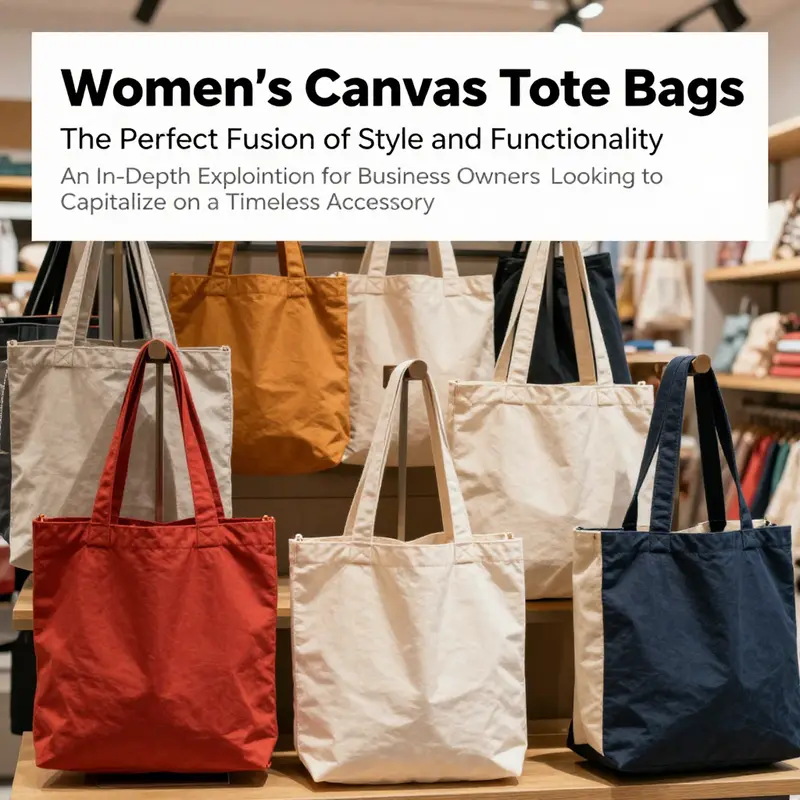
The women’s canvas tote bag epitomizes a blend of style, practicality, and sustainability, making it a must-have for consumers and a lucrative opportunity for business owners. This iconic accessory serves a dual purpose—it is a fashionable statement piece and a reliable carry-all. As consumer preferences shift towards eco-friendly products, the demand for canvas totes has surged, underlining their potential in the fashion marketplace. This article will delve into the versatility of women’s canvas tote bags, examine the sustainability practices involved in their production, highlight important design considerations, and explore current market trends that shape consumer preferences. Armed with this knowledge, business owners can strategically navigate the thriving landscape of tote bag offerings, ensuring they meet customer expectations and align with their values.
null
null
Sustainability in Women’s Canvas Tote Bags: Materials, Manufacturing, and Longevity
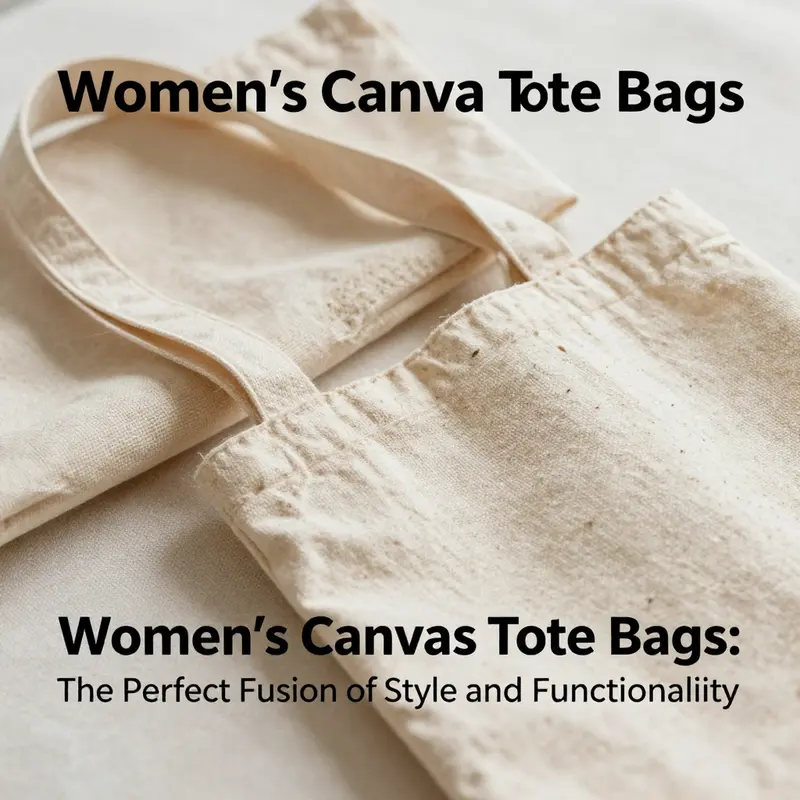
Canvas tote bags have earned a lasting place in sustainable wardrobes not by chance, but by an evolving approach to materials, production, and purpose. These bags embody a practical philosophy: design for longevity, choose materials with a gentler footprint, and weave accountability into every stage of creation. A canvas tote is more than a carrier for daily needs; it is a tangible commitment to reduce waste and extend the life of a product through thoughtful construction and responsible sourcing.
At the core of sustainability is the material: cotton canvas remains common for its durability and biodegradability relative to many synthetics. Brands now explore organic cotton or recycled cotton to address water use, soil health, and energy footprints. Organic cultivation reduces synthetic pesticides, while recycled cotton diverts textile waste from landfills. With properly sourced materials, the environmental advantage compounds: lower inputs, reduced processing energy, and longer fabric life due to quality construction.
Certifications help translate intent into verifiable performance. Standards such as GRS and EPD provide assurance about recycled content and life-cycle impacts, enabling consumers to compare options beyond aesthetics. They encourage brands to be transparent about supply chains and manufacturing choices, moving from marketing claims to accountability.
Manufacturing practices further reduce ecological footprints. Low-impact dyes, water recycling systems, and energy-efficient processes minimize water use and effluent while conserving energy. When dyeing, finishing, and assembly occur within a coordinated network, waste streams can be understood and redirected rather than discarded.
Durability remains the most practical expression of sustainability. Reinforced stitching at stress points, sturdy handles, and thoughtful details like reinforced bottom panels extend a bag’s life, delaying replacements and reducing market turnover. A long-lived bag supports reuse across seasons and contexts, aligning with a circular economy mindset.
Market dynamics show canvas totes maintaining a strong position in reusable-bag segments, favored for versatility, reliability, and credible environmental storytelling. Customization can amplify sustainability by encouraging ownership and longer use; embroiders, patches, and personal embellishments help a bag feel unique and valuable, reducing the urge to discard.
Finally, accountability and circularity close the loop. Transparent supply chains, take-back programs, and opportunities for recycling or reprocessing keep materials circulating rather than ending in landfill. Consumers, empowered by clear lifecycle information, can reward brands that invest in responsible design and end-of-life options.
Everyday Companions: The Design Details that Elevate Women’s Canvas Tote Bags
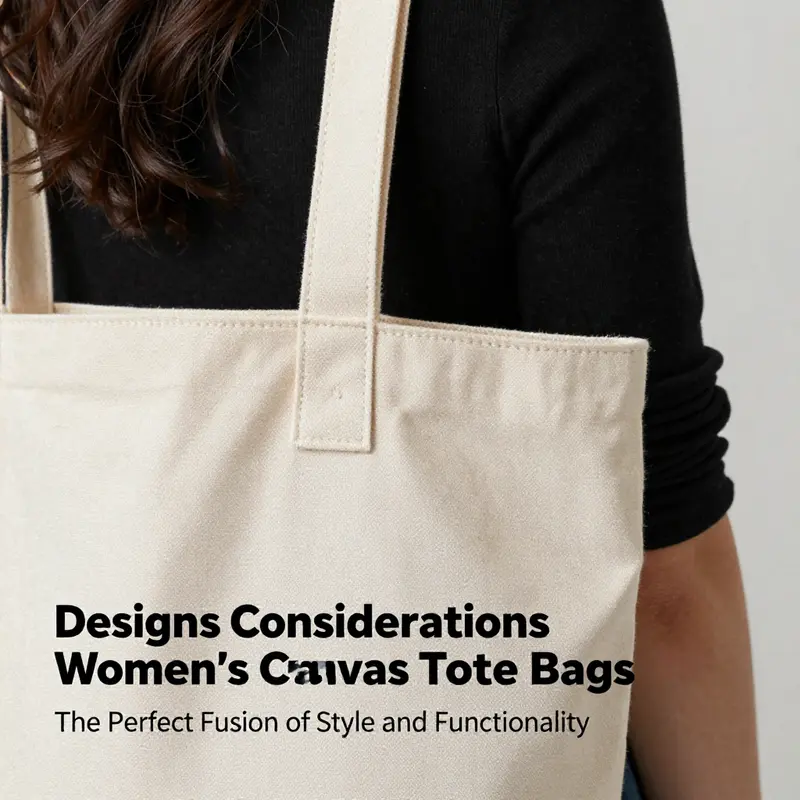
A well-made canvas tote does more than carry belongings; it carries the rhythm of daily life. The design details that shape these bags are rarely flashy, yet they determine how comfortably and confidently a person moves through a crowded morning, a quiet park, or a late-evening commute. In the simplest terms, a canvas tote is a compact engineering feat wrapped in a soft, approachable fabric. Behind the quiet exterior lies a careful balance of structure, material behavior, and thoughtful touches that let the bag handle diverse tasks without drawing attention to itself. When we examine this balance, we see a story of materials meeting ergonomics, of finishing touches aligning with everyday use, and of a cultural shift toward durable, versatile, and responsible fashion.
At the core of any compelling canvas tote is its material. The traditional canvas weathers daily wear because it is built from natural fibers that breathe, resist abrasion, and develop a patina with use. A 100% natural cotton canvas offers a soft hand and excellent workability, traits that invite owners to load the bag with anything from a laptop and lunch to hyper-organized notebooks and shopping finds. The weave is tight enough to hold its shape when full, yet flexible enough to fold and maneuver through a crowded doorway or a packed train. Such a fabric is forgiving of daily bumps while retaining its structural integrity over time. This durability is not a mere feature; it is a guarantee that the bag can stand up to the rhythms of a busy life without becoming a burden to carry.
However, few people buy a bag only for the material. The way that material is integrated into a protective, organized, and comfortable system matters just as much. Zippered closures have moved from luxury options to practical necessities in many contemporary designs. A secure closure helps prevent items from shifting or slipping out when a bag is swung through a doorway or jostled during a quick walk to catch a bus. Zippers, when chosen for quality and smooth operation, reduce anxiety about smaller items like keys, chargers, or cosmetics tumbling into the bottom. In tandem with secure closures, interior pockets become quiet, reliable allies. A well-placed padded sleeve for a tablet or ultralight laptop provides a reliable home for fragile electronics. Dedicated pockets for pens, a small wallet, and a clip for keys reduce rummaging and lost items. When the interior spaces are laid out with purpose, the bag ceases to feel like a single compartment and becomes a modular organizer that adapts to changing errands and responsibilities.
The fabric and lining choices also dictate how the bag behaves when loaded. Thick, reinforced stitching at stress points, often complemented by bar tacks and double or triple stitching, fortify the bag at the handles where tension concentrates. This attention to construction matters more than appearances because it translates to a longer lifespan and a more predictable carrying experience. A bag that can support a heavier load without curling at the corners or pulling away from seams lets a user plan for an entire day on one strap: coffee in hand, a tote stuffed with documents, a water bottle, and a change of clothes. In this way, the tote becomes a reliable partner rather than a temporary container. The practical benefits extend to the strap design as well. Wide, padded, or adjustable straps distribute weight more evenly across the shoulder, reducing strain and improving comfort when the bag is full. These ergonomic choices are not merely about comfort; they enable the bag to function as a stable, dependable companion for long days at the office, a day of travel, or a weekend full of errands.
Aesthetics, of course, are inseparable from function. The canvas bag’s minimalist beginnings offer a neutral canvas for personal expression. A well-crafted tote can be as understated as a clean silhouette with unadorned hardware or as expressive as a subtly accented edge, a refined leather highlight, or a carefully chosen contrast stitching. These design decisions matter because they set the tone for how the bag adapts to different contexts. In one moment, the tote may serve as a casual city companion; in another, it may accompany a more polished outfit for a meeting or dinner. The visual identity becomes part of the wearer’s broader personal style, allowing the bag to blend with a wardrobe rather than demanding a complete wardrobe update for every season.
In pursuit of elevating both form and function, many designers explore blends or accents that reinforce the bag’s impression of quality without compromising the fabric’s natural appeal. While canvas remains the anchor, subtle leather accents or hardware can elevate the sense of craftsmanship and durability. The result is a bag that communicates reliability through its tactile cues—how the handle feels in the hand, the way the zipper glides, the weight of a flourish in the metal hardware—without shouting its presence. This balance between restraint and refinement helps the bag transition seamlessly from daytime errands to evening plans. The goal is not to imitate luxury labels but to translate their principles—durability, thoughtful detailing, and quiet luxury—into a more accessible form.
Sustainability threads through every design choice. A growing emphasis on eco-conscious materials and ethical production practices reframes the canvas tote from a simple shopping accessory into a statement of responsible consumption. Brands increasingly adopt certified eco-friendly fibers or prefer production methods that minimize waste and reduce environmental impact. This shift resonates with consumers who seek items that align with their values and still deliver on longevity and practicality. In practical terms, choosing a tote with tightly woven canvas and reinforced stitching means selecting a bag built to endure repeated daily use rather than needing frequent replacement. The material’s longevity, in turn, reduces the frequency of disposal and encourages a more sustainable wardrobe cycle. The result is a product that satisfies both practical needs and ethical expectations, a rare combination in a world that often prizes novelty over endurance.
Designing for diverse uses is another central thread. A canvas tote must accommodate a broad spectrum of activities: a workday with a laptop and documents, a weekend at a farmer’s market with groceries and a water bottle, a beach excursion with sunscreen and a towel, or a travel day with a change of clothes and a compact jacket. A large interior capacity helps, but it must be balanced with a profile that doesn’t overwhelm the wearer or become unmanageable when the bag is light. This is where the interplay of shape, heft, and interior organization becomes critical. The tote should feel generous yet streamlined, friendly to casual outfits and sufficiently refined for more formal looks when paired with the right accessories. It is in this synthesis—capacity that remains controllable, compartments that keep contents accessible, and edges that hold their shape—that the tote earns its reputation as a versatile daily partner.
For consumers who want to explore more directly the range of options the market offers, the category often presents practical ways to customize or tailor a bag to personal needs. Personalization through embroidery, patches, or subtle colorways can transform a utilitarian tote into a signature piece, a reflection of taste without surrendering the essential advantages of canvas. The minimalistic look provides a generous canvas for self-expression, while premium trims and thoughtful hardware can signal a more deliberate, curated approach to daily life. In many ways, the design language of canvas totes mirrors the rhythm of modern living: flexible, resilient, and quiet in its confidence.
To connect these considerations to concrete shopping and design decisions, it helps to anchor the discussion in a practical sense of what to look for when evaluating a tote. Start with the fabric itself: a tightly woven canvas that’s thick enough to resist wear while still offering a soft hand. Check the seams—shoulder-to-shoulder, side seams, bottom corners—for straight lines, neat bar tacks, and consistent stitching. Feel the handles to determine if their construction distributes weight evenly and whether any padding reduces shoulder strain. Observe the closure mechanism: does a zipper feel sturdy and smooth, or does the bag rely on a magnetic snap that might not hold up under heavier loads? When the interior features are present, consider how well they support organization without overcomplicating access. The best designs feel invisible when you’re using them—reliable, intuitive, and elegantly simple.
In this context, the relationship between material fidelity, construction quality, and user-centered features becomes a guiding compass for both makers and wearers. It is a reminder that a canvas tote is not merely a container; it is a crafted space that supports daily rituals, helps protect valuables, and complements a person’s look. The capacity to adapt to different experiences—work, travel, shopping, leisure—depends on the careful integration of all these elements. When done well, the tote becomes a trusted companion, the kind of bag that earns its place whether the day is ordinary or exceptional. It is this blend of reliability and style—rooted in material truth and refined by thoughtful detail—that explains why canvas totes remain a staple beyond trends and seasons.
For readers seeking a quick, practical entry point to explore options that align with these design principles, the collection of women’s canvas tote bags highlights how a strong, breathable fabric can sit at the heart of a durable and stylish daily accessory. You can learn more about the range of canvas tote designs and how they can fit into different wardrobes by visiting the collection page dedicated to women’s canvas tote bags. women’s canvas tote bags.
As you consider the many small choices that define a tote’s character—fabric weight, stitching density, closure reliability, interior layout, strap ergonomics, and the smart use of accents—keep in mind the overarching aim: to bridge enduring practicality with a sense of personal style. A well-considered canvas tote does not demand a single, rigid use. It invites a flexible approach to everyday life, where the bag serves not as a statement but as an enabler of the activities, conversations, and routines that shape a day. It is in the patient balance of these elements—the sturdy weave under a soft touch, the weight distribution managed by strong handles, the organized interior, and the quiet elegance of restrained detailing—that the design details truly matter. This is how a canvas tote becomes more than a carryall; it becomes a reliable, stylish partner that accompanies the wearer through seasons of change while maintaining its core identity and purpose.
External reference for further technical context on canvas fabric: https://www.cotton.org/canvas-fabric-tote-bag/.
Quiet Threads and Personal Promises: How Consumer Taste and Personalization Drive the Market for Women’s Canvas Tote Bags
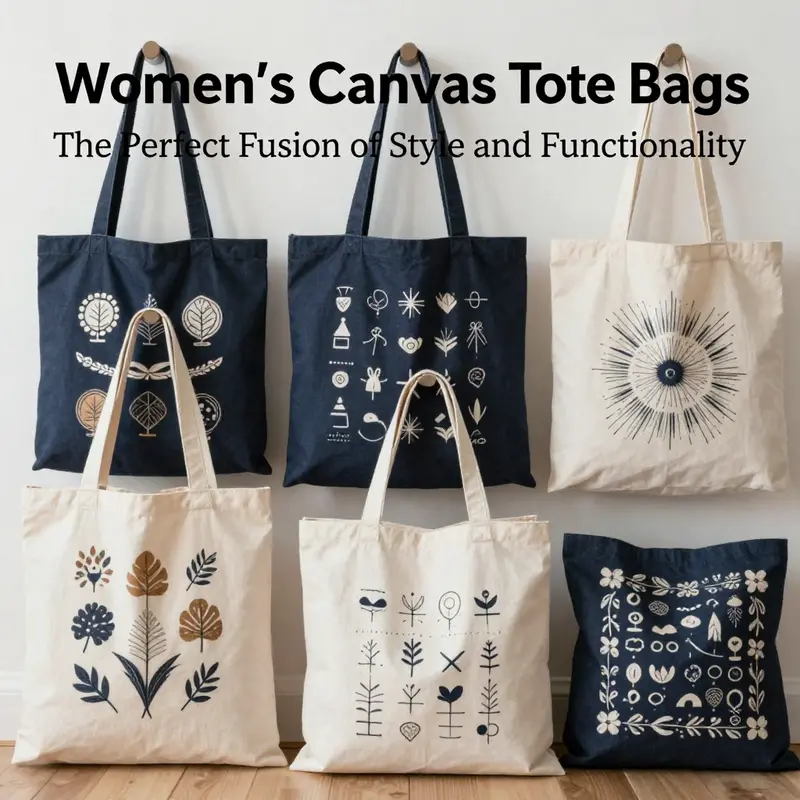
The canvas tote, once a practical workhorse, has earned a new status as a flexible platform for values, aesthetics, and everyday storytelling. Market researchers note a robust trajectory for tote bags in general, with projections of strong compound annual growth between 2026 and 2033. This momentum is less about a single silhouette or seasonality and more about a shifting consumer mindset that favors reusable, durable essentials that can be dressed up or down. In this landscape, the women’s canvas tote bag stands out not merely for its capacity but for its ability to absorb meaning and adapt to a spectrum of life moments. It is a product that invites a user to carry more than groceries or gear; it invites the wearer to carry intention. A bag that can hold a laptop, a notebook, a water bottle, and a poetry book, all at once, is valuable primarily because it signals a philosophy: purchase quality that lasts, design that breathes, and a footprint that respects the planet. The data are clear enough to feel tangible in hand: consumers are looking for items with longevity, options for personalization, and a clean, restrained visual language that travels well from commute to weekend retreat. The canvas material, with its naturally textured surface and sturdy weave, has a natural alignment with these preferences. It feels solid, approachable, and infinitely adaptable, a blank slate that welcomes both quiet refinement and bold self-expression. Where a shopper might once choose a bag as a discrete accessory, today many choose a canvas tote as a daily collaborator—reliable, repairable, and modest in its footprint, yet capable of transforming with the wearer’s mood through subtle details and thoughtful customization.
From the vantage of the market, the ascent of canvas totes is inseparable from a broader commitment to sustainability. Consumers increasingly value products that reduce single-use plastic and embrace gifts of longevity. They gravitate toward materials that are responsibly sourced and processes that respect workers and communities. In response, brands are foregrounding eco-certified materials and transparent supply chains, aiming to ensure that a tote bag is not only a statement of style but a pledge of conscience. The result is a quiet, pervasive shift: minimalism as a design ethic paired with purposeful personalization as a practical, joyful act. A canvas tote becomes a canvas of self in the most democratic sense—large enough to carry the tools of a modern life, simple enough to leave room for personal embroidery, patches, or prints, and sturdy enough to carry through years of daily use. This marriage of durability and discretion resonates with urban professionals who want a bag that looks unostentatious yet feels premium, and with environmentally minded shoppers who want to see a tangible commitment to responsible production.
Consumer preferences within this space reveal a compelling tension between restraint and expressiveness. On one side lies a preference for clean typography and understated graphics. Minimalist slogans and neutral palettes dominate, with natural canvas as a backdrop. Phrases such as “Less Plastic, More Tote” or “Carry Kindness” exemplify a design philosophy that communicates clear values without shouting. These designs rely on quiet typography—simple sans-serifs, carefully spaced lettering, and restrained color contrasts—that let the material do the talking. The appeal of this approach lies in its versatility: a single bag can pass from a polished office setting to a crowded farmers’ market without clashing with the wearer’s ensemble or the occasion. On the other side, nature-inspired motifs—botanical drawings, leaf patterns, and faint floral silhouettes—offer a more expressive alternative. Designers are exploring negative space, asymmetrical placements, and sparse color accents to create bags that feel organic rather than manufactured. This dual path—either typographic minimalism or botanical expressiveness—speaks to a broad spectrum of personal aesthetics while maintaining a shared language of sustainability and practicality.
Another marker of market health is the growing importance of customization. Personalization is no longer a luxury add-on but a core differentiator in both consumer and business ecosystems. Shoppers increasingly want bags that carry their initials, reflect their color preferences, or feature bespoke prints that tell a story. The trend toward monograms and bespoke prints works hand in hand with a refined design system: limit the visual vocabulary to no more than two typefaces per design, establish a clear typographic hierarchy, and allow emblematic elements to be swapped or reordered according to taste. This framework helps maintain coherence across a line while delivering the thrill of personalization. For retailers and manufacturers, customization opens doors to small-batch production, where embroidery, screen printing, heat-transfer graphics, and patchwork can be deployed without sacrificing efficiency or quality. The result is a market where a single canvas tote can be a unique artifact for a customer or a canvas you can offer to a wholesale partner with a range of personalization options.
To meet this growing demand, many brands are leaning into the material story as a way to reinforce trust and loyalty. Canvas, when treated with durable finishes or blended with breathable fibers, remains lightweight and resilient. The visual tone of the fabric—its natural hues, its subtle texture—lends itself to a design strategy that favors quiet confidence over loud branding. For the eco-conscious segment, the appeal is twofold: the bag feels responsibly produced, and it serves as a practical instrument for sustainable living. A tote that can be repaired or reimagined with new handles or patches extends its life, aligning with consumer habits that prize long-term value over disposable fashion rituals. In this context, the tote bag becomes not only a product but a platform for responsibility—a reminder that daily choices can align with broader environmental and social goals.
The market dynamics are also reshaping how these bags are positioned in retail and digital spaces. As demand grows, the role of storytelling becomes more pronounced. A canvas tote communicates a narrative about the wearer—whether it is tied to a local maker ethos, a commitment to slow fashion, or a personal moment of inspiration captured in a monogram or motif. Retailers are responding with curated assortments that emphasize cohesion and flexibility. The design language is intentionally restrained, so that a consumer can mix and match with existing wardrobes or swap out accessories to mark life milestones. The emphasis on modularity—interchangeable straps, removable linings, optional inner pouches—further reinforces the tote’s adaptability. Consumers respond not only to how a bag looks, but to how it functions in real life: how it sits on the shoulder, how much weight it can comfortably bear, how easy it is to clean, and how gracefully it ages with daily use. The ergonomic consideration of straps, padding, and reinforced stitching remains central to the story, ensuring that the bag supports long hours of wear without compromising comfort.
From a strategic standpoint, the convergence of sustainability, minimalism, and customization signals a thoughtful path for brands and retailers alike. The demand for eco-friendly materials and ethical production practices is not a trend that will fade; it is becoming a baseline expectation. Yet consumers still crave novelty and personalization, not novelty at the expense of function. The successful players in this market will balance these imperatives with a disciplined design language that keeps the canvas bag legible and timeless while inviting personal expression. This balance is particularly important for businesses that serve as both retailers and creators, offering customers the chance to participate in the design process without overwhelming them with options. The winning approach blends a restrained typographic toolkit with a few well-chosen motif options, and makes monogramming or customization a seamless, value-adding step in the purchase journey. In practice, this translates to catalogs that portray a family of silhouettes with shared materials and construction but distinct personality through color, texture, and personalization options. The broader implication for the industry is straightforward: the canvas tote is not a single product but a family of adaptable essentials that can be tailored, repaired, and trusted. And that adaptability is what ultimately sustains growth in a marketplace where consumers increasingly expect products to reflect both their daily realities and their long-term commitments to the planet.
For readers seeking a practical pathway into this evolving space, the most relevant takeaway is that personalization does not have to overwhelm design or inflate costs. A carefully designed customization program can leverage the natural strengths of canvas—its strength, its texture, its ease of finishing—while delivering a sense of exclusivity. Brands can begin with a two-tier customization strategy: offer a baseline selection of monogram options and a curated set of distinctive prints that align with the brand’s values and the consumer’s lifestyle. This approach preserves visual coherence across a line, supports efficient production, and gives customers a genuine sense of ownership without sacrificing the integrity of the product. In turn, customers gain a tote that speaks to them, not merely a generic item lifted from a shelf. The market rewards this clarity and care with loyalty, repeat purchases, and word-of-mouth advocacy that travels beyond traditional advertising. It is a reminder that the canvas tote, at its core, is a democratic object: accessible, wearable, and endlessly adaptable to the person who carries it.
For readers who want to explore a practical starting point for design inspiration or product research, a curated selection of canvas tote options can be found at the online collection of women’s canvas tote bags. There, visitors can observe how the same material can support both minimalist typography and botanical illustrations, and how subtle choices—such as thread color, stitch density, and hardware finish—can influence the bag’s perceived value and daily usefulness. This reference point underscores a central truth of the market: great design often lives in the quiet decisions. A light touch with a bold idea, a restrained palette with a single expressive motif, and a monogram placed with intention can transform a utilitarian object into a personal emblem of style and stewardship. The trend toward customization, in other words, is not about complexity for its own sake. It is about translating a wearer’s life into a tangible, durable companion that travels through work, discovery, and rest with equal grace.
External resource for broader context: Global Tote Bags Market Forecast 2026-2033, which provides industry-wide perspectives on growth, competition, and market segmentation that echo the themes discussed here. https://www.theglobalmarket.com/market-reports/tote-bags-market
Final thoughts
In today’s competitive fashion landscape, women’s canvas tote bags represent not only a practical choice for consumers but also a promising avenue for business growth. With their versatility, commitment to sustainability, thoughtful design features, and evolving market trends, these bags resonate deeply with consumers’ desires for functional and stylish accessories. Business owners equipped with an understanding of these dynamics can effectively position their offerings to meet consumer needs, ultimately enhancing their brand’s appeal and fostering customer loyalty. As consumer consciousness continues to evolve, those who prioritize quality, sustainability, and personalization in their product lines will find success in this ever-growing market.