
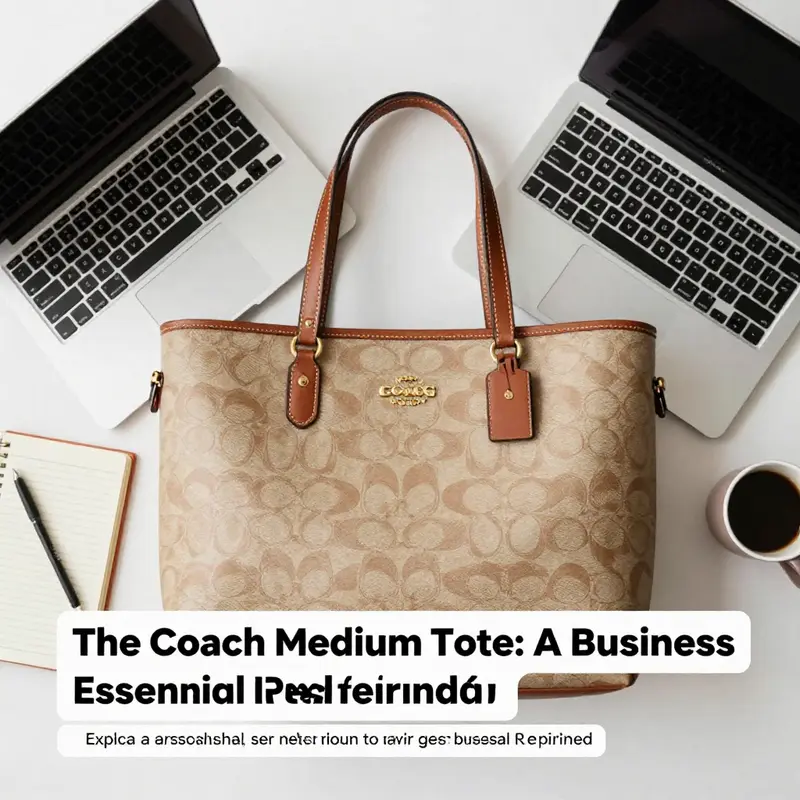
The Coach Medium Tote has emerged as a quintessential accessory for modern business owners seeking a balance between style and functionality. Its high-quality craftsmanship, spacious design, and adaptability cater to the diverse needs of professionals in various environments. From bustling offices to casual networking events, this bag serves as a reliable companion, elevating daily operations with elegance. This article will delve into the impeccable craftsmanship behind the Coach Medium Tote, its unmatched versatility, and the current market trends that affirm its popularity among discerning business owners.
From Grain to Gesture: The Craftsmanship That Defines a Medium Tote
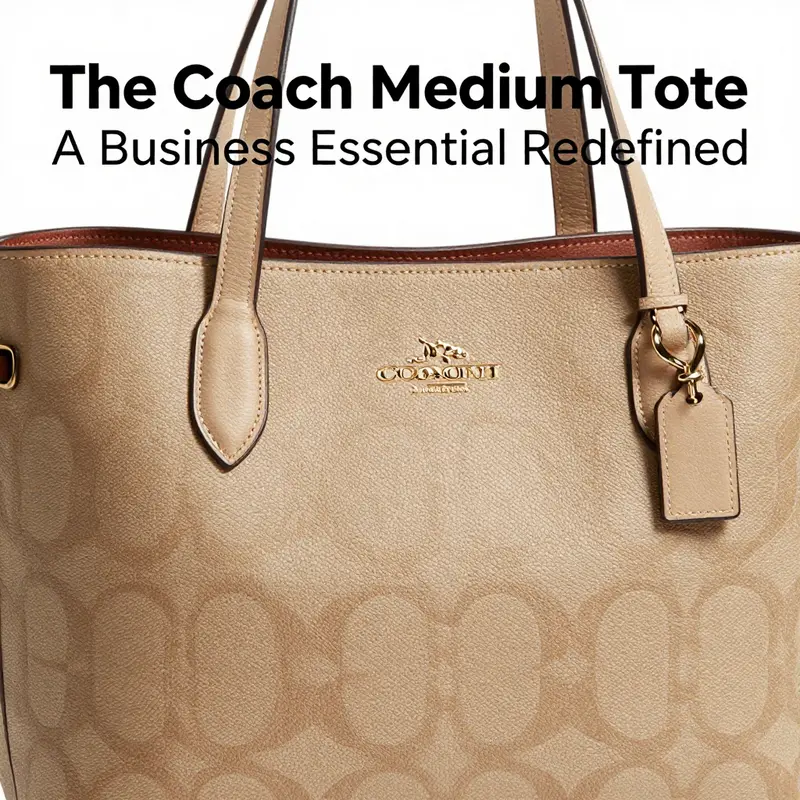
From Grain to Gesture: The Craftsmanship That Defines a Medium Tote
A medium tote’s value begins long before it reaches an arm. It starts with a decision about leather, hardware, and silhouette. It continues through measured cuts, careful stitching, and finishing touches. The outcome is a bag that carries essentials reliably, looks refined, and responds to daily life without losing composure. This chapter explores how material choices, structural thinking, and handcrafted details converge to produce a medium tote that feels both purposeful and personal.
Good materials are the foundation. Pebble-grain leather or fine calf leather are common choices for a balanced medium tote. Pebble-grain leather offers texture and toughness. Its raised grain hides minor scuffs and resists wear. Calf leather provides a smooth, luxurious hand and develops a subtle patina. Both options require skilled selection. Tanners sort hides to ensure consistent grain, thickness, and tensile strength. That selection stage sets the tone for the bag’s longevity.
Design philosophy informs every cut. A well-designed tote is ergonomic and intentional. Proportions are tuned to the human body so the bag sits comfortably on a shoulder and hangs naturally by hand. Strap width, length, and attachment points are tested to avoid digging or imbalance. The interior is designed with purpose: a central zipped divider, slip pockets at the sides, and a soft pocket for a tablet or small laptop. These choices create order without rigidity. Organization feels integrated, not imposed.
Construction methods translate design into a built object. Panels are cut with templates or computer-guided tools to maintain repeated precision. Edges are skived where necessary to reduce bulk. For strength, layers at stress points are reinforced—stitching lines may be doubled and edges glued before topstitching. Hardware is anchored through backplates or reinforced tabs. The result is a bag where each functional element—zipper, D-ring, clasp—sits on a stage of support.
Stitching is where craftsmanship becomes visible. Even consistent stitch length across seams signals care. Lockstitch techniques prevent unraveling, while edge stitching secures folded hems. Stitching density matters: tight stitches resist stretching and keep seams straight. In many premium pieces, makers use coated threads to improve abrasion resistance and reduce moisture wicking. When hand-finishing is applied, artisans may saddle-stitch critical areas, adding durability and a tactile signature.
Hardware and fittings shape the experience of use. Metal finishes are chosen for both strength and aesthetics. Brushed, polished, or antiqued finishes all age differently. Rivets and studs at stress points distribute load and prevent tearing. Zippers are selected for smoothness and longevity; metal teeth or high-grade molded options are common. A detachable strap is often fitted with swivel clips to reduce wear and prevent twisting. These small engineering choices have outsized effects on daily reliability.
Interior organization demonstrates thinking about real lives. A padded sleeve for a laptop protects electronics while keeping the bag streamlined. Slip pockets hold phones and wallets within quick reach. A central zipped pocket secures valuables without fragmenting the main compartment. The balance between open space and organized pockets determines how easily the bag adapts from work to errands. Thoughtful pocket sizing prevents items from tumbling together, while subtle gussets allow expansion without bulk.
Surface finishes and edge work refine the visual and tactile experience. Edge painting seals raw leather and provides a uniform outline. French edging creates a seamless, polished profile. Burnishing and waxing enhance water resistance and lend a soft sheen. For pebble-grain surfaces, finishing may include topcoats that repel stains while preserving texture. The goal is to protect the material while maintaining its character.
Design details often carry cultural or historical references. The idea that a bag should adapt to the body, for instance, reflects mid-century design principles that favored comfort and utility. That outlook encourages shapes that move with the wearer rather than constrain them. Embossed patterns and trompe l’oeil treatments add dimensional interest without compromising function. These artistic choices let the bag read as a piece with personality as well as purpose.
Material innovation helps balance weight and durability. Proprietary coated fabrics and lightweight PVC blends offer resistance to moisture and stains. They reduce fatigue during long days while keeping the silhouette firm. When combined with leather trim, these materials provide an approachable, easy-care option. The careful hybridization of textile and leather balances the tactile warmth of hide with the practical resilience of modern coatings.
Sustainability and responsible sourcing have entered the craftsman’s brief. Leather selection increasingly considers traceability, tanning methods, and environmental impact. Vegetable-tanned leathers offer a different aging path than chrome-tanned ones, producing varied patinas and ecological footprints. Recycled hardware and lower-impact finishes are chosen where possible. Transparency in materials reassures discerning buyers that craftsmanship does not come at a hidden cost to the environment.
The user experience is a primary measure of success. A medium tote should perform across contexts. It must hold a laptop and a water bottle, without appearing overloaded. Straps should remain comfortable, even when the bag is heavy. Interiors should organize, not confuse. Pockets must be deep enough to secure items but positioned for ease of reach. These practical criteria are the final tests of a tote’s design and build.
Quality control is the final gatekeeper. Every stitch, seam, and clasp undergoes inspection. Craftspeople check symmetry, stitch tension, and hardware alignment. They test zippers through multiple cycles. They examine leather surfaces for defects and confirm that edge finishes are uniform. Small imperfections can indicate larger structural problems. Attention to detail at this stage ensures the bag performs consistently for years.
Longevity is built in, not assumed. Durable leathers, reinforced stitching, and corrosion-resistant hardware all contribute. But maintainability matters too. A leather tote that allows for simple cleaning and conditioners extends its usable life. Removable straps and repairable parts make the bag less disposable. When craftsmen design with repair and refurbishment in mind, the object transcends seasons.
Aesthetic restraint supports versatility. A medium tote with clean lines and subtle logos remains adaptable across wardrobes. Color selection also plays a role. Neutral tones like black, tan, and deep cognac hide wear and match many outfits. Seasonal colors add personality, but restrained palettes extend the bag’s relevance. Design restraint ensures the bag complements rather than competes with its owner’s style.
The balance between function and elegance is a deliberate negotiation. A tote that prioritizes pure utility may lack refinement. Conversely, a bag focused solely on looks may fail the daily grind. The most successful designs reconcile both. They conceal reinforced linings behind graceful curves. They hide organizational complexity behind a minimalist exterior. The invisible labor of structure and reinforcement lets the silhouette remain calm.
Small gestures reveal a maker’s philosophy. A corner angled to reduce wear. A gusseted base that expands when needed. A hidden foot stud to protect the leather when set down. These are details a user notices over time. They often start as solutions to everyday problems. When executed cleanly, they feel inevitable.
Craftsmanship also shapes how a bag ages. Certain leathers develop a refined patina, which many find desirable. Others retain a uniform finish that resists visible change. Stitching and hardware determine whether the bag will fray or endure. Over time, the tote records the wear of real life—micro-scratches, softened edges, a darkened handle. Quality craftsmanship channels that history into a pleasing story.
Customization and personalization are further signs of thoughtful design. Interchangeable straps, removable pouches, and clippable charms let owners adapt the tote to their habits. Simple modularity extends usefulness. When the bag accommodates variation, it becomes more than a singular object. It evolves with its owner.
Making a medium tote involves an ecosystem of specialists. Tanners, cutters, stitchers, finishers, and quality inspectors all contribute. Each craftsman brings tacit knowledge about material behavior and technique. That collective craft defines the product more than any single element. The result is an object that feels coherent and considered.
Understanding the craftsmanship behind a medium tote reframes how one evaluates it. Price becomes a reflection of material quality, labor intensity, and design resilience. A well-made tote may demand a higher initial investment, but it often rewards longevity and daily comfort. More than a fashion statement, the tote becomes a trusted tool.
For those choosing a medium tote, look for signs of intentional construction. Consistent grain and tight stitching indicate careful material selection and workmanship. Hardware should feel substantial and move smoothly. Interior pockets should be scaled to modern essentials. Edges should be neatly finished and firmly sealed. These are the hallmarks of a bag designed to work hard without shouting for attention.
Practical maintenance extends a tote’s life. Regularly remove dirt and dry spills promptly. Use leather conditioners appropriate to the tannage. Avoid overstuffing to preserve shape. If hardware loosens, repair early to prevent further damage. When a bag is designed with repairability in mind, simple fixes can dramatically prolong usefulness.
A medium tote grounded in skilled craftsmanship offers a rare combination: everyday resilience with an enduring presence. It is a product of material wisdom, purposeful engineering, and human skill. Each choice—grain, stitch, finish, and pocket—adds a chapter to its story. The result is a companion that supports daily needs while revealing the care behind its making.
If you want a compact guide to choosing the right size and silhouette for daily use, consult this helpful medium tote sizing guide: medium tote sizing guide.
For a deeper look at the design principles that inspired modern ergonomic handbags, consider this resource on a mid-century designer whose work emphasized comfort and utility: https://en.wikipedia.org/wiki/Bonnie_Cashin
One Tote, Many Roles: The Practical Versatility of a Medium Pebble-Leather Tote

A single bag can redefine how you move through a day. A well-designed medium pebble-leather tote blends style and utility in ways that make transitions feel effortless. This chapter explores how such a tote adapts to work demands, travel needs, family life, and everyday errands. It shows how material, internal layout, and carrying options come together into a single, reliable companion.
From the moment you pick it up, the texture of pebble leather announces durability. The grain hides small scuffs and resists visible wear. That textured finish also softens with use, developing a patina that keeps the bag looking lived-in rather than worn out. For anyone who needs a bag that can withstand daily contact with desks, subway seats, and crowded coffee shops, this material is a practical choice. It strikes a balance between structure and flexibility: enough shape to sit neatly on a table, but enough give to slide in a folded jacket or a thin umbrella.
Size matters in daily carry, and a medium tote hits a sweet spot. It offers significantly more capacity than a compact handbag without the bulk of an oversized shopper. Laptops up to around 13 to 15 inches fit comfortably, along with a charger, a notebook, and a water bottle. Yet the bag still manages to remain compact enough for shoulder carry without digging into the arm. That balance makes it a go-to for professionals who commute and parents who need to juggle gear. The medium scale is also versatile for evenings when you want to downsize; remove a few items, detach the strap, and the tote feels more polished.
Interior layout plays a key role in how useful a tote can be. Thoughtful compartmentalization keeps essentials accessible. A central zipped pocket acts as a core separator, securing valuables while dividing the interior into two main bays. Side slip pockets are perfect for quick-grab items like phones and transit cards. Some versions include a dedicated pouch or removable insert for pens, chargers, or small cosmetics. This kind of organization reduces the ritual of emptying your bag to find one item. It also protects tech; a padded sleeve or a snug compartment keeps a laptop or tablet from shifting and from contact with heavier items.
Security goes beyond simple zippers. A top zip closure prevents accidental spills and keeps pickpockets at bay. Exterior zip pockets add convenience without forcing you to open the main compartment. When you need to reach for a ticket, lip balm, or keys, a front zip pocket keeps those items handy. Meanwhile, interior zipped pockets provide extra protection for passports, wallets, or medication.
Carrying options multiply a tote’s usefulness. A pair of sturdy handles invites hand carry or shoulder wear. A detachable crossbody strap transforms the tote into hands-free gear for days with long commutes, travel, or active parenting. Swapping from shoulder to crossbody gives you ergonomic variety. It also helps distribute weight differently, reducing fatigue on longer days. A removable strap can be adjusted for length or removed entirely for a streamlined silhouette during formal events.
Practicality shows itself in small but meaningful details. Reinforced stitching at stress points keeps straps from fraying. Metal feet on the base protect the leather when the bag sits on wet or dirty surfaces. Smooth, easy-to-operate hardware makes opening and closing the bag feel effortless. Inside, a light-colored lining helps you see items quickly, unlike dark linings that hide small objects. A well-placed key leash or snap-in pouch prevents keys from disappearing to the bottom of the bag.
Versatility extends to how a tote fits into different lifestyles. For the commuter, the tote neatly carries a laptop, a pair of headphones, and a light lunch. It organizes items so work mornings are less frantic. For the traveler, the medium tote serves as an ideal personal item on flights. It holds a travel wallet, reading material, a compact change of clothes, and in-flight essentials. When security requires quick access to tickets or passports, exterior pockets simplify the process.
Family life demands a flexible bag. A medium tote can carry baby wipes, a spare outfit, snacks, and toys, while still looking polished at a playdate or a parent-teacher meeting. Because the bag is neither too large nor too small, it avoids that awkward turning-into-a-diaper-bag appearance. The central zip pocket keeps small items separated from larger ones. For parents who alternate between work and home, this tote adapts without needing a complete switch of bags.
Beyond function, a tote influences daily style. Pebble leather has a casual elegance that pairs with business casual and weekend wear. The material complements tailored blazers and linen dresses alike. Choose classic colors to maximize versatility. A neutral shade blends with most wardrobes. Yet a richer color can become a statement piece that elevates simple outfits. The right proportions, hardware finish, and strap style determine whether the bag reads as formal or relaxed. This adaptability helps the tote match various roles without looking out of place.
Maintenance and longevity matter for an item meant for everyday use. Pebble leather requires minimal care. Wiping with a soft, damp cloth removes surface dirt. Avoid harsh chemicals and prolonged exposure to direct sunlight. Conditioning occasionally maintains suppleness. Storing the tote with tissue paper preserves shape when not in use. The right care extends the bag’s lifespan, ensuring the investment pays off through years of wear.
Functionality also means anticipating the unexpected. Zippered sections protect electronics during sudden drizzle. An interior water-resistant pocket is useful for wet masks or umbrella drip. A small, removable pouch becomes a mini-first-aid kit, useful when traveling with kids. Detachable straps eliminate the need for a second hands-free bag during crowded commutes. These thoughtful touches make the tote more than just a container; they make it a tool for modern life.
One of the strongest practical advantages is how a medium tote organizes technology. Many designs accommodate modern tech gracefully. Padded laptop sleeves reduce impact, while internal cable loops prevent chargers from tangling with other items. The tote keeps tech accessible at security checkpoints and while switching to remote work. For those who carry both a tablet and a phone, dedicated pockets help to avoid scratches and accidental activation. The interior design allows cables, power banks, and earbuds to coexist with notebooks and pens without chaos.
Careful selection of a tote also reduces the number of bags you need. Because one well-crafted medium tote can perform multiple functions, you avoid owning several single-purpose bags. This consolidation supports a more efficient lifestyle and a smaller closet footprint. The tote becomes a default choice for most days, while specialized bags remain reserved for unique needs. This practical economy also simplifies decision-making each morning.
Packing strategies boost the tote’s effectiveness. Use small pouches to group related items: a tech pouch for cables, a cosmetics pouch for touch-ups, and a document sleeve for papers. These pouches make it easy to swap contents between bags. Rolling softer items conserves space, and arranging heavier items at the bottom keeps the tote balanced. Keep a slim raincoat or compact umbrella near the top during inclement seasons. These simple habits turn an already useful tote into an organized powerhouse.
The tactile experience matters. Smooth zippers and comfortable handles make daily use pleasant. A detachable strap with padding increases comfort for long wear. Hardware that resists tarnish maintains aesthetics over time. These elements add up to a bag that feels reliable, not fussy. The tactile satisfaction reinforces the tote’s role as an everyday companion.
Sustainable thinking plays a role in choosing and using a tote. Selecting durable materials reduces the need to replace a bag frequently. Repairable hardware and replaceable straps extend utility. When the bag finally retires, neutral design allows it to be repurposed or passed on. A focus on quality over quantity supports longer-term value and reduces waste.
Finally, a medium pebble-leather tote fits into multiple social settings without awkwardness. It can accompany you to a client lunch, a weekend market, or a museum visit. It bridges the gap between professional expectation and casual comfort. By design, it reduces the friction of daily transitions. That seamless fit into different parts of life is the essence of modern functionality.
For readers seeking similar designs optimized for carrying laptops and daily essentials, see resources on laptop tote options to compare features and fit. You can explore details about tailored laptop tote bags and their features at this guide to laptop tote bags for women: https://alltotebags.com/laptop-tote-bags-women/.
For a close look at materials, construction, and specific styling options, refer to the manufacturer’s design gallery for a detailed example. The page highlights weaving, leather finishes, and compartment layouts that illustrate how material and design decisions shape utility: https://www.coach.com/gb/en/p/troupe-tote-16-with-weaving-z14699
Throughout its lifecycle, a well-made medium tote proves itself by adapting. It holds the gear you need, protects it, and presents it with quiet style. The combination of pebble leather, balanced size, thoughtful organization, and versatile carrying options makes the tote more than an accessory. It becomes an operational base for daily life, ready for work, travel, family routines, and spontaneous plans. This flexibility explains why a carefully chosen medium tote earns a central place in many wardrobes. It performs reliably, looks appropriate in many settings, and simplifies what you carry and how you carry it.
Enduring Craft and Everyday Versatility: Tracing the Pulse of a Designer Tote
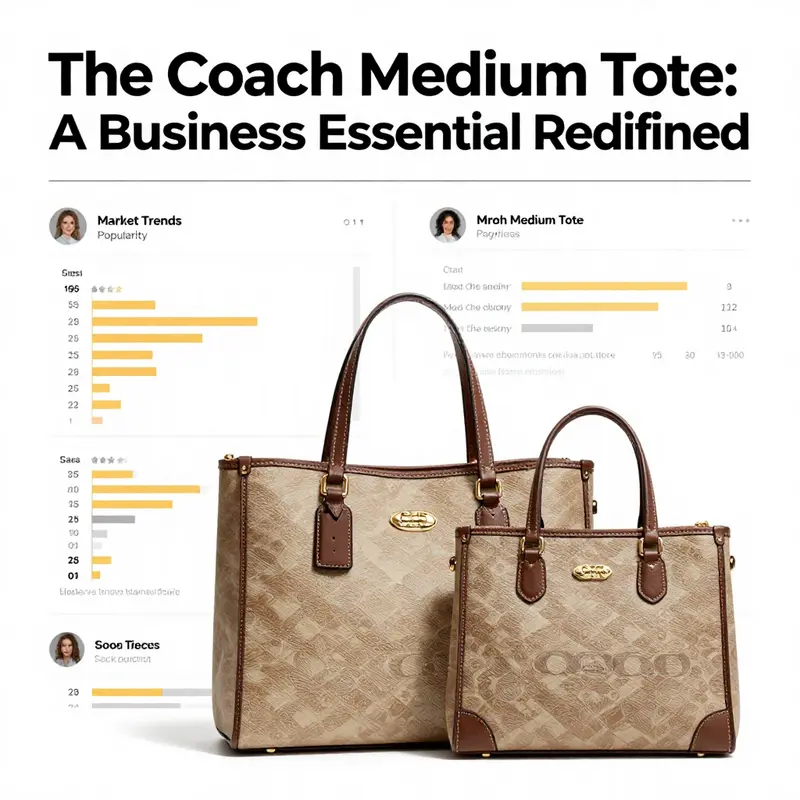
A designer tote that feels both timeless and immediately useful can seem almost magical until you consider what makes it so reliable. In any wardrobe where daily rituals revolve around commuting, meetings, and moments of pause between tasks, a bag that blends refined craftsmanship with practical detail becomes more than an accessory; it becomes a quiet engine of confidence. The silhouette most readers recognize in this category is defined by a few unwavering traits: a high-quality pebble leather surface that takes on a warm patina with use, a texture that remains scratch resistant through years of occasional brushes with hardware, fabric, and city grime, and a shape that stays gracefully structured without becoming rigid. When a bag carries a signature texture and a reputation for durability, it does more than hold a few items. It signals steadiness, intent, and the readiness to adapt to whatever a day might demand. In this way, the design philosophy behind this type of tote mirrors a broader cultural preference for products that age with dignity while continuing to perform at a high level. The result is a companion that looks equally at home in a polished office setting as it does on a casual coffee run, reinforcing the idea that elegance and practicality do not have to be mutually exclusive.
The interior organization that accompanies such a silhouette is a quiet triumph of usability. A roomy main compartment invites laptops, tablets, sketchbooks, and lunch pouches, while a zipped central pocket provides a secure pocket for valuables. Side slip pockets line the interior, offering fast access for the items that travel with you most, like keys, cards, or a transit pass. The layout is not merely about capacity; it is about a sense of order that reduces the cognitive load of the day. When the day asks for more than one role from a bag—office essential by day, dinner companion by night—the interior system remains intact, refusing to collapse into a jumble. This balance between capacity and organization is the kind of detail that tends to be overlooked in glossy overviews but becomes instantly apparent to anyone who has carried a bag through a full day of tasks.
One of the most powerful aspects of this silhouette is the way it carries. It is designed to be worn in multiple ways, allowing the wearer to shift from a hand-held posture to a comfortable shoulder carry, and, with a detachable strap, to a crossbody configuration when hands are needed elsewhere. That adaptability feels deceptively simple until you try it in real life: you grab the bag by the handles for a quick meeting, then switch to a longer strap for a transit ride, and finally settle into a crossbody on a crowded street where hands must be free. The ability to change posture without changing the bag is a quiet form of financial and emotional efficiency. Fewer bags in rotation mean fewer decisions, and fewer decisions translate into more mental space for the work and moments that matter most. In short, the design acknowledges that daily life rarely travels on a straight path, and it answers with a shape that accommodates movement rather than demanding it be constrained by a single carry method.
The lineage of this silhouette is as telling as its present-day practicality. An iconic tote that first gained widespread recognition in the fashion landscape during the 1960s established a benchmark for polish, proportion, and quiet strength. Its pebble leather surface, clean lines, and a hardware note—a turnlock, a small twist of metal that catches light and suggests a secure closure—became shorthand for an all-purpose bag that could anchor a look without shouting. The ethos behind this lineage is simple: create a piece that remains dependable as it evolves, a canvas that holds its value not only in terms of dollars but in the confidence it lends the wearer. To those who have followed fashion through more than a few seasons, this approach feels familiar. It is a reminder that fashion can be both forward and faithful at the same time: forward in its ability to adapt to new outfits and new contexts, faithful in its commitment to core materials, craft, and a tested interior logic. The enduring appeal lies not in novelty but in the promise of consistency, a promise that resonates with anyone who has learned to measure a bag by how well it supports the work of living.
In recent years the category’s best-loved versions have been characterized by generous interiors and supple but structured exteriors. A larger interior that still holds its shape, a detachable strap that broadens carrying options, and thoughtful organization features like a fully zipped main compartment and dedicated card slots are now regarded as essential. These details respond to a modern workflow: there is more information to carry, more devices to protect, and more settings to navigate, from the quiet corner of a library to the bustle of a downstairs office, to a cafe where a laptop becomes a portable workstation. The versatility is not an afterthought but a core attribute, embedded in the way the bag behaves with connectors, cables, notebooks, and everyday sundries. The result is a piece that supports work-life rhythm rather than dictating a single rhythm. That synchronization matters because it aligns with broader consumer expectations for longevity, practicality, and a sense that quality is an asset, not a luxury.
The emotional resonance of a well-crafted tote often comes from the small details that accumulate over time. The pebble leather’s tactile warmth invites touch; the grain and texture hint at a story of use and care rather than mere display. A scratch here or a subtle patina there becomes a badge of lived experience, a reminder that the bag has accompanied you through meetings, flights, coffee breaks, and spontaneous city strolls. A care routine becomes part of the ritual of ownership: conditioning the leather, keeping hardware polished, and storing the bag so that a respectful memory of seasons—some brighter, some more muted—stays with it. This narrative of aging gracefully may sound almost romantic, but it is grounded in everyday pragmatism. It reflects a consumer desire for products that do not demand replacement at the first sign of wear but invite investment in an object with a history and a future.
This is where the conversation about market demand naturally arrives at two related truths. First, the silhouette’s robust performance in both professional and casual environments broadens its appeal across generations. The bag becomes a bridge between different facets of life, supporting a variety of activities without requiring a new style for each context. Second, a durable, elegantly proportioned tote aligns with a growing preference for investment pieces that combine heritage craft with modern usability. The balance between classic form and adaptable function has become a guiding principle for contemporary consumers who want to accumulate fewer, better things. In practice, that translates to fewer impulse purchases and more considered acquisitions—bags that earn a place in a closet not only by beauty but by the quiet assurance that they will remain relevant as new trends emerge.
For readers who want to trace the practical implications of this trend, consider the line between tradition and innovation. The silhouette preserves a timeless proportion while expanding in subtle ways to accommodate today’s devices and daily rituals. The interior logic remains anchored in clear divisions and accessible pockets; the exterior still conveys a refined silhouette that reads as poised and confident. This is not nostalgia dressed up as fashion; it is a strategic approach to design that recognizes the realities of contemporary life and compensates for them with thoughtful engineering. In markets where shoppers increasingly evaluate an item based on its lifecycle, a well-made tote that ages well can be a compelling decision. The ability to pass from one stage of life to the next—city professional, remote worker, part-time student—without changing bags is a quiet vote for durability, sustainability, and value. It is also a reminder that fashion thrives when it respects endurance as a virtue rather than a compromise.
Consumers today are not simply buying a bag; they are investing in a product that supports their routines. The reference points for this investment often come back to the everyday tests: can it hold a laptop sleeve, a notebook, a chargers’ kit, and still zip closed with a sense of ease? Does it carry comfortably, even when it is fully loaded, and does it keep its shape after a day’s use? The answers, in most cases, favor the silhouette that blends a generous interior with a firmly crafted exterior. When such a bag can be carried across multiple contexts—meeting room to coffee bar, train platform to weekend errand run—the value proposition becomes clear: fewer bags to manage, more confidence in what you carry, and a sense that your belongings are supported by thoughtful design that respects both form and function.
In addition to the intrinsic attributes, the market’s current dynamics have amplified the appeal of a well-made tote with a storied background. Consumers are increasingly drawn to products that feel like an extension of their personal narrative—objects that reflect years of use and polish rather than disposable trends. The enduring silhouette, with its clean lines and practical features, fits this mindset neatly. It offers a stable aesthetic that does not demand constant updates to stay relevant, while still inviting personalization through wear, patina, and the small, telling choices of color and hardware that a person can claim as their own. As a result, the tote becomes not merely a practical purchase but a storytelling vehicle, a way to communicate taste, values, and a sense of continuity across seasons. In the context of a broader fashion ecosystem that often prizes rapid turnover, this kind of fixture can act as a counterbalance, a reminder that style, when anchored in craftsmanship, can endure while adapting to new contexts.
This chapter’s thread through history and practice points toward a simple takeaway: the most successful totes are those that neither resist change nor chase it blindly. They invite change by offering flexible ways to carry and organize, and they resist change by providing a tactile experience and structural integrity that remains recognizable year after year. The result is a bag that performs across a spectrum of life—from professional obligations to personal pursuits—without sacrificing its core identity. Those who study market trends and consumer behavior can observe that such pieces often become touchstones, anchors around which wardrobes and routines are built. The durability and versatility of the silhouette feed into a cycle of repeat purchases that are less about chasing novelty and more about reinforcing trust in a brand’s commitment to quality, craft, and longevity.
For readers curious about how these values translate into real-world sizing decisions and daily fit, there is a practical reference point worth exploring. The typical tote bag size that best aligns with professional and casual use often occupies a middle ground: ample interior space to accommodate devices and documents, yet a form that remains light enough to carry across a busy street or through a crowded corridor. If you want to gauge how a particular silhouette might accommodate your needs, you can review the general sizing guidance here: Coach tote bag size. This resource helps translate a brand’s internal design language into everyday expectations about fit, weight distribution, and ergonomics, making it easier to imagine how a bag feels when filled with the real-world items that accompany your day.
As a closing thread that ties past, present, and future together, the enduring tote profile speaks to a broader human preference: quality that remains relevant while still feeling fresh. It is a practical answer to the modern demand for items that serve multiple roles, hold up under repeated use, and age with dignity. In a world where the pace of change is constant, this kind of design offers a sense of steadiness. It invites wearers to invest in an object that will be part of countless days to come, a faithful object that will carry both work and life with quiet assurance. The appeal is not in a single feature or a fleeting trend but in a holistic experience—the tactile pleasure of durable leather, the satisfaction of intelligent organization, and the confidence that comes with a carry that truly grows with you.
External resource: https://www.coach.com/en-gb/product/market-tote-47384.html
Final thoughts
In summation, the Coach Medium Tote stands as a benchmark for quality, versatility, and market acumen for today’s business owners. Its exceptional craftsmanship ensures longevity and durability, making it a reliable choice for professionals on the move. As its popularity continues to grow, understanding the factors that contribute to its appeal provides valuable insights into consumer preferences in the fashion accessory market. This bag is more than just a tote; it’s a powerful tool that enhances professional identity while offering the functionality needed for daily business challenges.