
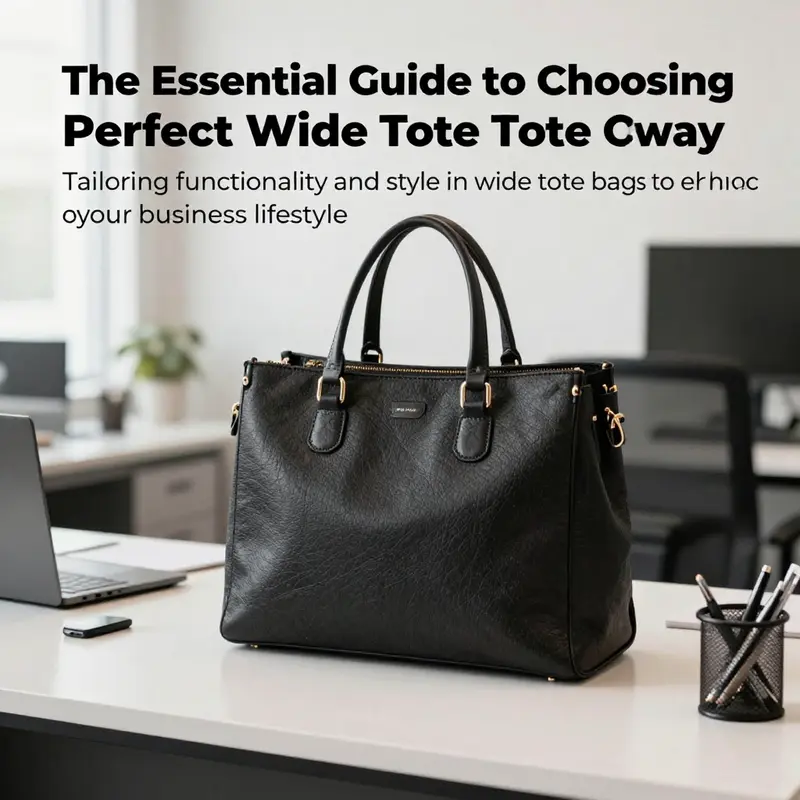
In today’s dynamic business environment, selecting the right wide tote bag can significantly impact productivity and professionalism. Wide tote bags offer a blend of style and utility, making them ideal for business owners who need to juggle work materials while maintaining a polished appearance. This article delves into essential aspects of wide tote bags, focusing on dimensions and capacities that suit various business needs, important functional design elements for everyday use, the importance of material durability and style, and how these bags fit into modern lifestyle choices. Each chapter explores a unique dimension of wide tote bags, guiding business owners in making informed choices that elevate their daily operations.
Proportionate Space: Mastering Dimensions and Capacity in a Wide Tote for Everyday Life

Choosing a wide tote bag is less a contest of maximal size and more a negotiation between space, proportion, and the rhythm of daily life. The most successful tote does not merely sit on your shoulder; it harmonizes with your frame, your commute, and the small rituals that fill the hours between home and work. In this sense, width, height, and depth form a triad that determines how the bag behaves in real use. The width you choose should feel proportional to your body and your typical load. A bag that is too broad for a short frame can overwhelm your silhouette and become awkward to maneuver through doors, elevators, and crowded trains. Conversely, a bag that is too narrow often forces you to compress your essentials, turning a simple journey into a game of Tetris every morning. The ideal width, therefore, sits within a spectrum that aligns with both your height and your everyday tasks, ensuring you carry what you need without fighting with the bag itself.
Depth, sometimes overlooked, is where the practical magic happens. A tote that reads as slim might still offer surprising capacity if its structure embraces depth without sagging into a shapeless bulge. A depth around 7.5 to 10 centimeters, roughly 3 to 4 inches, often translates into a roomy main compartment that remains accessible and organized. This modest depth helps keep the bag’s profile manageable while delivering a noticeable increase in internal capacity. It translates into a space where a laptop or tablet can nest beside notebooks, a compact lunch, and a water bottle, all without forcing you to choose which item must stay behind. A wide tote works best when its depth supports a logical division of space—think a padded sleeve for electronics, a middle section for documents, and a few discreet pockets for smaller items. The result is a bag that feels substantial and calm to use, not one that looks oversized and cumbersome when you carry only a few essentials.
Height and internal organization are the unseen translators between concept and experience. A roomy exterior can be deceiving if the interior layout fails to translate volume into usable space. Look for a bag that offers a dedicated laptop or tablet compartment, plus a mix of zip pockets and open sleeves that permit easy scanning for keys, a wallet, or a charger. When you walk into a café or hop on a bus, the ability to reach for essentials without spilling the contents is a sign of thoughtful design. An effective interior arrangement helps you optimize the volume you pay for, so you don’t need to downsize or overpack. A well-structured tote becomes more than a container; it becomes a small, portable workflow that travels with you.
Capacity, the measure most often translated into liters or cubic inches, bridges the gap between abstract space and tangible needs. A medium-sized tote, typically in the 12 to 18-liter range, strikes a balance suitable for weekday routines and weekend errands. It can cradle a laptop, notebook, a compact water bottle, and a modest lunch, with enough room left for a lightweight cardigan or a folded umbrella on rainy days. This size is especially appealing for commuters who want to transition smoothly from the desk to a coffee shop, from office to gym bag, without rummaging through a cavernous tote for every item. On the other end of the spectrum, a large tote in the 18 to 25-liter range provides generous space for beach outings, travel days, or when you simply prefer to keep several needs within arm’s reach. In such cases, the bag becomes almost a portable mini-wardrobe, accommodating towels, swimwear, travel documents, a spare change of clothes, or a camera kit. The caveat is that larger capacities demand more deliberate organization and durable construction to prevent the bag from becoming a cumbersome load.
A practical mindset combines these dimensions with your everyday rituals. If your routine involves carrying a 15-inch laptop, a larger width and a more robust interior system can make the bag feel lighter because it reduces the effort you put into retrieving and returning items. On the other hand, if most days involve carrying only a notebook, a tablet, and a bottle of water, a more compact wide tote with well-placed pockets might be more efficient. The math is simple but essential: measure the items you most frequently carry and add an inch of clearance to each dimension where you plan to slide items in and out. This ensures you do not fight against fabric or zippers when opening and closing the bag or when drawing out a charger cable. It is this attention to small margins—the space left for movement, the ease of reaching an item—that elevates a tote from merely large to truly functional.
The opening and closure of a wide tote contribute to its real-world usability just as much as the raw dimensions. A wide opening improves accessibility and reduces the time spent digging for objects, but a bag with an overly generous mouth without secure closure can invite items to slip out in crowded environments. The best designs balance open access with a secure, reliable closure—such as a zipper, magnetic snap, or a robust tab-and-sleeve system—that keeps contents intact while allowing swift retrieval. In practice, consider how often you remove or insert items in busy settings: during a commute with gloves on, in a café line, or on a windy street where papers threaten to flutter away. A well-considered opening width supports quick access while a dependable closure guards against the chaos of a busy day.
Material choice matters not only for aesthetics but for longevity and daily practicality. For daily commutes or frequent carries, a material that resists wear, is easy to clean, and holds its shape over time becomes a long-term friend. Durable fabrics like water-resistant canvas or recycled polyester strike a compelling balance between resilience and weight. A fabric with a waxed or treated surface can repel light rain and spills, reducing the need for immediate maintenance. The interior lining, if present, should be durable enough to withstand repeated insertion of heavy items without tearing. On the other hand, a full leather tote offers a different set of advantages—an enduring texture, a natural patina, and a formal versatility that suits office settings and special occasions alike. Leather requires more care but can reward with a sense of permanence that matches a dedicated daily routine. The choice between these materials is not a dichotomy of good or bad; it is a reflection of how you live, what you carry, and how you want your bag to age with you.
Between fabric and structure, the internal layout remains the constant that makes any width meaningful. A well-designed interior does more than separate bulk items from daily essentials; it creates a reliable map for your day. Look for a padded laptop sleeve or a dedicated laptop compartment that keeps electronics shielded from the rest of the load. Include a zippered pocket for valuables, a few open pockets for quick access to items like a phone or transit card, and a couple of stretch sleeves for water bottles or compact umbrellas. The goal is to make every item findable in a single, confident motion. When you can locate a charger without turning the bag inside out, you know the interior design has succeeded in translating space into order. A proportionate tote is not just about how much it can hold but about how efficiently it helps you organize what you carry.
A subtle but real consideration is how the tote sits on your body as you move. The weight distribution matters as much as the material or the capacity. A bag too wide relative to your torso can ride forward or backward, creating a tug on your shoulder and an awkward balance that makes the bag feel heavier than it is. A well-balanced tote distributes weight across the shoulder more evenly, and the presence of a detachable shoulder strap alongside a comfortable top handle can offer alternative wearing methods. This flexibility—being able to switch between a long-shoulder carry and a shorter hold—can transform a heavy day into something more comfortable, enabling you to navigate stairwells, escalators, and crowded sidewalks without fatigue.
The final measurement of a successful wide tote lies in how it integrates with the rest of your wardrobe and routine. A bag that speaks to your lifestyle should feel less like a fashion statement and more like a trusted tool. Its dimensions should suit your height, its capacity should accommodate your typical load, and its interior organization should align with how you pack. The most practical approach begins with a clear picture of your daily items: a laptop or tablet, documents, a water bottle, a small umbrella, a wallet, keys, and perhaps a light cardigan. Then you translate that picture into a bag that can hold those items with a little margin for variation. The result is a bag that does not dominate your day but quietly supports it, turning everyday tasks into smoother motions rather than daily obstacles.
If you want a concrete sense of how these principles apply in everyday life, you can explore practical examples and guidelines that translate size into comfort. For instance, a guide that helps you choose the right size tote for work without straining your shoulder offers useful heuristics about seasonal changes, different body types, and common carry scenarios. While the specifics of individual bags vary, the underlying idea remains constant: the right wide tote should feel natural to carry, easy to organize, and integrated into your daily rhythm rather than fighting against it. For readers who want to connect the theory with a tangible checklist, a concise resource outlines how to measure your typical items and translate those measurements into dimensions that balance form and function. The method is practical and repeatable, designed to avoid shoulder strain while providing enough space for the items that matter most to you.
To see how these ideas can translate into a real-world choice, consider a practical example of interior organization. Imagine a tote with a dedicated laptop sleeve that cushions a 15-inch device, a middle compartment for documents and notebooks, a zippered pocket for charged electronics, a front panel for pens and small tools, and a couple of elastic sleeves for a water bottle and a small umbrella. The exterior remains clean and durable, with a wide top opening that invites quick access to the essentials while the zipper secures the more valuable items. The tote’s width sits in a comfortable range for many body types, yet not so wide as to clash with daily crowds. Its capacity supports a full day’s needs without becoming a ballasted burden. The look remains versatile enough for work or weekend, and the bag’s performance under changing conditions—rain, light travel, or a spontaneous day trip—becomes a measure of its practicality rather than a mere aesthetic trait. In other words, a well-chosen wide tote becomes an ally, not a risk, in the choreography of daily life.
In the end, the art of choosing a wide tote bag is a balance between scientific measurement and lived experience. It is about translating numbers into comfort, and about turning space into a friendly stage for your daily tasks. When you select a bag, you are not merely selecting a container; you are choosing a portable workflow. You are deciding how your items will travel with you through the day—the way a laptop and notebook sit with a water bottle, the way keys slide into a pocket, the ease with which you retrieve a charger, the moment your bag closes with a confident, satisfying click. The right balance of width, depth, and capacity makes the bag feel like an extension of yourself rather than a burden you carry. It is this sense of seamless integration that turns a simple tote into a daily partner for work, travel, and life’s small adventures.
For readers who want a quick, practical anchor while you weigh your options, an integrated approach to sizing can be helpful. Start by measuring the items you reach for most often. Place them on a surface and sketch the space they occupy. Then, add a margin—an extra inch or so on each dimension—to account for ease of access and future needs. Compare these measurements with a few different tote silhouettes in your imagination or in a showroom. Visualize how your items would nest within the interior compartments and how much room remains for the unexpected add-ons that often accompany a busy day. This process reduces guesswork and makes the final choice much more satisfying. A well-chosen wide tote becomes something you look forward to using, a tool that respects your time and your priorities. It harmonizes with your height, your pace, and your routine, turning the simple act of carrying a bag into a small, reliable act of daily organization.
If you are curious about deeper, step-by-step guidance drawn from real-world usage and testing, a concise article on selecting the right size tote for work offers a practical framework that complements these considerations. It provides a structured path to determine when a bag’s opening and depth meet your needs, and when it’s time to consider a wider or deeper option. As you explore, you can also peruse related resources that discuss different types of totes, from those designed with laptop sleeves to more general-purpose options that emphasize everyday durability. Engaging with these materials can help you refine your judgment and feel more confident when you finally pick a bag that truly fits your life.
For readers who want a concrete reference to keep handy as you shop, consider this practical, research-informed guidance on size and capacity. It offers a balanced, non-sensational approach to choosing a tote that supports your workflow, rather than simply enlarging your luggage. And when you’re ready to explore specific features—such as a dedicated sleeve, multiple pockets, or reinforced handles—the internal link to a practical product-focused guide can help you compare how different layouts address your needs while staying true to your body’s ergonomics and your daily load. This is the essence of a well-chosen wide tote: a thoughtful intersection of size, strength, and structure that respects both your body and your day.
Internal link for further consideration: a detailed guide on tote configurations and storage solutions can be found here: tote bag with computer sleeve. The practical takeaway is to look for a padded laptop compartment, a secure zip pocket for valuables, and a flexible interior that can adapt to different kinds of days. Paired with a durable material and well-engineered openings, this combination helps you transform space into a workable platform. For further reading on sizing and ergonomic considerations, you may also consult external guidelines that synthesize size, weight, and movement to minimize strain during long days. See: How to choose the right size tote bag for work without straining your shoulder.
Designing for Daily Life: The Functional Backbone of a Wide Tote Bag
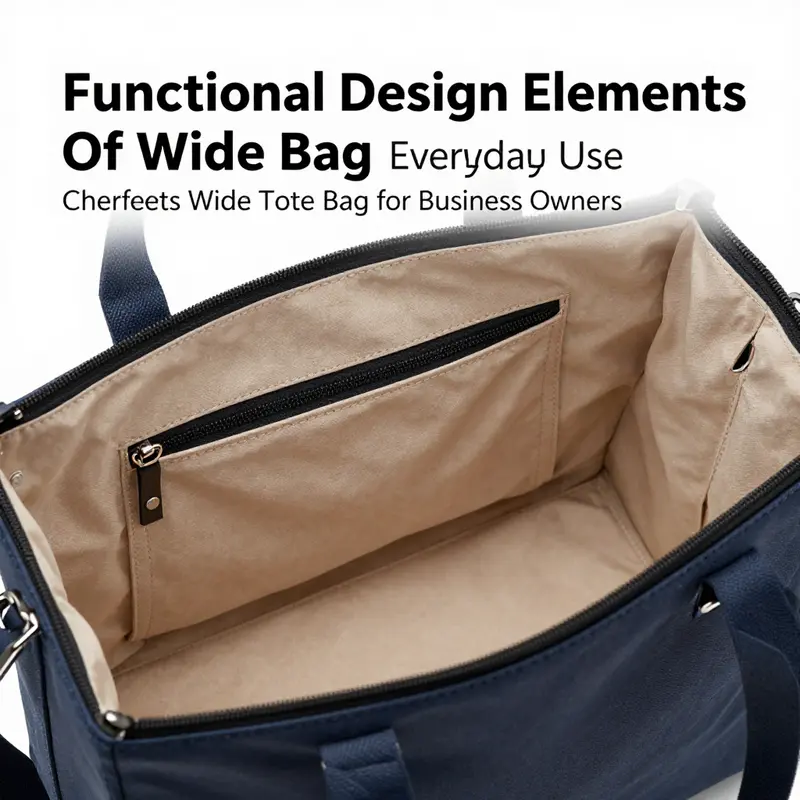
A wide tote bag can feel like a simple utility piece at first glance, a broad pocket you sling over your shoulder as you step into the day. But when you observe everyday life with a closer eye, the true value of a wide tote emerges not from how much space it offers in isolation, but from how intelligently that space is organized, guarded, and adaptable. The idea of functionality here is not a scented slogan or a seasonal trend; it is the quiet math of daily rhythms—the way a bag counts, sorts, and protects our belongings while keeping pace with a shifting schedule. In urban routines and hybrid workdays alike, a well-designed wide tote becomes a partner that supports rather than competes with your activities. It is the sum of several deliberate design choices that, taken together, transform a broad carrier into a highly reliable everyday companion. The conversation about functional design begins with a practical feature that shoppers repeatedly notice when they pick up a bag in a store or scroll through product pages: the top closure. A secure top zip closure does more than keep papers from fluttering out during a hurried commute. It establishes a boundary against the small, daily mishaps that can disrupt a day—a spilled drink, an accidental bump, or the inadvertent squeeze of a crowded elevator. In the tight lanes of city life, where papers tumble loose and a phone is knocked from your grasp, the zip is not just a barrier but a promise. It tells you that what you put inside remains inside, ready when you need it, and that the bag’s interior has a plan for whatever you carry. This sense of containment carries over to the way the bag handles broader, less predictable moments. If a shopper makes an unscripted stop at a market or runs a last-minute errand before an evening meeting, the tote’s closure remains a stable, unchanging element around which other flexible features can operate. This is where the conversation about expandability enters the narrative. Recent design iterations for wide totes often include zippers, snap buttons, or drawstrings that enable the bag to grow when needed and compress when not. The logic is straightforward but powerful: on days when you carry just a laptop and a notebook, the bag sits sleek and light; on busier days that include groceries, gym gear, or a change of outfit, the bag expands to accommodate. The ability to adjust capacity without changing the profile of the bag preserves the wearer’s balance and stance. The visual impression remains calm and uncluttered, even as the interior volume shifts. In practice, a bag with expandable capacity invites the user to think beyond a single use. It supports moments of spontaneity—an extra layer, a water bottle, a tote bag’s worth of library books—without forcing the owner to switch bags or make uncomfortable compromises. This adaptability speaks to a broader truth about daily life: needs are fluid, and the best everyday bag is the one that keeps pace without demanding constant attention or constant reconfiguration. A seamless transition between forms is, in itself, a form of efficiency, a design language that respects time and energy. That efficiency is reinforced by the bag’s carrying options. Wide totes often pair detachable shoulder straps with robust top handles, providing two distinct modes of wear that suit different tasks and contexts. When your hands are full, the strap detaches or repositions, offering a hands-free option that feels natural rather than contrived. When you want a traditional look or a quick grab on the go, the top handles offer a straightforward, tactile experience. The duality of handling options reflects a deeper design principle: flexibility with simplicity. The ideal everyday tote respects a user’s varied routines without forcing them into a single mode of use. The hands that carry the bag are not always free, and the bag should not constrain the hands it rests upon. In a sense, the ergonomics of the bag’s handles map directly onto the ergonomics of daily life. In parallel with how a bag is held, a well-planned interior configuration matters at least as much as the exterior silhouette. Internal organization is the backbone of practical daily use. The best designs imagine the most common tasks—carrying a laptop, storing documents, locating keys, and retrieving a water bottle—before the user does. A padded laptop sleeve, sized to accommodate common devices, protects equipment from bumps and reduces vibration that can travel to the user’s spine with each step. A hidden or discreet pocket for valuables offers a place to tuck away essentials such as a wallet, keys, or a personal device, giving a sense of security even in crowded spaces. A detachable internal bottle holder or a fixed, easily accessible pocket for water or a reusable cup helps support healthy habits and hydration without turning the interior into a cluttered maze. Such compartments do not swallow space; they organize it, turning the interior into a well-coordinated ecosystem where every item has a home. The practical effects of thoughtful organization extend beyond convenience. When items are easy to locate, the wearer spends less time rummaging and more time moving with intention. And as daily life often blends disparate activities—work, errands, social commitments—the ability to shuttle items between compartments, and to grab the essential item at a moment’s notice, becomes a form of indirect productivity. The bag’s material choices further knit functionality into daily life. Durability and maintenance are not afterthoughts but intrinsic to everyday reliability. Machine-washable fabrics provide a straightforward path to cleanliness, which matters when life becomes layered with work, gym sessions, and groceries. A quick wash can bring a bag back to a fresh state, reducing the fear of inevitable spills and muddy adventures. In urban settings, materials that resist water, stains, and abrasion offer practical peace of mind. Textured PVC or neoprene, for example, can provide a protective layer that shields contents from rain, splashes, and light scrapes. These materials often pair with reinforced seams and sturdy hardware to ensure longevity, especially as a bag travels through crowded streets, buses, and stairwells. Yet durability does not require sacrificing aesthetics. Natural leather or leather-like finishes bring a tactile richness and a sense of permanence. Such materials develop a patina with time, revealing a history of daily use that can be deeply satisfying. The trade-off between luxurious textures and practical upkeep is a design conversation worth having. If longevity is the aim, the bag’s seams, zippers, and closures must be engineered to endure repetitive stress. A high-quality zipper should glide smoothly after months of daily use; seams should resist fraying; and straps should remain securely attached even when the bag is loaded to its expanded capacity. These mechanical details, though often invisible to the average observer, are the quiet engines of reliability. The interior’s visibility is another subtle yet powerful factor. A light-colored lining or a bright interior can reduce the time spent digging for items in low-light conditions or during nighttime commutes. The simple act of locating a charger or a passport becomes less frictionful when the bag’s interior provides contrast and visual cues. This practical consideration aligns with a broader psychological benefit: reduced cognitive load. When a person does not have to fixate on where items live inside the bag, attention is freed for the tasks at hand—meeting deadlines, negotiating a schedule, or coordinating transit. In some designs, this emphasis on visibility is complemented by modular components. Removable pouches, zippered compartments, and adjustable dividers allow users to customize the space for specific days or tasks. The modular approach respects the uniqueness of daily life, recognizing that no two days are the same and that a single bag should accommodate a spectrum of routines without becoming a burden. The interplay between materiality, structure, and flexibility culminates in a wider design philosophy: the bag should feel poised between a sturdy work tool and a lightweight travel companion. The goal is to avoid the dichotomy between form and function; rather, the best wide tote boots both durability and ease, weight-bearing capacity and graceful handling. The final test, of course, comes from real-world use. A bag may tick all the boxes in a spec sheet, yet it must still pass the wear test—whether you are navigating a crowded subway car, rushing through a rain-soaked sidewalk, or carrying home a week’s worth of groceries combined with a laptop and a lunch. The value of a thoughtful design, then, lies in the quiet, unglamorous moments when the bag simply works as intended. That is when the functional elements reveal their true worth: how they hold up, how they adapt, and how they blend seamlessly into the fabric of daily life. In this sense, the wide tote bag becomes more than a container; it becomes a rehearsal space for routine. It invites you to consider your own rituals—where you sit, how you move, what you carry from morning to night—and then to choose a bag that aligns with those rituals rather than forcing you to alter them. The guidance embedded in its design is not a rulebook but a map of usability, a mirror of how much attention a product designer has paid to the cadence of everyday living. When the bag’s features align with your personal rhythm—when the closure is secure and quick, when capacity adjusts without compromising the silhouette, when the interior is organized without feeling rigid, and when the materials endure in all weather—you don’t merely own a bag. You own a dependable partner for the hours between waking and resting, a thoughtful tool that reduces friction in a day that already demands enough. This is the essence of functional design for a wide tote bag: not just to carry, but to support. It is an approach that respects the complexities of daily life and honors the human desire for order, efficiency, and style. The chapter of invention here is not about inventing a new gadget; it is about listening to the daily heartbeat of users and translating that rhythm into a bag that anticipates needs, adapts gracefully, and remains consistently reliable over time. For those who seek balance between practicality and elegance, the wide tote bag framed by these design principles offers a clear path. It invites exploration of how one’s day unfolds and how the bag can harmonize with it, rather than dictate a fixed pattern. In the end, choosing a wide tote that embodies these functional elements is less about selecting a trend and more about selecting a daily partner that helps you move through the world with ease and intention. When you open the bag and see the laptop sleeve, the hidden pocket, the water bottle holder, the sturdy zipper, and the well-placed compartments, you understand that design has found an expressive compromise: enough space to breathe, enough structure to guide, and enough resilience to endure the layered realities of everyday life. The result is a practical, stylish, durable, and flexible companion—a true wide tote designed for living well, one day at a time. To explore a curated perspective on how zippers and organization shape everyday tote experiences, you can learn more about tote bags with zippers. tote bags with zippers.
External reference for extended context: https://www.julyluggage.com/products/large-everyday-tote-bag
Durability Meets Design: The Material Story Behind Wide Tote Bags
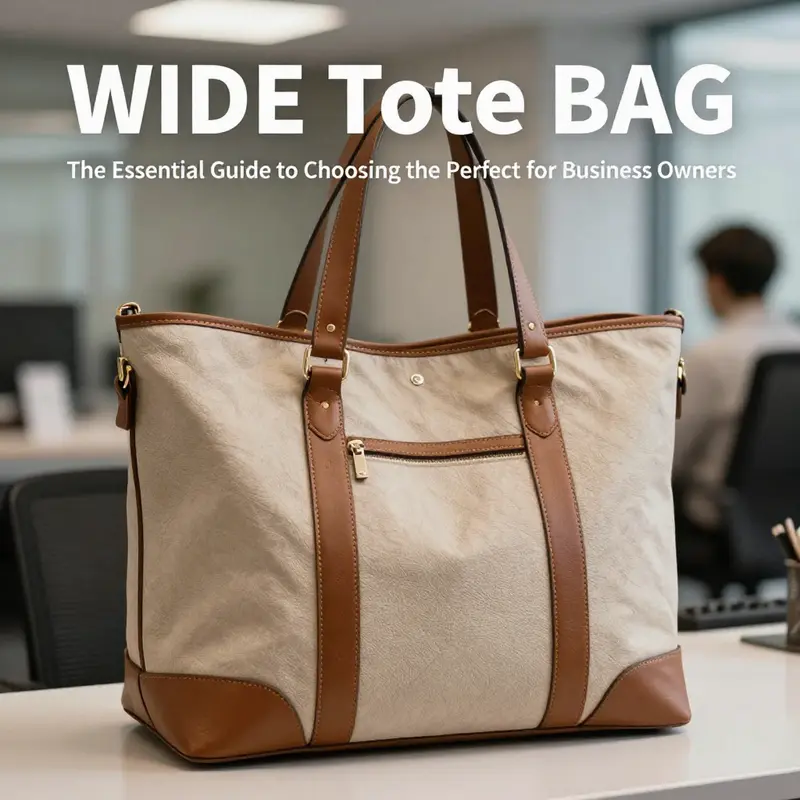
Choosing a wide tote bag that is built to last and still feel stylish is a balance between how it is made and how you intend to use it. The material you select does more than set the bag’s mood; it governs how it behaves under daily stress, how it ages, and how it pairs with the rhythms of your life. In a world where a tote is asked to carry either documents and devices or clothing for the gym and a lunch break, the fabric and its construction become the silent workhorses behind every confident everyday move. When we talk about durability in this context, we are really talking about a chain of decisions: the fiber, the weave, the finish, the weight, and the craft that binds it all together. Each link matters because a wide tote bag is expected to perform across a spectrum of conditions—from crowded commutes to weekend getaways—without fluttering into sameness or losing its edge as a fashion element. The material you choose will color not only how much you can carry but how you feel while you carry it, and how long you will enjoy that feeling before you need a replacement or a refresh.
One of the most enduring truths about wide tote bags is that their size is only half the equation. A bag can be impressively capacious yet fail under weight because the fabric stretches, the seams pucker, or the surface wears thin where it rubs against other objects. The sensible approach starts with material choice, then moves to how the bag is crafted to support that choice. In practical terms, this means considering the heft of the material, its resistance to the elements, and its capacity to maintain a clean, confident silhouette even after daily use. For people who rely on their tote as a workhorse—carrying folders, laptops, chargers, and perhaps a lunch—durability must extend beyond raw strength. It must include the ability to recover from a heavy day, retain shape after a partial rain shower, and resist the little scuffs and impressions that accumulate with life in motion.
Cotton canvas remains a timeless baseline for durability and practicality. When produced in a heavyweight form—think 12-ounce or thicker—and woven tightly, canvas offers a robust combination of resilience and breathability. It holds up under repeated loading and handles abrasion with a steady, almost quiet, fortitude. The appeal of canvas lies not only in its toughness but in its patina: it ages with character, gaining warmth and a slightly softer hand as years pass. The look can stay clean and professional enough for a work setting, yet still carry an easygoing vibe that pairs well with casual outfits on weekends. In terms of care, canvas benefits from straightforward maintenance—airing out, spot cleaning, and occasional gentle brushing to lift surface dirt. While it may not have the water resistance of some other materials, a canvas tote can be treated with a light water-repellent finish that preserves its breathability and life. The result is a bag that remains faithful to its purpose while quietly developing its own history.
Waxed canvas represents a natural evolution from plain canvas, offering enhanced weather resistance without sacrificing the familiar canvas feel. The waxed finish creates a protective layer on the surface, making the fabric repel light rain and splashes more effectively. Over time, waxed canvas develops a rugged patina—softened edges, deeper color, and a slightly slicker surface in places—adding visual depth that many designers and wearers find appealing. Maintenance shifts slightly with this material. The patina requires occasional maintenance to keep the wax layer even and effective, which means a light re-waxing every season or so, depending on climate and usage. The benefit is a tote that looks purposeful in wet weather and gains character from exposure to sun and rain alike. Waxed canvas can be a practical bridge between the casual and the professional, maintaining a crisp silhouette when new and softening gracefully as it ages.
Recycled ballistic nylon offers a modern, performance-oriented path for durability with a sustainability story. Originally developed for demanding environments, ballistic nylon resists abrasions, tears, and moisture far more readily than many other fabrics. In a wide tote, this translates into a bag that can shoulder heavier loads with less worry about the surface showing wear. It remains relatively light, which helps keep daily carry weights manageable, and it is remarkably easy to clean. For urban commuters and travelers, recycled ballistic nylon provides a dependable backbone that supports frequent handling—stowing in overhead compartments, sliding under office desks, and bouncing around in transit. The texture and sheen of this material tend to convey a contemporary, technical vibe, which can be surprisingly compatible with both modern office attire and casual weekend wear.
High-denier polyester, particularly 600D and above, represents another strong option for durability and practicality. Polyester of this density resists UV damage, limit-stretching, and general wear from rough handling. It tends to be highly resistant to abrasion and is often easier to clean than natural fibers. When the bag’s surface is exposed to sunlight over long periods, a higher-denier fabric holds its color and shape better, maintaining a consistent look as the bag endures daily cycles of loading and unloading. In addition to reliability, many high-denier polyesters are designed with sustainability in mind, incorporating post-consumer waste and responsible production processes. This material can offer a clean, utilitarian aesthetic that suits a wide range of outfits while still performing under pressure.
Full-grain leather remains the gold standard for those prioritizing elegance and long-term resilience. Leather that has not been coated or bonded delivers a natural resistance to wear and a depth of patina that tells a story with each passing season. Full-grain leather gains beauty as it ages, developing sheen and a softening hand that feels like a personal partnership between bag and wearer. Yet, leather demands care and awareness. It is heavier, which can affect overall tote weight, and it requires periodic conditioning to sustain its suppleness and water resistance. The surface of quality leather resists moisture, but sustained exposure to water should be managed with appropriate drying and conditioning to prevent stiffness or cracking. The payoff is a timeless, refined accessory that can accompany formal wear and daily office routines with equal ease. It is worth noting that, within this category, there is a distinction between full-grain leather and bonded or faux leathers: the former ages with grace, while the latter often peels or cracks under daily stress, leading to a shorter lifespan. A leather tote, if cared for thoughtfully, becomes not only a tool but a partner that appreciates the owner’s routine.
The practical takeaway is that there is no single best material for every situation. The best choice depends on how you plan to use the tote most days, the climate you encounter, and how much care you want to invest in maintenance. For a commuter who faces rain and crowded trains, a waxed canvas or recycled ballistic nylon tote offers a pragmatic balance of weather resistance and rugged durability. For someone who values a professional look with long-term elegance and is prepared to invest time in care, full-grain leather can be a compelling option. If the priority is lightweight duty with straightforward upkeep and a modern aesthetic, high-denier polyester provides a dependable solution that remains structurally sound under repeated use. The underlying thread across these options is not simply strength but the way the fabric’s character aligns with the user’s daily rhythm, and how that alignment ages into a personal style statement over time.
From a functional standpoint, the material must also support a well-considered interior design. A tote that carries heavy documents or a laptop benefits from a structure that resists sagging at the base and walls. A strong base made from the same material or reinforced corners can preserve shape and prevent the bag from compressing under weight. Inside, the best designs pair the material choice with organizers: shelves, dividers, zipped pockets, and a padded laptop sleeve. These components matter as much as the outer fabric because they maintain order, protect fragile items, and help you locate what you need without rummaging through a cavernous void. When the bag has internal organization, you are less likely to overstuff it in ways that stress seams or stretch fabric.
In terms of aesthetics, the material sets the bag’s personality. A piece made from heavyweight cotton or waxed canvas tends to project a grounded, approachable vibe, suitable for both office corridors and café corners. Recycled ballistic nylon, with its technical texture, conveys urban resilience and modern practicality, while high-denier polyester offers a clean, versatile canvas that works across seasons. Leather, especially full-grain, exudes sophistication and a sense of lasting value, becoming more distinctive as its surface develops. The visual impact of the material is inseparable from the bag’s function: a durable fabric that wears well also supports a silhouette that remains confident and intact amid daily usage. This alignment between function and form helps explain why many people gravitate toward wide tote bags as a core part of their wardrobe, not just a functional tool.
Maintenance habits also influence long-term durability. Cotton canvas benefits from airing and light cleaning; waxed canvas benefits from periodic re-waxing to maintain surface water resistance and uniform patina. Recycled ballistic nylon and high-denier polyester respond well to routine wipe-downs and occasional deeper cleaning, with the caveat that some finishes may be sensitive to harsh detergents. Leather requires conditioning to keep the surface supple and to protect against moisture. The best practice is to think in seasons: inspect the bag’s seams and corners after several months, check for loose threads or small tears, and address them before they become larger concerns. A well-maintained tote offers a longer life, preserving both function and style as part of a daily routine rather than just a seasonal purchase.
Aesthetics, durability, and daily practicality come together most clearly when a bag supports your existing habits. For instance, if your workdays involve transporting a laptop, notebooks, and a water bottle, a material that combines a sturdy feel with easy maintenance will reduce the friction of daily use. A canvas or waxed canvas bag can offer a generous interior with a soft, tactile surface; a reinforced base and sturdy seams prevent sagging; and the patina that develops with time adds a personal touch. If your schedule includes frequent travel or irregular commutes, a nylon option may be lighter, easier to wipe clean, and more resistant to moisture, while still providing structure. Leather, with its natural texture and aging, can be ideal for those who want a single bag that complements formal attire and informal ensembles alike, growing more distinctive rather than worn down by the day’s routine.
No matter the selection, a thoughtful approach to materials is inseparable from the bag’s ability to function as a reliable everyday partner. The timeless appeal of a wide tote lies in its capacity to adapt: it can be elegantly understated in a leather finish for professional settings, or bold in a waxed canvas that looks ready for travel or weekend projects. And because wide totes are typically chosen for their capacity, the material must also support a generous interior without sacrificing structural integrity. That means considering how the fabric interacts with the bag’s interior architecture: are there dedicated pockets, are the seams reinforced at high-stress points, is the zipper or closure system designed to hold up under repeated opening and closing without catching on fabric? These practical concerns sit alongside aesthetics in shaping a bag that remains a trusted ally over years, not just a few seasons.
As you compare options, one more facet matters: value. Durability and style are not purely about the strongest fabric or the most current look. They are about finding a harmony between material, weight, maintenance requirements, and how the bag supports your day-to-day life. You can test a bag’s credibility in ordinary moments: does it maintain its silhouette when fully loaded? Do the seams feel secure at the corners where load concentrates? Does the surface retain its color and texture after exposure to sun and rain? A tactile test can be surprisingly revealing. Lightly running a finger over the fabric will often reveal whether the surface is genuinely strong or merely coated with a flimsy finish. In the end, the most enduring wide tote bags combine premium materials—whether waxed canvas, full-grain leather, or recycled ballistic nylon—with thoughtful craftsmanship, including double stitching and reinforced corners. These are not just words on a spec sheet; they are the cues that tell you the bag will be a reliable companion, season after season.
If you want to explore a concrete example tied to practical application, consider how a tote with a dedicated laptop sleeve would fit your daily routine. A bag that offers a protective compartment for a laptop or tablet helps protect electronics from movement and impact while keeping them separate from other items. This kind of feature is particularly advantageous when the interior is composed of a durable material that resists snagging and abrasion. A tote bag with a computer sleeve can be a good reference point when you’re evaluating interior layouts and how your choice of fabric interacts with storage design. For a broader sense of how such features appear in real-world products, you can explore a sample at this link: tote bag with a computer sleeve.
In closing, the decision about material for a wide tote bag should be anchored in your lifestyle and priorities. If weather and rugged daily use are constants, waxed canvas or recycled ballistic nylon offer practical advantages without demanding onerous upkeep. If you prize elegance and a sense of time passing with you, full-grain leather provides a long-term companion that gains character. If you want a balance of practicality, lightness, and ease of maintenance, high-denier polyester can be a versatile choice. And whatever your pick, durability will be amplified by solid construction—double stitching, reinforced corners, and a layout that respects the weight you carry. The wide tote bag, when built with the right material and the right craft, becomes more than a container. It becomes a trusted partner that quietly supports your daily life, helping you move through your day with confidence, organization, and a touch of personal style. The material story is not just about material itself; it is about the way you and your bag define each new day together.
External resource: https://www.patagonia.com/shop/eco-friendly-reusable-tote-bags.html
Wearable Architecture: How Wide Tote Bags Shape Modern Living

Wide tote bags have migrated from simple carriers to central elements of how people move through daily life. They are not just containers; they are instruments of organization, identity, and efficiency. In spaces where work and leisure blur into one continuous itinerary, a bag that is roomy enough to accommodate a laptop but gentle enough to carry a sandwich, a water bottle, or a gym outfit becomes a silent partner in routine. The evolution of the wide tote reflects a broader shift toward adaptable living, where people juggle remote work, in-person collaboration, errands, and weekend getaways without swapping bags like outfits. The result is a form that looks unassuming yet behaves with the precision of a well designed tool, a piece of wearable architecture that supports rather than dictates behavior.
Part of the appeal lies in the bag’s generous silhouette. A wide footprint offers interior volume that scales with the demands of modern life. The oversight is not merely about how much a bag can hold, but how its dimensions work in concert with a person’s movements. The height, width, and depth of a tote establish the rhythm of daily tasks. A bag with sufficient depth, even if its exterior remains deceptively flat, can transform a commute by removing the need to juggle between different bags for documents, a laptop, gym gear, or groceries. This is not a gimmick; it is a practical upgrade that translates into real time saved and less mental clutter when moving through offices, coffee shops, and metro stations.
Designers have embraced the concept of wearable architecture by enforcing structure that stays upright, even when the bag is fully loaded. The stand up tote, a standout in modern bag design, keeps the bottom flat and rigid. This feature does more than preserve an elegant line when the bag sits on a desk; it enhances interior organization. With a stable base, items can be cued into specific compartments without tipping over into a jumble. Large compartments can accept a 15 inch laptop with room to spare for notebooks, chargers, and a planner, while smaller pockets—zippered organizers, pen sleeves, and mesh dividers—anchor everyday items such as keys, lip balm, and a phone. The practical impact is meaningful: fewer rummage cycles, quicker access to essential tools, and a sense of control that translates to reduced stress during a hectic day. This architectural logic makes the tote feel less like a fashion statement and more like a dependable workspace extension.
From a material perspective, the appeal of wide totes rests on a careful balance between durability and tactility. Premium leathers offer a sense of permanence and a tactile luxury that improves with time, acquiring a patina that tells a personal story. Yet durability does not hinge on leather alone. Recycled textiles and canvas blends bring sustainability into the equation without sacrificing structure. Water resistance and easy maintenance become practical selling points for urban dwellers who face variable weather and a packed schedule. The material choices shape an experience as well: a bag in a fluid, yet robust fabric can shrug off light showers while maintaining a crisp silhouette; a buttery leather, thoughtfully finished, offers a refined, enduring presence that pairs with both tailored workwear and casual weekend looks. In this sense, wide totes function as a wardrobe multiplier, capable of playing host to different outfits and moods while offering the same core benefits of capacity and organization.
The interior architecture deserves equal attention. Thoughtful internal layouts—labeled compartments, a padded laptop sleeve, zip pockets, and dedicated sleeves for tablets or documents—transform a large interior into a navigable space. The goal is not to overfill the bag but to support efficient packing. When items have allocated homes, it becomes easier to locate a charger or a water bottle without compromising space for larger essentials. A well designed interior helps protect valuable devices from impact while keeping cords and adapters tidy. The presence of a standalone laptop compartment can be a deciding factor for many commuters who want quick access to a device during screening at security or while moving between meetings. The overall effect is a sense of order that carries into the wearer’s schedule: a ritual of packing becomes a ritual of leaving the house with confidence, knowing that everything needed for the day is within reach.
Beyond function, wide tote bags articulate identity. Their size and silhouette make a statement about the wearer’s approach to life—efficient, prepared, and aesthetically considered. In a culture that prizes both practicality and taste, the tote becomes a portable mirror of values. Neutral palettes such as black, tan, navy, and taupe enable effortless coordination with a broad range of outfits, reinforcing the bag’s role as a daily workhorse rather than a seasonal highlight. Yet even within a restrained color story, the design can express personality through texture, hardware, and the way a bag holds its shape when carried. A bag that stands tall on a desk or sticks out of an overhead bin in a subtle, architectural way communicates a quiet confidence about its owner’s routines and priorities. In this regard, the wide tote becomes more than a utility; it becomes a visual representation of a lifestyle that values adaptability, responsibility, and a measured sense of elegance.
The cultural dimension of wide totes extends into sustainability and ethical consumption. Durable, reusable bags appeal to a social moment that is increasingly mindful of waste and resource use. Materials that are resilient and repairable align with a philosophy of longevity rather than disposable consumption. A bag built to endure daily use, with robust stitching and reinforced corners, is not merely a purchase; it is a commitment to reducing single use waste and embracing a circular approach to fashion. Texture and finish can tell a story about material ethics as well. Recycled canvas or organic cotton invites a tactile awareness of where materials come from and how they perform in the real world, while natural leathers, if chosen responsibly, offer a sense of heritage and timelessness that resists the whims of fast fashion. In a climate where the lifecycle of a product matters as much as its initial appearance, the wide tote stands as a model of durable design that ships with a smaller ecological footprint over time.
The market response to these developments has reinforced the bag’s evolving role. The rise of stand up totes and architecturally minded silhouettes reflects a consumer base that values flexibility and resilience. Demand is driven by urban professionals who shuffle between offices, cafés, coworking spaces, and weekend outings, all in a single day. The bag’s ability to anchor a lifestyle rather than simply to carry belongings is what gives it cultural resonance. In parallel, designers and ateliers have embraced the task of crafting bags that feel both exclusive and accessible. They explore the tension between refined materials and practical features, ensuring that a wide tote can be both a staple for daily use and a statement piece in more formal contexts. This balance—between form and function, aesthetics and practicality—underpins the bag’s enduring appeal and its capacity to integrate into diverse wardrobes and routines.
As a cultural artifact, the wide tote also embodies a broader philosophy of consumerism that prizes longevity, versatility, and responsibility. Consumers are increasingly drawn to pieces that withstand trends while supporting sustainable practices. A versatile tote can anchor a capsule wardrobe, allowing individuals to minimize the number of bags they own without sacrificing versatility. The design emphasis on neutral colorways and modular compartments makes the tote adaptable across seasons and events, from business meetings to weekend markets, from a gallery opening to a gym session. The result is a bag that does not demand a separate behavioral script but adapts to the wearer’s life, an essential trait in an era where daily rhythms are dynamic and often unpredictable.
This holistic approach to design—pairing stand up structure with high quality materials and thoughtful interiors—has implications beyond individual lifestyle choices. It informs how people perceive value, how brands communicate with their customers, and how urban living is imagined in contemporary fashion culture. When a bag is robust enough to survive a long day of movement and refined enough to serve as a personal link to style, it becomes a trusted companion rather than a seasonal accessory. The wearer’s confidence grows as the bag proves its worth: it can carry essential work documents, a laptop, and daily necessities; it can also accommodate a change of clothes for a post work exercise class or an informal dinner with friends. The wide tote, in this sense, becomes a practical partner in negotiating the complexities of modern life.
For readers looking to explore how these bags fit into evolving fashion discourse, the current trend landscape provides useful context. The tote bag scene has not only kept pace with technology and urban mobility but has become a touchstone for conversations about sustainability, material ethics, and the aesthetics of quiet confidence. If you want to see how the broader discussion around tote bags is unfolding, you can explore ongoing conversations about trends in tote bags trending at the following link: tote bags trending. This resource captures how designers, retailers, and consumers articulate a shared language about form, function, and value in a world where the line between work gear and personal gear continues to blur.
Ultimately, the wide tote bag is more than a product; it is an ongoing solution to a living, moving life. It supports the way people navigate the city, the way they balance professional obligations with personal time, and the way they project a coherent identity while remaining flexible enough to adapt to new tasks and new environments. The magic lies in its dual capacity to be both sturdy and refined, to offer generous space without sacrificing elegance, and to remain comfortable regardless of how much it carries. As cities evolve and schedules grow more complex, the wide tote stands ready to be the anchor of daily routine, a vessel of organization in an age of constant motion. This is not a fashion trend that comes and goes; it is a design philosophy that quietly shapes how people live, work, and move through the world.
External reference: Expert Tips For Choosing The Ideal Tote Bag Size To Fit Your Lifestyle — https://www.luxatote.com/blog/ideal-tote-bag-size-lifestyle
Final thoughts
Selecting the right wide tote bag is more than just choosing a stylish accessory; it’s about enhancing the efficiency and professionalism of your daily business activities. By focusing on dimensions and capacities, understanding functional design, and opting for durable, stylish materials, business owners can find a tote that not only accommodates their essentials but also complements their professional image. As the modern lifestyle continues to evolve, the wide tote bag stands out as a versatile companion, ready to meet the demands of any business environment. By making a thoughtful selection, you can ensure that your tote bag becomes an indispensable part of your work toolkit.