
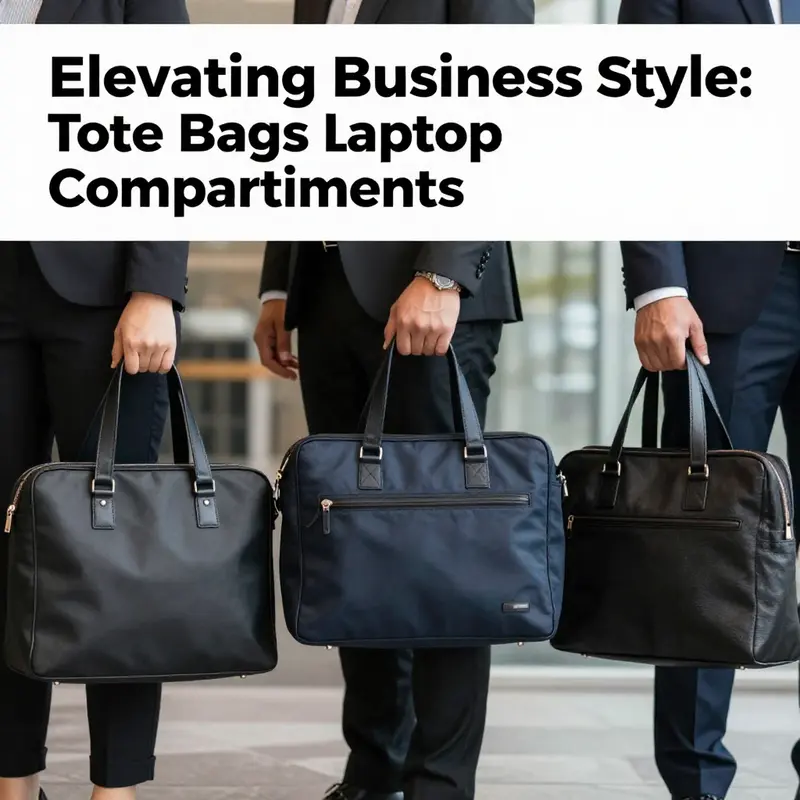
Tote bags equipped with laptop compartments have surged in popularity among business owners who prioritize both style and utility. As professionals seek to project a polished image while ensuring they can carry essential devices, these versatile bags have filled a significant gap in the market. In this article, we will explore how the versatility of tote bags seamlessly integrates functionality and aesthetic appeal, compare their safety features against traditional laptop bags and backpacks, assess their ergonomic advantages for on-the-go comfort, and analyze current market trends and consumer preferences. Each chapter provides insights to help you make informed choices in curating a professional image that meets modern demands.
Carrying Confidence: The Subtle Power of Laptop-Compartment Totes for Everyday Mobility and Style
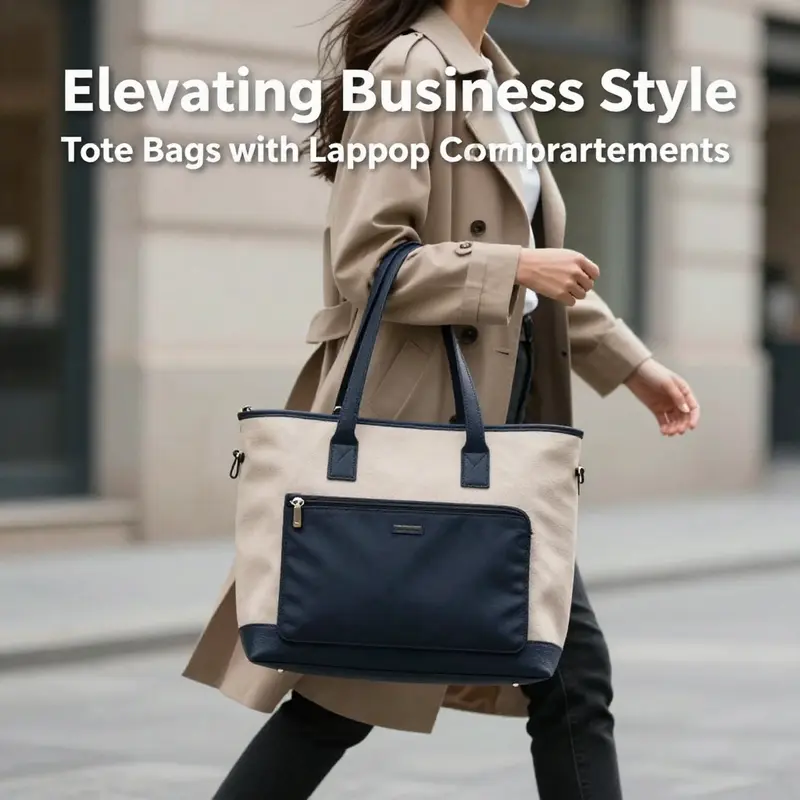
A tote bag with a laptop compartment occupies a curious niche in modern carried ecosystems. It sits between the pristine efficiency of a dedicated laptop case and the casual, unconstrained appeal of a daily tote. Its appeal lies not in converting one object into another, but in the way it blends two often competing values: elegance and practicality. For professionals who move through a cityscape of meetings, cafés, and quick errands, this hybrid offers a seemingly simple proposition: access, appearance, and enough protection to keep a device ready for the next appointment. Yet the calculus is nuanced. The same design that makes a tote easy to wield in a crowded lobby or on a train can limit the level of protection a device receives when weights and volumes pile up. The tension between accessibility and security is the chapter’s thread, weaving through materials, forms, and everyday rituals that define how these bags actually perform in real life.
The beauty of tote bags with laptop compartments is their ability to merge form and function without forcing a user to choose one over the other. The exterior often adheres to the minimalist, almost timeless silhouette of a classic tote, sometimes with a structured frame or reinforced sides that imply steadiness and presence. Inside, the padded laptop sleeve provides a crucial, if imperfect, shield. Padding is designed to absorb minor shocks and to reduce abrasion from other items pressed against the device. In practice, this protected pocket is typically integrated into a larger, open interior that remains accessible and easy to organize. The effect is a bag that invites you to reach in and grab your laptop or a notebook without undo risk of fumbling or time wasted digging through compartments. It’s the kind of design that supports a brisk, urban rhythm: you slide a device out for a meeting, slide it back in, and move on to the next task without losing momentum.
But this openness, while convenient, is not without trade-offs. The very feature that makes these totes appealing—their generous, unstructured interior and the absence of rigid internal dividers—can leave a laptop more vulnerable to pressure from heavier items or from accidental drops onto hard surfaces. The 2026 comparative analyses highlight this reality: the built-in sleeve is often constrained by the bag’s overall architecture. To preserve a slim, stylish profile, padding tends to be thinner than what a purpose-built laptop bag would provide, and there is rarely the kind of internal reinforcement you’d find in a purpose-made case or a backpack’s chassis. When a tote is crowded, the weight of objects such as chargers, notebooks, or a water bottle can press against the laptop, compressing the sleeve and, in some situations, diminishing the protective buffer. It’s not a universal flaw, but it is a meaningful constraint that shapes how users think about risk and habit when they choose this kind of bag.
The same design that limits protection also opens up a broader portal of use. These totes are not merely for carrying a laptop; they are a flexible daily carry solution. Many models incorporate additional pockets and organizational details—small zippered compartments for keys and coins, slim slots for pens, tablet sleeves, or even a discreet pocket for a cardholder. A well-planned arrangement can support a clean, efficient workflow: you know where your charger sits, where your stylus rests, and where you keep a spare notebook. The important point is that the interior remains accessible, which reduces the cognitive load of daily routines. You can adapt on the fly: a quick trip to a coffee shop for a working session, a last-minute dash to a meeting across town, or a lunch with a colleague that unexpectedly becomes a productive planning session. The tote becomes a mobile workstation that does not press you into a single role—office worker, student, or casual professional—but supports all aspects of a day that blends multiple spaces and moments.
Material science has moved this concept forward in meaningful ways. Modern tote bags employ water-resistant fabrics, durable canvases, and reinforced stitching that extend the bag’s life while maintaining a refined exterior. The emphasis on sustainable and stylish production methods is no longer a footnote; it is a core selling point for many designers and consumers who want versatility without compromising their environmental standards. A tote that can shrug off a sudden drizzle while remaining elegant at a café table is a tote that earns trust in the longer arc of daily use. The balance between aesthetics and resilience becomes a narrative about durability that is tactile and visible in the fabric’s texture, the stitching’s evenness, and the hardware’s heft. The result is not merely a bag; it is a promise that your everyday gear can travel with you through a city’s changing moods without sacrificing style.
Ergonomics plays a decisive role in how these bags perform in real-life scenarios. Backpacks have long been championed for weight distribution, spreading load across both shoulders and the spine. They reduce strain when you carry heavier loads for longer periods. Totes, especially when loaded with a laptop and accessories, can pull to one side, inviting an imbalance that becomes noticeable after hours of wandering through transit hubs. The practical response is a thoughtful combination of carry options and structure: a tote with a long, adjustable strap that can convert into a crossbody state, a degree of stiffness that keeps the body’s center of gravity aligned, and a trim that prevents the bag from collapsing inward when you set it down. A well-designed tote can thus emulate the ergonomics of a lighter backpack by distributing load more evenly than a shoulder bag that relies on a single strap. Yet even with these features, the comparative advantage of a backpack in terms of comfort remains clear for those who regularly move across long distances with substantial equipment. This is not a verdict against totes; it is a recognition that people carry differently and that design must accommodate those differences rather than pretend a single solution fits all.
The everyday life of a tote bag with a laptop compartment is a study in mobility. For those navigating an urban tapestry—meetings in glass-walled rooms, working sessions in bustling cafés, social events that require still looking polished—the bag must awkwardly juggle two identities: it must be ready for serious work but not so stern that it erases personal style. The tote’s exterior often borrows the refined lines of a professional bag, while the interior carries the practical ethos of a day bag. This dual identity is particularly appealing to people who wish to maintain a professional demeanor without resorting to a boxy, overtly utilitarian bag. The open top or wide mouth that many totes feature makes access instantaneous, a detail valued by someone who must switch between digital notes and printed documents with frequent tempo changes. In this sense, the tote is less about the singular need to protect a device and more about enabling a workflow—keeping notebooks, tablets, chargers, and even a water bottle within easy reach while preserving a clean, presentable silhouette.
Part of the evolving appeal lies in the way designers have integrated protective features without sacrificing style. The laptop sleeve remains a focal point, a padded pocket that signals a boundary between fragile electronics and everyday clutter. The padding, while not as robust as a dedicated case, is strategically placed to cushion the device against minor bumps. Some bags also feature contrast stitching or reinforced corners that signal durability and add a touch of visual interest. In addition, the exterior construction often includes water resistance and a level of structure that helps the bag hold its shape even when it isn’t full. This helps the user avoid the accidental crush of other items against the laptop, a common worry when a tote seems to invite careless packing. When these design elements work in harmony, the bag becomes a capable, stylish partner for daily life rather than just a suspendable carrier.
In practice, the choice between a tote with a laptop compartment and a more dedicated bag is a matter of context and risk tolerance. If you travel frequently, carry high-value devices, or work in environments where electronics face greater exposure to impact or moisture, investing in a purpose-built laptop bag or a backpack with reinforced padding may provide stronger protection. On the other hand, if your routine emphasizes flexibility, quick transitions, and a polished appearance that suits meetings and social settings alike, a well-made tote offers a compelling blend of style and utility. The goal is not to eliminate compromise but to acknowledge it and optimize around it. A tote’s strength lies in its adaptability: it can be slung over the shoulder for a quick dash to a meeting, carried by hand for a confident, formal appearance, or worn crossbody for hands-free multitasking. For those exploring this balance, a model that exemplifies the blend—a tote bag with a computer sleeve—is worth examining. A model such as the tote bag with computer sleeve illustrates this approach, presenting a refined exterior while preserving a dedicated space for a laptop inside.
Careful selection matters, too. The value of a tote’s versatility is amplified when the bag remains resilient across seasons, spills, and daily use. Regular cleaning, proper drying, and occasional conditioning of leather accents or reinforced handles help maintain the bag’s shape and touch. When the fabric resists water and stains, a tote holds its shape and its sense of purpose even after rough commutes. The interior organization, often a mix of main compartment space and smaller pockets, should be tested during a first week of use. If you find that your laptop sits too close to other devices or that the sleeve entry becomes awkward after adding a water bottle or a notebook, you may want to reconfigure your packing approach or choose a different tote with more internal structure. In effect, the tote becomes less a static object and more a dynamic partner that adapts to how you live and work every day.
Ultimately, the decision to use a tote bag with a laptop compartment hinges on a blend of values: speed, aesthetics, practicality, and protection. For many, style is not mere decoration but a signal of professional identity and personal taste. The tote delivers that signal without the stiffness of a more rigid briefcase, while its practical elements support a mobile, on-the-go routine. Yet the discussion about protection should not be avoided. If your day includes frequent travel or a high likelihood of the bag being set on unforgiving ground or crowded floors, you might prioritize a more rugged solution or pair the tote with a protective sleeve that has extra shock absorption. For others, the tote’s openness and accessibility are precisely what makes it valuable. The laptop remains secure enough for daily commutes, and the bag’s other pockets and features offer enough organization to streamline the loading and unloading rhythm that characterizes modern work and study life. This nuanced understanding of what the bag can and cannot do helps users align their choice with their actual needs, rather than with a marketing promise.
The broader conversation about these bags connects to evolving workwear and lifestyle trends. The rise of hybrid work, urban mobility, and a growing interest in sustainable, adaptable accessories has propelled tote bags with laptop compartments from niche options to everyday essentials for many. They reflect a design philosophy that refuses to sacrifice personality for performance and refuses to sacrifice performance for personality. It is possible to envision a future where the tote becomes even more capable, not by clinging to a single maxed-out function but by expanding its ecosystem: better protective materials without adding bulk, smarter pockets that anticipate device sizes, and modular components that let a user tailor the bag to a single day’s needs. The conversation about these bags is thus not only about how you carry your laptop; it is about how you carry your life through a city, a campus, or a corridor of ideas. The best-tuned totes will remain those that understand balance—between ease of access and protection, between style and resilience, between one-strap convenience and two-strap stability, between the social moment of a polished appearance and the private moment of a laptop’s inner calm.
For readers who want to connect this discussion to concrete experiences, consider reflecting on how your own routines intersect with carrying gear. Do you often move quickly between rooms, or do you spend more time working in a few fixed locations? How important is it that your bag looks professional in a café or during a client meeting? How much protection do you need for a high-value device when you travel by bus, rail, or air? Answering these questions honestly will illuminate whether a tote bag with a laptop compartment remains the best fit or whether a more protective, structured option is warranted. The beauty of this category is that you do not have to surrender style to function; rather, you can search for a bag that respects both values, one that carries not just a device but a sense of poise and ease. This is the core advantage the hybrid tote offers: it translates the language of professional life into an accessory that can adapt to the moment, not one that compels the moment to fit its design constraints.
External resource: For a broader perspective on how these design choices align with contemporary workwear trends, see The New York Times guide on modern workwear trends: https://www.nytimes.com/2026/01/24/style/tote-bag-laptop-compartment-design-trends.html
null
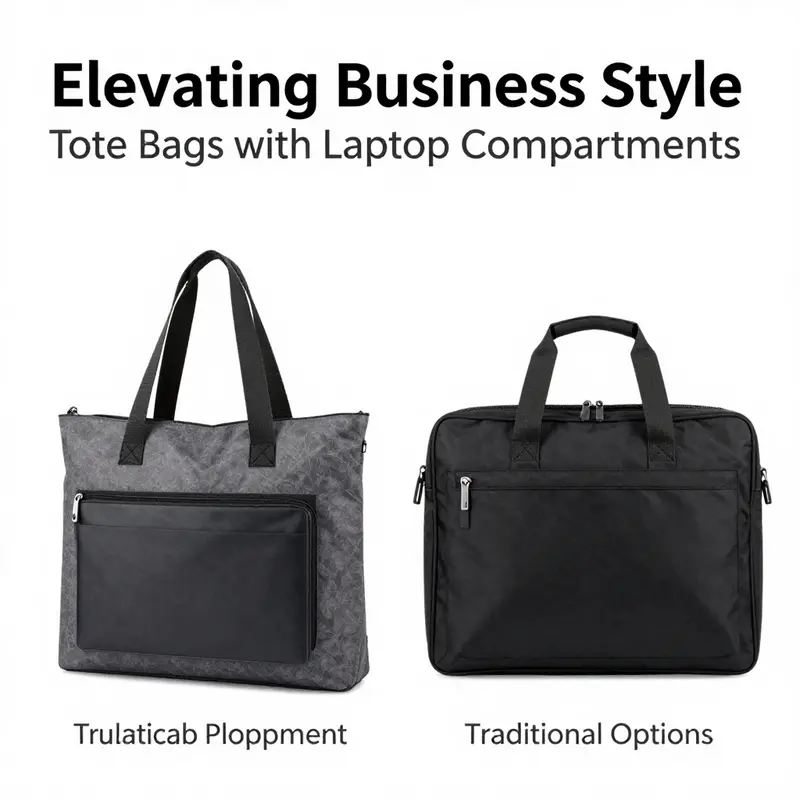
null
Carrying Comfort on the Move: Ergonomics of Tote Bags with Laptop Compartments

The everyday tote bag that steps into the role of a laptop carrier reshapes more than just how we pack our day. It carries an implicit promise: style, accessibility, and the ease of switching from a desk to a sidewalk. Yet beneath the smooth exterior of many totes, the physics of how weight sits on the body remains a quiet, often overlooked factor. The laptop compartment, designed to cradle a device with a slim profile, can give a practical false sense of security. In truth, the ergonomics of a tote are governed less by the sleeve and more by how the bag distributes load across the body during movement, especially when the bag is perched on one shoulder or carried by a single hand. A deliberate, numbers-grounded examination helps illuminate what daily users might feel in their shoulders, necks, and spines after a week of commuting, errands, and meetings stitched together by a single strap and a soft, flexible silhouette.
Weight distribution sits at the heart of tote ergonomics. When a bag relies on one strap, weight tends to migrate to one side of the body. The consequence is not merely temporary fatigue after a long day but a potential pattern of strain that accumulates over weeks and months. The American Academy of Orthopaedic Surgeons has highlighted a practical threshold: carrying more than 10 to 15 percent of your body weight on a single shoulder increases the risk of long-term discomfort. Translating that to real life makes the math clear. For someone who weighs 150 pounds, the threshold lands roughly between 15 and 22 pounds. A laptop alone typically weighs between three and seven pounds, with chargers, notebooks, and other essentials easily bumping the total beyond that safe window. It is not unusual for a crowded tote to exceed these numbers when it is packed for a full day of activities, particularly if the bag doubles as a personal item across meetings, transit, and a quick stop at a café on the way home.
Even when a laptop sleeve is generously padded, the single-strap design that many totes inherit does not address the core ergonomic challenge: load distribution and spinal alignment. The padding inside the sleeve helps shield the device from minor bumps, yet it cannot compensate for how the bag’s weight sits on the body during movement. The mind naturally shifts to the core mechanics of carrying: the spine maintains a relatively neutral posture when load is supported by both shoulders, the chest, and the hips, with the load evenly shared among stronger muscle groups. In contrast, a tote that carries a heavy load on one shoulder tends to tilt the pelvis and twist the torso slightly. That subtle misalignment, repeated across a day of commuting or errands, can translate into neck tension and shoulder strain that gradually becomes a reminder of the body’s limits.
The contrast with backpacks is instructive. Backpacks, by design, distribute weight across the back and shoulders, engaging a more balanced set of muscles and supporting the spine in a more neutral position. Most ergonomic backpacks offer features that actively contribute to this: chest and hip straps, rigid back panels, and ventilated back systems. These elements help transfer a portion of the load to the core and larger muscle groups, reducing the burden on the cervical and thoracic spine during activity. The effect is not merely comfort in the moment; it is a protective pattern for posture over time. For those who walk, climb stairs, or navigate crowds for extended periods, this distribution makes a tangible difference in fatigue, stiffness, and the body’s capacity to recover from the day’s demands.
Expert insight from a respected ergonomics professional reinforces this understanding. Dr. Laura Bennett, a certified ergonomist at the Spine Health Institute, notes that properly fitted backpacks significantly reduce spinal deviation and muscular strain compared to single-strap alternatives. Her assessment underscores a practical takeaway: when the daily routine includes more than brief, casual carries, the ergonomic advantages of dual-strap designs can translate into meaningful reductions in postural stress and discomfort. The implication is not that totes have no ergonomic value, but that their suitability is highly dependent on how and how long they are worn, what is inside them, and how the wearer moves through space.
Given these realities, the recommendations for tote users grow clear. For commuters who spend more than a short stretch walking or riding transit, or for those who routinely carry a heavier payload, a bag that offers dual-strap support or an additional crossbody option can help distribute weight more evenly. If the day’s schedule is dominated by brief legwork and short trips, a well-designed tote remains a practical and stylish tool. The key is to balance the load and the duration: lighter loads, shorter durations, and a design that keeps the center of gravity close to the body can all limit risk.
Practical design considerations also play a critical role in shaping the ergonomic outcome. A tote with a laptop compartment benefits from several strategic features without sacrificing its clean, minimal aesthetic. The position of the laptop within the bag matters: placing heavier items toward the middle, near the bag’s spine, helps keep the center of gravity aligned with the user’s body and reduces the tendency for the bag to tilt away from the torso. A sturdy base or reinforced panel that resists sagging under weight contributes to a more predictable hang, which can mitigate sloshing of items that wobbles the balance during walking or turning through crowds. Interior organization matters as well. When items are neatly arranged, the weight can be more evenly distributed, and the risk of a sudden top-heavy shift is reduced. Even with a padded sleeve, users should aim to minimize extra bulk around the laptop so that the bag maintains a compact, cohesive profile that does not pull the body to one side.
In this light, the tote’s true ergonomic strength lies in its flexibility—not merely in how it carries a laptop, but in how it accommodates daily rhythms. A bag that offers both a comfortable shoulder strap and a detachable crossbody strap gives the wearer a choice about load distribution. The choice matters: crossing the body tends to reduce the load’s leverage on one shoulder and makes it easier to counterbalance when negotiating stairs, boarding buses, or passing through crowds. Beyond straps, attention to fabric and construction can influence daily comfort. Softer, forgiving materials may feel more comfortable against the skin, but they should not come at the expense of structural support. A tote that combines a well-padded laptop sleeve with a reinforced panel and a durable, form-stable base can deliver both protection and a more consistent ride on the shoulder.
The cultural appeal of totes—versatility, accessibility, and a sense of ease—often tempts us to push capacity. It is common to see a tote packed with electronics, notebooks, chargers, and other essentials, all while maintaining a sleek silhouette. The risk, as the ergonomics literature and clinical guidance suggest, is not merely one heavy device. It is the cumulative effect of a heavy, unbalanced load that shifts with every step, every bend to pick up a dropped item, and every crowded doorway one must pass through while balancing the bag. The body’s joints, muscles, and connective tissues respond to this pattern over time, and the outcomes—stiffness, tension, and occasional flare-ups of neck or shoulder pain—are your body’s quiet feedback mechanism telling you to rethink the carry approach.
For readers who want to go deeper into the practicalities of carrying methods and their implications for long-term health, a closer look at the design and use of laptop-carrying totes is illuminating. Consider exploring collections that emphasize a dedicated sleeve and a thoughtfully shaped interior, where the laptop is cradled and less likely to press against other items. Such bags can help protect the device while reducing the likelihood that a heavy load will drag the wearer off balance. For a closer look at how these designs can be framed and evaluated, see the discussion of tote bags with a computer sleeve in this curated selection: tote bag with computer sleeve. This resource highlights how the sleeve integrates with the bag’s overall architecture, illustrating how thoughtful layout can minimize jostling and improve ergonomics without sacrificing style. The emphasis on a stable laptop pocket, coupled with careful weight distribution, helps bridge the gap between form and function for users who want a bag that travels well across a busy day.
Even with these considerations, the reality remains that tote ergonomics depend heavily on the user’s routine. If your day is a sequence of short hops within a compact urban footprint, a tote can be a comfortable ally when paired with mindful packing and a strap configuration that reduces one-sided load. If the day requires longer walks, more time on transit, or frequent lifting and bending, the ergonomic case for a backpack strengthens. The goal is not to prescribe a single answer but to empower readers to assess their own patterns and choose tools that align with their bodies and their schedules. The tension between style and protection is not a binary choice; it is a spectrum in which material choice, strap design, internal layout, and the wearer’s activity profile determine the most comfortable and sustainable option.
As you consider the next tote that will carry your laptop, reflect on a few practical questions. How far do you walk from point A to point B each day? How heavy is your typical gear when you leave the house? Do you have a second strap or an option to switch to a crossbody carry? How well does the bag retain its shape when full? Each answer nudges you toward a carry approach that respects your body as you navigate stairs, sidewalks, and crowded corridors. And if your day is primarily car-based or involves brief transit steps, a tote with a well-integrated laptop sleeve and a compact, balanced profile may strike the right balance between aesthetics and ergonomics. In every case, the aim is a steady, predictable carry that keeps you moving with less friction in your joints and muscles, rather than a bag that forces your body to compensate for design decisions that prioritize appearance over function.
Ultimately, the ergonomic story of tote bags with laptop compartments is a reminder that there is always a tension between convenience and protection. Protection for the device matters, but so does protection for the body that carries it. If long-term comfort and health are priorities, the better-equipped ergonomic option often lies with designs that actively support balanced weight distribution, or with backpacks that offer a more comprehensive load-management system. Tote bags remain compelling for their elegance and ease, especially for short, nuanced bursts of movement. The best choice, however, is the one that respects both device safety and the wearer’s physical well-being across the rhythm of daily life. For readers who want to explore the topic further and see how tote designs implement these ergonomic principles in practice, the existing body of guidance and studies provides a useful compass as you navigate from one meeting to the next, and from one corner of the city to another. For a broader medical perspective on carrying methods that inform these discussions, external readers can refer to the American Academy of Orthopaedic Surgeons resource list on ergonomic carrying methods for laptops: https://www.aos.org/news-and-resources/press-releases/2026/02/02/ergonomic-carrying-methods-for-laptops
Between Style and Safeguard: Market Currents, Consumer Desires, and the Realities of Laptop-Compartment Totes
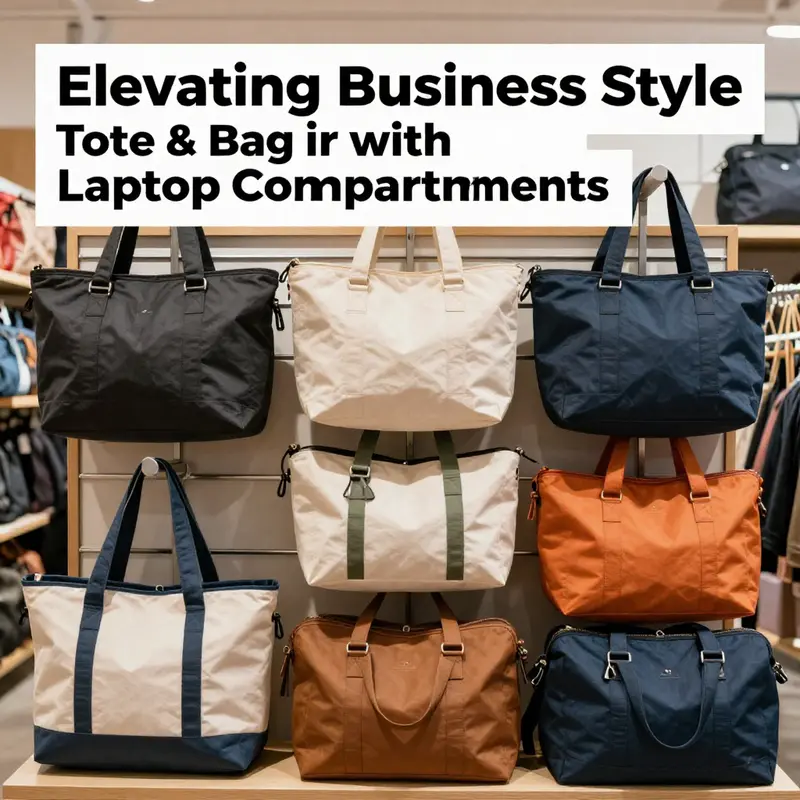
The rise of tote bags with laptop compartments reflects a quiet but meaningful shift in how people balance work, study, and daily life. These bags fuse the casual elegance of a city-ready accessory with a protective feature that once lived only in purpose-built laptop cases or sportier backpacks. They shout a preference for versatility: the ability to slip from a morning meeting to a coffee shop, then onto a quick errand, without changing bags or compromising a professional appearance. In practice, the appeal rests not just on how a bag looks, but on how it adapts to the rhythms of contemporary life. A shopper arrives at the station, laptop in hand, a planner, a tablet, and a few essentials tucked into a few snug pockets. The tote’s charm lies in its capacity to organize those items with a sense of order that doesn’t feel engineered or punitive. Yet beneath that ease lies a tension that marks the category: the trade-off between style and protection, between a slim profile and the serious demands of daily use in crowded urban environments. The 2024 market snapshot shows shoppers leaning into fashion-forward silhouettes that still promise practicality. The traditional laptop bag, known for its utilitarian stance and restrained color palette, remains a staple in formal settings. But the growing acceptance of hybrid work and the demand for a single, all-purpose accessory have broadened the market for totes that carry more than just a notebook. Consumers want a piece that can glide from a boardroom to a brunch without signaling a different identity, and designers have responded by blending high-grade materials, refined hardware, and thoughtfully placed sleeves that cradle devices with a reassuring sense of snugness. In this context, the built-in laptop sleeve is not simply a feature; it is a design philosophy. It embodies a belief that everyday technology requires a protective, dedicated micro-environment. The best-situated sleeves offer quick access while preserving the integrity of the device, positioning the laptop so the screen faces inward, away from abrasive zips and loose objects. That placement matters: a sleeve that keeps the laptop aligned with the bag’s main body reduces the risk of pressure on corners and minimizes the chance that other contents will crowd the device. Across 2024, consumer conversations about these totes highlighted two enduring priorities. First, the compartment layout must feel intuitive. A well-placed sleeve that accommodates various laptop sizes, with a little extra space for a charger and perhaps a slim tablet, makes daily use effortless. The second priority is comfort. The shoulder strap must distribute weight without pulling the wearer to one side, and the bag must remain stable when resting on a bench or being set down on a crowded train floor. These priorities shape consumer choices as much as aesthetics do. A great-looking tote can win praise, but it is only as useful as its internal organization and ergonomic design allow. The market reflects that layering of needs. Consumers weigh a bag’s ability to keep devices secure against the ease with which it can be repurposed for weekend errands, school runs, or a quick trip to the gym. The trend toward multifunctional accessories—where a single piece serves as a briefcase, a shopping companion, and a casual carry-all—has become more pronounced. In response, designers now emphasize modularity, with pockets sized for tablets, chargers, and even external drives, all tucked into accessible zones that don’t interfere with the laptop’s sleeve. A 2026 analysis by a prominent health publication underscored this shift toward usability, noting that durability, ergonomic comfort, and smart compartment placement were decisive factors in real-world daily use. The emphasis on ergonomic straps, better weight distribution, and the careful alignment of pockets with everyday workflows emerged as a core theme. This aligns with a broader consumer appetite for fashion-forward pieces that still perform when the day gets busy. Yet even as the market grows more confident in its aesthetic and practical balance, the chapter cannot ignore the protective limitations that accompany tote designs. The same stream of studies that celebrates style also points to a distinctive risk profile. When tested under controlled conditions, backpacks consistently delivered stronger impact protection. In simulated drop tests, the difference could reach as much as forty percent in favor of backpacks, a figure that underscores a fundamental design truth: structure and padding are more robust when the bag is built around a rigid or semi-rigid frame and a suspension system. Totes, by contrast, typically rely on a single layer of padding within a soft-lined sleeve. This arrangement, while compact and lightweight, is less capable of absorbing shocks or distributing force if the bag is dropped, bumped, or pressed under crowded conditions. The implication for users is clear: protection is not a given in this category. The same studies emphasize how the bag’s physical structure—thin straps, a lack of weight distribution, and limited internal reinforcement—can exacerbate stress on seams and contents. A bag that rides on a single shoulder for hours or that skews when placed on a subway floor can experience greater fatigue in both fabric and seams. The result is a nuanced decision for consumers: they enjoy the elegance and convenience of totes, but they often accept that protection levels will be lower than those offered by more purpose-built laptop carriers or backpacks. For people who travel frequently or carry high-value devices, the trade-off can favor a backpack or a dedicated laptop bag. Conversely, for those whose daily routine includes short commutes, indoor errands, and meetings across campuses or offices, a well-constructed tote can deliver enough protection while also delivering the aesthetic and social ease that makes it worth choosing that solution most days. This is the heart of the market’s appeal today: a compromise that’s increasingly refined rather than compromised. Materials have evolved to support this balance. Treated leathers and durable synthetics, along with water-repellent finishes, offer a quieter, more sophisticated silhouette. Color palettes remain conservative—black, navy, gray—signaling professionalism while enabling easy coordination with a range of attire. The result is a product category that does not simply keep a device safe; it complements a lifestyle that blends professional intent with personal style. Yet the conversation about value cannot ignore the consumer’s perception of durability and the bag’s long-term resilience. A tote that looks sharp on day one must also hold up after months of daily use and frequent loading, unloading, and transportation through public transit and airports. In this sense, the category’s success depends not just on what happens inside the sleeve, but on how the bag behaves as a wearable, long-term companion. The best practice for buyers, then, is to approach tote bags with laptop compartments as hybrid tools rather than pure equipment for protection. They are design-led products that work best when chosen with attention to how they will be used. For readers who want to explore real-world designs that balance fashion and function, a representative exploration of a tote bag with a computer sleeve can be found here: https://alltotebags.com/tote-bag-with-computer-sleeve/. This reference helps illuminate how compartment placement, internal padding, and strap geometry translate from concept to daily experience. It also highlights how a seemingly small decision—where to place a pocket, how thick the padding is, or how a strap attaches—can shape comfort and usability across a long day. The wider discussion remains one of pragmatism and preference. Some readers will prioritize a sleek exterior and a lightweight, low-profile interior. Others will seek a more robust, multi-pocketed layout that can hold a notebook, a charger brick, a small tablet, a water bottle, and the inevitable odds and ends that accumulate during a busy day. The fashion-forward dimensions of these totes do not exist in isolation; they respond to real needs, and the innovations in this space often come from listening to those needs. What does this listening look like in practice? It looks like thoughtful sleeve dimensions that accommodate a range of laptops, from compact ultrabooks to mid-size models, while leaving room for the charger and protected accessories. It looks like reinforced stitching and better weight distribution that reduce fatigue during long commutes. It looks like a thoughtful arrangement of exterior and interior pockets that prevent items from crowding the laptop sleeve and creating unwanted pressure on the device. It looks like strap ergonomics designed to balance the bag’s weight across the body, preventing a shift that could pull the bag to one side and strain the neck, shoulder, or back. And it looks like a willingness to embrace modularity, so a tote can be customized with removable inserts or dividers, allowing users to tailor the internal organization to their work, study, or weekend routines. The current market trajectory suggests a future in which tote designs will increasingly blend protection with aesthetic finesse. Innovations may include lighter yet stronger padding materials, micro-structured frames that don’t add bulk, and more intelligent interior layouts that anticipate the typical contents of a professional day. As this evolution unfolds, consumers will continue to weigh the allure of a single stylish accessory against the practicalities of device safety. The most informed buyers will recognize that the category is not static and that premium products will justify modest trade-offs with greater confidence about long-term durability and daily usability. For educators and designers, these insights translate into a clearer cue: invest in user research, remain faithful to the dual goals of elegance and protection, and communicate clearly about what a tote can and cannot protect. In the end, the conversation circles back to everyday realities. The tote’s popularity rests on its ability to be equally at home in a coffee shop and a conference hall, and that dual identity requires a careful balance of form and function. For readers who want to see how these ideas translate into tangible examples without straying into brand-specific territory, a practical entry point is a tote bag with a computer sleeve, which serves as a reference point for discussing how sleeve placement, padding thickness, and strap design influence every moment of use. The broader takeaway is straightforward: tote bags with laptop compartments are not meant to replace purpose-built protection entirely; they are meant to complement a modern, mobile lifestyle by offering a stylish, convenient, and increasingly capable option for those who move quickly through a cityscape and a workday alike. External research continues to illuminate this landscape, and ongoing studies will further clarify how materials, ergonomics, and user expectations converge to shape tomorrow’s best-sellers. For a broader perspective on how these trends translate into real-world preferences and tested usability, readers can consult external analyses such as the one linked here: https://www.womenshealthmag.com/health/a45839578/best-work-totes/.
Final thoughts
Tote bags with laptop compartments have redefined how professionals approach mobility and style. They balance the need for functionality with a keen aesthetic appeal, making them an ideal choice for the modern businessperson. While these bags serve a valuable role in daily operations, it’s crucial for business owners to assess the trade-offs in protection and comfort compared to traditional options. As we move forward in a market that continually evolves, staying attuned to consumer preferences and ergonomic needs will be essential for making informed purchasing decisions. Embrace the evolution of your professional style with tote bags that meet both form and function.