
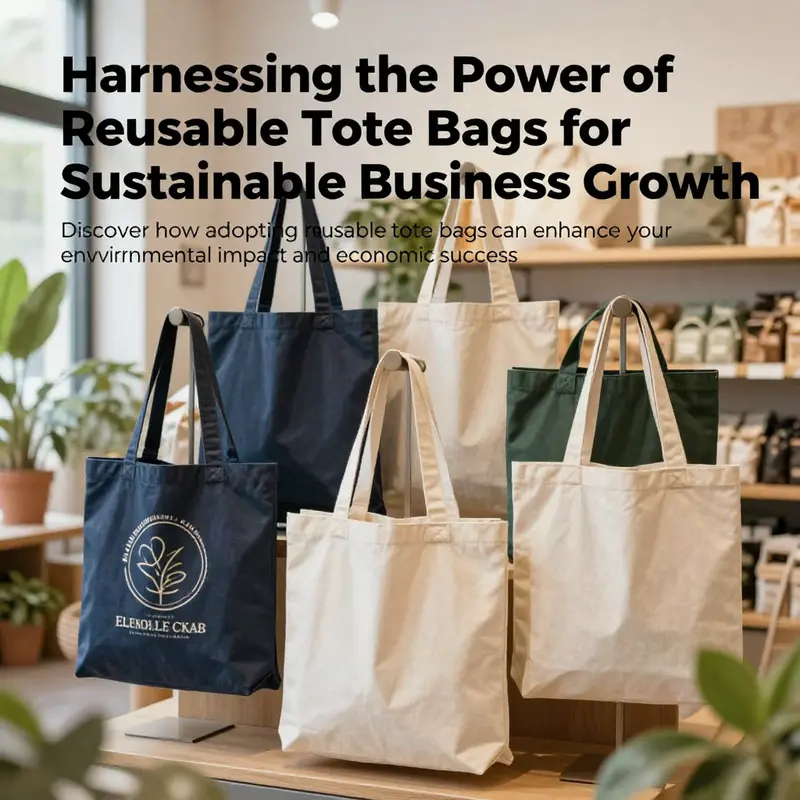
In today’s marketplace, being environmentally conscious has become a priority for consumers and businesses alike. Reusable tote bags present a unique opportunity for business owners to align with sustainable practices while simultaneously enhancing their brand visibility and reducing costs associated with single-use plastics. This article delves into the multifaceted advantages of reusable tote bags, examining their environmental impact, economic benefits, and versatility in design. Each chapter will provide insights necessary for businesses looking to make a positive change, both for the planet and their bottom line.
Rethinking the Green Promise: The Environmental Realities Behind Reusable Tote Bags
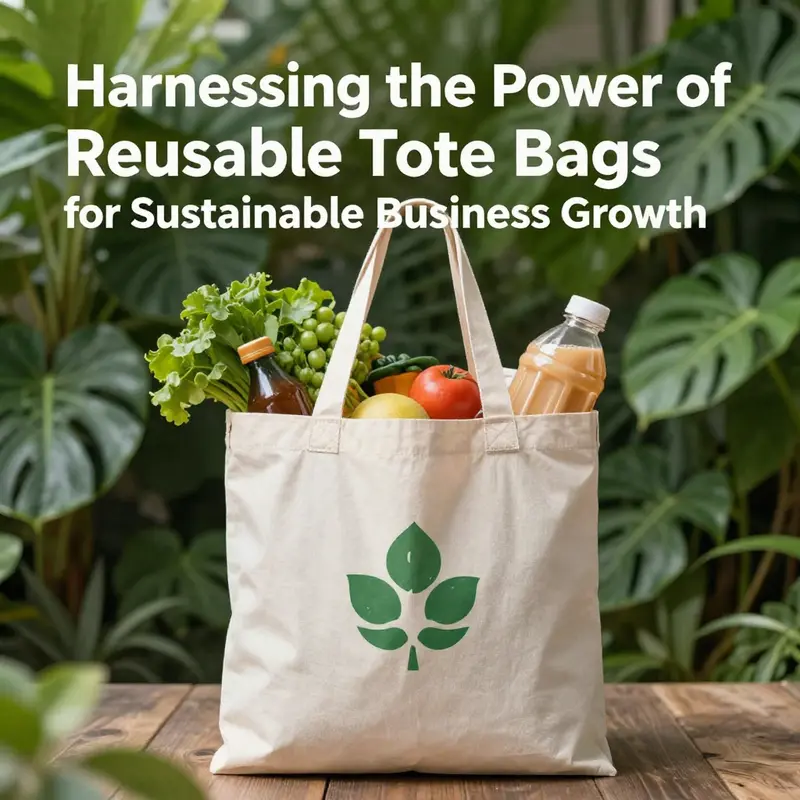
Reusable tote bags have entered daily life with the aura of a straightforward win for the planet. They promise a simple swap: one sturdy bag instead of a handful of disposable plastic bags that would otherwise accumulate in landfills, oceans, and closets. But measuring their true environmental impact requires more than counting reusable trips and calling it a day. It requires stepping back to examine the lifecycle of the bag—from raw material extraction and manufacturing to use and eventual disposal—and, crucially, how often the bag is actually reused. The lifecycle analysis that underpins today’s conversations about reusable totes reveals a nuanced truth: the initial environmental footprint of these bags, particularly those made from cotton, is substantial. The weight of that initial footprint becomes meaningful only when the bag is used repeatedly, trip after trip, over a long period. The extent of the benefit is not a given; it is earned through consistent, repeated use and conscious maintenance over time.
The data are striking. A landmark assessment conducted by a Danish environmental agency quantified the threshold at which a conventional cotton tote bag becomes environmentally competitive with a single-use plastic bag. To match the global warming potential of a plastic bag used once and discarded, the cotton tote had to be reused an astonishing 7,100 times. That figure unsettles common assumptions about “natural” materials automatically delivering a better outcome. Cotton is a resource-intensive crop. Its cultivation can demand up to 20,000 liters of water for a single bag, and the process can emit CO₂ at a rate that, across a lifecycle, is hundreds of times greater than that of a plastic bag—270 times more in some calculations. This is not to condemn cotton on principle, but to illuminate the scale of the challenge: the environmental payoff of cotton totes emerges only when they are brought into daily rotation and kept in service for thousands of trips.
Non-woven polypropylene, a lighter and less resource-intensive option on a per-bag basis, shifts the equation but does not dissolve it. Even these lighter bags must be reused many times to surpass the climate benefits of a single-use plastic bag. The Danish study estimated a reuse threshold of roughly 52 uses for non-woven PP bags to outperform a disposable bag in terms of climate impact. Those figures are not mere trivia; they recalibrate expectations around sustainability. They remind us that the physical footprint involved in producing a bag is not a one-and-done cost. It is a capital unfurled into the atmosphere and water resources, which only pays off when the bag is employed again and again across varied trips—grocery runs, errands, picnics, and even as ad-hoc carry solutions for everyday life.
A central, cautionary voice in this conversation comes from Dr. Jane Goodwin, an environmental scientist who has spoken openly about the real world of reuse. Her emphasis is twofold and stark: “Reusables only win if they’re actually reused. A bag sitting unused in a closet is an environmental liability, not an asset.” The message is not that reusables are inherently bad; it is that the math of their environmental advantage relies on behavior as much as on material choice. A bag may represent idealism, but without habitual reuse, its value remains static, and the upfront footprint lingers in the system as a form of hidden waste. This insight anchors the broader analysis: the benefit accrues through patterns of use, not through mere possession.
The conversation grows more complex when we turn to other materials and end-of-life possibilities. Paper bags, for instance, are biodegradable and recyclable in principle, but their production is not free of environmental costs. Manufacturing one ton of paper can require roughly 17,000 gallons of water and can emit around 1.5 tons of carbon dioxide equivalents. The heavier weight of paper bags translates into higher transportation emissions, and contamination from food residue can complicate recycling, sometimes leading to methane generation if bags end up in landfills. Such dynamics remind us that material choice is a spectrum rather than a verdict: cotton’s resilience comes with a high production cost, PP offers lighter responsibility per bag but still demands repeated use, and paper embodies a recycling ideal that is frequently constrained by practical realities.
What emerges from these insights is a principle with practical consequences for consumers, retailers, and policymakers: the environmental payoff of a reusable tote is a function of actual reuse. A bag that is bought, carried home, and then stored unused in a closet yields little to no benefit, and in some instances it adds to the total environmental burden. The implication for everyday life is clear. When people decide to use a reusable bag, they should integrate it into a reliable routine that spans many trips and multiple contexts. In other words, the bag’s potential is not a one-off swap but a long-term commitment to avoid single-use alternatives across a broad range of activities. The more a bag travels through a person’s life, the more likely it is to offset its initial cost to the environment.
This logic invites us to think about how bags are designed and how their use is encouraged. Design can nudge behavior toward frequent reuse by emphasizing durability, ease of cleaning, and everyday convenience. A bag that lasts, that can be easily folded or stored, and that accommodates groceries, books, and other daily items without losing shape or strength, is more likely to be pulled from the closet and into service day after day. The most effective totes blend form and function: they offer a generous capacity yet remain compact when empty; they resist wear and tear under regular use; they clean up easily and dry quickly; and they resist odors and stains that might discourage repeated use. In short, practicality is a powerful lever in the environmental equation.
In retail contexts, brands and businesses can reinforce reuse by aligning price, design, and messaging with long-term use. A bag bought as a promotional item may carry a logo that makes it a constant reminder of a brand, but the real value for the planet is realized when the bag travels with the owner through hundreds of trips. To maximize reuse, retailers can steer customers toward bags that feel reliable and sturdy in hand and that integrate seamlessly into everyday routines. The goal is not to shun cotton or favor PP by default, but to encourage use patterns that yield measurable environmental benefits over time. Every trip with the bag becomes a data point in the larger story of sustainable living, a story that is written not by a single purchase but by repeated choices over months and years.
For readers who want a market-facing perspective on how tote bags are evolving in consumer consciousness, consider the broader landscape in which these items circulate. The market increasingly recognizes that a tote is not only a carrier but a statement of lifestyle, a symbol of responsibility that travels through consumer spheres—from grocery aisles to work commutes to social events. The way totes are manufactured, marketed, and adopted reflects a broader trend toward intentional consumption: buyers are not merely choosing a bag; they are choosing a pattern of use. In this sense, the environmental success of a reusable tote hinges on everyday habits as much as on the material it is made from. A practical, everyday tote becomes a living part of a sustainable workflow, a small but persistent lane of reduction in the vast traffic of disposable goods.
To see how this thinking translates into real-world choices, one can review the market’s current offerings and the ways retailers present them. Some totes are designed with a clear emphasis on capacity and strength, enabling buyers to replace multiple disposable bags with a single carrier that endures many shopping trips. Others highlight lightness and portability, appealing to urban commuters who want to carry a tote as a second bag or to slip into a larger backpack. The variability in design is not only about aesthetics; it is a strategic decision about how often a bag is likely to be used in daily life. A durable tote that folds neatly into a small pouch can become a preferred option for spontaneous errands, where users might otherwise grab a disposable bag. In such scenarios, a bag may accrue frequent use simply because it is easy to carry and quick to access.
The lifecycle is also a question of regional practice and policy. In places where bag fees, recycling infrastructure, or public awareness campaigns emphasize waste reduction, the reuse equation may tilt more favorably toward environmental benefits. Conversely, where disposal systems are weaker or where consumer behavior does not consistently favor reuse, the same bag remains a passive asset with limited impact. This context-dependence is not a flaw; it is a reminder that sustainability is deeply embedded in social norms, infrastructure, and daily rhythms. The most meaningful improvements come from a combination of material science, thoughtful design, and behavior change that makes reuse a natural default rather than a deliberate exception.
Within the broader discussion of reuse, it is helpful to connect the concept to practical actions. Consider an individual who uses a cotton tote for weekly grocery shopping, a lunch bag for workdays, and a tote for weekend market trips. If that person rotates through two or three bags rather than using a single bag exclusively, the reuse count increases, and the environmental payoff rises correspondingly. On the other hand, if an individual owns several cotton totes but uses them only a few times a year, the opportunity to reduce plastic consumption is small, and the upfront environmental cost of cotton remains a heavy weight on the ledger. The takeaway is not a prohibition against cotton but a call for a lifestyle pattern that values reuse as a daily discipline. In markets and communities where such patterns are cultivated, the environmental advantages of tote bags become more tangible and measurable over time.
This is where the design of messaging matters. When retailers and environmental communicators craft messages around totes, they should foreground reuse frequency, durability, and practical routine. The goal is to shift consumer perception from seeing a tote as a fashion accessory or a one-off promotional item to recognizing it as a durable tool for sustainable living. The more people integrate their totes into daily activities—shopping, commuting, school runs, library visits—the more likely they are to realize the environmental gains that inspired the switch away from disposable bags. As a result, the value proposition of a reusable tote is not merely its presence in a shopping cart but its ongoing partnership with a lifestyle that aims to minimize waste, conserve resources, and reduce emissions across many trips and seasons.
For readers who want to explore how such a mindset translates into market behavior or to discover how a given market segment frames tote usage, a look at current trends can be illuminating. The market increasingly favors bags that strike a balance between aesthetics and resilience, offering designs that people feel proud to carry while also standing up to daily wear and tear. In this evolving landscape, the success of a tote is measured less by its novelty and more by its longevity and ease of use. A bag that survives years of use with minimal care, and that invites regular reuse across grocery runs, commutes, sports practices, and weekend projects, embodies the ideal of sustainable practicality. In this sense, the environmental story of a reusable tote is not a single act of substitution but a long-running habit that culminates in a measurable reduction of plastic demand and a more efficient use of natural resources over time.
If you’re curious about how consumers and retailers narrate the reuse journey in practical terms, you can explore a market snapshot focused on tote bags and their role in contemporary life. For a sense of how the current landscape is shaping consumer choices, see Tote Bags Trending. This resource highlights how design, marketing, and everyday use intersect to influence reuse patterns and adoption rates, which ultimately determine the real-world environmental outcomes of reusable totes.
In closing, the environmental impact of reusable tote bags is a layered affair. It is not solely about choosing cotton, PP, or paper in a vacuum; it is about choosing materials and, more critically, committing to use them in a way that multiplies their value across many trips. The most sustainable choice is the one that travels with you repeatedly, becoming part of a routine rather than a one-off purchase. The science shows the thresholds, the numbers are sobering, and the opportunities sit in plain sight—habits, design, and policy aligned to turn a simple tote into a durable ally in a long-term project of reducing waste and emissions. The bag itself is only as good as the life it leads, and that life depends on your daily decisions, your willingness to carry it, and your resolve to replace single-use habits with steady, repeated use.
External resource for further reading: https://www.mst.dk/media/349641/lifecycle-assessment-of-grocery-bags.pdf
Weighing the Long View: How Reusable Tote Bags Shape Personal Budgets and Local Economies
The economic benefits of adopting reusable tote bags extend far beyond the simple transaction of buying a bag. They thread through household budgets, store operations, municipal waste systems, and even the texture of local economies. When a family chooses a tote for shopping, the decision reverberates in the way money cycles within a community. The ledger may seem modest at first glance, but it captures a pattern: a shift from short-lived, single-use items toward durable, reusable options that spread costs and benefits across years. This chapter follows that thread, tracing how initial up-front costs contrast with long-run savings, how consumer behavior compounds those savings, and how broader economic forces respond as more households and businesses participate in a tote-based economy. It is not merely about convenience; it is about a systemic adjustment in consumption that touches production scales, job creation, and public spending. The narrative invites readers to see a simple canvas bag as a small instrument with outsized economic consequences when used consistently and thoughtfully over time.
The financial logic of reusable totes begins with the upfront price. A reusable bag may cost more at the register than a single-use plastic alternative. Still, the gap narrows as durability and reuse accumulate. A strand of data from bulk manufacturing points to very low unit costs for certain materials when produced at scale. For example, bulk orders of recycled non-woven material bags can begin at remarkable price points—down to roughly $0.21 per piece for orders of 100,000 or more as of January 2026. Such figures illuminate a fundamental truth: mass production lowers the barrier between sustainability and affordability. For a small business, promotional campaigns that rely on branded tote bags become more viable when fixed costs are spread over a large volume. For households, the story is different but related. A consumer who owns a tote and uses it repeatedly will eventually outperform the impact of continually purchasing disposable bags, particularly when the bag’s material and construction are aimed at long life. Yet the precise tipping point—the moment when a reusable bag begins to yield net savings—depends on how often it is used and the price of disposable bags in a given region.
To understand the long-term savings, it helps to consider a practical benchmark. A widely cited lifecycle perspective from the UK Environment Agency in 2011 suggested that a cotton tote must be reused many times before its environmental impact becomes favorable relative to disposable bags. The study is often summarized as indicating that a cotton tote should be reused 131 times to outcompete a plastic bag in terms of global warming potential. In some summaries, a smaller threshold is cited, suggesting even modest reuse can yield environmental benefits when other factors are included. While the exact numbers reflect a particular methodology, the overarching implication remains robust: durability and reuse pay off over time. When households plan purchases, they can translate that environmental insight into a shopping strategy—using a tote for dozens of trips rather than buying dozens of new bags, or choosing materials with a longer lifespan to maximize return on investment. The math may feel abstract, but the effect is tangible: the more you reuse, the greater the cumulative savings in both money and emissions, even if each bag requires a higher initial outlay.
The economic calculus continues with annual savings that accumulate as a habit forms. Frequent shoppers who bring their own bags can deviate meaningfully from the default path of buying and discarding plastic bags. The savings here are twofold: direct money saved on bag purchases and indirect savings from avoiding the cost of waste. In many markets, the cost of plastic bags at the point of sale has risen or is subsidized by retailer mandates, promotions, or bag bans. When a consumer simply swaps to a reusable tote, that person reduces the number of disposable bags needed over the course of a year. The effect compounds across households, creating a measurable impact on personal budgets. Retailers increasingly recognize this dynamic and frequently offer incentives for customers who bring their own bag. Small discounts, loyalty points, or even a few extra minutes saved in checkout lines—these incentives may seem modest in isolation but compound into meaningful annual savings when multiplied by thousands or millions of shoppers. The net result is a form of microeconomic efficiency: a larger share of consumer expenditure stays within the local economy rather than flowing outward to disposable bag production and packaging supply chains.
Beyond the confines of a single wallet, the broader economic implications of widespread tote adoption extend to waste management and local employment. A reduction in disposable bag consumption translates into lower municipal expenditure on waste collection, sorting, and landfill space. The costs of cleanup and environmental remediation that accompany litter and improper disposal are borne by taxpayers and local governments. When communities embrace reusable totes, those costs can fall, freeing budgetary space for other priorities. In turn, lower waste volumes can influence the demand for waste- processing infrastructure and the staffing that supports it. This is not a zero-sum game; it depends on how efficiently a city translates reduced bag waste into a leaner waste management system or a shift toward recycling-based value streams. In emerging economies, where rapid urbanization stresses public services, the adoption of reusable bag systems can foster resilience by supporting local manufacturing capacity instead of imported alternatives. By prioritizing domestic production of durable totes, communities can spur job creation, skills development, and investment in sustainable logistics, which collectively strengthen local economies over the long horizon.
The cost dynamics of tote bags are not uniform across materials, and that variance feeds into both consumer choice and business strategy. Non-woven polypropylene bags, recycled fabrics, cotton canvas, and even paper tote options each present distinct tradeoffs in weight, strength, and environmental footprint. A retailer aiming to maximize value for customers might choose a blend of options, balancing cost, durability, and branding potential. For example, a non-woven recycled bag can offer a low per-unit cost at very high volumes, but its softness and structure may differ from a heavy cotton canvas bag that lasts longer but costs more upfront. A smart procurement approach looks at total lifecycle cost rather than sticker price. If a low-cost tote lasts enough trips to surpass the per-trip cost of disposable bags, the investment is justified. If a bag’s weight reduces its practicality for daily use, its lifecycle advantage fades. Sustainability, in this sense, becomes a function of ongoing utilization: how often the bag is carried, how long it remains functional, and how easily it can be repaired or cleaned over time. Consumers who understand these nuances can align their purchasing with personal routines, choosing totes that fit shopping habits, commuting patterns, and even weekend getaways. The result is a portfolio of options that preserves the economic upside while meeting practical needs—an anchor for budgeting decisions that extend beyond a single shopping trip.
From a market perspective, the adoption of reusable totes has the potential to reshape promotional economics as well. Businesses often view bags as a medium for brand visibility and customer engagement. The ability to customize totes invites marketing campaigns that remain in consumers’ hands long after the purchase. When a company can leverage tens of thousands of bags with a consistent design, the upfront cost is amortized across a broad audience. This creates an economical platform for brand storytelling, customer loyalty, and regional awareness without the recurring expense of disposable giveaway items. The cost structure of promotional totes—particularly when produced in bulk with recycled materials—can be a strategic asset. It is not only about the bag as a product, but about the bag as a carrier of value, a portable advertisement, and a reminder of a shared commitment to sustainable practice. In communities where consumer awareness aligns with corporate responsibility, tote-based promotions can translate into meaningful economic activity, as small businesses connect with local suppliers, manufacturers, and distributors who are part of a more circular economy.
An important thread in this economic tapestry is the relationship between consumer behavior and product design. If shoppers discover that a tote is lighter, easier to wash, and more versatile—whether it carries groceries, a gym kit, or a laptop sleeve—the likelihood of sustained use increases. The design features that support long life—durable seams, reinforced handles, stain resistance, and ease of cleaning—are not cosmetic but economically consequential. A bag built to endure repeated use lowers the chance that a user abandons it after a few trips, shifting the cost-benefit balance firmly in favor of reuse. In this context, the materials themselves are not merely inputs; they are strategic choices that influence how often a bag is used, how long it lasts, and how easily it can be repurposed or repaired. A cotton canvas tote, for instance, may be aesthetically pleasing and durable, but it requires more washing and care than a synthetic alternative. A robust non-woven bag, while inexpensive, should be designed to withstand heavy loads to maximize lifespans. The economic optimization thus becomes a balancing act—maximizing durability for the most frequent uses while maintaining practicality for everyday life and minimizing environmental cost at every stage of a bag’s life.
The interplay between cost, durability, and consumer incentives also shapes the downstream effects on retailers and suppliers. Retailers who encourage customers to bring their own bags not only reduce packaging and procurement costs but also signal a commitment to sustainability that can influence customer satisfaction and retention. A store that offers a discount or a loyalty perk for using a reusable tote supports a feedback loop: shoppers feel rewarded for sustainable behavior, which reinforces the habit and spreads to others in the community. Over time, that habit can become a standard expectation, subtly shifting consumer norms and influencing how new products are packaged and sold. When a large segment of shoppers consistently uses durable totes, retailers may adjust inventory decisions, favoring multi-use packaging and more resilient supply chains. These adaptations, in turn, ripple through the economy by supporting local manufacturing, reducing waste transport costs, and lowering the total cost of ownership for both shoppers and business operators.
The environmental economics of tote bags are inseparable from the social fabric in which they operate. The cost savings described here are most powerful when they align with policies, infrastructure, and consumer culture that support reuse. For instance, cities that encourage reusable bags through educational campaigns, convenient recycling options for old totes, and accessible purchase points for high-quality bags help ensure that the environmental benefits translate into real economic gains. When households see their grocery bills hinge less on disposable bags—and when those savings are reinforced by retailer incentives—they become more likely to invest in higher-quality totes that can withstand daily use. This creates a virtuous circle: durable bags reduce waste, which lowers municipal costs, while the continued demand for quality totes sustains local jobs and investment in sustainable manufacturing. In such ecosystems, the economic benefits of reusable totes extend beyond the arithmetic of price and price-per-use. They become part of a broader shift toward more resilient consumption patterns, where households, businesses, and public institutions share a common incentive to keep materials circulating, rather than discarding them after a single use.
If we step back and view the landscape holistically, the economic benefits of adopting reusable tote bags resemble a long-term investment strategy rather than a series of isolated cost savings. The initial outlay is a decision about future cash flow, risk, and stability. The returns are not merely measured in dollars saved on grocery bills, though those are real. They are also measured in the reduced exposure to volatile packaging costs, the avoidance of waste disposal fees that may rise with time, and the intangible value of brand integrity and community trust. In markets where environmental awareness has become a differentiator for consumers, the value of sustainable tote programs can translate into higher customer engagement, more repeat visits, and a stronger sense of community identity around responsible consumption. The economic message is clear: investing in durable, reusable totes is not a niche choice but a broad-based strategy that aligns personal finances with local prosperity and environmental stewardship.
To connect these threads back to the reader’s daily life, consider a simple scenario. A family buys a set of durable totes at affordable per-unit costs, perhaps in the range of a few dollars per bag depending on material and customization. Over a year, they reduce the number of disposable bags purchased by several hundreds. Those savings accumulate month by month, especially when discounts for using own bags are offered at multiple retailers. Then, over multiple years, the public sector experiences lower waste management burdens, which can free funds for schools, health services, or infrastructure projects. And in regional economies, the demand for high-quality, long-lasting totes supports local manufacturers and suppliers who train workers and invest in better processing facilities. It is a modest shift with wide-reaching implications, a reminder that everyday choices—what we put in our shopping bags and how often we reuse them—can echo through wallets, workplaces, and municipal budgets alike. As adoption grows, the cumulative effect becomes less abstract and more measurable: more durable bags circulating, fewer plastic bags in landfills, and a more resilient local economy that isn’t as vulnerable to price swings in disposable packaging.
The path to these outcomes depends on a blend of practical choices and strategic support. Consumers who plan ahead, selecting totes with the right balance of price, durability, and usability, can maximize savings with minimal effort. Businesses that recognize tote programs as a sound investment can design promotions that reward reuse without sacrificing profitability. Policymakers who balance access to affordable alternatives with incentives to reuse can amplify the benefits, ensuring that sustainability translates into tangible economic resilience. In this convergence of choices, a single reusable tote becomes a microcosm of a larger transition—from disposable to durable, from linear to circular, from a quick price check at checkout to a lasting improvement in financial and environmental outcomes.
The potential for economies to grow around reusable totes also invites a broader appreciation for the role of customizable options. Customized totes, especially those made from recycled materials, can function as powerful branding and promotional tools while spreading the cost across a broad audience. The economics of customization rely on volumes, but the payoff can be substantial when a campaign reaches thousands of customers who carry the bag for months or years. In that sense, tote programs can support inclusive economic activity: merchants and suppliers work together to produce durable goods, while communities gain a low-cost, high-visibility vehicle for communication and education about sustainable practices. The value proposition is not merely a matter of reducing waste; it is about building networks of trust and shared responsibility. A well-designed tote program can become part of a city’s identity, a practical convenience for shoppers, and a steady source of demand for local manufacturers, all at once.
The broader economic calculus also invites consideration of how tote programs interact with the life cycle of goods. When a bag is built to last and is repaired or repurposed rather than discarded, the lingering value of that bag remains in circulation longer. This aligns with the idea of a circular economy, where product life extension reduces the need for raw materials and the energy intensity of new production. Each tote that defers replacement by a season or two translates into avoided emissions, avoided packaging, and a slower rate of resource extraction. The cumulative effect of millions of such decisions can shift market dynamics enough to influence where manufacturers locate facilities, how supply chains are structured, and how goods are priced to reflect the true costs of their production and disposal. In other words, the humble tote is not just a bag; it is a practical, scalable instrument of economic and environmental strategy. When seen through that lens, the choice to invest in durable totes becomes part of a prudent, long-range plan for financial health, community vitality, and planetary well-being.
The final thread ties back to everyday life. For many households, the daily rhythm of shopping can be a touchpoint for meaningful economic change. A reusable tote is not merely a tool for carrying groceries; it is a steady reminder that small decisions accumulate. Each use adds to a ledger of cost savings, waste reductions, and brand loyalty, reinforcing a culture of responsibility that benefits everyone. The habit persists because it is reinforced by the practical benefits: less plastic waste, lower ongoing bag costs, and session-by-session savings that add up across a year. The same habit also strengthens a local economy by fostering demand for durable goods and for the skilled labor that produces, inspects, and distributes them. The social dimension—customers supporting retailers who champion reuse, communities rallying around waste reduction, and workers finding stable employment in sustainable manufacturing—complements the individual financial gains. It is this fusion of personal advantage with public good that defines the true economic value of reusable tote bags.
For readers seeking a quick connective thread to practical resources, consider exploring a current compilation of tote bag trends and options that emphasizes durability, utility, and the potential cost benefits of reuse. This curated perspective can help shoppers and businesses identify tote styles that align with their daily routines, while also supporting the broad economic logic outlined above. By focusing on long-lived designs and materials, buyers can maximize the return on investment and contribute to a more resilient local economy with every purchase. The path to financial and environmental efficiency is paved with thoughtful choices about how we shop, what we carry, and how often we reuse what we already own. As adoption grows, so too does the opportunity to build a marketplace where sustainable products meet solid economics, and where a simple tote bag helps carry more than groceries—it carries a future in which households, businesses, and communities thrive together.
Internal link for further exploration: tote-bags-trending
External resource: For a deeper understanding of the lifecycle considerations behind bag choices, see the UK Environment Agency’s life cycle assessment of plastic bags. This source provides context for how reuse and material selection influence environmental outcomes over time and can complement the economic framing presented here. https://www.gov.uk/government/publications/life-cycle-assessment-of-plastic-bags
Beyond Utility: The Quiet Revolution of Reusable Tote Bags in Design, Durability, and Daily Life
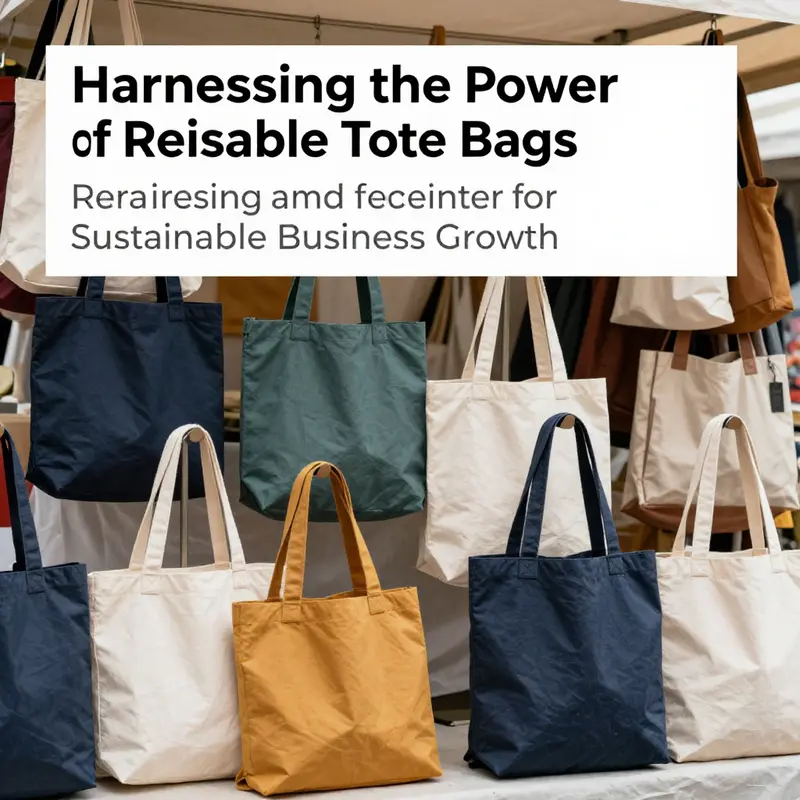
The reusable tote bag is more than a convenience; it is a lens on daily life, durability, and values. It sits at the intersection of function and style, a tool that travels with us through errands, meetings, libraries, and weekends. Its rise signals a shift from single use toward lasting habits, from disposable speed to deliberate pacing. A tote is a compact ecosystem: it must hold papers, a laptop, groceries, and perhaps a water bottle, yet still feel light and manageable. The design challenge is to balance capacity with portability, and to age gracefully under weather, wear, and changing needs. When well made, a tote becomes a partner that accompanies a person through a day, a season, and even a move across town.
Material choices matter: heavy canvas offers texture and durability; nylon keeps weight down; recycled fabrics reduce footprint; plant based leathers offer a different patina while staying mindful of resources. The most enduring totes rarely rely on a single material; they blend avoidance of bulk with reinforced seams, sturdy hardware, and sensible interior pockets. The tactile surface tells a story about how the bag will accompany its owner over time. Color and silhouette also matter: neutral tones with clean lines tend to harmonize with a range of outfits and contexts, extending the bag’s useful life by reducing calls for replacement.
Features matter: reinforced handles, secure closures, interior sleeves for electronics, exterior pockets for quick access, and straps that can convert from handheld to crossbody when hands are full. Care and maintenance are part of sustainability: regular cleaning, proper drying, and prompt repair keep a tote useful for years rather than months. The result is a product that invites reuse rather than waste, and a design approach that respects the rhythms of daily life.
Beyond the item itself, the tote participates in a broader ecosystem. Retailers and brands increasingly offer options that fold into a larger sustainable narrative, from packaging to repair programs to customization that aligns with corporate responsibility. The economics of durable design favor those who invest in quality materials and thoughtful engineering, even if the upfront cost is higher. Over time, the value is measured in reduced waste, fewer bags to juggle, and a calmer, more organized daily routine.
For readers seeking deeper insight, a technical guide on foldability, material compatibility, and performance can illuminate how a bag behaves under load, in rain, or during long commutes. If you are exploring tote options for branding, look for designs that reflect real use: durable fabrics, reinforced seams, functional pocketing, and a form that remains legible as life unfolds. In practice, the best totes feel almost invisible when you are living your day, quietly supporting you without shouting for attention.
Internal resource: women’s canvas tote bags
External resource: https://www.researchgate.net/publication/378412965FoldableReusableToteBagsWholesaleKeyStandardsPhysicalPropertiesandEngineeringApplications
Final thoughts
The adoption of reusable tote bags serves not just as a sustainable alternative to plastic but as a strategic business move in today’s eco-conscious environment. By understanding their environmental impact, recognizing the economic benefits, and appreciating their versatility in design, business owners can leverage reusable tote bags to build a more responsible brand. Embracing this trend not only supports the planet but can also enhance customer loyalty and lower operational costs, proving that sustainability and profitability can indeed go hand in hand.