
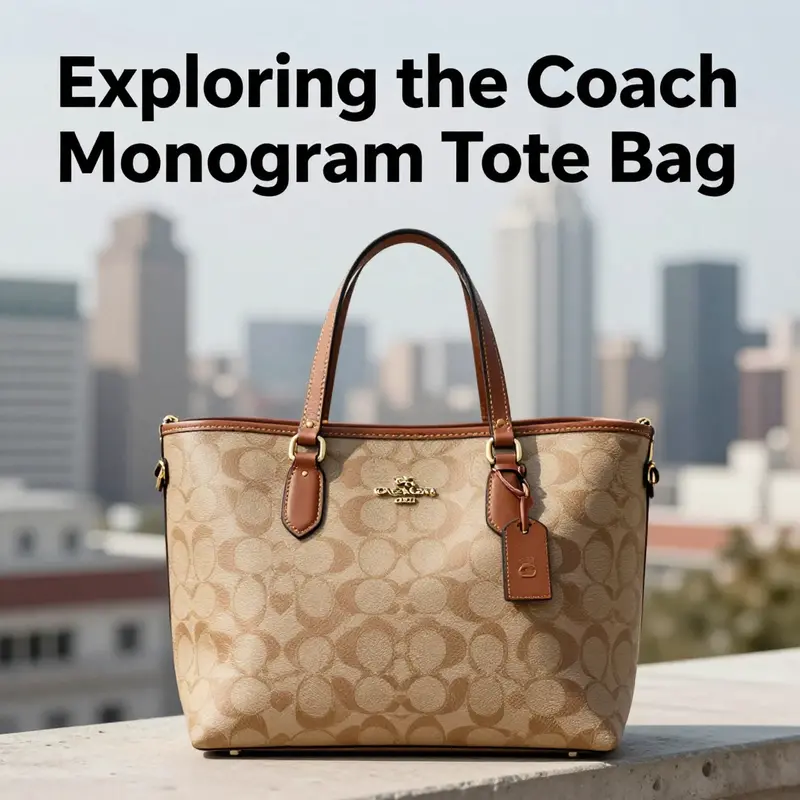
The Coach Monogram Tote Bag stands as a symbol of luxury and practicality, embodying the values of style, heritage, and everyday usefulness that define the Coach brand. Perfect for business owners seeking a blend of sophistication and function, this tote bag is crafted from durable materials featuring the timeless ‘City Monogram’ print, making it not only visually appealing but also incredibly functional. Throughout the following chapters, we will explore the intricate design elements, the remarkable practicality that ensures it meets the demands of daily life, the sourcing authenticity that reassures quality, and the overarching fashion statement it continues to represent in contemporary culture.
Weaving Heritage with Utility: The Design Language of the Coach Monogram Tote Bag
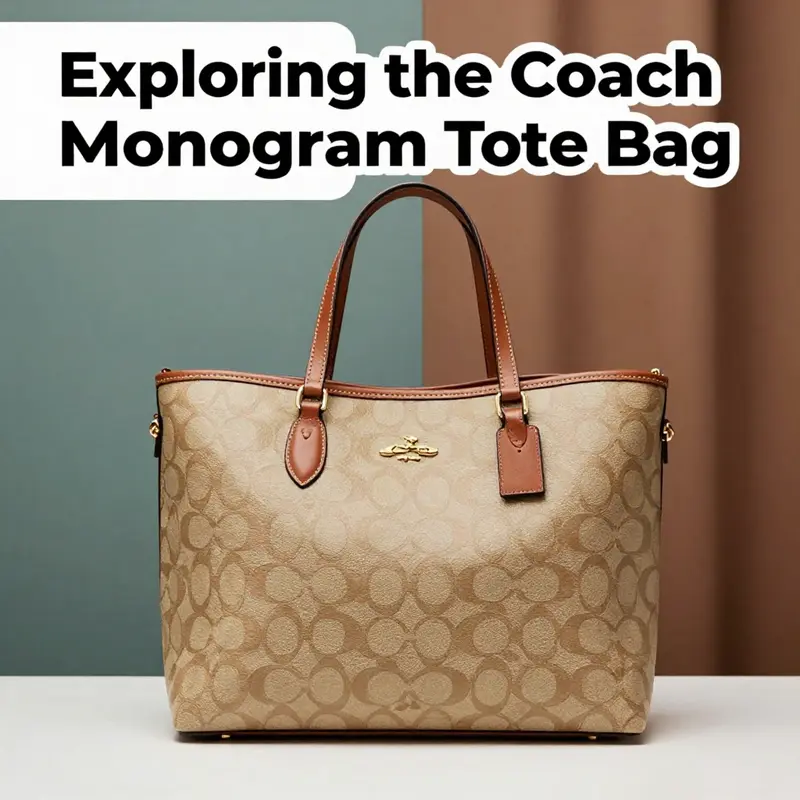
The Coach Monogram Tote Bag embodies a design philosophy that feels both storied and practical, a rare balance that has kept it relevant through decades of changing runways and shifting function. Its most recognizable feature—the signature monogram print—reads like a tactile badge of heritage. Since the brand’s ascent in 1941, that emblem has traveled with customers as they move through cities, from morning commutes to evening errand runs, quietly signaling a confidence rooted in craftsmanship. The City Monogram aesthetic is more than a logo; it is a visual shorthand that pairs simplicity with refinement. The print often arrives in restrained colorways, from classic monochrome to softer tints, allowing the bag to harmonize with both formal and casual wardrobes. In this way, the bag acts not only as a carrier but as a wearable statement of a particular American design language: uncompromising quality, accessible luxury, and a nod to the era when reliable, well-made goods defined everyday style. The monogram, embossed or printed with equal poise, anchors the bag in its lineage, reminding the wearer that fashion can be enduring when paired with purpose.
Materials lie at the heart of this balance. The tote’s structure relies on coated canvas—a surface that resists wear and weather while retaining a polished, low-maintenance feel. Coating adds a protective layer that repels light rain, smudges, and everyday scuffs, letting the bag endure through long days and crowded train carriages. When leather details appear, they do so with a quiet confidence, offering tactile contrast and a touch of luxury without overpowering the overall silhouette. The leather accents—such as reinforced handles or trim—provide durability where it matters most, ensuring that grip and wear remain comfortable even as the bag fills with daily essentials. Inside, a fabric lining furnishes a clean, smooth interior that makes organizing easier and more intuitive. The lining reduces friction when sliding items in and out, a subtle detail that changes the day’s rhythm rather than shouting for attention. The materials work together to deliver a tote that is not only elegant to look at but trustworthy in use, a companion that you can reach for with confidence and reach again without worry.
Beyond materials, the bag’s silhouette reinforces its practical promise. Its structured shape gives a modern, architectural line while preserving a soft, human feel that never appears overbearing. This balance matters: a tote that maintains its form under weight makes daily tasks more predictable, whether you’re carrying a laptop, a shopping haul, or a change of clothes for travel. The rigid frame helps the bag stand upright when set down, a small but meaningful convenience when boarding a train or loading into a car. The overall profile remains sleek enough to slip under a desk or into a locker, yet generous enough to accommodate larger items when needed. This thoughtful proportion is not happenstance; it reflects Coach’s insistence that practicality should never compromise elegance. The geometry of the bag—its clean lines, carefully rounded corners, and measured depth—speaks to an ethos of quiet confidence that suits a wide range of activities and settings.
Versatility remains a central thread in the design. The Tote typically includes straps that can be adjusted or detached, expanding the ways it can be worn. It can be carried by handheld tote handles for a classic, corporate feel, slung over the shoulder when hands are full, or worn crossbody for ease during a busy day of errands or travel through unfamiliar airports. This adaptability is more than a convenience; it reflects a broader philosophy about how we move through spaces. The bag’s capacity is engineered to be practical without appearing bulky, striking a balance between space and silhouette that makes it a go-to option for those who want one bag that does most things well. The strap hardware is robust enough to endure daily use, yet refined enough to remain discreet, ensuring that the bag’s presence stays grounded in sophistication even when loaded with everyday gear. Carrying options thus translate into a life designed around flow rather than friction, a small but meaningful contribution to the wearer’s day.
Closures and pockets further enhance the sense of order that the bag offers. A zip-top closure secures the main compartment, giving quick access to belongings while providing a protective seal against rain or crowding. The interior arrangement prioritizes accessibility and organization—internal pockets for small items, a dedicated space for documents or a tablet, and occasionally side compartments that can hold chargers, pens, or keys without snagging. The placement of these pockets is deliberate, designed to be within easy reach without requiring a search party when the bag is opened. Such details mean the tote can function as a lightweight work bag, a weekend carry-all, or a travel companion that keeps essentials neatly contained rather than lost in a cavern of fabric. The interior layout mirrors a philosophy of thoughtful design: form follows function, yet the result remains visually refined. It’s this conviction that makes the monogram print feel less like decoration and more like a signal of intent—the wearer intends to move with ease, to organize with discipline, and to present a curated personal style in every moment.
Personalization quietly elevates the experience, turning an elegant utility piece into a deeply personal object. The brand’s monogramming options invite wearers to imprint their own identity on the bag, transforming a familiar silhouette into a bespoke artifact. With a broad palette of fonts, styles, and symbols, customers can express aspects of their character, milestones, or preferences in a way that feels both intimate and tasteful. The ability to choose from a wide array of monogram options invites a sense of ownership that is increasingly central to how people engage with their wardrobes. A monogram can be a private reminder or a public signal of personality, a private joke or a statement of aspiration, all while keeping the garment’s silhouette and coloring intact. The result is a bag that is not only seen but also felt—an everyday emblem of personal taste that travels with the wearer through meetings, meals, and getaways. The 70-plus options for monogramming reinforce the idea that a bag can be more than a container; it can be a curated extension of the self, a portable canvas on which life’s small details are proudly displayed.
The convergence of legacy and contemporary practicality is at the heart of this design language. The monogram, a visual cue that signals both heritage and refinement, is matched by materials and construction that stand up to modern rhythms. Coated canvas is not merely a protective surface; it is a strategic choice that aligns with contemporary needs for durability, ease of care, and longevity. The fabric lining inside complements this pragmatism, offering a gentle interior that protects valuable items while permitting smooth, quiet operation. Leather details—when used—receive careful attention, ensuring that the bag remains wearable across seasons and occasions. The colorways chosen for the monogram print often favor versatility, enabling the bag to pair with neutrals and bolder hues alike. In this way, the design speaks to a broad audience: professionals who need a reliable daytime companion, travelers seeking a dependable carry-on, and fashion enthusiasts who want a statement piece that does not scream but rather speaks with quiet assurance.
The capacity and dimensions of the bag anchor its practical appeal. At a height of 33 centimeters, a length of 29 centimeters, and a depth of 15.8 centimeters, the tote offers a balanced interior that feels expansive without being cumbersome. The measurements translate into a flexible interior that can hold a laptop, documents, a water bottle, a makeup case, and perhaps an extra layer for changing weather conditions. Yet the bag remains proportioned enough to avoid the silhouette appearing bulky when items are removed. This measured space is crucial for daily life, where unpredictability is a constant and a dependable bag can reduce the friction of commuting, shopping, or travel. The design thus respects the realities of modern routines, acknowledging that organization and accessibility matter as much as aesthetics. It is in these quiet, well-considered choices—combined with the brand’s storied monogram—that the bag earns its place as a timeless instrument of daily life, a piece that evolves with the wearer rather than forcing them into a fixed style script.
Of course, the broader cultural resonance of a monogram tote cannot be ignored. The monogram serves as a subtle indicator of taste and discernment, inviting the wearer into a tradition of craftsmanship that values detail, durability, and a clean, legible line. In an era where bags can be quick to discard and quick to replace, a well-made piece with a clear sense of identity endures. The bag’s design communicates a philosophy of refinement that does not demand constant renewal. It invites users to invest in an item that matures with time, picking up stories from the places it travels and the hands it meets along the way. In this sense, the Coach Monogram Tote Bag is not merely a product; it is a narrative, a portable artifact that carries both the weight of history and the lightness of everyday use. It asks not what you wear, but how you carry what matters, and it offers a design language that travels with you across life’s varied scenes.
For readers who wish to explore related iterations within the same design ethos, the broader collection of signature tote bags demonstrates how the same core principles—the monogram as heritage, the coated canvas and leather interplay, the structured silhouette, and the array of carrying options—translate into a family of bags that respond to different needs without sacrificing coherence. This continuity is the defining feature of a true design language: a central idea expressed in multiple forms, each one tuned to a unique moment or function. The monogram motif remains the thread that ties these pieces together, a visible reminder that style can be both personal and enduring when anchored in thoughtful craft and disciplined restraint. If you are drawn to this approach, a closer look at related lines can reveal how the same principles adapt to varying sizes, interiors, and hardware finishes while preserving the calm elegance that belongs to the core silhouette. A representative entry point in this vein is the collection of signature tote handbags, where the balance of branding, material choice, and practical details continues to be refined for contemporary life.
Internal hyperlink reference: This approach is echoed in the brand’s broader signature tote handbags, which you can explore at Coach signature tote handbags.
External resource: For a deeper dive into the brand’s design standards and current releases, see the official site at https://www.coach.com.
Carrying Confidence: The Functionality and Everyday Practicality of the Coach Monogram Tote Bag
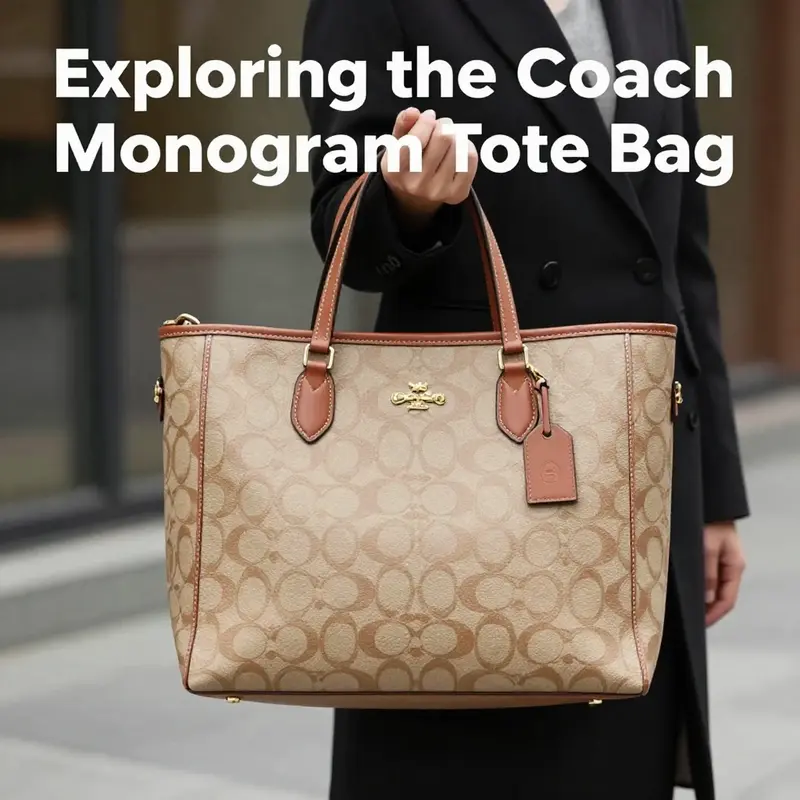
Every bag has a role, but the right bag becomes a trusted companion, changing how we move through a busy day. The monogram tote from the house that blends American ease with refined craft embodies a rare balance of form and function. It is not merely a carryall; it is a compact system designed for daily life in which ease of access, clarity of organization, and the resilience of materials converge. To appreciate its functionality is to see how design choices translate into real-world utility, from the commute to a weekend getaway. The result is a product that meets modern rhythms with a quiet confidence, the kind of bag that makes the act of carrying a little less fraught and a little more fluid. It invites a user into a space where everything has a place and everything is within reach when needed, a value proposition that survives trends because it remains useful long after the immediacy of fashion passes.
At the core of this practical elegance is a thoughtful body that favors openness without sacrificing security. The open-top silhouette invites quick access to essentials, a feature that feels almost second nature during a hectic morning or a late-evening dash between meetings and trains. The spacious interior is not a mere container; it is a flexible arena that accommodates a laptop toward the medium end of the spectrum, a stack of notebooks or a handful of folders, gym clothes that might ride along for a post-work session, and personal items that keep life, and memory, within arm’s reach. The bag’s capacity is not an invitation to overpack but a promise of nimble adaptability. It is the difference between a thoughtful, well-planned carry and a cluttered, improvised one. In daily rituals—commuting, shopping, airport runs, or hotel lobbies—the ability to pivot from desk-to-door-to-destination without rummaging becomes a subtle, but notable, advantage.
The interior layout is deliberately practical rather than ostentatious. The main compartment, generous in scale, is complemented by a zipper-secured pocket that protects valuables and a removable zip pouch that can function as a standalone organizer when needed. This arrangement supports a layered approach to organization: the larger items settle into the main space, while the smaller items—wallets, keys, headphones, and phone—nestle into dedicated pockets. The presence of a dedicated zippered compartment is more than a convenience; it reduces rummaging time and helps maintain a clean sense of order, which, in turn, minimizes the mental friction that often accompanies a busy day. A detachable strap adds another layer of flexibility, enabling the bag to be carried by hand, slung over the shoulder, or worn crossbody. This adaptability is not merely about convenience; it is about enabling smoother transitions between different contexts—office, coffee shop, gym, or flight gate—without forcing a change in the bag or a change in how the user carries it.
The materials speak to durability without compromising elegance. A sturdy signature canvas forms the backbone of the bag, providing a reliable, wipe-clean surface that holds up under the abrasions of daily use. The coated fabric treatment helps resist the wear and tear of rain, accidental spills, and dust, ensuring the bag remains legible and presentable even after long days. Leather accents frame the canvas with a tactile warmth that softens edges, increases grip, and adds a touch of refinement that elevates the overall aesthetics. This combination of coated fabric and leather trim is not a mere stylistic choice; it is a deliberate decision to pair resilience with timeless appeal. The hardware—gold-tone closures and fittings—offers both a visual cue and a functional reinforcement, anchoring straps and securing closures in a way that keeps everyday use feeling secure rather than precarious. The result is a tote that looks composed in a meeting room and remains steady during a crowded commute, a nuance that only becomes apparent after days of use.
To understand how such a bag serves real-life scenarios, imagine the routine of a professional who moves between a desk, a conference room, and a series of errands. In the morning, a laptop slips neatly into the main compartment, and a notebook slides beside it. A charger and a compact umbrella nest in the zippered pocket, easy to retrieve when a venture outside calls for a break in the weather. A gym outfit, if needed, folds into the main space with room to spare for a water bottle and snacks. By noon, items within reach—phone, wallet, keys, and a compact makeup bag—are organized in the front pockets, reducing the need to empty the bag during a quick security check or a hurried lift to a conference floor. By evening, the same bag shifts its role from daily workhorse to carry-on companion for a weekend trip, with room to spare for a few essentials, a compact garment, or a travel document sleeve tucked into the interior pocket. The versatility of the interior layout—paired with the exterior’s quiet elegance—enables a single bag to support both professional routines and personal adventures, a rare form of functional longevity that reduces the cognitive load of choosing how or where to carry.
The monogram itself is more than a pattern; it signals a certain readiness and fluency. The iconic motif acts as a simple shorthand for a lifestyle that owes as much to heritage as it does to practicality. This is not a bag that demands attention for attention’s sake; it earns recognition through its steady reliability. The coated fabric preserves the look of a well-loved canvas while resisting the scuffs and moisture associated with everyday life. Leather, chosen for its durability and tactile appeal, ages gracefully, developing a patina that reflects time spent in transit and in the care of its owner. Gold-tone hardware catches light and catches the eye in a way that feels purposeful rather than flashy, a reflection of the wearer’s preference for quiet confidence. The result is a tote that wears well with suits and sneakers alike, a rarity in a market that often favors one mood at the expense of another. A bag that can simultaneously tug at a memory of classic American design and answer the practical needs of a modern schedule becomes more than a product—it becomes a trusted ally, an item that is neither faddish nor disposable.
Of course, the practicality of a bag is inseparable from the realities of care and maintenance. The coated fabric is forgiving and easy to wipe down, particularly after a spill or a rainstorm. A damp cloth suffices for routine cleansing, while a light conditioning of leather trim helps preserve its suppleness and luster. Because the bag is built for daily use, a routine that keeps the leather ready for action is a small but meaningful maintenance habit that extends the bag’s life and keeps its lines crisp. This is less about vanity and more about preserving a structure that carries not just objects but also the rhythm of daily life. The ease of care reduces hesitation about taking the bag from car to office to gym, a practical assurance that the bag will perform while the days remain unpredictable.
The chapter’s focus on durability and practical design is anchored by a direct line to the brand’s own description, which emphasizes the everyday utility embedded in the tote’s construction. This alignment is not about marketing bravado; it is about a shared language of use that designers, retailers, and owners recognize when a bag becomes a staple rather than a trend. The reality that a single tote can accommodate a 13-inch laptop, a book, gym clothes, and personal paraphernalia speaks to the ergonomics of the design. The interplay between open access and secure compartments reflects a measured understanding of how people move through spaces, from office corridors to airport gates. In the end, the tote’s design is a map of daily life: it invites you to pack with intention, access with ease, and carry with confidence.
For readers who want to explore related carry options or broader collections that echo this approach to handbags, the conversation can extend to a family of silhouettes that share its spirit of adaptability and enduring aesthetics. The idea is not to curate a rigid checklist but to recognize a design language that values simplicity, resilience, and a quiet, practical elegance. When a bag is designed to be both a reliable work tool and a companion on weekend adventures, it has the potential to reduce decision fatigue and enhance the flow of daily routines. It is easy to overlook the power of a well-made tote until you notice how much lighter and more focused your day feels when you do not have to think twice about where things live or how to reach them. The best features emerge gradually, as routine proves them indispensable.
Internal reference and broader context help readers situate the monogram tote within a larger ecosystem of carry traditions. For a consolidated view of related silhouettes and how they align with the same attention to detail, explore the broader catalogue in this curated collection: Coach Signature Tote Handbags. This resource offers a snapshot of how the signature motif translates across different shapes and sizes while maintaining a shared commitment to practicality and craftsmanship. It is a helpful touchstone for readers who want to compare interior layouts, hardware choices, and strap configurations across a family of bags designed to adapt to diverse everyday needs. As a buyer or a curatorial reader, you may find it informative to examine how similar design decisions surface in related models, reinforcing the idea that a well-made tote can be both faithful to a brand’s heritage and responsive to the demands of contemporary life. The discussion of durable materials, thoughtful compartments, and versatile carrying options helps illuminate why certain bags endure in a crowded market.
For those seeking a more formal, official reference to the exact product lineage and material specification, the authoritative product description from the designer’s own site provides a precise snapshot of the construction and capabilities. This external resource details the practical specifications and features that underlie the bag’s everyday utility, reinforcing the narrative of durability and versatility that ran through the chapter. See the official product page for the Mollie Tote Bag 25, which documents the design approach, material choices, and functional promises that align closely with the monogram tote’s priorities. Coach Mollie Tote Bag 25 product page
From Counterfeit Fears to Verified Craft: Authenticity and Sourcing of the Coach Monogram Tote Bag
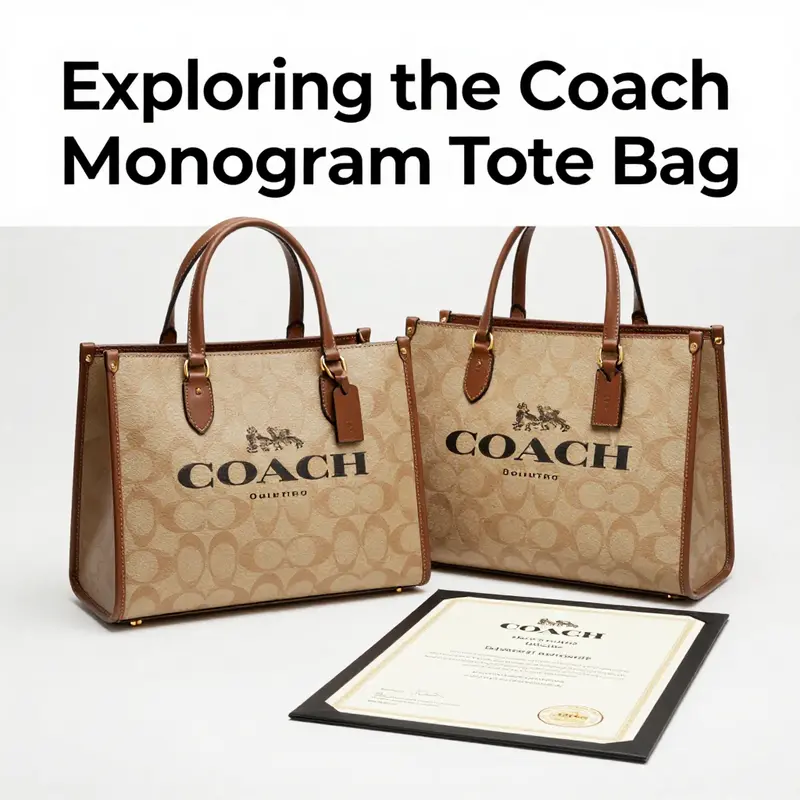
When a bag carries a legacy as much as a function, authenticity becomes more than a checkbox on a receipt. It becomes a lived experience of craftsmanship, provenance, and the quiet confidence that comes with knowing a purchase is supported by a robust sourcing and quality-control framework. The Coach Monogram Tote Bag sits at that intersection where brand heritage meets practical daily use. It is not merely a carrier for items; it is a statement about how luxury can be timeless, durable, and responsible. In tracing its authenticity and sourcing, we encounter a narrative that threads through branding precision, material integrity, and the careful choreography of production and distribution. What unfolds is less a checklist and more a story about how a globally admired silhouette remains credible in an era of counterfeit risk and online marketplace volatility. The monogram itself—an enduring symbol of a New York-origin brand established in the early 1940s—acts as both beacon and gatekeeper. The large CC monogram tote has become a signature piece because it crystallizes a philosophy: luxury should be legible, enduring, and versatile enough to accompany a life in motion. The bag’s dimensions—approximately 33 centimeters tall, 29 centimeters wide, and 15.8 centimeters deep—offer a generous interior that supports a commuting routine, a day of errands, or a brief weekend escape. Its coated fabric finish speaks to a practical side of luxury; it is durable, easy to care for, and resistant to the everyday scrapes of city life. Leather details provide the tactile counterpoint—an understated refinement that elevates the tote from merely functional to quietly luxurious. This combination of coated fabric and leather not only enhances aesthetics but also informs the authenticity dialogue. Materials, when selected with care, reveal a truth that can be felt as much as seen: a sense of weight, of substance, of a product built to weather time. This tactile truth is the first line of defense against counterfeit misrepresentation and a strong signal to the informed buyer about the bag’s origin and durability. The sourcing story behind the monogram tote matters because it anchors the product in a broader ecosystem of quality control, supply chain transparency, and brand stewardship. The bag is designed with versatility in mind. The adjustable shoulder strap allows for multiple configurations—carried by hand, slung over the shoulder, or worn crossbody—adapting to the rhythms of daily life. This adaptability is not merely a design flourish; it is a reflection of the sourcing choices that ensure long-term usability. Yoking form and function, the bag demonstrates how a luxury label translates a heritage print into a contemporary, practical accessory. The monogram’s placement and alignment offer a quiet litmus test for authenticity. When the initials CC appear, they should align with a precise rhythm, neither crowded nor misaligned. This level of precision is not an afterthought; it is embedded in the design and verified at multiple stages of production. The crest of quality emerges through the stitching that threads the pieces together. Consistent craftsmanship means stitches that lie flat, evenly spaced, with no loose threads or irregularities. The hardware is another visible touchstone. The zippers, clasps, and rings must feel substantial, with a smooth action and uniform finish. When these elements synchronize, they tell a story of meticulous assembly and careful final inspection. The authenticity conversation also naturally extends to sourcing channels. The most trustworthy route for acquiring a bag of this pedigree is through official brand channels or authorized retailers. The official COACH site represents the most reliable access point for genuine items that carry the brand’s warranty and quality guarantees. Optionally, a parallel-import arrangement from the production site can promise authenticity, but it requires careful verification to avoid gray-market concerns. Authenticity, in this context, rests on three pillars that must work in concert: branding fidelity, material integrity, and craftsmanship consistency. Branding fidelity means the logo is crisp, well-positioned, and proportioned to the design’s scale. Material integrity means the bag’s coated fabric feels robust and resistant to staining, while leather accents maintain their luster and texture even with daily handling. Craftsmanship remains visible in the evenness of the seam lines, the alignment of the monogram motif across panels, and the balance of hardware with the bag’s overall weight. Together, these elements form a cohesive judgment of authenticity that can be made without disassembling the bag or relying solely on packaging. The sourcing dimension of this bag’s narrative invites a broader reflection on how luxury goods circulate in a global marketplace. The basis for trust in a monogram tote is not merely the desirability of the print but the reliability of its supply chain. The bag in question is described as created for daily use, with durability and care requirements that align with the needs of a busy life. This practical orientation—coated fabric that is easy to care for and leather details intended to last—speaks to a planning mindset that values long-term performance as part of luxury ownership. Such a mindset resonates with purchasers who want a product that remains presentable, even after years of use, rather than a transient trend item. In practice, verifying authenticity begins with the source. The most reliable path to a genuine monogram tote is to purchase through the official brand website or through authorized retailers that carry the full brand warranty and authentication protocols. This direct avenue eliminates much of the guesswork that accompanies secondary-market purchases. For readers seeking a curated overview of related designs, there is a resource that gathers core Coach signature tote offerings and guides the consumer through distinguishing features, including monogram alignment and material choices. A helpful starting point is the Coach Signature Tote Handbags page, which consolidates essential details about the signature line and its construction. This resource acts as a touchstone for buyers trying to compare subtle differences in monogram scale, placement, and finish across various iterations of the tote. While it is possible to encounter well-presented listings on third-party marketplaces, careful scrutiny remains essential. A listing with the title “COUTURE COACH LARGE CC MONOGRAM TOTE BAG!” illustrates how alluring language and evocative branding can obscure the reality of provenance. In such cases, buyer vigilance should extend beyond the photographs. Key checks include seller ratings, a precise product description that aligns with known characteristics of authentic pieces, and multiple, well-lit photos that show the monogram’s orientation and stitching at several angles. If a seller cannot provide these details, or if the listing lacks clear provenance, it is prudent to pause and consider official channels where authenticity is guaranteed. The decision to source a monogram tote from an authorized channel aligns with a broader consumer aim: to preserve the integrity of a luxury object and to support fair labor practices embedded in the production chain. This perspective is not merely about owning a status symbol; it is about engaging with a system built to uphold standards, from material selection through to final assembly and subsequent service. The role of proper sourcing is also about the aftercare experience. When a bag is bought through the right channel, warranty coverage, genuine replacement parts, and access to service are readily available. The material choices, such as coated fabric and leather trims, respond to practical needs while demanding responsible handling. The coated fabric offers ease of cleaning and a degree of water resistance, which is particularly valuable for a tote intended for daily use. Leather accents, while elegant, require careful maintenance to prevent drying or cracking over time. The contrast between the durable exterior and the more refined interior details often reflects the balance achieved in the design process. In this context, the monogram tote embodies a philosophy that luxury product storytelling should be coherent from the first impression to the last use. The narrative of authenticity extends beyond the surface aesthetics and into the production and distribution chain. The official site and recognized retailers serve as custodians of this narrative, ensuring that what reaches the consumer reflects the quality, design intention, and ethical standards associated with a respected brand. For readers who want to anchor their understanding in a practical resource, the official brand site—though not a substitute for personal inspection—offers documentation about material specifications, care instructions, and design rationales that illuminate the product’s intent. It is a reminder that a handbag is more than a container; it is a carefully engineered object designed to withstand lived experience while preserving its identity over time. The layering of authenticity checks—branding precision, material integrity, and craftsmanship fidelity—works in concert with sourcing reliability to create confidence in every purchase. This confidence is not an expendable luxury; it is a prerequisite for a long-term relationship with a product that is expected to perform day after day. As readers consider their next step, the synthesis of these elements supports a decision-making process that honors both value and value creation: investing in a bag that remains true to its origin and purpose, while also accommodating the evolving needs of a modern lifestyle. For those who wish to explore related topics and expand their understanding of tote design and brand stewardship, a broader look at related Coach offerings can be found on related pages within the same resource network. Specifically, a discussion of the signature tote families provides context for how monogram motifs travel across different silhouettes and how subtle variations in layout or finish can affect perceived authenticity. A concise way to approach this is to compare monogram scale, alignment, and finish across multiple iterations, using the same criteria of branding fidelity, material integrity, and craftsmanship as the touchstones. This approach helps buyers appreciate the continuity of a design language while recognizing the unique traits that separate one tote from another. In closing, authenticity and responsible sourcing are not abstractions but practical commitments that shape the consumer experience. The Coach Monogram Tote Bag stands as a case study in how a luxury label translates its heritage into a durable, adaptable, and trustworthy daily companion. The value of buying through official channels, or through verified retailers, becomes apparent in the assurance of accuracy in branding, durability in materials, and consistency in construction. It is a reminder that luxury is not merely about display; it is about enduring performance, careful stewardship, and a story that travels with each use. For readers who want to dive deeper into specific product family insights, consider exploring the Coach Signature Tote Handbags page as a focused reference point, and for broader context on brand authenticity and sourcing practices, consult the official brand site online at https://www.coach.com.
null

null
Final thoughts
The Coach Monogram Tote Bag transcends mere fashion accessory; it combines exquisite design with practical functionality and a promise of authenticity, appealing to business owners and fashion enthusiasts alike. By incorporating this iconic tote into their daily routines, individuals can embrace both style and efficiency. Furthermore, its cultural significance as a versatile, recognizable item in the world of luxury clothing positions it as not just a product but a statement of taste and enduring quality. Embracing such a time-honored brand ensures you remain stylish and practical in everything you do.