

In today’s dynamic business environment, a professional’s choice of accessories can reflect not only personal style but also a commitment to quality and functionality. Coach black totes are at the forefront of this trend, seamlessly blending elegance with practicality. This article dives deep into two of Coach’s standout models—the Mollie Tote and the Gramercy Tote—each offering unique features that cater to different professional needs. We will explore the functionality and design features that make these bags essential, alongside current market trends and pricing insights that will assist business owners in making informed purchasing decisions.
The Classic Black Tote: Craft, Versatility, and the Subtle Art of Everyday Luxury
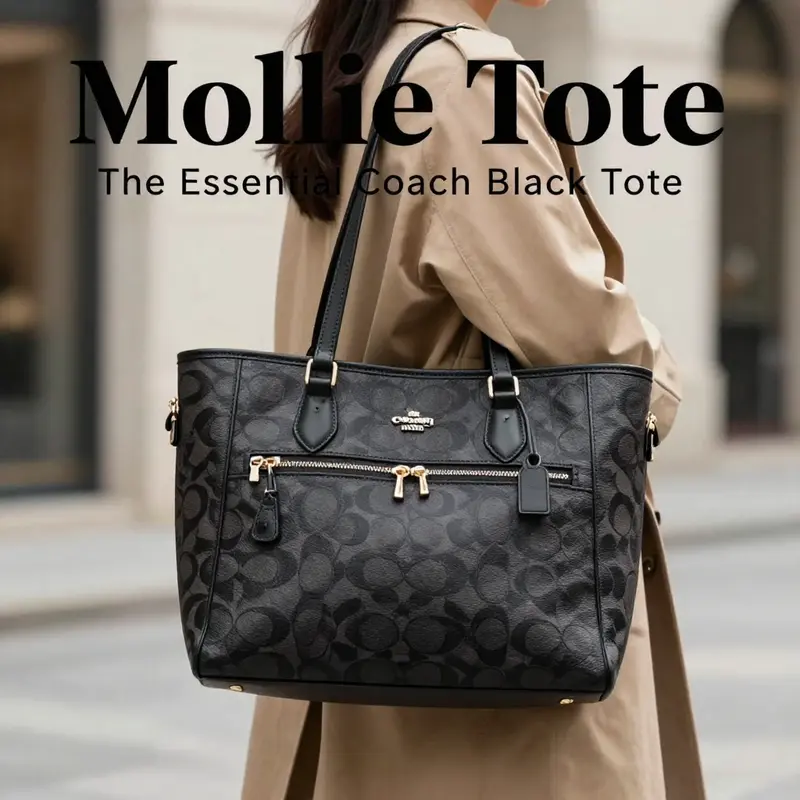
Across a busy week, a black tote can become the most dependable ally. It carries the weight of meetings, ideas, and life’s everyday errands without shouting for attention. Its design asks for little more than your sense of organization and trust. When you first reach for it in the morning, you notice how the material feels under your fingers, and you recognize the promise of a bag that remains poised through the hum of the day. The black tote is not a statement so much as a promise: that utility and elegance can coexist, that form can follow function, and that style need not demand constant adjustment. In this narrative, the bag becomes a partner, not an accessory—a partner capable of shifting its shape, mood, and role to match the rhythm of your day.
Material choice matters; it is the quiet backbone of daily reliability. A tote built from premium coated canvas offers lightness and resilience. The coating protects against spills, while the texture catches light in subtle ways, giving the bag a warmth that does not pretend to be soft luxury but earns it day after day. For others, a version in smooth calfskin leather speaks of refinement, a tactile honesty that ages gracefully. Both options, when crafted with attention, reveal a shared commitment to longevity. The seams lie flat and trim, the edges are reinforced, and the hardware glints with a measured restraint. The silhouette stays crisp as it travels from the subway to the conference room and back again, never leaning toward ostentation, always leaning toward usefulness.
Open the bag and you meet an interior that is more workshop than wardrobe. A generous central pocket keeps the most valuable items secure, protected by a reliable zip that you can count on to close smoothly even when the bag is brimming. Alongside this central space lie multiple compartments designed for quick access. A pair of side open sections can cradle a notebook or a phone with enough freedom for a charging cable to slip through when needed. The interior layout is not a gimmick but a system, one that invites you to place items where they will be found again without a hunt. The organization becomes a habit, the bag a map of your day. In its quiet way, the tote teaches its owner to value order, not as a constraint, but as a liberator of time.
Where the bag truly shows its versatility is in its carrying options. A detachable strap lets you swap between a graceful handhold, a steady over-the-shoulder carry, or a crossbody silhouette that stays secure against the body during a busy commute. The ability to reconfigure without changing bags is a small luxury: you can adapt to a long morning on campus, a late business dinner, or a casual weekend errand run without pausing to switch accessories. The strap length and the anchor points are designed to stay comfortable over hours of use, reducing fatigue and helping you keep your posture upright during long days. This adaptability matters because daily life rarely fits into a single moment; it flows, with the bag moving along with it rather than demanding a new purchase for every shift.
Size is not a badge but a practical fit. The tote sits in that sweet middle ground, not too large to feel unwieldy, not so small that you risk cramming items unchecked. It invites a laptop or tablet, a wallet, a phone, and a notebook without forcing you to juggle. It accommodates a lunch container or a reusable water bottle, and it still offers a pocket for cables, a pen, and keys. The result is a daily companion that can carry the day’s essential technology with ease, while keeping the aesthetic calm and professional. The beauty of this balance is that it does not shout for attention in the way some oversized bags do, nor does it fade into the background. It commands a quiet respect, the kind that comes from thoughtful proportion and reliable performance.
From a design perspective, the all-important philosophy is restraint. The bag adheres to a simple, timeless silhouette, free from elaborate logos or unnecessary flourish. The craft reveals itself in the careful execution: the precision of the stitching, the evenness of the fold, the way the zipper tracks with minimal friction, the way the handle meets the body without creasing or strain. This is not a flashy accessory; it is a tool with a personality shaped by restraint. The result is a product that can stay current for years, aging with grace rather than becoming outdated. The beauty lies in the quiet confidence of good craftsmanship—the sense that every seam exists for a purpose and every line has earned its place in the whole. It is a reminder that luxury, at its best, is a discipline rather than a display.
An everyday luxury like this does more than hold items. It supports focus by removing friction from daily routines. When you reach for a notebook or a charger, the interior layout makes access intuitive rather than deliberate. You can find what you need without a pause, and that small efficiency adds up across a week, a month, a year. In this way, the bag becomes not just a carrier but a facilitator of thought. The absence of noise—the absence of loud branding or needless pockets—lets you bring your own identity to the day instead of being defined by your accessory. The bag becomes a canvas on which professional life and personal life merge smoothly. It respects boundaries while inviting interactions with the world, from a quick coffee to a late-night project sprint. The experience is less about making a visible statement and more about enabling a confident, unhurried pace.
Price, in the luxury segment, mirrors the balance of materials, production methods, and brand philosophy. A tote that combines practical durability with refined materials will sit in a mid-to-high range, reflecting both the physical heft of its components and the intangible value of a design that endures. The most meaningful purchase is not the momentary thrill of novelty but the long, steady return on daily use. Care extends the bag’s life: gentle cleaning, proper storage, and avoidance of harsh solvents preserve the coating or the natural patina of leather. With routine care, a well-made tote remains a trusted partner for years, treading lightly on the conscience of the owner and leaving room for new experiences rather than constant replacement. The durability is, in many ways, the quiet reward of a well-considered design rather than a flashy feature.
Reflecting on this class of bags invites a broader view of how we curate our daily ensembles. The black tote, in its minimalist elegance, acts as a neutral stage for every other element in the wardrobe. It does not demand attention; it supports variety. It becomes a scaffolding for the day’s narrative—holding the notebook that captures an idea, the device that keeps us connected, the lunch that sustains the afternoon, the water bottle that reminds us to hydrate, and the keys that unlock the next moment. In a culture that often moves too quickly, such a bag offers steadiness, a sense that the everyday can be handled with grace. The true value is not novelty but reliability, not branding but character, not flash but fidelity. The bag thus earns its place as a foundational piece, one that speaks softly of patience, precision, and a refined, unruffled sensibility.
Looking ahead, the study of a timeless tote reveals more about the rhythm of modern life than about any single item. It prompts questions about how we structure our days, how we protect what matters, and how we present ourselves in a world that rewards both efficiency and tact. The experiences gathered from using such a bag form the backbone of a practical philosophy: choose pieces that respect your time, honor your intentions, and age with you. The black tote who stands as a quiet partner in the office, on commutes, and during casual moments is more than a mere accessory. It is a statement about how we live—an invitation to move through the day with intention, calm, and a sense of enduring style.
Quiet Power in Black Leather: The Subtly Luxurious Allure of a Timeless Tote
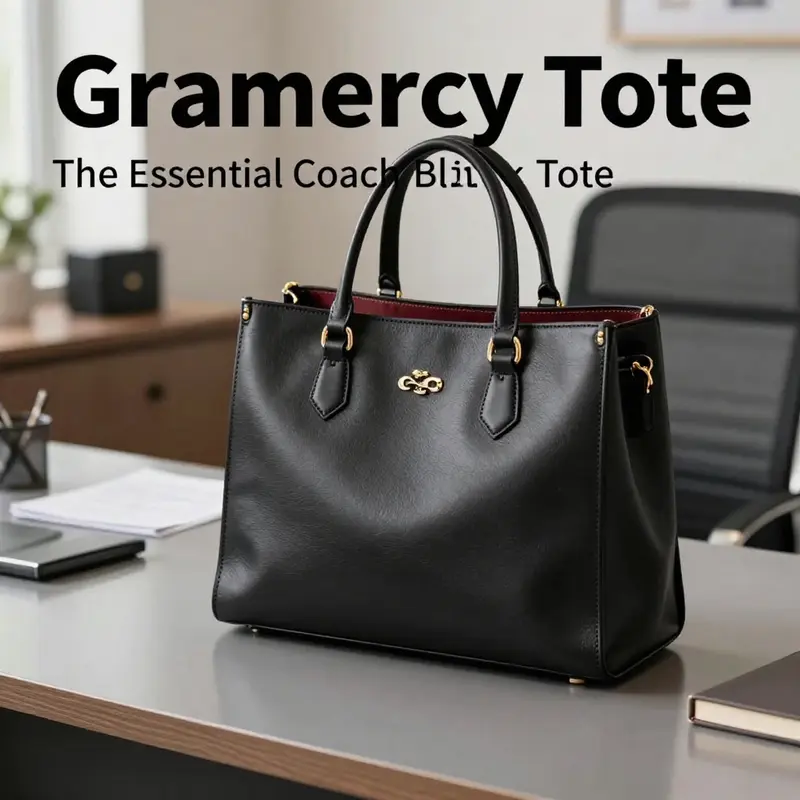
A black tote, in the hands of a practiced wearer, becomes more than a bag. It is a portable workspace, a discreet shield from the day’s chaos, and a quiet declaration of taste that favors function over flash. In the context of a modern wardrobe that must transition from morning meetings to evening plans, this particular model embodies a philosophy of restrained elegance. The bag’s presence is felt more in what it allows you to do than in what it shouts about you. It asks for little attention and gives back a great deal in return: organization, ease, and a silhouette that remains calmly in step with a fast-paced life. The most telling aspect of its design is not the absence of logos or ostentation, but the clarity of purpose that drives every detail. The material choice—double-faced suede with a supple, natural-grain leather counterpart—speaks to a commitment to tactile quality and lasting beauty. It is a choice that ages gracefully, developing a patina that marks each owner’s journey in a way that mass-produced, uniform bags simply cannot emulate. In this sense, the bag functions as a ledger of daily use, a record of how its owner moves through space and time with intention rather than impulse.
The logic of its interior is equally telling. It opens to reveal a surprisingly capacious interior that invites a 16-inch laptop to sit alongside chargers, notebooks, and a portfolio. This is not a sac used only for its looks; it is a work tool, a portable office that respects the boundaries between clutter and clarity. Within the main chamber, a discreet snap pocket stows smaller essentials—keys, a compact wallet, earbuds—keeping them accessible yet minimized in bulk. The closure system, a magnetic snap, prioritizes quick, confident access, allowing the bag to be opened and closed with one hand—a small but crucial advantage when rushing between trains, conference rooms, or coffee shop corners. The understated hardware—clean lines rather than heavy logos—conveys a modern, urban attitude that aligns with a professional’s need for reliability over flash.
One of the most compelling aspects of this tote is its strap system. The design team opted for adjustable straps featuring a series of asymmetrical buckles that offer versatility without complicating the silhouette. Carried by hand, the bag sits with a calm, vertical line that flatters a range of outfits, from tailored suits to streamlined athleisure. Worn over the shoulder, the strap geometry shifts the bag’s weight and balance in a way that feels natural, almost instinctual, as if the bag had learned its owner’s stride. The option to switch between carry modes is not a fashion flourish; it is a practical adaptation to the daily rhythms of work and life. To complement its adaptability, four protective feet at the base protect the bag on café floors, transit platforms, and office lobbies, preserving its surface and ensuring that it ages with the same dignity as its owner. This is a small but meaningful detail that signals a concern for longevity and daily resilience, a hallmark of any piece designed to endure.
The minimalist aesthetic is not mere restraint; it is a response to modern wearers who value quiet confidence over loud branding. The color, a rich, deep black, is versatile enough to anchor an entire wardrobe while remaining unfussy enough to pair with seasonal textures—wool, denim, suede, even tailored leather—with ease. The finish on the leather and suede is treated to soften over time, inviting a natural patina that tells a story of use. The patina is not merely cosmetic; it is a functional evolution. It reflects light in subtly different ways as the surface changes with each touch and each exposure to weather, becoming more unique with age. A reviewer’s note about the leather’s lightweight feel despite the bag’s generous size captures a paradox at the heart of the design: sheltering capacity without heaviness, abundance without bulk. It is this balance—capacity and weight, presence and restraint—that makes the bag a reliable partner for an ambitious routine.
In the broader landscape of luxury carry-alls, this particular model stands apart through its construction and the intention behind every seam. The interior layout is generous but intelligent, designed to keep daily life organized without turning the bag into a serialized system of pouches. A subtle ring inside serves as a dedicated anchor for keys or a small pouch, reducing the minute chaos that so often accompanies a busy day. You can picture the owner placing a tablet, a planner, a charging cable, and a notebook into the interior with a calm ritual, knowing that everything has its place and that nothing will pinball into an unplanned crumple on a crowded train. The magnetic snap closure provides quick security, a practical reassurance when one’s hands are full and the city’s pace accelerates. These choices reflect a design ethos that values the user’s experience above all else: a bag that serves, rather than dictates, the rhythm of daily life.
Occasionally, the market for such a bag reflects its status as a modern classic. Black leather totes with this degree of capacity and restraint enjoy a steady, if selective, demand. While some seasons see limited availability, the long-term appeal remains robust because the bag’s essence is not tied to a single trend but to a timeless model of usefulness and elegance. The price range, influenced by the materials and finishes chosen for a given season, may fluctuate, yet the value endures. It is not merely about owning a piece of luxury but about acquiring a reliable tool that complements the owner’s professional identity and personal style. A well-made tote like this one becomes part of a personal narrative—a canvas that carries documents, devices, and a life’s worth of small, meaningful moments—from the first interview to late-night brainstorms.
As one explores the bag’s place in a modern wardrobe, it becomes clear that the true luxury lies in the confidence it offers to its owner. Confidence in the bag’s capacity, confidence in its durability, and confidence in its ability to stay quiet when the moment calls for understatement. It is not a statement piece in the conventional sense; it is a trusted companion. This distinction matters because it shifts the expectation from spectacle to reliability, from flash to function. A tote of this kind becomes a practical partner for a professional who values time, organization, and the smooth flow of daily routines. It is a reminder that luxury, in its best form, does not demand attention; it earns it through consistent performance and quiet integrity.
For readers seeking a broader understanding of the family of totes and their place in a curated wardrobe, there is a useful resource that expands on the concept of a signature tote collection. See the guide to Signature Tote Handbags for a broader look at how minimalist silhouettes can anchor a modern closet while offering the flexibility to adapt to changing needs. Signature Tote Handbags
In the end, the market’s most enduring black tote is not merely a carrier of belongings. It is a portable, adaptable archive of a life in motion—the minutes between meetings, the coffee breaks that become brainstorms, and the quiet commutes that frame a day’s work. It offers a sense of continuity, a reminder that good design can be as practical as it is beautiful. The bag’s strength lies in its balance: a generous, laptop-ready interior that does not overwhelm, a strap system that shifts with the wearer’s needs, and a surface that ages with character rather than slipping toward cliché. It is, in short, a modern classic, a faithful partner to those who move through the city with focus, poise, and a disciplined sense of taste. As the hours unfold, this is the kind of companion that proves its worth again and again—the sort of accessory that quietly reinforces the confidence of its owner without ever stealing the scene.
External resource: https://www.vogue.com/article/how-to-care-for-leather-bags
The Quiet Power of the Black Tote: Functionality, Craft, and Everyday Ready Style

A black tote from a premium label is more than a simple carrier for daily life; it is a companion that quietly supports the rhythm of work, travel, and casual moments without demanding attention. In this sense, the bag embodies a philosophy that values clarity of purpose as much as it values refinement of form. The best totes in this category balance spacious interiors with organized layouts, sturdy construction with elegant restraint, and a color that remains versatile across settings. The result is a bag that can move from a morning commute to an after-work engagement, seamlessly aligning with both professional attire and casual wear. What makes these pieces remarkable is not a single standout feature but a carefully curated ensemble of attributes that work together to enhance daily routines rather than distract from them. From the way the interior is laid out to the way the exterior carries a minimalist silhouette, these totes are designed with a deep understanding of how people actually use bags in real life.
Functionality sits at the heart of the design language. A true everyday tote must be more than eye-catching; it must be capable of holding the tools of modern life while remaining comfortable to carry. In practice, this means a spacious interior that accommodates a 13-inch to 16-inch laptop, along with documents, notebooks, a tablet, and the inevitable miscellany of keys, phones, and chargers. The beauty of a well-made black tote is that its interior feels expansive yet organized. Rather than becoming a bulky cavern, it is segmented by deliberate pockets and compartments that invite a sense of order. When a bag provides interior zip pockets and multifunction pockets, it invites users to sort small items—pens, lip balm, earbuds, receipts—in a way that reduces the need to rummage and uproot the entire contents at a moment’s notice. The practical impact of this organization is tangible: faster morning routines, less stress during travel, and more focus on the work or the moment at hand.
Durability is inseparable from daily usefulness. The materials and construction behind these totes are chosen for resilience as well as beauty. A polished pebble leather or a robust canvas forms the backbone of the exterior, complemented by reinforced stitching and careful edge finishing. The goal is not only to endure the rigors of daily use but to age gracefully, acquiring soft patinas that tell a story of time and care. The hardware—whether a subtle turnlock or a discreet metal accent—exists to enhance security and longevity without shouting its presence. A bag that wears well is one that accepts daily abrades and weight without warping or losing its shape. In this sense, the outer shell becomes a shield for the contents, preserving the structure of the interior and maintaining the tote’s upright silhouette even when it is fully loaded.
The closure system acts as a guard for belongings while also shaping the experience of use. Magnetic snaps, when thoughtfully integrated, offer quick access without compromising security. They provide a soft, forgiving way to seal the bag with one hand—an everyday luxury when a person is juggling coffee, phone, and keys. The best designs ensure that the magnet engages with a satisfying click, yet remains reliable through the countless days of commuting and travel. This balance between ease and protection is what allows the bag to slip into professional settings just as comfortably as it does into weekend errands. A reliable closure is not flashy; it is a quiet guarantee that items stay in place, so essentials are always ready when you reach for them.
Carrying comfort is another subtle, essential dimension. The tote’s ergonomic options are crafted with attention to how hands and shoulders behave under load. Some versions offer a sturdy top handle for hand carry, while others present a detachable shoulder strap or a crossbody option for versatility. The ability to switch between hand carry and shoulder or crossbody wear ensures the bag adapts to different contexts—meetings that require quick, hands-free movement, days spent hopping between offices, or weekends when the bag doubles as a gym or library companion. The strap systems are designed with width and padding that distribute weight evenly, reducing fatigue and improving balance when the bag is full. In many cities, where daily routines involve long walks or transit transfers, this ergonomic flexibility is the difference between a bag that remains a joy to use and one that becomes a burden over time.
From a design standpoint, the color and silhouette of a black tote are deliberate choices that echo modern minimalism. The black palette is not merely a fashion statement; it is a functional decision that makes the bag infinitely adaptable. It harmonizes with suits and denim alike, pairs with metallics for an evening look, and resists showing dirt or wear in daily use. The silhouette tends to favor clean lines and restrained detailing, which speaks to a timeless sensibility rather than a fleeting trend. Inside, the lining is often a premium fabric that exudes refinement and resilience, providing a soft counterpoint to the exterior’s sturdiness. The tactile experience of the interior—how it feels against the fingers when a zipper is opened or a pocket is accessed—contributes to the overall perception of quality. These sensory details—how the bag sounds when unzipped, how smoothly the zipper slides, how the lining responds to a swipe of a sleeve—create an every-day luxury that is easy to overlook but deeply felt in use.
The narrative of the design is completed by the careful balance between branding and restraint. Subtle branding, understated hardware, and quiet signature touches evoke heritage and craftsmanship without shouting a logo at every glance. This restraint aligns with the needs of professionals who want their accessories to complement, not compete with, their outfits. In practice, it translates to a bag that feels appropriate in a client meeting, a classroom, or a coffee shop study session. The sense of timelessness that emerges from this approach makes the tote a reliable baseline piece: its value is reinforced by its lasting appeal and the confidence it inspires in the wearer.
In terms of everyday rituals, the tote is a stage for routine optimization. A laptop sleeve is sometimes integrated into the interior or offered as a compatible accessory, designed to cradle a device securely while keeping it separate from the rest of the contents. This arrangement helps protect electronics from impact and from scratches, while still allowing easy access when needed. The broader interior layout supports a spectrum of use cases—from a slim portfolio with a tablet to a fuller setup that includes a makeup kit or a light workout kit for post-work sessions. The capacity to adapt to changing needs is the essence of a practical tote: not simply a container, but a modular partner that enhances organization and efficiency. For readers who want to explore a similar approach to organization in bags that accommodate tech gear, consider a tote designed with a dedicated computer sleeve, which can be investigated here: tote bag with computer sleeve.
The design, of course, responds to the realities of modern lifestyles. People move through spaces that require quick transitions, from crowded subways to quiet conference rooms. A black tote that carries weight without sacrificing silhouette offers a quiet assurance: you can arrive prepared, composed, and ready to engage. The bag’s interior organization supports this poise. The presence of interior zip pockets creates a secure space for valuables—small items that could be lost in a larger cavity if left unconfined. An inside snap pocket provides a comfortable place for items you want to access rapidly, like a transit card or keys, without having to rummage through the depths of the bag. Additionally, even the base of the tote can be engineered with protective feet or a reinforced bottom to resist wear, helping the bag hold its shape over time and across thousands of exchanges with floors, car seats, and office desks.
What emerges, finally, is a philosophy of everyday luxury: a tote that is neither ostentatious nor disposable. It respects the wearer’s need for clarity, efficiency, and grace. It offers a calm, quiet confidence that the bag will be there, ready to support whatever the day brings. This is possible because the tote’s designers understand not only how materials speak to the eye but also how they respond to touch, weight, and use. The fabrics and leathers chosen for outer surfaces are matched by thoughtfully engineered interiors, each feature deliberate, not decorative. The result is a bag that earns its keep through durability, subtle elegance, and an unspoken promise of reliability. In this sense, the black tote becomes a daily instrument—an item of practical design that, in the simplest terms, is ready when you are.
For those seeking a practical reference point for organization and function that aligns with the ethos described here, the related product category emphasizes the value of dedicated compartments and protective sleeves, offering a blueprint for how a modern tote can support a laptop and other essentials in a balanced, accessible way. As a starting point for understanding how interior layouts can improve everyday usage, you can explore a generic tote category that highlights computer sleeves and organized pockets, which aligns with the broader discussion of functionality without naming specific brands.
External resources can offer additional perspectives on care and maintenance that extend the life of leather and fabric bags. A well-cared-for tote not only preserves its aesthetic but also sustains its structural integrity through years of daily use. To deepen understanding of leather care and bag maintenance, see a reputable fashion resource on how to care for leather bags: https://www.vogue.com/article/how-to-care-for-leather-bags
Black Totes, Quiet Luxury: Market Trends and Pricing in Coach’s Monochrome Line
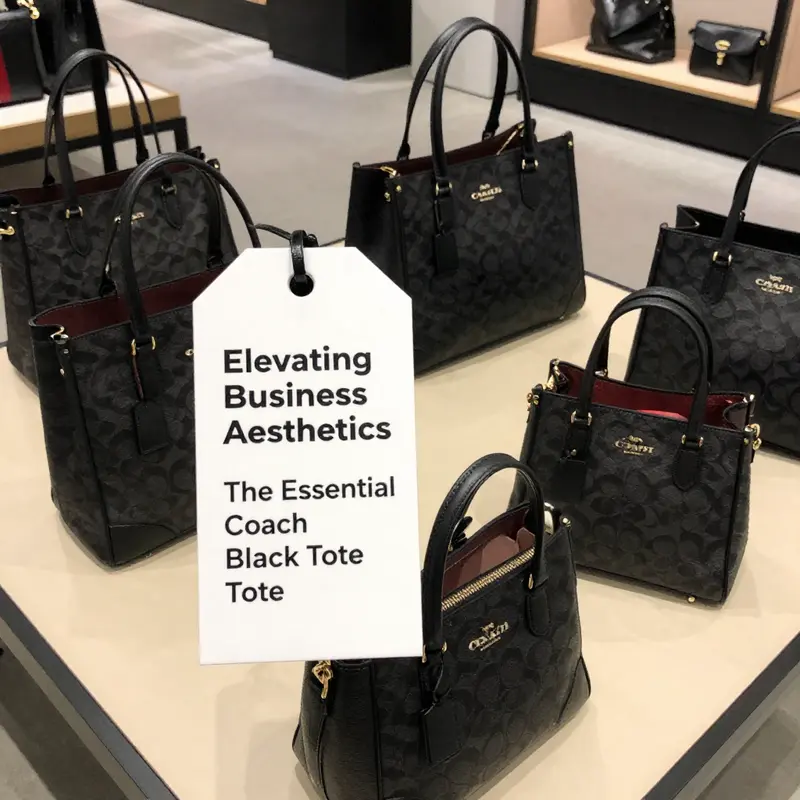
A black tote from a luxury brand often carries more than the sum of its parts. It’s a practical vessel for daily life, a statement about taste that refuses to shout, and a barometer of how a modern luxury house imagines durability, desirability, and distinction without leaning on overt branding. In early 2026, the category of monochrome Coach totes has emerged not merely as a product line but as a signal about how luxury design is evolving. The appeal rests on restraint: clean lines, durable construction, and materials that speak softly of craftsmanship rather than loudly of status. In this sense, the black tote becomes a testing ground for what many brands call authentic new luxury—an approach that blends timeless design with a contemporary expectation for personal resonance. The market narrative around these bags is less about fleeting trends and more about a durable, everyday luxury that can travel across settings, from early commutes to late meetings and casual weekend errands, all while maintaining an understated polish that can adapt to changing personal identities.
At the heart of this shift is a deliberate choice of materials and construction that underline utility without compromising luxury. The lighter, everyday tote often relies on a signature coated canvas for its core shell. This material combination—a canvas exterior with a coated finish—delivers enduring versatility: it resists moisture, remains supple, and sheds heavy maintenance demands. The need to balance weight with durability is especially important in a bag intended for daily use, where the burden of a full workday, a laptop, and the miscellany of life can otherwise turn a tote from a trusted companion into a fragile liability. In tandem with canvas, the more premium tier of black totes leans into calfskin leather, particularly in areas that earn the first touch of the hand or the eye of a discerning observer. Smooth calfskin creates a tactile and visual elegance that reinforces the sense of a timeless staple rather than a seasonal flourish. The design philosophy reads clearly: a focus on craftsmanship, a quiet celebration of materials, and a finish that invites a sense of long-term attachment rather than a fast-fashion sprint.
The functional spine of these bags remains their most persuasive argument. Inside, thoughtful organization—multiple compartments, dedicated sleeves for tech devices, and interior pockets—transforms a tote into a practical workstation on the move. The detachable strap is a small but powerful capability, enabling wear as a shoulder bag or a crossbody when the day’s activities require hands-free versatility. The absence of overt logos, a hallmark of the current luxury language, reframes the tote as a personal expression rather than a billboard. What matters then is not a flashy insignia but the experience of using the bag: smooth zippers, the satisfaction of a quiet latch, the resonance of a perfect balance between form and function. These moments accumulate into a perception: a tote that remains relevant across seasons, a companion that earns a “you could rely on this” reputation rather than a “you must be seen with it” one.
Pricing is the clearest translation of this design and philosophy into market behavior. The contemporary core range for a black Coach tote sits within a conservative band—roughly a mid-tier window that signals premium positioning without alienating a broad base of buyers seeking lasting value. A recent example in the market shows a black, monochrome model priced around $450, a figure that aligns with Coach’s strategy of elevating the perception of luxury while maintaining a price point accessible to a new generation of buyers. This price is not an isolated data point but part of a broader arc: the brand has been shifting toward what it describes as authentic new luxury. This approach emphasizes timeless design and emotional resonance over the latest trend or a heavy reliance on conspicuous branding. It is a deliberate move to attract younger consumers who want a tote that reflects their identity while still conveying a sense of heritage and quality. The core price band, often cited as roughly $350 to $500 for similar products, reinforces the idea that the category is maturing into something more stable and less prone to the volatile discounts that characterized luxury segments in the past.
This stabilization mirrors a broader market shift away from logo-centric, conspicuously branded luxury. Gen Z and other younger consumers in North America and beyond are increasingly drawn to items that feel personal and crafted rather than ostentatiously branded. They want a product that supports their day-to-day life and quietly signals good taste rather than signaling membership in a luxury club. In response, brands like Coach emphasize the emotional resonance of their offerings: the story of craftsmanship, the sense that a bag is built to endure, and the subtlety that makes a piece work in multiple contexts—from professional environments to weekend leisure. The real value for these shoppers lies not in a single season’s novelty but in a bag that ages gracefully with its owner, gaining a patina of use that mirrors the wearer’s evolving life.
From a strategic perspective, the pricing narrative is also about how the brand positions itself in relation to discounts and promotions. The fiscal discipline reflected in the market reports points to a mid-to-high double-digit uplift in average selling price in the first quarter of the fiscal year 2026. In plain terms, the company appears to be reducing the reliance on deep discounts and instead leaning into a curated product lineup that can command higher prices while still feeling accessible to a youthful demographic. There is a clear intent to stabilize prices across the portfolio, preserving a looser, more inclusive aura around luxury rather than a shrinking window of opportunity created by frequent markdowns. This approach helps to sustain an aura of exclusivity without alienating younger buyers who have grown attuned to the value proposition of long-lasting goods.
The geographic expansion accompanying this pricing strategy offers another layer of context. Coach has been broadening its footprint in key markets, with particular emphasis on China as a growth engine. The introduction of flagship stores in major urban centers—alongside new outlets in emerging lower-tier cities—signals a deliberate strategy to reach a broader spectrum of consumers who may be new to the brand or returning to it as part of life transitions, such as entering the professional world or seeking a durable daily companion. These moves highlight a dual focus: first, reinforcing the brand’s luxury credentials in cities with sophisticated consumer bases; second, cultivating a broader, more inclusive luxury dialogue in markets where history with the brand is newer but potential for long-term loyalty is strong. The result is a nuanced growth model that seeks to balance flagship prestige with wide accessibility, ensuring that the monochrome tote remains a viable option wherever a customer lives or works.
In practical terms, the modern black Coach tote invites a form of brand conversation that is less about shouting and more about listening. The bag becomes a focal point in a broader ecosystem of accessories, where complementary pieces—wallets, small pouches, and organizational inserts—help shape a coherent user experience. The emphasis on durability, combined with the elegance of simplified aesthetics, supports a lifestyle narrative: a person who values quality, who wants a bag that can handle daily life with minimal fuss, and who appreciates the confidence that comes from carrying a well-made object. The absence of overt branding is not a limitation but a promise: the bag’s identity emerges through its utility, its material language, and the quiet confidence of the wearer. This, in turn, resonates with a growing cohort of consumers who prize authenticity and craftsmanship as a form of self-expression rather than a display of wealth.
To place this within a broader reference frame, consider how a well-curated Coach tote sits within the online conversation about luxury and everyday practicality. The modern tote is frequently discussed in terms of its adaptability to work and non-work contexts, its capacity to accommodate everyday tech and personal items, and its ability to transition across settings with ease. The material choices—coated canvas for lightness and resilience, calfskin for tactile luxury—offer a tangible demonstration of how a company can deliver both form and function in equal measure. And while one model may introduce a slightly different silhouette or feature set, the underlying philosophy remains consistent: invest in timeless design, deliver enduring quality, and price in a way that invites a broader, more diverse audience to participate in a modern luxury narrative.
For readers who want to explore more of the Coach tote universe while maintaining a critical eye on how these pieces are positioned in the market, a broader catalog of Coach tote handbags provides useful context. This resource can help connect the dots between the monochrome, understated tote and other silhouettes that share the same design language, materials, and craftsmanship ethos. Coach tote handbags offers a starting point for understanding how different configurations relate to the core values discussed here, without getting distracted by logos or louder branding cues. Meanwhile, those seeking direct insight into the brand’s current strategic direction and new luxury philosophy can look to the official site for the most up-to-date announcements and product availability. External market observations and brand communications together paint a picture of a house that is deliberately evolving, prioritizing personal resonance and lasting quality over flash-in-the-pan popularity.
In sum, the quiet luxury of Coach’s black tote category stands as a compelling case study in how a heritage brand adapts to a shifting consumer psyche. It is not simply about creating a bag that happens to be black, but about engineering a product that embodies a lifetime value proposition: a dependable, elegantly restrained form that accompanies daily life across a spectrum of activities, environments, and identities. The·monochrome aesthetic, the emphasis on materials and craftsmanship, and a pricing strategy that supports both accessibility and prestige all point to a coherent, forward-looking vision. As the brand expands into new markets and refines its lineup, the black tote remains a central pillar—an anchor of reliability in a luxury landscape that increasingly prizes narrative substance over surface visibility. For readers tracing the evolution of smart luxury, it is the quiet, well-made tote that often tells the most persuasive story about where the category is headed next.
External resource: https://www.coach.com
Final thoughts
In conclusion, Coach black totes stand out in the world of business accessories by combining luxury with unparalleled functionality. The Mollie Tote and Gramercy Tote both cater to distinct professional needs—whether you seek versatility or sophisticated luxury. Understanding the features and market dynamics associated with these bags not only aids in making an informed investment but also ensures that you align your professional image with your project goals. As you consider your next tote purchase, reflect on how it can enhance not just your style, but also your daily efficiency in the business arena.